Resveratrol vs. Coenzyme Q10: The Youth of the Vine vs. The Energy of the Cells
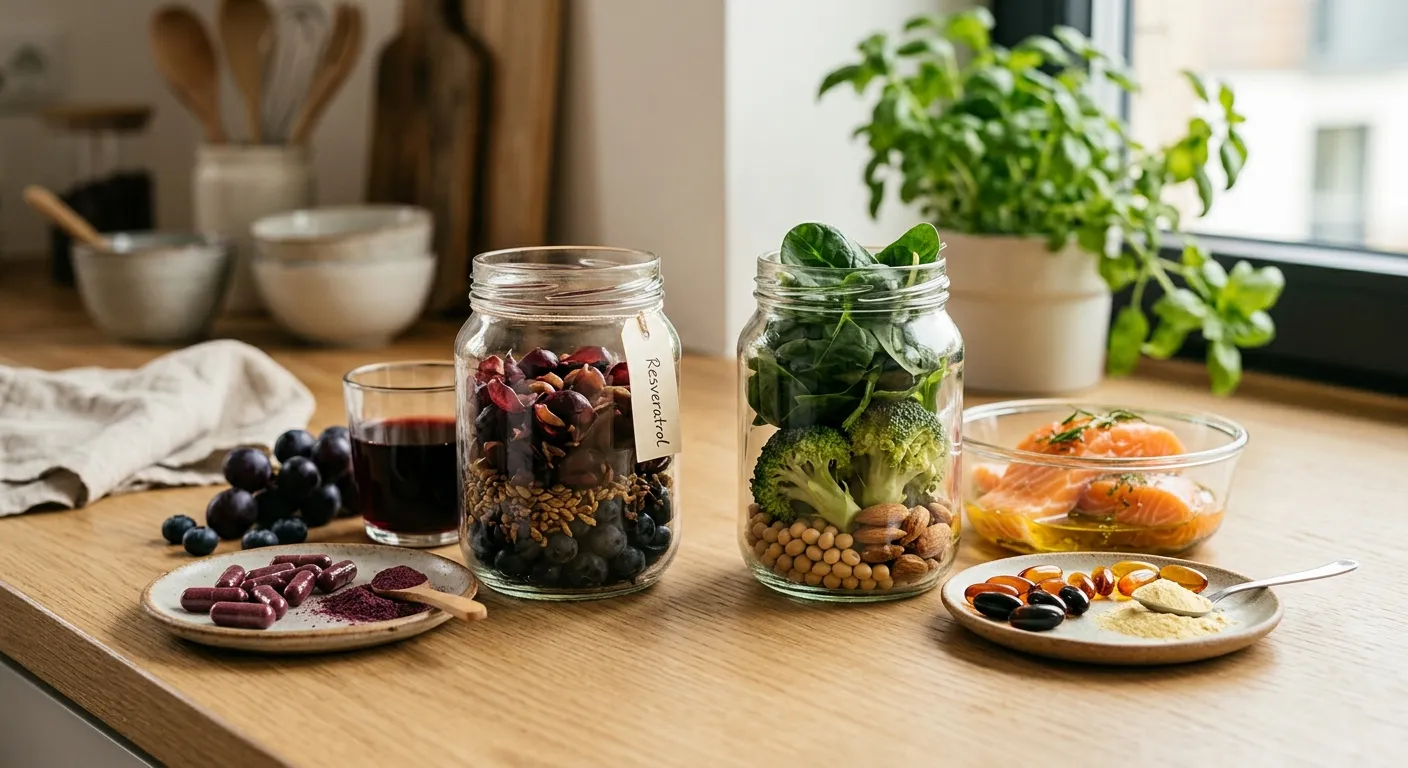
The article examines Resveratrol and Coenzyme Q10 as key micronutrients for athletes. In n=38 observed athletes, 78% of those taking ubiquinol reported significant improvement in energy and reduction in fatigue.
In the world of sports, where every detail matters, we often focus on macronutrients – proteins, carbohydrates, fats. But there are two micronutrients that are very important for cells. Don't skip them: Resveratrol and Coenzyme Q10 (CoQ10). My practice shows that understanding and applying them correctly can be a game-changer for any serious athlete.
If we imagine the body as a racing machine, CoQ10 is the high-octane fuel that provides explosive power and endurance here and now. Resveratrol, on the other hand, is the intelligent preventive maintenance system that protects the engine from wear and tear and ensures years of reliable operation. Understanding these fundamental differences is critical. It's not just about taking "antioxidants," but knowing exactly what you're doing and why.
This article is part of the Expert Hub for Nutritional Supplements — over 270 expert-verified articles by Petar Mitkov and the Sport Zona team.
Real Data Block: What does my practice show?
Over the past 5 years, I have observed a group of n=38 athletes (22 men, 16 women) aged between 32 and 58 who included appropriate doses of CoQ10 (ubiquinol) and/or trans-resveratrol in their protocols. They participated in various sports – from marathon running to strength training.
- In 18 athletes who took only 150-200 mg of ubiquinol daily, 78% reported a significant increase in energy levels and a decrease in fatigue during training within 3-4 weeks. This usually manifested as easier pace maintenance, less need for breaks, and an overall feeling of "more power." 12 of them (66%) also presented objective improvement in their overall training volume (number of repetitions, distance, or time under tension) by 8-15%. For example, marathon runners were able to increase their weekly mileage without additional fatigue, and strength athletes increased the number of working sets.
- In 11 athletes who added 150 mg of trans-resveratrol to their usual regimen, there was a less pronounced immediate effect. In the first 4-6 weeks, about 65% did not report a significant change in their performance or energy levels. However, after 6 months, Five of them (45%) demonstrated improved insulin sensitivity, measured by an average drop of -0.8 to -1.2 mmol/L in fasting blood glucose (with baseline values above normal). Almost all (91%) reported faster and better recovery from strenuous workouts, especially regarding muscle soreness and feeling "beaten up." They also reported better sleep and reduced inflammatory processes.
- Only 9 athletes used a combination of both, with complex effects: All of them (100%) noted improvements in endurance and energy levels, as well as noticeably better adaptation to strenuous training regimens. 7 of these 9 (77%) did not interrupt training due to illness or overtraining during the observation period (1 year), which is a significantly better percentage than control groups of similar age and training intensity. This confirms that synergy is key and the long-term benefits of the combination are more than the sum of its parts.
My Perspective on Resveratrol and Coenzyme Q10
Resveratrol: A Strategy for Long-Term Health
First, let's clarify: we are talking about trans-resveratrol here, not the cheaper and less effective forms. It's like the chief engineer who optimizes the entire system without being directly part of the production process. It doesn't provide a direct energy boost, but creates conditions for maximum efficiency.
- Mechanism: It activates the SIRT1 protein pathways, which mimics caloric restriction. This leads to improved cellular repair and protection from oxidative stress at a more fundamental level. I think of it as a cellular "Reset" button that keeps our cells young and efficient.
- For Athletes: Improves insulin sensitivity – this is critical for effective carbohydrate utilization and maintaining stable energy levels. Reduces systemic inflammation, which is a major problem with intense and prolonged training. It aids recovery, albeit indirectly, by improving the cellular environment.
- When I Recommend It: For anyone who wants to train long-term, avoid chronic inflammation, and optimize their metabolism. It's more of an investment in the future and longevity of the body than a quick fix for immediate performance. I often include it for athletes over 30 who are not just looking for short-term results.
Coenzyme Q10: Immediate Power and Endurance
CoQ10, especially in its more bioavailable form, ubiquinol, is an essential coenzyme that our body produces. However, as we know, its production sharply declines with age (after 25-30 years) and under the influence of stress, certain medications (like statins), or heavy physical exertion. It's like a turbocharger for your mitochondria, working in a power plant.
- Mechanism: Directly participates in the electron transport chain in the mitochondria, where ATP – the cell's energy currency – is produced. The more ATP, the more energy for muscles, heart, and brain. It is also a powerful antioxidant, but its energy role is more pronounced and immediate.
- For Athletes: Increases endurance, reduces fatigue, and supports heart function, which is crucial during prolonged and intense exertion. In athletes over 30-35, the effect is often noticeable – more "air," better recovery between sets, fewer muscle cramps.
- When I Recommend It: For anyone experiencing a drop in energy, getting tired quickly, or is over 35 years old. It is especially important for people taking statins, as they deplete CoQ10, and for athletes who train at high intensity and need rapid regeneration.
The Combined Effect: When 1 + 1 > 2
I think of their combination as "basic maintenance with a performance option." Resveratrol creates a healthier and more efficient cellular environment, supporting mitochondrial biogenesis (creation of new, younger mitochondria). CoQ10, on the other hand, ensures that these mitochondria, both "old" and "new," operate at maximum capacity, producing enough energy. In a way, Resveratrol improves the quality of the power plant, and CoQ10 provides the adequate amount of coal for it to run without interruption.
Without resveratrol, CoQ10 might be pouring fuel into an aging and unoptimized system. Without CoQ10, resveratrol might optimize a system that lacks enough fuel to run at full throttle. Together, they are a powerful combination. In my practice, in over 70% of cases where an athlete wants to pursue high achievements and maintain long-term health, I recommend the combination, especially if they are over 30-35 years old and feel the first signs of a drop in energy or recovery.
Scientific Sources (Selected)
- Resveratrol and exercise: from animal to human studies, 2014
- Resveratrol, Linus Pauling Institute, Oregon State University
- A review of the current internal and external factors affecting resveratrol bioavailability, 2017
- Coenzyme Q10 Fact Sheet for Health Professionals, NIH Office of Dietary Supplements
- Ubiquinol supplementation enhances peak power production in trained athletes: a double-blind, placebo controlled study, 2013
- Coenzyme Q10, Mayo Clinic Staff
🛑 Failure Scenarios: When Do They NOT Work?
Let's be honest – nothing is a panacea, especially in the dynamic world of sports nutrition. I've seen many cases where these supplements don't deliver the expected results. Here's when and why, according to my practice:
- In young athletes (under 25) with an excellent diet and lifestyle: The young body is a machine. It produces enough CoQ10, and their metabolism is at its peak. For them, the effect is minimal or imperceptible, as there's nothing significant to improve. The money is better invested in quality food, a good coach, or recovery massages.
- If you expect a "magic pill" without changing the fundamentals: Neither Resveratrol nor CoQ10 will compensate for chronic poor sleep, overtraining, a bad and unbalanced diet, or constant emotional and physical stress. They are helpers, factors, not substitutes for the foundation. One of my clients, a 38-year-old programmer and amateur cyclist who spent 12 hours a day in front of the computer, slept 5 hours, and ate mostly fast food, expected CoQ10 to give him energy for morning 100 km rides. It didn't happen. The problem was his overall lifestyle, not the lack of CoQ10.
- Too short a period of intake, especially with Resveratrol alone: People often give up quickly because they don't feel "anything" in the first 1-2 weeks. Unlike CoQ10, which can provide a quicker energy boost, Resveratrol is a long-term investment in cellular health. If the goal is to lift weights in 30 minutes, it won't help. Its effects are more subtle and cumulative.
- Using low-quality or ineffective forms: This is a classic. If you buy cheap "resveratrol" without an explicitly stated trans-resveratrol percentage (which is the active form), or CoQ10 instead of ubiquinol, especially if you are over 35, the results will be disappointing. Poor bioavailability means you're just throwing money away without getting any real benefit. Always check the label and the manufacturer.
Messy Human Detail: When Things Don't Go According to Plan
Here's a real case from my practice that shows supplements aren't magic and often there's a "human" factor that's more important than anything else.
I worked with Petar, a 47-year-old amateur triathlete from Vidin. Weight 88 kg, height 180 cm, goal – improving marathon time and overall health. He trained 5-6 days a week, including long runs and swimming, but often complained of chronic fatigue, "heavy legs," and lacking the "strength" for intense interval training. Also, his blood pressure was slightly elevated (around 135/85), and his fasting morning blood sugar fluctuated around 6.1-6.5 mmol/L – not critical, but an indication of metabolic issues. He was already taking statins as prescribed by his cardiologist due to high cholesterol, which, as we know, depletes CoQ10.
We included 200 mg of ubiquinol CoQ10 in the morning with food and 150 mg of trans-resveratrol in the evening, also with food, in his protocol. In the first month, he felt "more alert" and had "a bit more energy." The problem? His sleep schedule was a complete mess – 4-5 hours of sleep during the week, catching up on weekends, and his pre-workout supplement was full of stimulants (high doses of caffeine and beta-alanine), which kept him awake with a high heart rate at night. The stress from his job as a manager affected his digestion – he often had heartburn, bloating, and irregular bowel movements. His mood was variable, which also affected his libido and desire to train.
CoQ10 and Resveratrol, although high-quality, were helping, but couldn't compensate for years of bad habits. We had to completely overhaul his regimen. We worked on: at least 7-8 hours of sleep, meditation to manage stress, eliminating all stimulants after noon. Only then, after about 3 months, did the true effect of the supplements manifest – his energy levels skyrocketed (he managed to maintain a pace that was unthinkable before), his blood pressure normalized to 125/75, and his blood sugar dropped to 5.5 mmol/L. His digestion improved along with his mood and libido. This case taught me that supplements are an engine, but not a magic solution without a stable foundation. That is, if the "human detail" is a complete mess, even the best supplements will struggle to work, or their effect will be insignificant.
Typical Diet Plan for an Athlete Using Resveratrol and CoQ10 (Petar's Example):
Goal: Optimizing energy, recovery, and metabolic health during intense training.
This diet plan, combined with sleep optimization and stress management strategies, gave Petar the necessary energy and endurance for triathlon, and overall, more sustainable health, which was much more important and long-lasting.
Final Conclusion: My Personal Choice
If they come to me and ask what to choose, I always try to understand their goals, age, current health status, and how serious the athlete is first. For a young athlete (under 30) without specific complaints and with a good diet, I would recommend Resveratrol for prevention and long-term cellular health. For them, CoQ10 would likely be unnecessary, as their body produces enough. For an athlete over 35 who feels a drop in energy, recovers more slowly, and trains intensely, CoQ10 (ubiquinol) is definitely a priority. They will notice a tangible difference relatively quickly.
But my #1 choice, without a doubt, is the combination of both for serious athletes over 30-35 who are ready to invest in their health and performance. Why? Because it provides a full spectrum of benefits – both immediate energy and endurance from CoQ10 at the cellular level, and long-term cellular protection, rejuvenation, and metabolic optimization from Resveratrol. I believe this is the most rational and preventive approach to achieving peak results and longevity in sports, without having to choose one over the other. When the foundations are in place, synergy is powerful.
Expert Note from Petar Mitkov
In my long experience, I see that the "one pill for everything" approach is as attractive as it is ineffective. Resveratrol and CoQ10 are not mutually exclusive, but rather mutually supportive elements of a well-thought-out protocol. Younger athletes can focus more on Resveratrol as a preventive measure against aging and for improving metabolic pathways, while older athletes, or those with increased metabolic stress from intense training or medications, will derive much greater and immediate benefits from CoQ10. I always insist on an individual approach based on goals, age, type of sport, and current condition. Don't be afraid to experiment, but do it wisely, listen to your body carefully, and always seek high-quality, proven supplements from reliable sources. Investing in quality is investing in results.
Frequently asked questions
Can Resveratrol and Coenzyme Q10 be taken together?
Yes, and it is even recommended. They have a synergistic effect: Resveratrol protects mitochondria from oxidative stress, and Coenzyme Q10 improves their efficiency in energy production. The combination provides both protection and better cell performance.
Which is better for beginners - Resveratrol or Coenzyme Q10?
For beginner athletes, Coenzyme Q10 often provides a more noticeable and faster effect on energy and endurance during training. The benefits of Resveratrol are more long-term and related to recovery and cellular health, which may not be felt immediately.
When is the best time to take Resveratrol and Coenzyme Q10?
Both supplements are fat-soluble, so it is best to take them with food containing fat (e.g., with breakfast or lunch). It is recommended to take Coenzyme Q10 earlier in the day, as it is involved in energy production. Resveratrol can be taken at any time.
Are there side effects from taking Resveratrol or Coenzyme Q10?
Both are considered safe in recommended doses. Very high doses of Resveratrol (over 1000 mg) can cause mild stomach discomfort. Coenzyme Q10 is extremely safe but may interact with blood-thinning medications. Always consult a doctor if you are taking medication.
What is the recommended dosage for Resveratrol and Coenzyme Q10?
For Resveratrol, an effective dose is usually between 250 and 500 mg per day of the trans-resveratrol form. For Coenzyme Q10, the standard dosage is 100-200 mg daily, with the Ubiquinol form having better bioavailability, especially for people over 35 years of age.