Rotator cuff
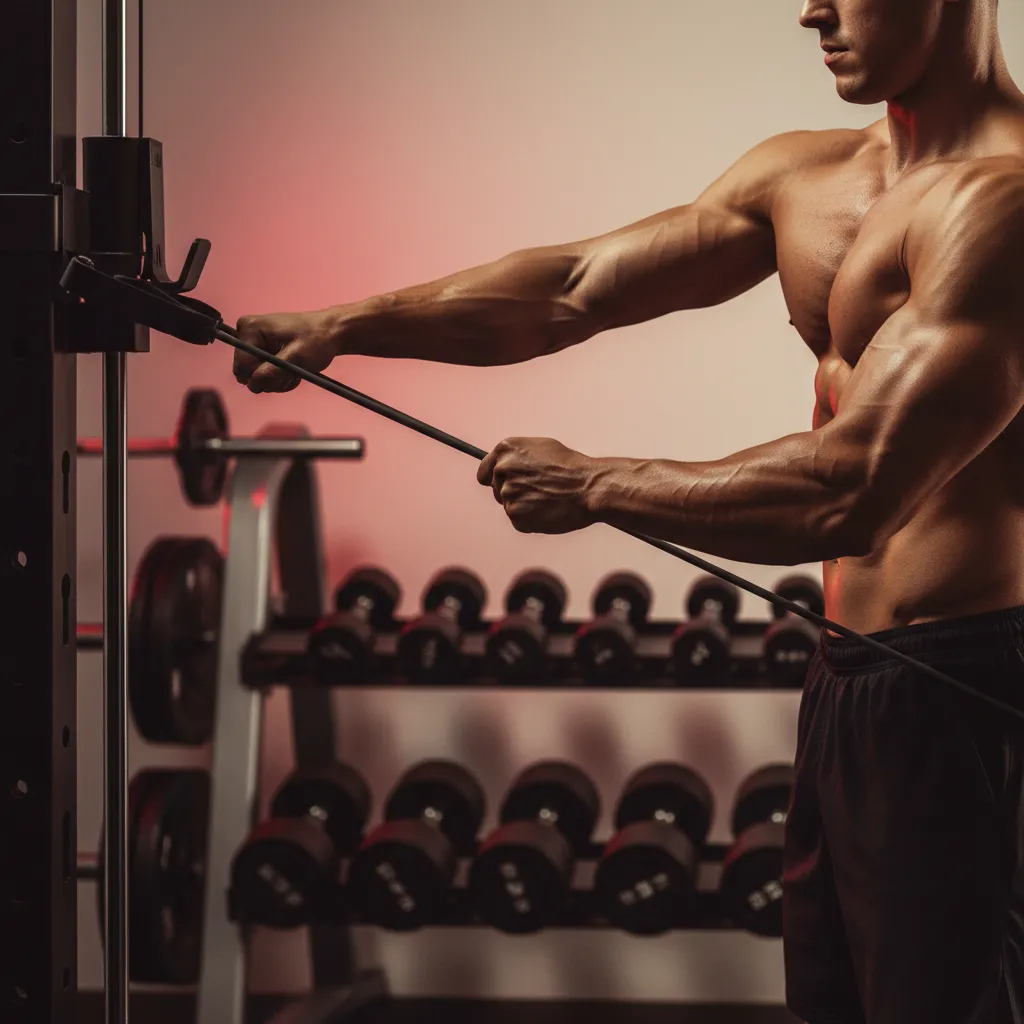
The rotator cuff is a key group of four muscles that stabilize the shoulder joint. Understanding these muscles and their proper care is essential for preventing common injuries and maintaining shoulder functionality, especially for athletes.
Rotator cuff is an anatomical term that describes a group of four muscles and their tendons, surrounding the shoulder joint, providing it with stability, rotation, and elevation. This muscle group is critically important for normal shoulder function and is often subject to injuries, especially in strength athletes and people performing repetitive overhead movements.
Anatomy of the Rotator Cuff: The Four Musketeers of the Shoulder
💬 Simply put: The rotator cuff is a group of four muscles and their tendons that surround the shoulder joint, providing it with stability and allowing movements such as lifting and rotating the arm.
The rotator cuff consists of the following four muscles, each playing a specific role in the movement and stabilization of the shoulder joint:
- Musculus Supraspinatus: Located in the upper part of the shoulder blade. Its main function is to initiate abduction (lifting the arm to the side) and stabilize the head of the humerus in the glenoid cavity. It is often the first of the rotator cuff muscles to be injured.
- Musculus Infraspinatus: Located below the supraspinatus, on the posterior surface of the shoulder blade. It is primarily responsible for external rotation of the shoulder (rotating the arm outwards).
- Musculus Teres Minor: Located below the infraspinatus, also on the posterior surface of the shoulder blade. It works together with the infraspinatus for external rotation and adduction (bringing the arm towards the body).
- Musculus Subscapularis: The only muscle of the rotator cuff located on the anterior side of the shoulder blade. Its main function is internal rotation of the shoulder (rotating the arm inwards) and adduction.
Functions and Importance for Strength Training
In addition to enabling various shoulder movements, the rotator cuff muscles play a key role in centering the head of the humerus in the glenoid cavity during dynamic movements. This ensures optimal mechanics and prevents excessive displacement or friction that can lead to injuries. In strength training, especially in exercises like overhead press, bench press, and rows, the strength and stability of the rotator cuff are essential for safe and effective execution.
Common Injuries and Risk Factors
The shoulder joint is the most mobile in the human body, making it more susceptible to injuries. Rotator cuff injuries are among the most common shoulder problems. They can range from inflammation (tendinitis) to partial or complete tears of one or more tendons.
Major risk factors include:
- Overuse: Repetitive movements, especially overhead (e.g., in swimming, tennis, throwing).
- Trauma: A sudden fall on an outstretched arm or a direct blow.
- Reduced Blood Circulation: As age progresses, blood supply to the tendons can decrease, reducing their ability to repair.
- Poor Technique: Incorrect execution of weight exercises, placing excessive stress on the shoulder joint.
- Muscle Imbalance: Weakness in the rotator cuff muscles compared to the larger shoulder muscles (deltoids, chest muscles).
Prevention and Strengthening: Key Exercises
Regular inclusion of specific rotator cuff exercises is essential for preventing injuries and improving overall shoulder function. Focus on exercises that strengthen the muscles for external and internal rotation, as well as stabilization.
| Exercise | Description and Focus | Recommended Range |
|---|---|---|
| Face Pulls | Strengthens the upper back and external shoulder rotators, improving posture and stability. | 3-4 sets x 12-20 repetitions |
| External Rotations (with band or dumbbell) | Isolates and strengthens the infraspinatus and teres minor, vital for external rotation. | 3 sets x 15-20 repetitions per arm |
| Internal Rotations (with band or dumbbell) | Strengthens the subscapularis, balancing the strength of the rotator cuff. | 3 sets x 15-20 repetitions per arm |
| Sleeper Stretch | Improves internal rotation, often limited in athletes. Not a strength exercise, but a stretching one. | 30-60 second hold |
Progression and Training Volume
For rotator cuff exercises, the quality of movement and control are more important than the weight used. Start with light weights or low resistance and gradually increase as you feel you can maintain perfect form. A higher number of repetitions (12-20) with moderate volume (2-3 times per week) is usually optimal for prevention and rehabilitation. Studies by leading experts in strength training, such as Brad Schoenfeld, emphasize the importance of balanced training of muscle groups for long-term joint health.
- Significantly reduces the risk of shoulder injuries.
- Improves shoulder joint stability and strength.
- Allows for safer and more effective execution of fundamental exercises.
- Contributes to better posture and skeletal mechanics.
- Speeds up recovery after shoulder injuries.
- Excessive weight can lead to injury.
- Poor technique in specific exercises is counterproductive.
- Lack of sufficient attention can lead to muscle imbalance.
- With an existing injury, the wrong approach can worsen the condition.
- May take more time than "fun" exercises in the gym.
When to Seek Help?
If you experience persistent shoulder pain, limited range of motion, or a feeling of weakness, it is important to consult a doctor or physical therapist. Early diagnosis and adequate treatment are key to successful recovery and prevention of more serious complications. Self-treatment without professional advice can lead to the chronification of the problem.
See more in the fitness guides of Sport Zona Academy.
📚 Scientific Sources
🔬 Expert Note from Sport Zona
In my work with athletes in fitness and strength sports, I often see neglect of the rotator cuff. The lack of targeted work for the strength and stability of these muscles is the number one reason for chronic shoulder pain and injuries. Incorporating specific exercises, even with light weights, significantly changes performance and longevity in sports.
See more in the fitness guides of Sport Zona Academy.
Recommended products
Frequently asked questions
How often should I train my rotator cuff?
It is recommended to include it 2-3 times a week. It can be done as a warm-up before main upper body workouts or as a separate routine.
Should I use heavy weights for the rotator cuff?
No, the focus should be on light weights and precise control of movement. The goal is conditioning and stabilization, not maximum strength. Higher repetitions (12-20) are more appropriate.
What are Face Pulls and why are they important?
Face Pulls is an exercise performed with a cable and pulley. It targets the muscles of the upper back and the external rotators of the shoulder, improving posture and preventing imbalances often caused by overtraining the chest and front deltoids.
Can I train my rotator cuff if I have pain?
If you are experiencing pain, it is important to consult a doctor or physical therapist first. It may be necessary to adapt exercises or temporarily stop certain movements, but in many cases, controlled rehabilitation exercises are part of the recovery process.