RPE (Rate of Perceived Exertion) — Scale and Application
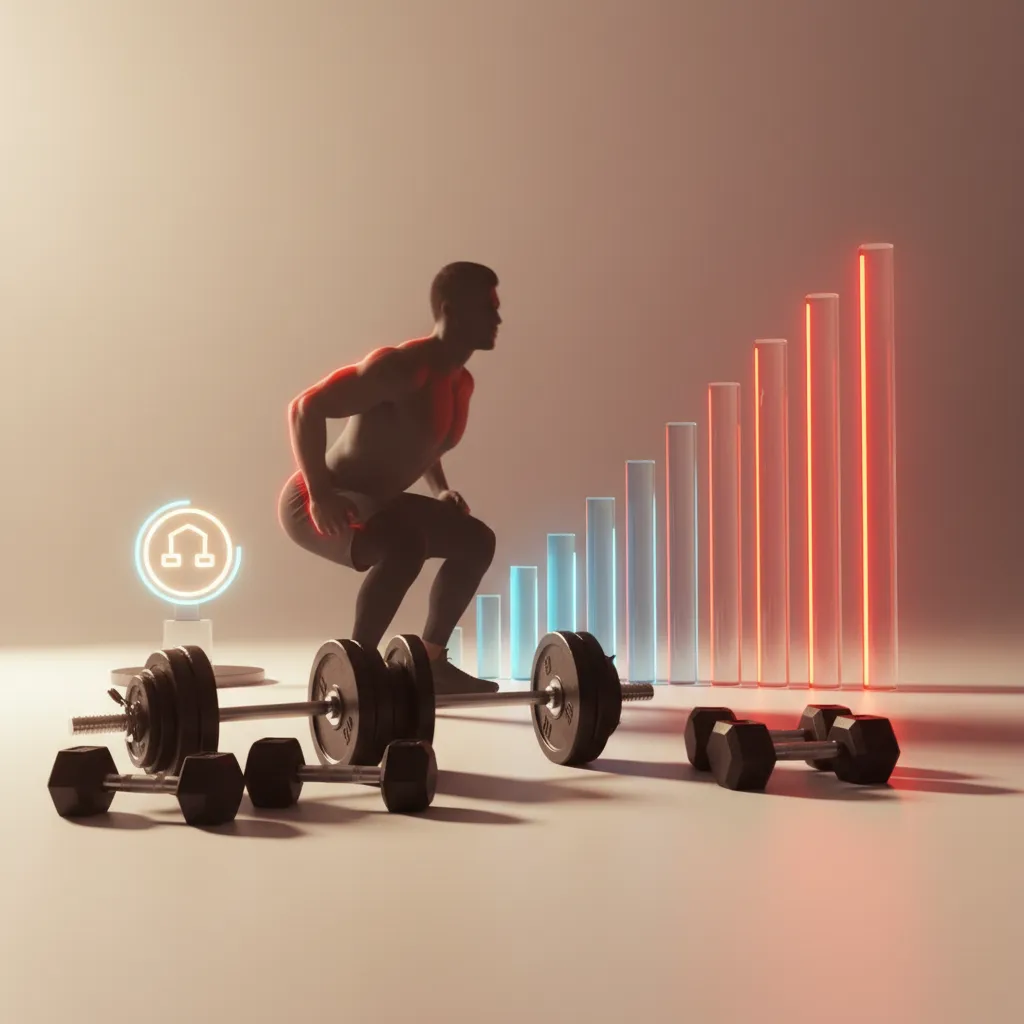
Borg Scale and Modified RPE 1–10, how it is used in powerlifting and fitness
RPE (Rate of Perceived Exertion) is a subjective scale for measuring the intensity of physical exertion, which assesses how hard you feel the effort is at a given moment.
📌 3 Key Takeaways
- RPE allows for self-regulation – adapting weights according to your current state, which prevents overtraining and injuries.
- The modified scale (1-10) is directly related to "reps in reserve" (RIR), where RPE 8 means you have 2 more reps "in reserve".
- Accurate use of RPE requires practice and honesty, with recording videos of your sets helping you calibrate your perception with actual performance.
What Exactly is RPE?
💬 Simply put: RPE is a scale that helps you assess how difficult a given exercise is for you at the moment, so you can train smarter.
The term RPE (Rate of Perceived Exertion) was introduced in the 1960s by Swedish scientist Gunnar Borg. His original scale, known as the Borg scale, ranges from 6 to 20. The idea is that when you multiply the number from the scale by 10, you get an approximate heart rate during exertion (e.g., RPE 13 ≈ 130 beats per minute). This scale is still used in cardiac rehabilitation and scientific research for aerobic endurance.
However, in the world of strength training, powerlifting, and modern fitness, a modified RPE scale from 1 to 10 has become popular, popularized by coach Mike Tuchscherer. This scale is much more intuitive and is directly linked to the concept of "Reps in Reserve" (RIR). The formula is simple:
10 – RPE = RIR
This means that if you rate a set as RPE 8, you should have the strength for exactly 2 more repetitions before reaching complete muscular failure. RPE 9 means 1 rep in reserve, and RPE 10 is maximum effort to failure. This system transforms subjective feeling into a practical tool for managing intensity.
🔬 From Practice
I worked with a powerlifter who had been stuck on his deadlift for months, following a strict program based on percentages of his 1RM (one-rep max). On "bad" days, when he was tired or sleep-deprived, he couldn't hit the prescribed weights, leading to frustration and risk of injury. When we switched his program to one based on RPE, things changed. Instead of "5 reps at 80%", the task became "5 reps @ RPE 8". On good days, this meant 190 kg, on bad days - 175 kg. This flexibility allowed him to accumulate quality volume without "burning out" and within 3 months, he improved his 1RM by 10 kg.
How it Works in Practice
Applying RPE allows for so-called self-regulation of training. Instead of blindly following fixed weights, you adapt them based on how you feel on a given day. Two scenarios:
Scenario 1: Powerlifter with a squat program of 4 sets of 3 reps @ RPE 8.
- Warm-up: The lifter warms up progressively: 60 kg x5, 100 kg x3, 130 kg x1. The last warm-up set at 130 kg feels like RPE 6. This gives him an idea of his daily form.
- First working set: He loads 160 kg for 3 reps. The feeling is RPE 7 (he had strength for 3 more reps).
- Second working set: He increases the weight to 167.5 kg for 3 reps. This set feels like a perfect RPE 8 (exactly 2 reps in reserve). This is his top set for the day.
- Third and fourth sets: Due to accumulated fatigue, he stays at 167.5 kg. The third set feels like RPE 8.5, and the fourth already like RPE 9. He stops there, adhering to the prescription and avoiding the risk of technical failure.
Scenario 2: Fitness enthusiast with a leg press program of 3 sets of 10 reps @ RPE 7-8.
The goal here is hypertrophy, which requires working close to failure, but not necessarily to it. The trainee chooses a weight of 100 kg. He performs 10 reps and feels he could do 4-5 more. This is RPE 5-6, too light. In the next set, he increases the weight to 120 kg. He does 10 reps and feels he has 2 reps left. This is RPE 8 – perfectly within the prescribed range.
| Characteristic | Modified RPE Scale (1-10) | Original Borg Scale (6-20) |
|---|---|---|
| Primary Application | Strength training, powerlifting | Cardio, endurance, clinical setting |
| Key Indicator | Reps in Reserve (RIR) | Approximate Heart Rate (HR x 10) |
| Failure Scale | RPE 10 = Maximum Effort (0 RIR) | RPE 20 = Maximum Effort |
| Most Common Use | Programming strength intensity | Monitoring aerobic load |
When and How to Use It
RPE is most valuable for heavy, compound exercises like squats, deadlifts, bench presses, and overhead presses. For these, technical execution is key, and reaching complete failure often leads to poor form and increased risk of injury. RPE helps to stop the set at the right moment – when the stimulus is sufficient, but fatigue has not yet compromised safety.
To start using RPE effectively:
- Be Honest: Ego is the biggest enemy of RPE. Don't try to cheat the scale. Rate your effort as objectively as possible.
- Record Yourself: Film the last few reps of your heavy sets with your phone. Then, compare how you *felt* with how the bar speed *looked*. A slow, grinding rep is rarely RPE 7.
- Keep a Log: Record the RPE for each working set (e.g., "Squat: 140 kg x 5 @ RPE 8"). This creates a database that helps you track progress and calibrate yourself better over time.
- Use it for Self-Regulation: If your program says "set @ RPE 8", but the weight from last week feels like RPE 9 today, reduce the weight to get into the correct intensity zone.
⚠️ Common Mistakes
- Misunderstanding RIR: The most common mistake is inaccurately estimating "reps in reserve". Many beginners rate a set as RPE 8, but would fail if they attempted one more rep. That was actually RPE 9.5.
- Ego-Lifting: Deliberately underestimating RPE to justify using heavier weight. This completely defeats the purpose of the system.
- Confusing Pain with Effort: RPE measures effort, not pain. Sharp, joint pain is a signal to stop, regardless of RPE.
- Lack of Calibration: Not learning from your mistakes. If you consistently underestimate or overestimate RPE, you need to actively work on your calibration, for example, through video analysis.
RPE or Percentages of 1RM – Which is Better?
The best approach combines both systems. Percentages of one-rep max (1RM) are a great guide for the starting weight in a training cycle, while RPE allows for daily adaptation of that weight based on your current state.
How Long Does it Take to Learn to Assess RPE Accurately?
It takes between 4 and 8 weeks of consistent practice, logging, and self-analysis. The key is accumulating experience with different rep ranges and weights to feel what RPE 7, 8, and 9 actually mean for your body.
Can RPE Be Used for Hypertrophy, Not Just Strength?
Absolutely. For muscle hypertrophy, it's crucial to train close to failure. Using RPE 8-9 for most of your sets ensures you provide a strong enough mechanical stimulus for growth, without having to go to complete failure on every set, which is taxing on the nervous system.
See more in the fitness guides of Sport Zona Academy.
🔬 Expert Note from Sport Zona
From experience, I know that introducing RPE to athletes who have only trained with set repetitions until now requires time and patience. Initially, most underestimate or overestimate their effort, but over time they learn to feel their body better and better. This skill is invaluable for avoiding overtraining and maximizing results.
See more in the fitness guides of Sport Zona Academy.
Recommended products
Frequently asked questions
What is RPE and what is it used for?
RPE (Rate of Perceived Exertion) is a subjective scale that measures how hard you feel the physical effort during training. It is most commonly used in strength training and powerlifting to adjust weights according to your current state.
What is the difference between the original Borg scale and the modified RPE scale (1-10)?
The original Borg scale ranges from 6 to 20 and is associated with approximate heart rate, primarily used in cardio and rehabilitation. The modified scale from 1 to 10 is more intuitive for strength training and directly linked to "reps in reserve" (RIR).
How does the modified RPE scale (1-10) relate to "reps in reserve" (RIR)?
The modified RPE scale (1-10) is directly related to RIR through the formula: RIR = 10 - RPE. For example, an RPE of 8 means you have 2 more repetitions in reserve before complete failure.
How can RPE help avoid overtraining and injuries?
By allowing self-regulation, RPE enables you to adjust weights according to your physical condition on a given day. This prevents overtraining and reduces the risk of injuries, as you are not blindly following fixed weights.