Swedish wall for home — installation, dimensions, exercises
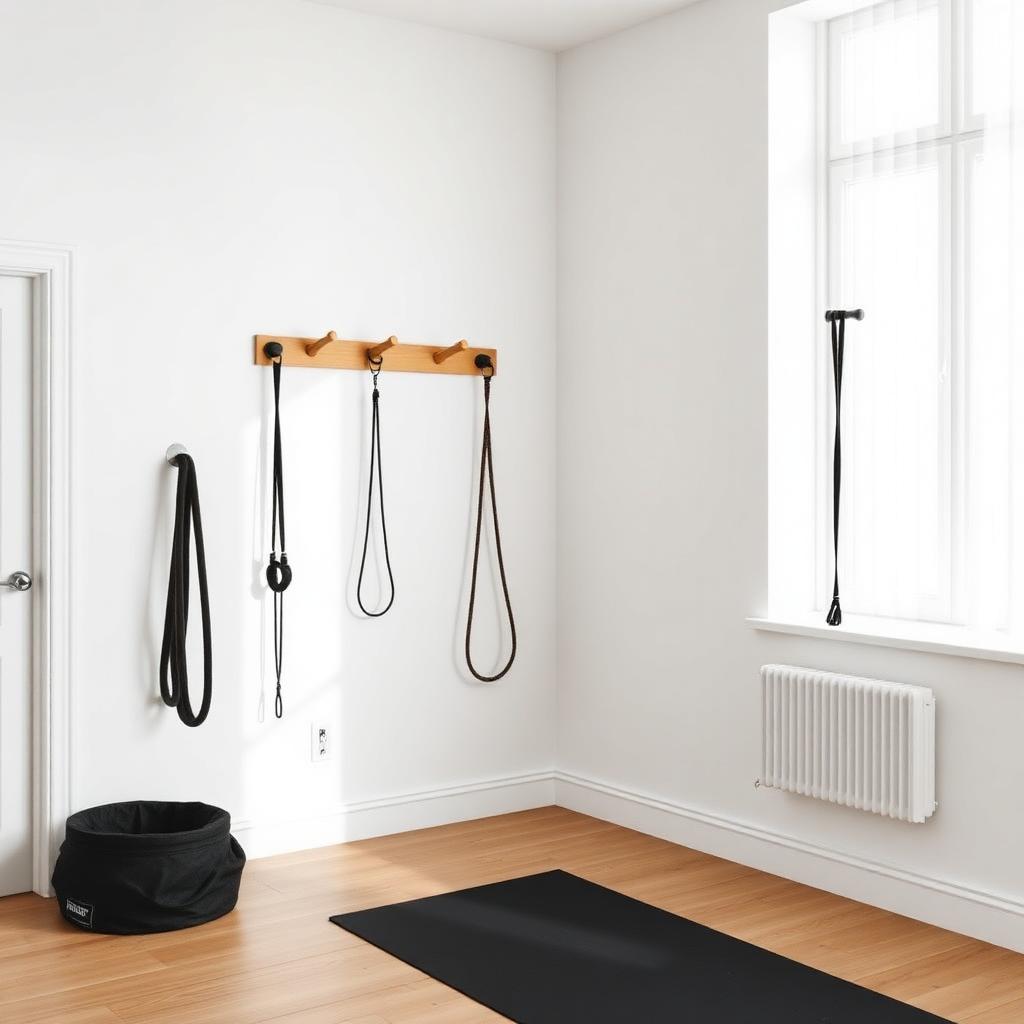
The Swedish wall is a versatile home appliance—it occupies 1 m² of wall space, can support people up to 150 kg, and allows for over 50 exercises. Beech wood models are the most durable and quiet. Metal ones are cheaper but noisy. Installation is to a load-bearing wall using chemical anchors.
Short answer: Wooden beech 230 cm high, 80 cm wide. Installation — chemical anchors in a load-bearing wall. Accessories: pull-up bar, gladiator, parallel bars, leg strap. Load up to 150 kg.
Why choose a Swedish wall for home?
The Swedish wall is the most multifunctional piece of equipment for small homes, providing a full range of exercises for the whole family in a minimal space.
The Swedish wall is the most multifunctional piece of equipment for small apartments. With 1 m² of wall space, you get: a pull-up bar, parallel bars, abdominal machine, leg straps, stretching bridge, TRX anchor point. Suitable for children, adults, and serious athletes.
What are the materials: wood or metal?
Wooden (beech)
- Warm and pleasant to the touch, not slippery with sweaty hands
- Quiet — no metallic ringing during exercises
- Aesthetic — fits into home interiors
- Load capacity: 120–150 kg (professional models up to 200 kg)
- Price: €250–€600
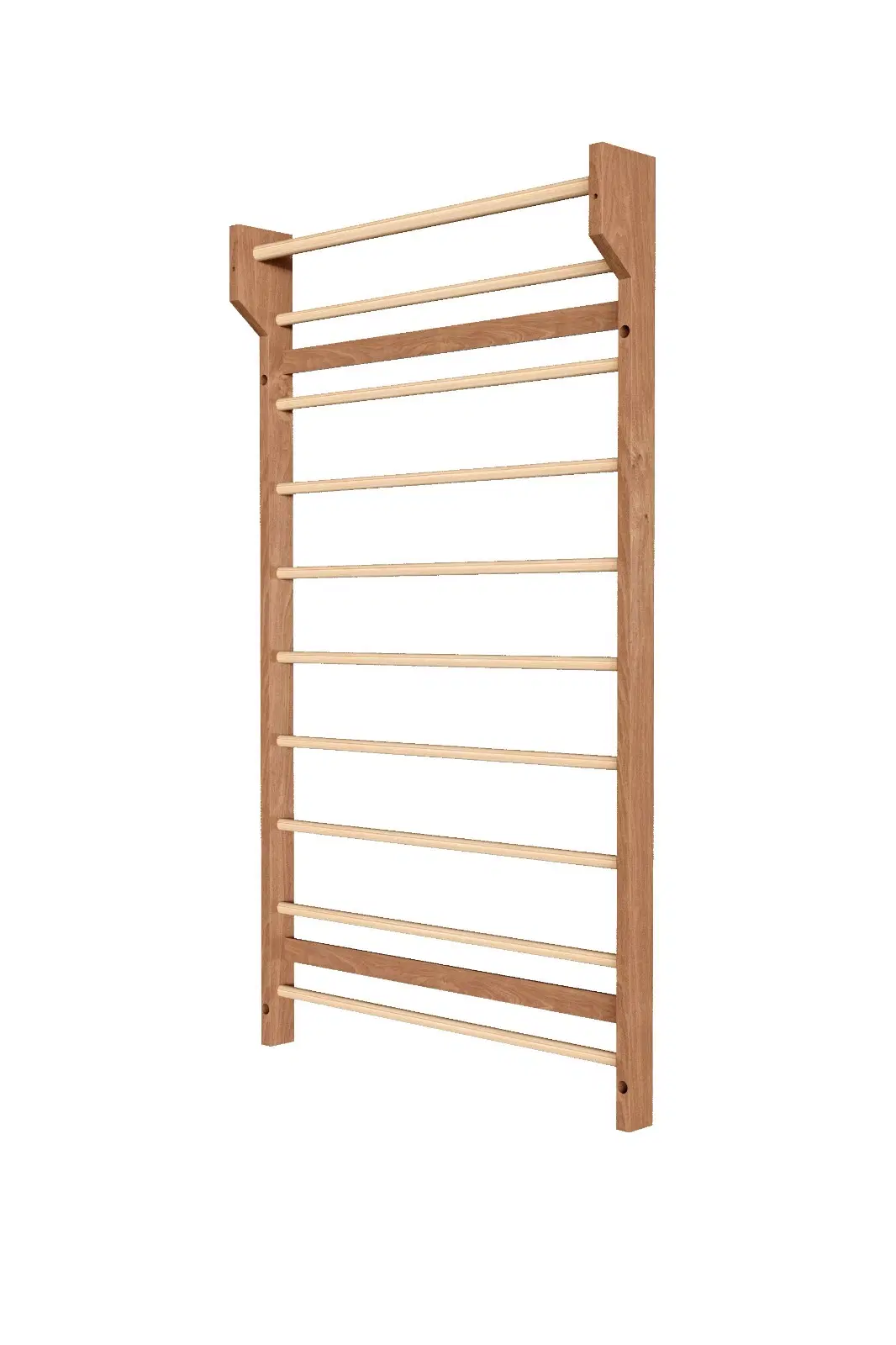
A Swedish wall can be made of wood or metal, with the choice largely depending on preferences for aesthetics and durability, as well as the intended use, such as home, fitness studio, or rehabilitation. See Swedish walls.
Metal
- Cheaper (from €150)
- Noisy — resonates during movement
- Slippery when sweaty
- Cold to the touch — requires gloves in winter
- Load capacity: up to 200 kg
Suitable for: garages, outdoor spaces, budget solutions.
What dimensions should I choose?
The standard height of a Swedish wall is a minimum of 230 cm, with 220 cm recommended for children, and 260 cm for high ceilings. The width is a standard 80 cm, but for two people it can reach 100–120 cm, while the distance from the wall is 15–20 cm.
- Height: minimum 230 cm (standard); for children — 220 cm; for high ceilings — 260 cm
- Width: 80 cm (standard); for two people simultaneously — 100–120 cm
- Depth: 15–20 cm from the wall
- Distance between rungs: 13–15 cm (standard for climbing)
- Rung diameter: 28–32 mm for adults, 22–25 mm for children
What accessories are needed for a Swedish wall?
Swedish wall accessories are additional attachments that expand training possibilities and improve the functionality of the equipment.
Standard (often included)
- Pull-up bar — at the top, with multiple grips
- Gladiator (chin-up bar with grips) — for dips and pull-ups
Additional
- Parallel bars (dip bars) — for triceps and chest
- Leg strap — for inverted squats and stretching
- Bench with hooks — turns the wall into a complete fitness unit
- Side pulleys — for leg raises
How is a Swedish wall installed?
Installing a Swedish wall requires a load-bearing wall made of brick, concrete, or aerated concrete with metal anchors for aerated concrete (chemical anchors for concrete/brick – M10x100 mm minimum), with the top rung at least 220 cm from the floor; leveling and a double-weight test before use are mandatory.
- Load-bearing wall — only brick, concrete, or aerated concrete with metal anchors for aerated concrete. Never on drywall!
- Chemical anchors for concrete/brick — M10×100 mm minimum. Dowels do not hold under heavy loads.
- Installation height — the top rung at least 220 cm from the floor (for clean pull-ups).
- Leveling — mandatory, otherwise the rungs will wobble during pull-ups.
- Double-weight test — before the first workout, test with 2x the load (two people hanging).
What exercises can I do with a Swedish wall?
A variety of exercises can be performed with a Swedish wall, such as pull-ups (wide, normal, and reverse grip), hanging leg raises (Hanging leg raises and Knee raises for an easier version), dips on the parallel bars for triceps and chest, and inverted rows with low attachment.
- Pull-ups — wide, normal, and reverse grip
- Hanging leg raises — leg raises for abs
- Knee raises — easy version for beginners
- Dips on the parallel bars — for triceps and lower chest
- Inverted rows — rowing with low attachment
- Stretch with strap — spinal decompression
- Bridge with feet on a rung
- L-sit hold on the parallel bars — for abs and shoulders
- Toes-to-bar — CrossFit exercise for abs
- Calisthenics flow — advanced combination
Why is proper installation so important?
- Drywall installation — the wall will fall on the first pull-up
- Dowels instead of chemical anchors — do not hold repeated loads
- Fixing with 4 points — at least 6 are mandatory, for wide models — 8
- Saving on straps and accessories — the wall itself without a bar and parallel bars offers limited exercises
🔬 Expert note from Sport Zona
Proper installation of the Swedish wall guarantees safety during exercises, with stability being key when using it at home.
Recommended products
Frequently asked questions
Can a Swedish wall be mounted on drywall?
No. Drywall cannot withstand repeated pull-up loads. Installation must be on a load-bearing wall of brick, concrete, or aerated concrete using chemical anchors.
What height Swedish wall for home?
A minimum of 230 cm for clean pull-ups for an adult. For children - 220 cm. For ceilings over 260 cm - I recommend the 260 cm model with an additional bar at the top.
How much weight can a Swedish wall withstand?
Quality wooden wall made of beech - 120–150 kg. Professional models - up to 200 kg. Metal - usually 150–200 kg. Always check the passport data.
Wooden or metal?
For home, always wooden (beech) - quieter, more aesthetic, not slippery. Metal - only for garages and open spaces where noise is not an issue.