Supersets and giant sets — advanced techniques
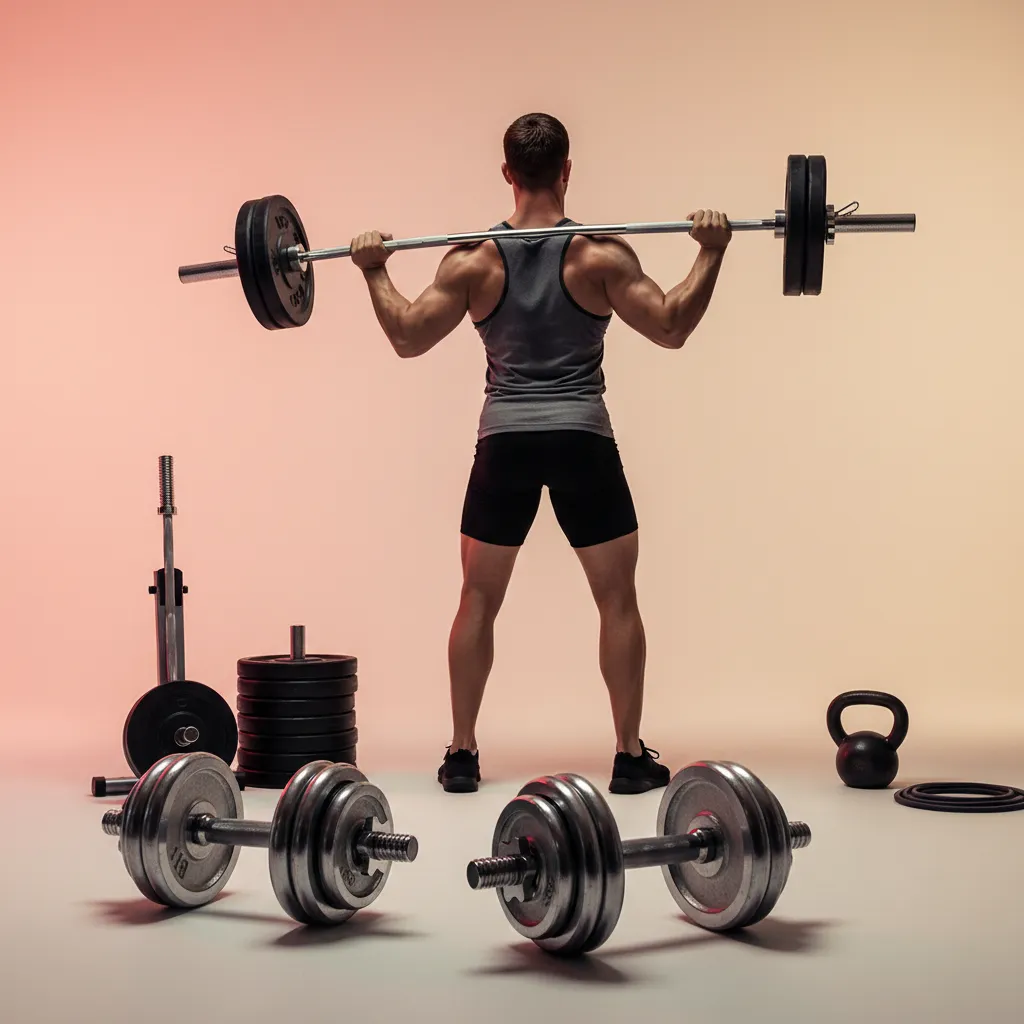
antagonist supersets, giant sets for density, time-efficiency
Supersets and giant sets are advanced training methods where two or more exercises are performed consecutively with minimal or no rest between them for greater efficiency and intensity.
📌 3 Key Takeaways
- Supersets (2 exercises) and giant sets (3+ exercises) drastically reduce workout time while increasing its density (work volume per unit of time).
- Antagonist supersets (e.g., chest-back, biceps-triceps) are extremely effective because they allow one muscle group to recover while the opposing one works.
- Giant sets are best suited for smaller muscle groups or as a "finisher" at the end of a workout for maximum metabolic stress and pump, but not for compound strength movements.
What Exactly Are Supersets and Giant Sets?
💬 Simply Put: Supersets and giant sets are a way to train more intensely by doing several exercises right after one another without rest.
- Antagonist Superset: Exercises for opposing muscle groups (antagonists) are combined. Classic examples are a push and pull movement (bench press + row) or a flexion and extension (bicep curl + triceps extension). This is the most popular and often the most effective type.
- Agonist Superset: Two exercises for the same muscle group are combined (e.g., barbell squat followed by leg press). This variation is extremely taxing and leads to immense local fatigue and metabolic stress.
- Unrelated Superset: Exercises for completely different body parts are combined, for example, shoulder press and calf raises. The goal here is almost entirely time-saving.
How Does It Work in Practice?
These methods primarily work by increasing training density – the amount of work done in a given period. Instead of doing 8 sets (4 for chest and 4 for back) in 25-30 minutes, with an antagonist superset, you can complete them in 15-18 minutes while keeping your heart rate high and burning more calories. Example of an Antagonist Superset (Chest and Back):- A1: Dumbbell Bench Press: 10 reps with 30 kg per arm.
- Rest: 10 seconds
- A2: Dumbbell Row (Renegade Row): 10 reps per side with 30 kg.
- Rest: 90-120 seconds after completing A2.
- A1: Barbell Bicep Curl: 8 reps with 40 kg.
- Rest: 10-15 seconds
- A2: Dumbbell Preacher Curl: 10 reps per arm with 12 kg.
- Rest: 10-15 seconds
- A3: Cable Rope Hammer Curl: 12-15 reps to failure.
- Rest: 120 seconds after completing A3.
🔬 From Practice
I've worked with many busy clients in leadership positions who only have 45 minutes for a workout. With one of them, switching from standard sets to antagonist supersets (chest/back, quads/hamstrings) allowed us to maintain almost the same training volume but shorten the session from 70 to 45 minutes. Initially, his strength performance slightly decreased (about 5-10% on major lifts), but after 3-4 weeks of adaptation, strength levels recovered, and his muscular endurance and conditioning improved noticeably.
When and How to Use Them?
Supersets and giant sets are not for everyone and not for every situation. They are a tool in the arsenal of intermediate and advanced athletes. Use them when:- Time is limited: This is their main advantage. If you only have 45-60 minutes, they are the best way to get a lot of work done.
- You want to increase intensity: They are a great way to "shock" the muscles and break through training plateaus.
- The goal is hypertrophy and conditioning: High volume and short rest periods create strong metabolic stress, which is a key factor for muscle growth and improving work capacity.
- As a "finisher": One giant set at the end of a workout for a specific muscle group can lead to an incredible pump and stimulate additional growth.
- Do not apply them to heavy, compound movements: Doing a superset of heavy squats and deadlifts is a recipe for disaster. Technique breaks down, and the risk of injury is huge. Save them for assistance or isolation exercises.
- Plan the logistics: Choose exercises that are close to each other in the gym. If you have to run from one end of the gym to the other, you lose all the intensity, and the idea becomes pointless.
- Reduce the weights: You cannot use the same weights as with standard sets with long rest. Reduce the working weight by about 20-30% initially and focus on good form.
Comparison of Training Methods
| Method | Primary Goal | Intensity (Stimulus) | Workout Time |
|---|---|---|---|
| Standard Sets | Maximal strength, mechanical tension | High (from weight) | Long |
| Supersets | Efficiency, moderate metabolic stress | Medium to high (from density) | Medium |
| Giant Sets | Maximum density, high metabolic stress | Very high (from volume and density) | Short |
Common Mistakes and Misconceptions
The biggest misconception is that supersets are better for muscle growth than standard sets. The truth is they are a *different* stimulus. The mechanical tension from heavy standard sets is indispensable for strength and hypertrophy. Supersets and giant sets add to this through metabolic stress and increased volume. The best program often combines both approaches.⚠️ Common Mistakes
- Excessive fatigue and poor form: Forcing the last reps with bad technique just to finish the set. Always stop when form breaks down. Better fewer reps with good technique than more with bad.
- Lack of rest BETWEEN supersets: Rest between exercises within a set should be minimal, but rest after completing the entire super/giant set should be adequate (90-180 seconds) to maintain good performance in the next round.
- Using them all the time: Applying these methods in every workout, for every exercise, is a sure path to overtraining, especially if you are not recovering optimally (sleep, nutrition). Use them strategically for 4-6 week cycles.
Are supersets suitable for beginners?
Absolutely not. Beginners should focus on mastering the correct technique for compound exercises and building a strength foundation with standard sets. Supersets require good body control under fatigue, which beginners lack.
Can I do supersets for legs?
Yes, but with extreme caution. Combinations like squats and lunges are very taxing on the central nervous system and cardiovascular system. A safer and often more effective option is an antagonist superset like leg extensions (quadriceps) and leg curls (hamstrings).
Are supersets better for burning fat?
They burn more calories per unit of time compared to standard sets because they keep your heart rate elevated and reduce rest time. This makes them a useful tool during a calorie deficit, but the primary driver for fat loss will always be diet.
See more in the fitness guides of Sport Zona Academy.
🔬 Expert Note from Sport Zona
When combining exercises for supersets or giant sets with exercises for different muscle groups, it's more important to consider the ability to maintain technique rather than getting too fixated on "correct" antagonists or synergists. There is a huge field for experimentation.
See more in the fitness guides of Sport Zona Academy.
Recommended products
Frequently asked questions
What is the main benefit of supersets and giant sets?
The main benefit is increased training density, meaning performing more work in less time. This makes workouts more efficient and time-effective.
When would giant sets be most appropriate?
Giant sets are best suited for smaller muscle groups or as finishers at the end of a workout. Their goal is maximum metabolic stress and pump, not for primary strength movements.
What is the difference between antagonistic and agonistic supersets?
Antagonistic supersets combine exercises for opposing muscle groups (e.g., chest and back), while agonistic supersets combine exercises for the same muscle group (e.g., two types of leg exercises).
Can beginner athletes use these techniques?
These techniques are considered advanced and require good physical conditioning. It is recommended that beginners start with classic training methods before moving on to supersets and giant sets.