Martial arts mats — EVA, IXPE, or Judo
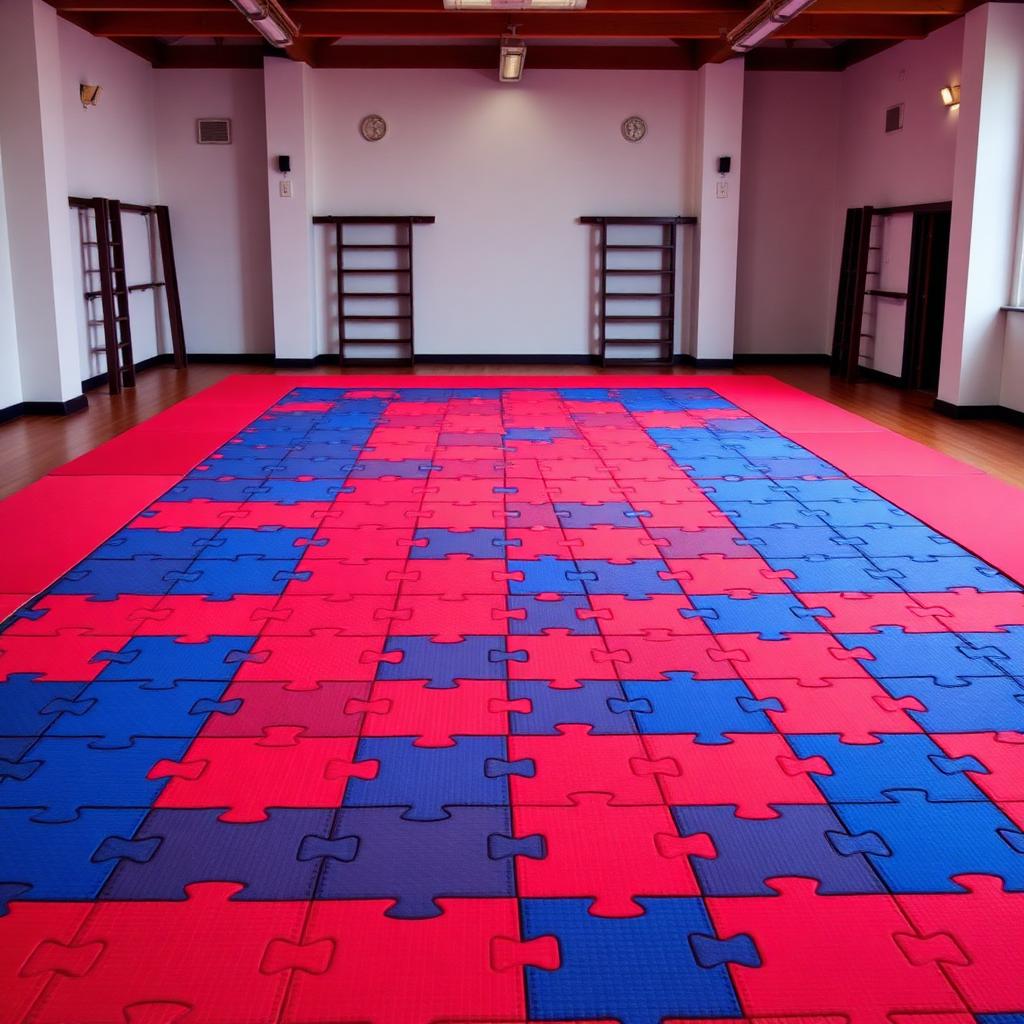
EVA tatami mats (20–40 mm) are the most versatile – for karate, kickboxing, MMA, children's sections. IXPE tatami mats are denser, do not absorb sweat, ideal for BJJ and MMA. Judo tatami mats (40 mm, 180 kg/m³) are the densest, for throws and serious falls.
Short answer: Karate/Kickboxing: EVA 25–30 mm. Children's section: EVA 20–25 mm. BJJ/MMA: IXPE 30–40 mm. Judo/Sambo: special 40 mm high density.
Complete Guide to Choosing Tatami for Martial Arts and Fitness Halls
Choosing the right tatami is one of the most important investments for any martial arts hall or even for your home training corner. The right flooring not only provides comfort but is a key factor for the safety of trainees, protecting them from injuries during falls, and directly influences the technique and dynamics of the sport. In this expert guide, we will delve into everything you need to know – from materials and their applications to maintenance and the specific requirements of different martial arts styles.
What are the Different Types of Tatami by Material?
The types of tatami by material are of particular importance for the safety of trainees and the effectiveness of training, as different types are suitable for different martial arts.
At the core of every tatami is the material it is made from. It determines key characteristics such as density, weight, impact absorption, durability, and price. Let's look at the three main types that dominate the market.
EVA (Ethylene Vinyl Acetate)
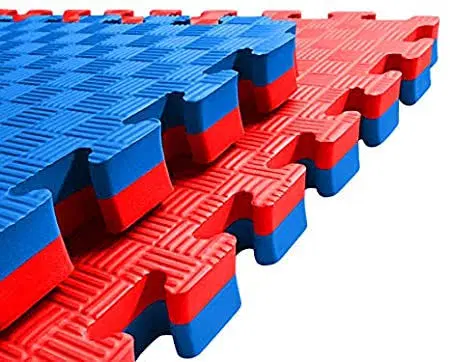
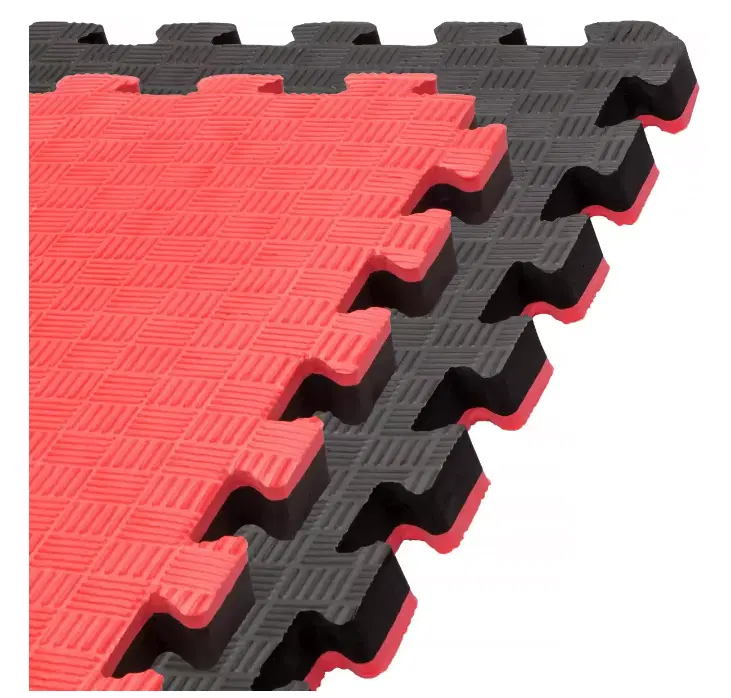
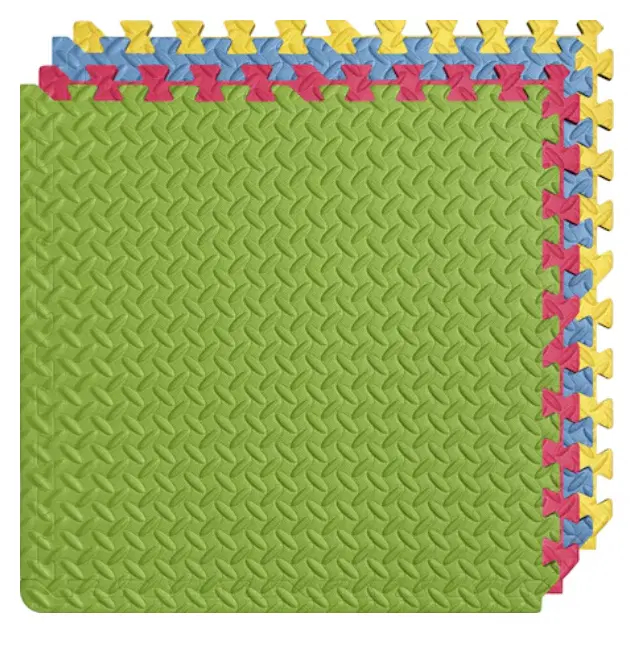
A lightweight, soft foamed material. This is the most common and affordable option, often called "puzzle tatami" due to its characteristic interlocking edge design. EVA is a blend of ethylene and vinyl acetate, which gives it flexibility and good cushioning properties. Colored mats, puzzle-style or with straight edges, make it a popular choice for children's play areas, beginner gyms, and sports without intense throws.
- Density: 80–120 kg/m³
- Thickness: 20, 25, 30, 40 mm
- Surface: Tatami-finish (imitating rice straw matting, providing better grip) or smooth.
- Advantages: Low cost, lightweight, easy installation and disassembly, variety of colors.
- Disadvantages: Lower durability, can absorb moisture and odors over time, not suitable for heavy falls.
- Price: 25–60 €/m² depending on thickness and density.
IXPE (Cross-linked Polyethylene)
IXPE, or cross-linked polyethylene, represents a step up in quality and durability. This material has a closed-cell structure, making it completely waterproof – it does not absorb sweat, water, or cleaning agents. This makes it extremely hygienic and easy to maintain. Denser and more durable than EVA, it is recommended for professional gyms with active grappling and MMA training, where sweating is intense.
- Density: 130–200 kg/m³
- Thickness: 30, 40, 50 mm
- Advantages: Excellent shock absorption, high durability, 100% waterproof, hygienic, long lifespan.
- Disadvantages: Higher price than EVA.
- Price: 60–120 €/m²
Judo Tatami (Specialized)
This is the pinnacle in the hierarchy of sports flooring, designed for disciplines with high and powerful throws like judo, sambo, and aikido. It is a composite structure: a core of agglomerated polyurethane foam or very high-density EVA, covered with durable, non-slip vinyl with a "tatami" texture. The base is rubberized and textured (anti-slip) to prevent any sliding on the floor. The standard size is 2×1 m or 1×1 m.
- Density: 180–240 kg/m³
- Thickness: 40, 50 mm (40 mm is the standard for most competitions)
- Weight: 12–22 kg/mat (for 2x1m size)
- Advantages: Maximum safety and shock absorption, exceptional stability, long-lasting (often over 15 years), easy-to-clean vinyl surface, meets international federation standards (IJF Approved).
- Disadvantages: High price, heavy weight, difficult installation and moving.
- Price: 90–200 €/m²
What is Key When Comparing Materials?
The comparative table of materials is a summary of the key differences between them, presented in a detailed and structured manner.
| Criterion | EVA (Puzzle) | IXPE | Professional Judo Tatami |
|---|---|---|---|
| Impact Absorption | Good (for light falls) | Excellent (for medium to heavy falls) | Maximum (for high throws) |
| Durability / Lifespan | Low to medium (2-5 years) | High (5-10 years) | Very high (10-20+ years) |
| Hygiene (Water Resistance) | Porous structure, can absorb moisture | Waterproof (closed cells), very hygienic | Vinyl surface, completely waterproof and easy to disinfect |
| Surface Stability | Medium (puzzle connections can shift) | Good to excellent (depending on installation) | Excellent (heavy mats with anti-slip base) |
| Suitable for | Karate, Taekwondo, Kickboxing (for beginners), children's groups, home use | BJJ, MMA, Grappling, Wrestling, professional gyms | Judo, Sambo, Aikido, Jiu-Jitsu (traditional), competitions |
| Price | Low | Medium to high | High |
Which Tatami is for Which Sport?
The appropriate type and thickness of tatami for martial arts are determined by the specific needs of the practiced sport: Karate (kumite) requires EVA 25 mm, Karate (kata) – EVA 20 mm, Kickboxing / Muay Thai – EVA or IXPE 25–30 mm, MMA – IXPE 40–50 mm, BJJ (Brazilian Jiu-Jitsu) – IXPE with tatami finish 40 mm, Judo and Sambo – Judo tatami 40–50 mm, and for Children's section (3–10 years) – EVA 20–25 mm.
| Sport | Type | Thickness |
|---|---|---|
| Karate (kumite) | EVA | 25 mm |
| Karate (kata) | EVA | 20 mm |
| Kickboxing / Muay Thai | EVA or IXPE | 25–30 mm |
| MMA | IXPE | 40–50 mm |
| BJJ (Brazilian Jiu-Jitsu) | IXPE with tatami finish | 40 mm |
| Judo | Judo tatami | 40–50 mm |
| Sambo | Judo tatami | 40–50 mm |
| Children's section (3–10 years) | EVA | 20–25 mm |
What are the Detailed Recommendations for Choosing Tatami Based on Martial Art Style?
Brazilian Jiu-Jitsu (BJJ) and Grappling
BJJ tatami needs to be soft enough to absorb takedowns but firm enough not to hinder positional changes. A 40mm IXPE tatami with "tatami finish" is the gold standard due to its excellent grip, resistance to wear, and waterproof properties.
Mixed Martial Arts (MMA)
MMA combines striking, wrestling, and ground grappling. The flooring must be versatile and extremely durable. It needs to absorb the impact of kicks and powerful takedowns. 40 mm or even 50 mm IXPE tatami is the ideal choice. It offers the necessary combination of cushioning and stability. The surface should again be smooth or have a "tatami-finish" to prevent skin abrasions during ground fighting.
Judo, Sambo, Aikido
These disciplines focus on throws (Nage-waza). Safety during falls (Ukemi) is an absolute priority. Compromises are not acceptable here. Professional judo tatami with a thickness of 40 mm or 50 mm is mandatory. Its high-density core (230-240 kg/m³) can absorb the energy of high-amplitude throws, while the firm surface provides stability for the thrower's (Tori) feet during movement. The heavy mats and their anti-slip base ensure the flooring does not shift during intense sparring (randori).
Boxing, Kickboxing, and Muay Thai
In these primarily striking sports, there are no throws. The main function of the flooring is to provide stability for footwork, prevent slips, and offer light cushioning for minor falls or ground training (stretching, crunches). EVA tatami with a thickness of 20-30 mm is perfectly adequate. A firmer surface is even advantageous as it does not impede quick movements and pivots.
Karate and Taekwondo
Here we have a distinction. For kumite (sparring), which involves dynamic movement and the risk of falls, EVA 20-25 mm is recommended. For kata (forms), where stability of stances (dachi) is crucial, a firmer tatami is needed – EVA 20 mm or even a harder surface is preferable. Overly soft tatami can compromise balance and proper form.
How to Choose Tatami for Martial Arts?
The choice of tatami depends on several key criteria. For throws and serious falls (judo, sambo), tatami with a thickness of 40-50 mm and high density (>200 kg/m³) is mandatory, while for striking sports and light falls, 20-30 mm is sufficient.
- Type of Falls — for throws and serious falls (judo, sambo) — mandatory 40-50 mm with high density (>200 kg/m³). For striking sports and light falls, 20-30 mm is sufficient.
- Sweating Intensity — IXPE does not absorb, EVA with tatami finish is easy to clean, but with heavy sweating and poor hygiene, it can start to smell over time. For BJJ and MMA, opt for IXPE.
- Age of Practitioners — softer and colored EVA tatami (25-30 mm) are suitable for children, providing protection during their frequent but less powerful falls. Adults and competitive athletes require denser and more stable flooring.
- Subfloor Base — on a hard base like concrete, opt for greater thickness (minimum 30-40 mm). On a softer base like linoleum or wooden floors, thinner tatami (20–25 mm) can be used.
- Color Zoning — competitive halls often use a central area (e.g., yellow or blue) and a safety zone around the perimeter in a contrasting color (e.g., red). This helps competitors and referees orient themselves in the space.
What is the Optimal Tatami for Home Use vs. Professional Gym?
For Your Home Fitness Corner
EVA puzzle tatami is the perfect choice for home use as it is affordable, easy to assemble and disassemble, and a thickness of 25-30 mm is sufficient for most solo workouts and light sparring.
For a Professional Martial Arts Hall
Here, the requirements are fundamentally different. The flooring is used daily by dozens of people, subjected to extreme loads, and safety is a primary concern and legal requirement. Investing in IXPE (for MMA/BJJ) or professional judo tatami (for throws) with a thickness of 40-50 mm is mandatory. It is recommended to use solid mats with straight edges (1x1m or 2x1m), which are laid tightly together and bordered with a special frame to prevent shifting. This is a long-term investment that ensures the safety of your clients, the professional image of the gym, and the durability of the flooring for a decade or more.
How to Properly Install, Care for, and Maintain Tatami?
The installation, care, and maintenance of tatami are key processes that can double their lifespan while ensuring safety and hygiene for trainees.
Installation
- Puzzle Tatami (EVA) — ideal for temporary areas up to 50 m². For larger areas, due to thermal expansion and contraction, the interlocking edges may start to separate. For permanent halls, choose mats with straight edges and a finishing border.
- Anti-Slip Base — mandatory for professional judo tatami when placed on smooth floors (tiles, laminate). For EVA and IXPE, a special anti-slip underlay can be placed beneath them.
- Acclimatization: Before installation, leave the tatami mats in the room for 24 hours to acclimatize to the temperature and humidity. This will prevent later expansion or contraction.
Cleaning and Disinfection
- Daily: Clean with a vacuum cleaner (with a soft brush) or a dust mop to remove hair, dust, and other particles.
- Weekly: Thoroughly clean with a well-wrung mop and a specialized antibacterial, pH-neutral solution for sports flooring. Avoid harsh cleaners like bleach or ammonia-based ones, as they can damage the material.
- Disinfection: Especially important for IXPE, vinyl surfaces, and "tatami finish" in close-contact sports (BJJ, MMA). Use disinfectants effective against bacteria (like staphylococcus) and fungi, but safe for skin contact.
- UV Protection: Direct sunlight is the enemy of EVA material. It dries it out, makes it brittle, and leads to cracks. Keep tatami mats away from direct sunlight or use UV-protective film on windows.
Why are Safety, Standards, and Certifications Important When Choosing Tatami?
Safety, standards, and certifications are a guarantee of quality, which is important in case of an incident, especially when choosing tatami for a public hall.
- IJF (International Judo Federation) Approved: This is the highest standard for judo tatami. It guarantees that the flooring has passed rigorous tests for impact absorption, density, and friction. Mandatory for high-level competitions.
- UWW (United World Wrestling) Approved: The equivalent standard for wrestling competitions.
- EN 12503: European standard that defines safety requirements for sports flooring, including for martial arts.
- EN 71-3 (Toy Safety): An important certificate, especially for children's tatami. It guarantees that the material does not contain harmful heavy metals and chemicals like phthalates.
- Fire Resistance Class (e.g., Bfl-s1): This European standard indicates how the material reacts to fire. For public buildings, this is often a mandatory requirement from fire safety authorities.
What are the Common Mistakes When Choosing Tatami?
20 mm EVA for judo/sambo offers absolutely insufficient cushioning, leading to serious injuries, and IXPE without "tatami finish" for BJJ presents a slippery surface when sweating, increasing the risk of injuries. Puzzle tatami in a competition hall is a mistake because its interlocking edges tear and shift.
- EVA 20 mm for Judo/Sambo: Absolutely insufficient cushioning. This is a recipe for serious injuries to the spine, neck, and joints during throws.
- IXPE without "Tatami Finish" for BJJ: The smooth surface becomes extremely slippery when sweating, which hinders movements and increases the risk of injuries.
- Puzzle Tatami for a Competition Hall: The interlocking edges are the weak point of puzzle tatami. Under heavy falls and intense use, they tear and shift, creating dangerous unevenness.
- White/Light Tatami in a Hall with Heavy Sweating: Stains from sweat, blood, and dirt become extremely visible and difficult to clean. Choose darker or patterned colors (blue, black, red, gray).
- Ignoring Maintenance: Dirty tatami is a breeding ground for bacteria and fungi that can cause skin infections. Regular disinfection is mandatory.
Why is Tatami Choice Critical for Martial Arts?
- 1. Can I use tatami for yoga or fitness?
- Yes, but with caveats. For dynamic yoga or fitness exercises, thinner and firmer EVA tatami (20mm) is suitable as it provides stability. Thick and soft grappling tatami (40mm) are not a good choice for balancing poses, as the foot "sinks" into them. They are perfect for stretching and floor exercises.
- 2. My tatami is slipping on the floor. What should I do?
- If it's EVA puzzle, you can place a special anti-slip mat underneath it, sold in flooring stores. Another option is to border the area with heavy objects or fix it to the walls with skirting boards. Professional judo tatami have a built-in anti-slip base.
- 3. Why are professional judo tatami so heavy and expensive?
- The weight comes from the extremely dense pressed foam core and the heavy rubberized base. This mass guarantees stability – the mats do not shift even during the most powerful throws. The price is justified by the complex composite structure, the high-quality materials used, the long lifespan (15+ years), and most importantly – the certified safety they provide.
- 4. What is the realistic lifespan of tatami?
- It depends on the material, intensity of use, and maintenance. With normal club use: EVA puzzle tatami lasts about 2-5 years before the interlocking edges loosen or the surface wears out. IXPE tatami has a lifespan of 5 to 10 years. Professional judo tatami is an investment for 10-20 years, sometimes more.
- 5. Can I mix different types, thicknesses, or brands of tatami?
- It is strongly not recommended. Even a small difference in thickness (e.g., 20 mm to 25 mm) creates an edge that is a serious tripping hazard and risk of injury. Different materials and densities also offer different responses to stepping and falling, disrupting the consistency of the training surface.
- 6. How to deal with unpleasant odors from the tatami?
- Odor is usually a result of bacteria feeding on sweat and organic matter that has soaked into the flooring (especially with EVA). The solution is regular cleaning with an enzymatic cleaner that breaks down organic compounds, followed by disinfection. Good ventilation of the hall is also key.
🔬 Expert Note from Sport Zona
Choosing tatami for martial arts is considered critical, as underestimating density and choosing the same type of tatami for all disciplines are among the most common mistakes that compromise the health of athletes and the long-term success of the gym.
Recommended products
Frequently asked questions
EVA or IXPE tatami for MMA?
IXPE 30–40 mm — not slippery, more durable, denser for safe parterre training and throws. EVA is acceptable only for the beginner section.
What thickness of tatami for children?
EVA 20–25 mm for children's section (3–10 years) of karate, aerobics, and general physical training. Thicker tatami mats are too soft and hinder balance.
Why are judo tatami mats so expensive?
High density (180–230 kg/m³), specialized anti-slip base, polyester cover with tatami finish, and certification for throws from 1.5+ m height.
How often should tatami mats be replaced?
EVA — 3–5 years with active use. IXPE — 5–8 years. Judo tatami — 8–12 years. Replace when visible indentations, cracks, or loss of cushioning occur.