Beef Protein vs. Citrulline: Muscle Architecture vs. Metabolic Throughput
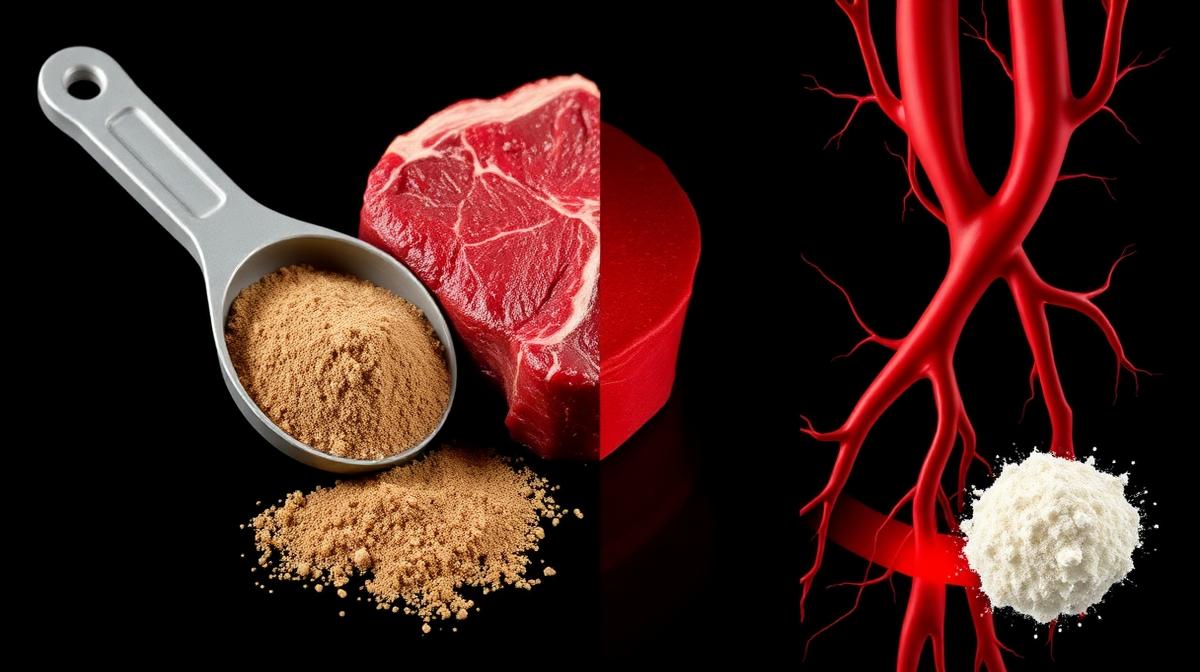
While beef protein is a fundamental resource for tissue building, citrulline is a metabolic catalyst that changes the very dynamics of training. Understanding their synergy is the difference between ordinary nutrition and precise athletic programming.
Short Answer: Beef protein builds muscle tissue with a complete amino acid profile, while citrulline increases blood flow by up to 30% through nitric oxide. Practical tip: Take 6-8g of citrulline malate 30 min before training and beef protein afterwards for maximum synergy.
This comparison pits "Structural Capacity" against "Vascular Efficiency." In the body's systemic architecture, Beef Protein provides the hardware (muscle fibers), while Citrulline optimizes the logistics (blood flow) to deliver resources to cells faster and more efficiently.
Related Reading: The Detailed Guide to Supplements — over 270 expert-verified articles by Petar Mitkov and the Sport Zona team.
What is the systemic role and mechanism of action?
Beef protein (isolate) is a supplement that delivers a complete amino acid matrix and supports structural synthesis (anabolism), while Citrulline (malate/L-Citrulline) increases Nitric Oxide (NO) levels for hemodynamics and detoxification.
| Characteristic | Beef Protein (Isolate) | Citrulline (Malate/L-Citrulline) |
|---|---|---|
| Biological Focus | Structural Synthesis (Anabolism) | Hemodynamics and Detoxification |
| Primary Mechanism | Delivery of a complete amino matrix | Increasing Nitric Oxide (NO) levels |
| Training Effect | Building strength and volume | Endurance and "pump" |
| Waste Management | Neutral | Active ammonia excretion |
| Timing of Intake | Post-workout / Throughout the day | 30-60 min. Pre-workout |
| Specific Bonus | Natural Creatine and B12 | ATP and phosphocreatine resynthesis |
What is collagen in beef protein?
1. Beef Protein: "The Biological Hardware"
Beef protein (especially isolate) is purified from collagen impurities and offers a high concentration of specific amino acids.
Simply put: This section compares how beef protein and citrulline affect the body, looking at their main functions and how they work at the cellular level, as if they were different tools with unique tasks.
Scientific Sources
- Gorissen, S. H. M., et al. (2018). "Protein content and amino acid composition of beef and plant-based protein sources used in the sports nutrition industry." Journal of Sports Sciences. (DOI: 10.1080/02640414.2018.1506502)
- Pérez-Guisado, J., & Jakeman, P. M. (2010). "Citrulline malate enhances athletic anaerobic performance and alleviates muscle soreness." Journal of Strength and Conditioning Research. (PubMed: 20386132)
- Gonzales, J. U., et al. (2017). "Does L-citrulline supplementation improve exercise performance in adults? A randomized, double-blind, placebo-controlled trial." Experimental Gerontology. (DOI: 10.1016/j.exger.2016.12.016)
We see that the combination of structural protein and a vasodilator often leads to better results. A common mistake is to rely on only one aspect – either just building material or just "pump," without optimizing both processes simultaneously.
- Nitrogen Retention: As a complete protein, it maintains a positive nitrogen balance, which is essential for muscle growth.
- Insulin Co-factor: Protein intake stimulates a mild insulin spike, which opens the "gates" of cells for amino acids.
2. Citrulline: "The Nutrient Superhighway"
Citrulline is unique in that it is not broken down in the liver but goes directly to the kidneys, where it is converted to arginine.
- Vasodilation Effect: By increasing nitric oxide, citrulline relaxes the smooth muscles of the blood vessels. This widens the arteries, allowing more blood, saturated with amino acids from beef protein, to reach the working muscle.
- Fatigue Buffering: During intense exercise, ammonia builds up, which is toxic to cells. Citrulline speeds up the "urea cycle," converting ammonia into urea, allowing you to perform more repetitions before the muscle "gives up."
Citrulline Malate vs. L-Citrulline: Which Works Better?
Malate — The Hidden Energy Bonus
- Energy Bonus: Malate is an intermediate in the Krebs cycle (energy production). It helps muscles recycle lactate and produce ATP more efficiently.
- Synergy with Meat: Since beef is rich in creatine, adding citrulline malate enhances the rate at which the body replenishes its phosphocreatine stores during rest between sets.
What is the practical algorithm for choosing beef protein or citrulline?
Choose BEEF PROTEIN if:
- Your main goal is to gain lean mass and tissue recovery.
- You avoid dairy products due to allergies or digestive discomfort.
- You are looking for a complete amino acid profile in a convenient shake form.
🔵 Choose CITRULLINE if:
- You want to increase training intensity (more volume and endurance).
- You are looking for a visual "pump" and better vascularity (visible veins).
- Your goal is to reduce muscle soreness in the days following intense exertion.
- You want to improve cardiovascular health and blood pressure.
The practical selection algorithm provides guidelines based on individual goals: beef protein is suitable for gaining lean mass, recovery, and avoiding dairy products, while citrulline is for increasing training intensity, "pump," vascularity, and reducing muscle soreness.
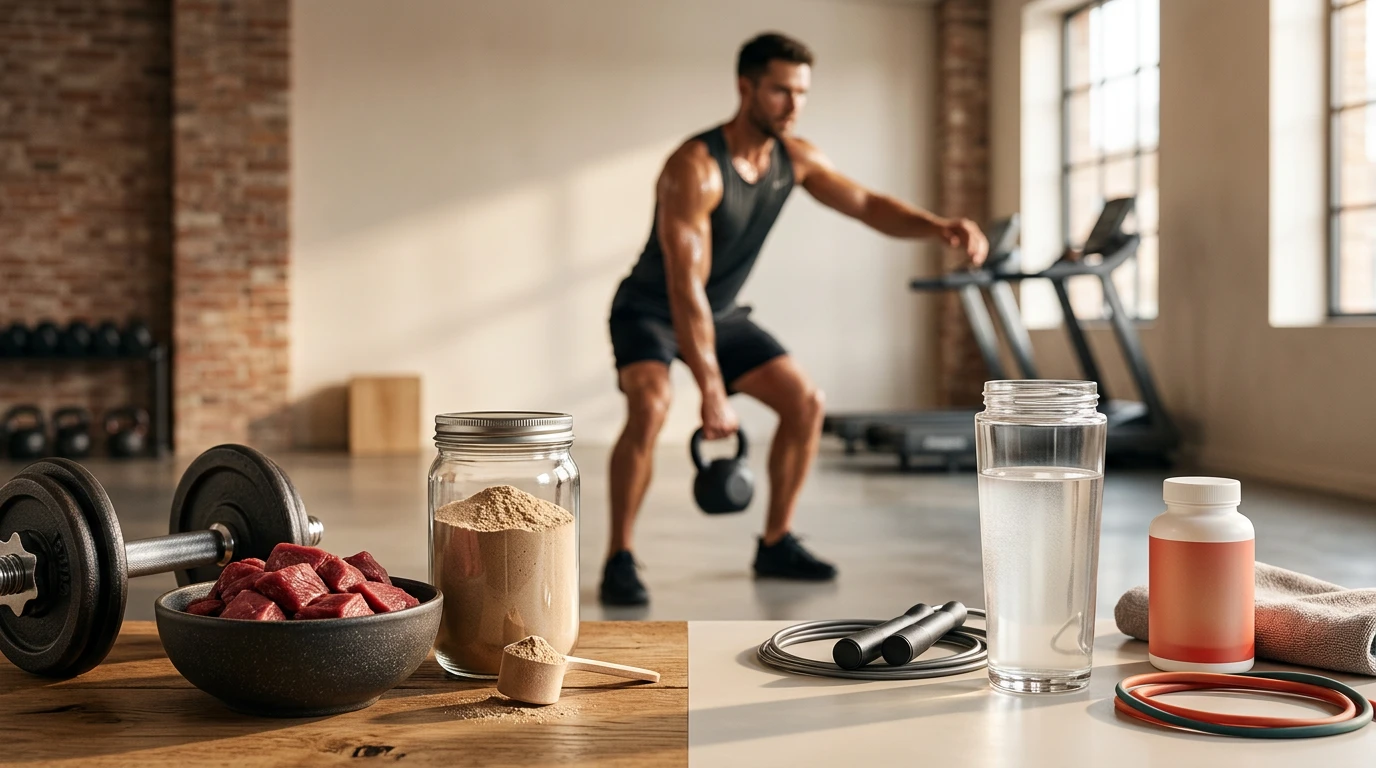
For best results, combine 20-30g of Beef Protein Isolate (post-workout) with 6-8g of Citrulline Malate (30-45 minutes before workout) for a combined effect on muscle growth and performance.
When to choose Beef Protein over Citrulline?
🟣 Three-Phase Synchronization for Maximum Effect
- Phase 1 — Preparation (Pre-workout): 6–8g Citrulline Malate 45 minutes before training. This dilates blood vessels and prepares the "road network."
- Phase 2 — Execution: During training, citrulline will excrete ammonia, allowing for greater load.
- Phase 3 — Building (Post-workout): 30g Beef Protein Isolate. Thanks to improved blood circulation from citrulline, amino acids from the protein will reach muscle cells much faster to start repair.
The "Flow and Build" strategic protocol is a systematic approach to optimizing athletic performance, combining the benefits of Beef Protein for muscle architecture and Citrulline for improving metabolic throughput.
- Choose Beef Protein if your goal is direct support for muscle growth and recovery through a high-quality amino acid profile.
- Choose Citrulline if you are looking to improve athletic performance through increased blood flow and reduced fatigue.
- Combine Both if your goal is a comprehensive approach to optimizing muscle architecture and metabolic throughput for maximum results.
- Choose Beef Protein if you need an easily digestible, lactose-free protein source.
📖 What are Beef Protein and Citrulline?
Beef protein is a high-quality source of amino acids that serve as building blocks for muscle growth and recovery. Citrulline is an amino acid important for the urea cycle. It aids blood flow by increasing nitric oxide.
⚖ Pros and Cons
| Pros | Cons |
|---|---|
|
|
🗣 Simply Explained
Beef protein is like building strong brick walls – it provides all the building blocks for your muscles. Citrulline, on the other hand, acts like a pumping system that improves blood circulation and helps deliver nutrients to the muscles faster.
Choose the right product for your goal:
→ Beef Protein Powder
→ Citrulline Malate
→ Amino Acid Complex (including Citrulline)
Combined Protocol for Maximum Effectiveness:
Combining products increases effectiveness. Based on Sport Zona data and practice.
⚖ When to Choose Beef Protein
- The athlete seeks to gain lean muscle mass and tissue recovery.
- The athlete avoids dairy products due to allergies or digestive discomfort.
- The athlete needs a complete amino acid profile for effective muscle building.
- The athlete aims to maintain a positive nitrogen balance for muscle growth.
⚖ When to Choose Citrulline
- The athlete wants to increase training volume and endurance during workouts.
- The athlete aims for a visual "pump" and better vascularity during training.
- The athlete seeks to reduce muscle soreness after intense physical exertion.
- The athlete wishes to improve cardiovascular health and blood pressure.
Expert Note from Sport Zona
For many years, I've observed that most trainees focus on only one type of supplement. With appropriate dosing and combination of Beef Protein with Citrulline, I see faster and more complete results in pump and recovery.
Recommended products
Frequently asked questions
Can beef protein and citrulline be combined?
Yes, combining them is highly recommended for maximum effect. Beef protein provides the building blocks, and citrulline improves their delivery to the muscles.
When is the best time to take beef protein and when to take citrulline?
Beef protein is best taken after training for recovery, while citrulline is effective 30-60 minutes before training to improve blood circulation and endurance.
What is the primary function of beef protein and what is the function of citrulline?
Beef protein is key for building and repairing muscle tissue, providing a complete amino acid matrix. Citrulline improves blood circulation by increasing nitric oxide, leading to a better muscle pump and endurance.
Do beef protein and citrulline have potential side effects?
Beef protein is generally well-tolerated, except in cases of specific allergies. Citrulline may cause mild stomach discomfort at high doses, but it is considered better than arginine in terms of digestion.