Leg Day — Complete Program with Explanations
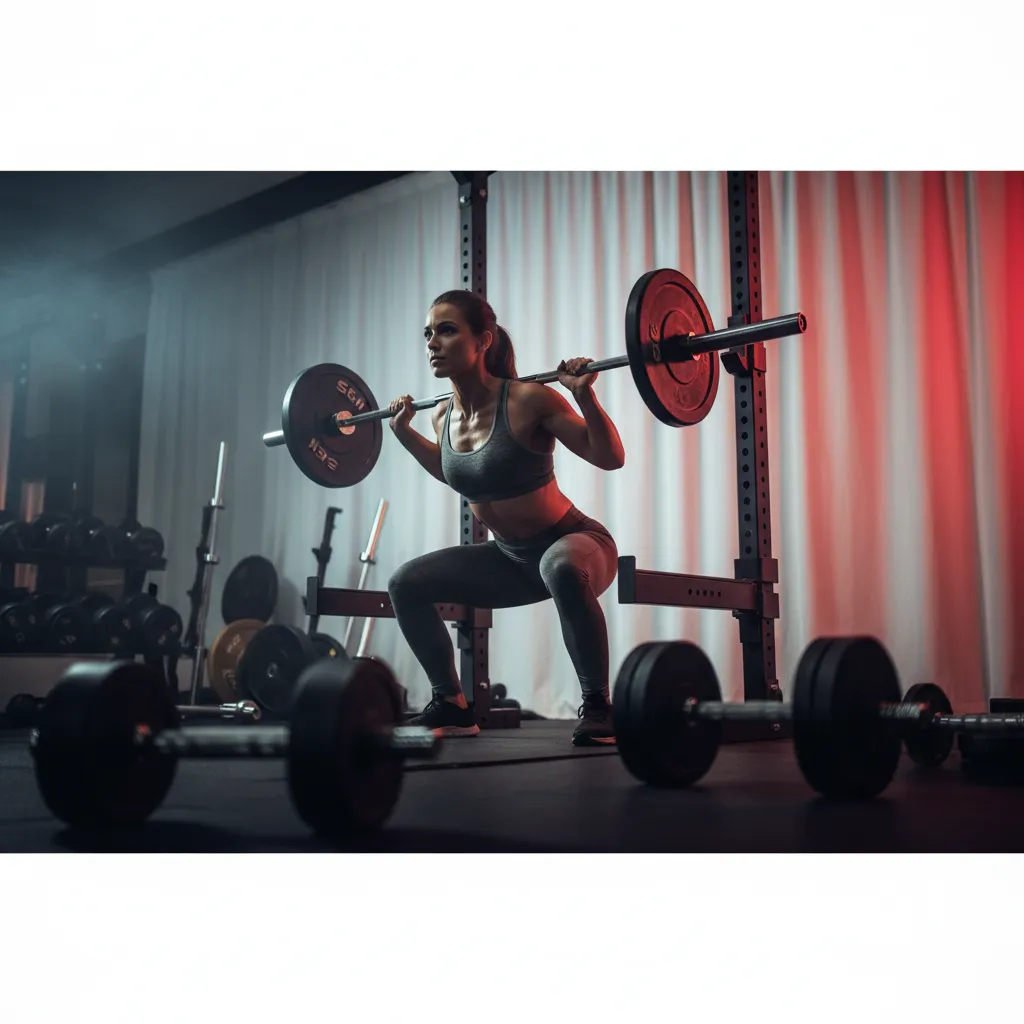
Learn how to build strong and functional legs with our Leg Day workout guide. We'll cover essential exercises, volume, intensity, and provide you with a complete program.
Leg training (leg day) is a specialized workout focused on the muscles of the lower body – quadriceps, hamstrings, glutes, and calves – with the goal of building strength, endurance, and muscle mass. It is key for overall athletic development, improves functionality, and prevents imbalances often seen with excessive focus on the upper body.
There's a joke in fitness circles: "Don't skip leg day." But for many people, it's not a joke, but a reality. Leg training is often the most neglected, yet most rewarding part of a training program. Strong legs are the foundation of any athletic performance, they improve posture, speed up metabolism, and contribute to an aesthetically balanced physique.
Why is Leg Training So Important?
💬 Simply put: Leg workouts are important for your overall development, strength, and muscle growth because the legs contain the largest muscles in the body.
The lower body is home to the largest muscle groups. Training them requires more energy, leading to a greater caloric expenditure during the workout and an elevated resting metabolism. This is especially important for those aiming to reduce body fat, as well as for athletes who need explosive power and endurance. Furthermore, strong legs are a preventative measure against injuries, especially to the knees and back. Research, such as that by Brad Schoenfeld, highlights that lower body training elicits a significant anabolic response, leading to better growth of leg muscles, as well as other muscle groups.
Key Leg Exercises and How to Perform Them
For a complete leg workout, you need to include exercises that target all major muscle groups. Here are the main ones:
1. Squat
The squat is the king of all exercises. It works the quadriceps, hamstrings, and glutes, while also engaging the core and many stabilizing muscles. There are various variations – back squat, front squat, goblet squat, and others.
- Technique: For a back squat, the bar is on the trapezius muscles, feet are shoulder-width apart (or slightly wider), toes slightly out. Start by moving backward and down as if sitting on a chair. Knees follow the direction of the toes. Depth is to parallel or deeper if mobility allows, without rounding the back. The core is tight, the back is straight.
- Common mistakes: Excessive forward lean, lifting the heels, insufficient depth.
2. Romanian Deadlift (RDL)
The RDL is an excellent exercise for the hamstrings and glutes, with minimal quadriceps involvement. It is key for developing the posterior chain, which is often weaker than the anterior chain.
- Technique: Stand upright with a barbell (or dumbbells) in front of you. Grip is slightly wider than shoulder-width. Initiate the movement by pushing your hips back, maintaining a slight bend in your knees. The barbell moves close to your legs, keeping your back straight. Lower until you feel a good stretch in your hamstrings (usually to mid-shin or below the knees), then return to the starting position by squeezing your glutes.
- Common mistakes: Rounding the back, excessive knee bend (which turns it into a conventional deadlift), using too much weight.
3. Lunges
Lunges are a unilateral exercise that improves balance, coordination, and targets the quadriceps, hamstrings, and glutes individually, helping to correct muscle imbalances.
- Technique: Stand upright. Step one foot forward, lowering your body until the knee of the back leg almost touches the floor, and the front leg forms a 90-degree angle at the knee. Ensure the knee of the front leg does not go past the toes. Return to the starting position. They can be performed statically, walking lunges, or reverse lunges.
- Common mistakes: Unstable torso, insufficient depth, front knee going past the toes.
4. Leg Curls and Leg Extensions
These isolation exercises are great for finishing the workout, targeting the hamstrings (Leg Curls) and quadriceps (Leg Extensions) respectively.
- Technique (Leg Curls): Lie face down on the machine with your ankles under the pad. Curl your legs towards your glutes, squeezing your hamstrings. Return to the starting position in a controlled manner.
- Technique (Leg Extensions): Sit on the machine with your legs under the pad. Extend your legs forward, squeezing your quadriceps. Return to the starting position in a controlled manner.
- Common mistakes: Using momentum, insufficiently controlled movement.
Sample Leg Workout Program
Here is a complete leg day program that balances volume, intensity, and includes the main movements. The program is suitable for both advanced beginners and intermediate trainees.
| Exercise | Sets | Reps | Rest | Notes |
|---|---|---|---|---|
| Barbell Back Squat | 3-4 | 6-10 | 2-3 min | Start with 1-2 warm-up sets. Focus on perfect form. |
| Romanian Deadlift (RDL) | 3 | 8-12 | 90-120 sec | Use controlled movement, focus on hamstring stretch. |
| Bulgarian Split Squat | 3 per leg | 10-15 per leg | 60-90 sec | Can be done with dumbbells or bodyweight. Important for unilateral strength. |
| Leg Press | 3 | 10-15 | 90-120 sec | Alternative to squat when needed. Controlled movement, full range. |
| Leg Extension | 3 | 12-15 | 60 sec | Quad isolation, focus on peak contraction. |
| Leg Curl | 3 | 12-15 | 60 sec | Hamstring isolation, controlled movement. Can be lying or seated. |
| Calf Raises | 3-4 | 15-20 | 30-60 sec | Can be standing, seated, or on a leg press machine. Full range of motion. |
Volume and Intensity: The Key to Growth
To get the most out of your leg training, you need to understand how to manipulate volume (total number of working sets) and intensity (the weight used relative to your maximum strength).
- Volume: For most trainees aiming for hypertrophy, the recommended weekly volume of working sets for large muscle groups like the legs is between 10 and 20 sets. If you train legs once a week, this means doing all your sets within that single workout. If you train twice a week, split them up. For beginners, 10-12 sets per leg workout is a good start.
- Intensity: For hypertrophy, the rep range of 6 to 15 is most effective, using a weight that allows you to reach near failure within that range. Subjective rating of perceived exertion (RPE – Rate of Perceived Exertion) or reps in reserve (RIR – reps In Reserve) are excellent tools. For most working sets, aim for an RPE of 7-9 (2-3 RIR), meaning you could have performed 1-3 more reps to complete failure.
- Progressive Overload: This is the golden standard for muscle growth. Aim to increase the weight, number of reps, or volume over time while maintaining good form. For example, if today you squatted 100 kg for 8 reps, next time try 100 kg for 9 reps or 102.5 kg for 8 reps.
Frequency and Periodization
How often should you train your legs? For most people, training legs 1-2 times per week is optimal. More advanced athletes can benefit from higher frequency (up to 3 times per week) if they can manage the volume and recovery. For beginners, one comprehensive leg day per week is perfectly sufficient.
Periodization is the strategic planning of training over time to maximize results and avoid plateaus. This can involve phases of higher volume and lower intensity, followed by phases of lower volume and higher intensity. For example, you might alternate a month focused on heavier sets with fewer reps (6-8) with a month focused on lighter volume with more reps (12-15).
- Increases overall strength and athleticism
- Improves metabolism and aids fat burning
- Builds a balanced and aesthetic physique
- Reduces the risk of knee and back injuries
- Increases hormonal response (testosterone, growth hormone)
- Enhances functional movements in daily life
- Can be extremely exhausting and painful
- High risk of injury with poor technique
- Requires more recovery time
- Often leads to muscle soreness (DOMS)
- Requires good mobility and flexibility
- Psychological barrier for many trainees
Warm-up and Stretching
Never skip your warm-up! It prepares your joints and muscles for the upcoming load, increases blood flow, and reduces the risk of injury. Start with 5-10 minutes of light cardio (exercise bike, treadmill) and then move on to dynamic stretches (leg swings, bodyweight squats, hip rotations). After the workout, a few minutes of static stretching (holding a position for 20-30 seconds) can help improve flexibility and reduce muscle soreness, although evidence for the latter is mixed.
See more in the fitness guides of Sport Zona Academy.
📚 Scientific Sources
- Effects of Unilateral Versus Bilateral Resistance Training on Strength, Jump, and Speed Performance in Soccer Players, 2020
- Comparison of Lower Limb and Torso Muscle Activation During Barbell Back Squat and Belt Squat, 2020
- Exercise variation is more effective than load variation for improving muscular strength, 2014
🔬 Expert Note from Sport Zona
From my 12 years of experience with Bulgarian athletes, I've noticed that many people avoid leg training because it's tough. But it is precisely consistency and proper loading of the lower body that are the key to strong and functional legs and to real improvement in any other training goal.
See more in the fitness guides of Sport Zona Academy.
Recommended products


Frequently asked questions
How often should I do leg training?
For most people, training legs 1-2 times a week is optimal. Athletes and more advanced trainees can increase to 3 times if they ensure sufficient recovery and manage volume.
What is the most important leg exercise?
The squat is widely recognized as the king of leg exercises, as it engages multiple muscle groups and is extremely effective for building mass and strength.
How can I avoid muscle soreness after Leg Day?
Completely avoiding muscle soreness is difficult, especially when starting a new program. Help yourself with adequate warm-up, progressive overload, sufficient sleep, hydration, and a quality diet rich in protein.
Can I train legs with only dumbbells?
Yes, it is possible to have an effective leg workout with only dumbbells. Exercises like the dumbbell goblet squat, dumbbell lunges, dumbbell Romanian deadlifts, and dumbbell Bulgarian split squats are excellent alternatives.