Shoulder workout — anterior, lateral, posterior deltoid
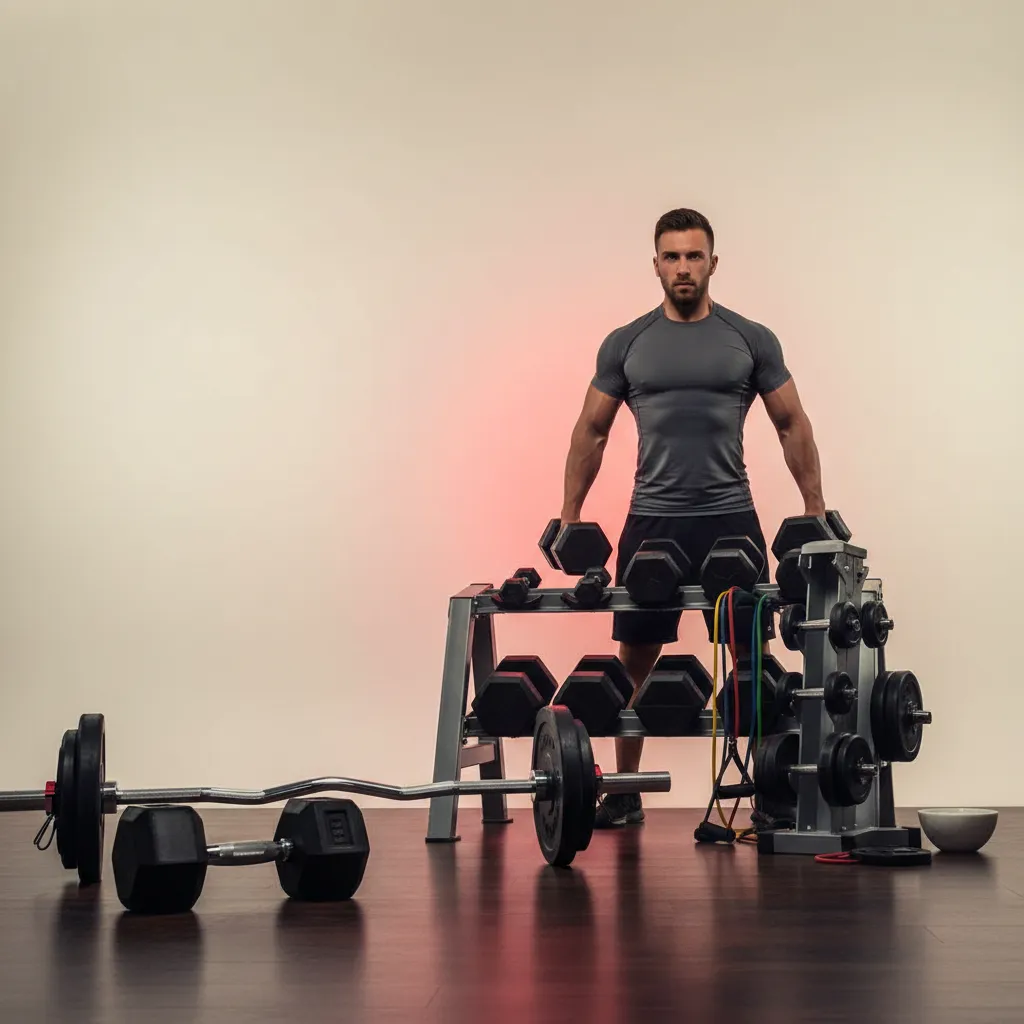
This comprehensive guide is dedicated to building strong and balanced shoulders through targeted training for the anterior, lateral, and posterior deltoids. We cover essential exercises such as OHP, lateral raises, and rear delt flyes, providing practical tips and strategies for optimizing the development of each head.
Shoulder training is a targeted exercise program designed to develop the strength, size, and endurance of the deltoid muscles, which form the shoulder complex. These muscles are composed of three main heads – anterior, lateral/medial, and posterior – each requiring specific stimuli for optimal growth and balance.
Shoulders are not just a large muscle group that contributes to an athletic physique. They play a crucial role in almost every upper body movement, from daily activities to complex athletic gestures. Well-developed and balanced shoulders improve posture, prevent injuries, and contribute to overall functionality. Neglecting one of the heads, especially the commonly overlooked posterior deltoid, can lead to imbalances, pain, and a higher risk of shoulder joint injuries.
Understanding Shoulder Anatomy
💬 Simply put: This article will show you how to train all parts of your shoulder muscles – anterior, lateral, and posterior – to make them stronger, bigger, and protect you from injuries.
Before diving into exercises, it's important to understand the structure of the deltoid muscle:
- Anterior Deltoid: Located at the front of the shoulder. Its primary function is to raise the arm forward (flexion) and internally rotate it. It is highly activated in any pushing movements forward or upward, such as the bench press or overhead press.
- Lateral/Medial Deltoid: Situated on the side of the shoulder, it contributes to width. Its main function is to raise the arm sideways (abduction). This is the muscle most responsible for giving the shoulders a "3D" look.
- Posterior Deltoid: Located at the back of the shoulder. It is involved in extending the arm backward (extension), external rotation, and horizontal abduction. It is often the least developed, as people tend to focus more on anterior deltoid and chest exercises.
The balance between these three heads is crucial for appearance, rotator cuff health, and shoulder joint stability.
Key Exercises for Each Head
1. Anterior Deltoid: Overhead Press (OHP)
The overhead press is one of the most effective exercises for overall shoulder development, but it particularly activates the anterior deltoid. It can be performed with a barbell or dumbbells, seated or standing.
- Technique (with barbell, standing): Stand with feet shoulder-width apart. The barbell should be at chest height, gripped slightly wider than shoulder-width, palms facing forward. Brace your core and glutes. Press the barbell overhead until your arms are fully extended, but without locking your elbows. Slowly and controllably lower the barbell back to the starting position.
- Recommendations: For strength and size, perform 3-4 sets of 5-8 repetitions. Use a weight that allows you to maintain good form throughout the entire range of motion.
2. Lateral Deltoid: Lateral Raises
Lateral raises are the gold standard for isolating the lateral deltoid and adding width to the shoulders.
- Technique: Stand or sit on a bench with dumbbells in each hand, palms facing each other. Your elbows should be slightly bent (around 15-20 degrees) and remain in this position throughout the movement. Raise the dumbbells to the sides until your arms are parallel to the floor or slightly higher. Imagine pouring water out of a bottle. Lower them back down with control.
- Recommendations: For best results, perform 3-4 sets of 10-15 repetitions with moderate to light weight. It's important to avoid using momentum. According to research, a slight forward lean can optimize lateral deltoid activation (Schoenfeld, 2010).
3. Posterior Deltoid: Rear Delt Flyes
This muscle group is often neglected but is essential for balanced shoulder appearance and health.
- Technique (with dumbbells, bent-over): Hinge forward at the hips, keeping your back straight, until your torso is almost parallel to the floor. The dumbbells should hang in front of you with slightly bent elbows. Raise the dumbbells to the sides and slightly up, as if "opening your wings," focusing on squeezing the rear deltoids. Lower them back down with control. You can also use a reverse pec deck machine or a cable machine.
- Recommendations: Do 3-4 sets of 12-20 repetitions. The posterior deltoid responds well to higher volume and more repetitions. It's important to feel the muscle working, not rely on your biceps or traps.
Building a Balanced Training Program
For optimal shoulder development, it's important to include exercises for all three heads and ensure adequate recovery.
- Overall shoulder development.
- Improved aesthetics (wider and rounder shoulders).
- Increased strength in all upper body movements.
- Prevention of shoulder joint and rotator cuff injuries.
- Improved posture.
- High risk of shoulder joint injury if performed incorrectly.
- Requires careful weight selection and precise technique.
- Excessive volume can lead to overtraining.
- It's easy to create imbalances if one head is trained more than the others.
Sample Shoulder Workout Split
You can train your shoulders 1-2 times per week, depending on your overall training volume and recovery capacity. Here is a sample plan for one workout:
| Exercise | Deltoid Head | Sets | Reps | Rest (seconds) |
|---|---|---|---|---|
| Barbell/Dumbbell Overhead Press | Anterior, Lateral | 3-4 | 6-10 | 90-120 |
| Dumbbell Lateral Raises | Lateral | 3-4 | 10-15 | 60-90 |
| Reverse Pec Deck/Rear Delt Flyes (dumbbell, bent-over) | Posterior | 3-4 | 12-20 | 60-90 |
| Close-Grip Push-ups (or similar stabilization exercise) | Anterior (secondary) + Stabilizers | 2-3 | 10-15 | 60 |
Progression and Periodization
To continue making progress, you need to constantly challenge your muscles. This can be done through:
- Increasing weight: When you can complete all sets and reps with good form, try increasing the weight by 1-2.5 kg.
- Increasing reps: If you can't increase the weight, try adding 1-2 reps to each set.
- More sets: Adding an extra working set.
- Decreasing rest: Shortening the rest intervals between sets.
- Improving technique: Stricter execution, slower negative movement.
Periodization – the systematic planning of training for varying volume and intensity – is also key. For example, you might have phases with a greater emphasis on strength with lower reps and heavier weights, followed by phases for hypertrophy with moderate volume and reps.
The Importance of Warm-up and Stretching
The shoulder joint is one of the most mobile but also one of the most unstable in the body. Proper warm-up is essential for injury prevention.
- General warm-up (5-10 minutes): Light cardio such as treadmill, elliptical, or stationary bike to increase heart rate and body temperature.
- Specific warm-up (5-10 minutes): Dynamic shoulder exercises like arm circles forward and backward, elbow rotations, light-weight rotator cuff pull-aparts on a cable machine. Perform 1-2 light warm-up sets of your first working exercise with very light weight.
Post-workout stretching can improve flexibility and aid recovery. Focus on static stretches for the anterior, lateral, and posterior deltoids, holding each stretch for 20-30 seconds.
Nutrition and Recovery
Without adequate nutrition and rest, even the best training program will not yield results. To build muscle mass, aim for:
- Protein: 1.6-2.2 grams of protein per kilogram of body weight, distributed evenly throughout the day.
- Carbohydrates: The primary source of energy. Consume complex carbohydrates, especially around your workouts.
- Fats: Healthy fats are important for hormonal balance and overall health.
- Caloric Surplus: To gain muscle mass, you need to consume slightly more calories than you burn. Aim for about 200-500 calories above your maintenance level.
- Sleep: Aim for 7-9 hours of quality sleep per night, as this is when the body recovers best and produces growth hormone.
A common mistake is overtraining. If you experience constant fatigue, joint pain, or a drop in performance, you may need to reduce the volume or intensity of your training and allow yourself more recovery time.
See more in the fitness guides of Sport Zona Academy.
📚 Scientific Sources
- Comparison of muscle activation between barbell, dumbbell, and machine shoulder press, 2020
- Electromyographical analysis of the deltoid muscle during different shoulder exercises, 2013
- Electromyographical activity of the anterior, medial, and posterior deltoid muscles during various shoulder exercises, 2013
🔬 Expert Note from Sport Zona
From my experience with Bulgarian athletes, the most common shoulder problem is neglecting the posterior deltoid. Many people focus only on the anterior and lateral parts, which leads to imbalances and often pain. I always recommend giving the posterior deltoid the same attention to avoid future problems and achieve maximum development.
See more in the fitness guides of Sport Zona Academy.
Recommended products


Frequently asked questions
How often should I train my shoulders?
It is generally effective to train shoulders 1-2 times per week. If you are training your whole body, you can include one shoulder exercise in each workout, but if you have a specific shoulder day, one day a week is sufficient for recovery and growth. According to some studies, more frequent inclusion of small volume may be more effective for hypertrophy than one large volume per week.
How can I avoid shoulder injuries?
Avoid injuries by always doing a thorough warm-up, using proper technique for each exercise, not using excessively heavy weights, and ensuring balanced development of all three heads of the deltoid. The rear delt and rotator cuff are often neglected, which can lead to imbalances and injuries. Maintain good mobility and strength in the shoulder joint.
Can I train my shoulders every day?
Training shoulders every day is not recommended for most people, especially if the goal is hypertrophy. Muscles need time to recover and grow. Overtraining can lead to fatigue, decreased strength, and an increased risk of injuries. If you still want to train more frequently, significantly reduce the volume and intensity of each workout.
What is the best exercise for broad shoulders?
To build broad shoulders, Lateral Raises are the most effective exercise as they directly target the lateral (medial) head of the deltoid muscle. This head is responsible for shoulder width. It is important to perform them with controlled form, without momentum, and with a focus on muscle contraction.