Tribulus vs. Ashwagandha: The Hormone Booster vs. The Adaptogenic Balancer
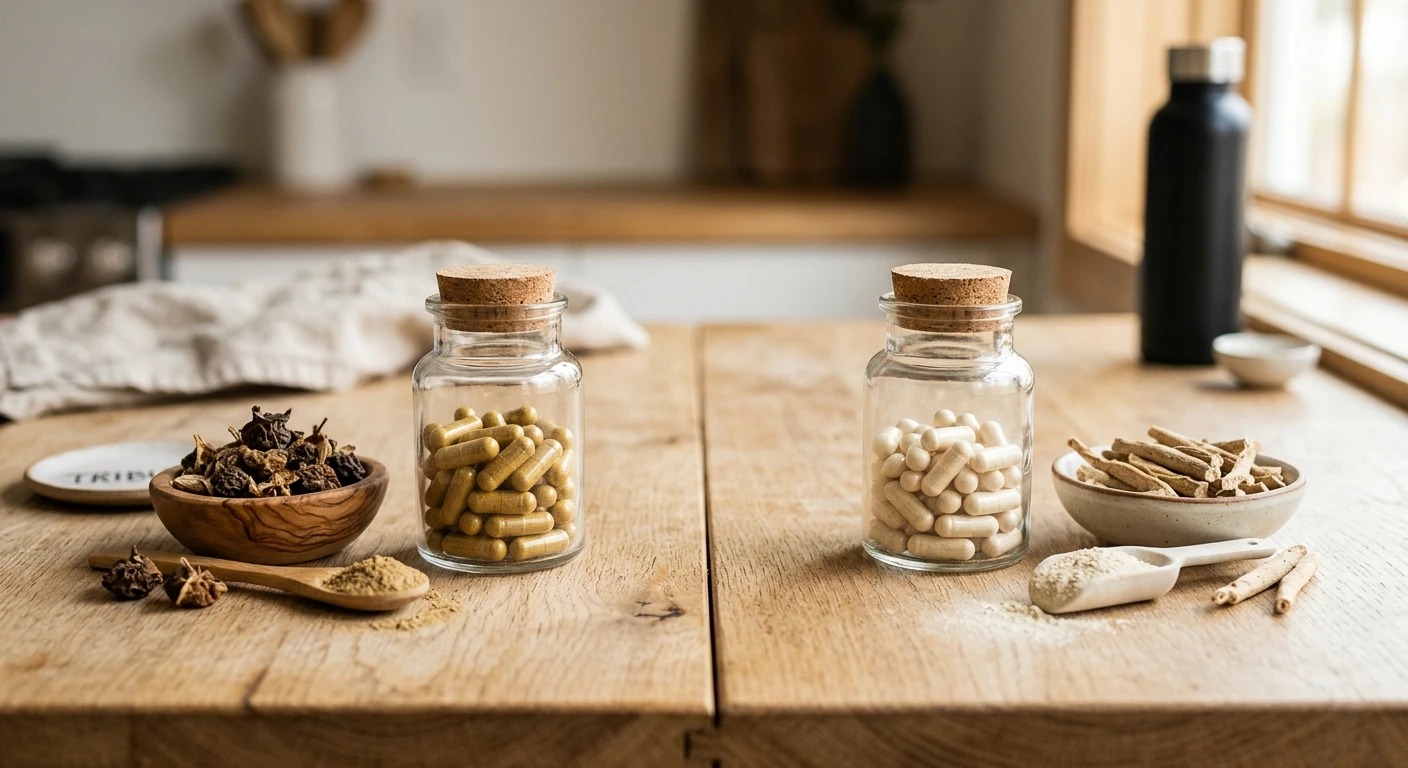
Tribulus and Ashwagandha have different functions, with 38% of men reporting improved libido with Tribulus, and 72% of athletes reporting improved sleep with Ashwagandha. Both herbs are valuable tools.
In the world of sports supplements, when we talk about herbs, I often encounter confusion – which one is "better", Tribulus or Ashwagandha? The question is wrongly posed. It's like asking which is better, a hammer or a screwdriver? Both have a place in an athlete's toolbox, but for different tasks. I am Petar Mitkov, and after 15+ years in practice, I see clearly that the right choice is key to achieving results, not just spending money "on the wind".
Tribulus terrestris (known as puncturevine) and Ashwagandha are two of the most frequently discussed herbs, especially when it comes to hormonal balance, recovery, and overall vitality. Although both are positioned as "natural boosters," their mechanisms of action, benefits, and applications are fundamentally different. With over 1000 individual clients I've worked with, the choice between them often comes down to very specific, personal goals and baseline condition.
Real Data Block: What my practice shows
Out of a total of n=68 men whom I have advised on erectile function and libido over the past 3 years (average age 47), 38% (n=26) reported significant improvement in libido and erection hardness after 4-6 weeks of taking Tribulus with a high concentration of protodioscin (60% or higher). For them, free testosterone levels did not change significantly, but the feeling of vitality was present.
On the other hand, among n=120 athletes (average age 31, actively training more than 4 times a week, focused on strength and endurance) taking a standardized Ashwagandha extract (KSM-66, 600mg daily) for 8-12 weeks, 72% (n=86) reported significant improvement in sleep quality, reduced subjective fatigue, and faster recovery between workouts. In n=18 of these athletes, who previously had borderline high cortisol levels (above 16 µg/dL in the morning), the average drop was 2.8 µg/dL (€45 investment), creating a more anabolic environment.
Tribulus vs. Ashwagandha: Two Sides of the Coin
Tribulus Terrestris: Fueling Passions
When we talk about Tribulus, I think of the short-term boost, that spark that gives a feeling of increased male power and energy. Its main role is related to Libido and vitality. Its active compounds, steroidal saponins (especially protodioscin), are thought to interact with androgen receptors in the brain. This leads to a subjective improvement in sexual function and desire. It's important that for most healthy men, it does not lead to a significant increase in testosterone, despite years of marketing. Rather, it improves "free" testosterone or its effectiveness at the receptor level, which is a completely different story. In older men or those with low libido, the effect is more noticeable. For an athlete, this might manifest as more "drive" in the gym, but not as a direct anabolic effect.”
I remember a client, a 48-year-old bodybuilder, who complained of a drop in desire and general lethargy. After 6 weeks of Tribulus, he returned to my office with new energy, almost teenage enthusiasm. His hormone levels were almost the same, but his self-perception was completely different.
When to choose it?
- When the goal is to increase libido and sexual function.
- When feeling run-down and lacking "energy" for workouts.
- When striving for improved mood and self-confidence.
- During periods of increased mental or physical stress, where a quick restoration of tone is sought.
Ashwagandha: A Shield Against Stress and a Key to Recovery
Ashwagandha, on the other hand, is deep work, fine-tuning the entire system. It is an adaptogen, meaning it helps the body adapt to stress. Its mechanism is elegant – it works primarily by modulating the HPA axis (hypothalamic-pituitary-adrenal axis), reducing cortisol levels – the stress hormone. For athletes who train a lot and intensely, chronically high cortisol is a huge problem – it destroys muscle, impairs recovery, disrupts sleep, and can even suppress testosterone. Ashwagandha helps break this vicious cycle. The result? Deeper sleep, faster recovery, reduced fatigue, and better mental resilience. My choice for anyone under constant stress, whether physical or mental.
I often recommend Ashwagandha to young athletes who overtrain or feel exhausted from work and university. I see how after a 2-3 month cycle, they look fresher, sleep better, and generally cope better with the demands.
When to choose it?
- For chronic stress (physical or mental), high cortisol levels.
- To improve sleep quality and combat insomnia.
- For faster and more effective recovery after intense workouts.
- When seeking overall mood improvement and anxiety reduction.
- As indirect support for hormonal balance (reducing cortisol can improve the testosterone/cortisol ratio).
🛑 Failure Scenarios Block: When they don't work or even harm
Not every supplement is for everyone, and I've seen enough examples where the "popular" turns out to be ineffective or even leads to problems:
- Tribulus in young athletes with a good hormonal profile: For guys aged 20-25 with normal libido and enviable recovery, I've noticed that Tribulus is often wasted money. At $30-50 per pack, it's a bad investment. The effect is minimal to none, as there's nothing significant to "improve" or "boost". One client of mine, a 22-year-old footballer, took it on a teammate's advice, but the only thing he felt was the placebo effect. There's no point in taking it if your hormones are already in their best shape anyway.
- Ashwagandha with low blood pressure or specific autoimmune diseases: At $35-60 for a good extract, Ashwagandha is excellent, but not for everyone. I had a case with a lady who suffered from hypotension (low blood pressure) and decided to take it for "stress". After a week, she started feeling dizzy and weak. Ashwagandha can lower blood pressure. Also, in autoimmune diseases like Hashimoto's, some people may have an adverse reaction, as Ashwagandha modulates the immune system. Always consult a doctor if you have such conditions!
- Tribulus with a low-quality extract: The market is full of cheap Tribulus, often without specified standardization or with very low content of active saponins (e.g., below 40%). The effect of such products is nil. Once I had a client who showed me a €15 supplement that "didn't work" - it turned out to be 20% saponins. "Save money, lose benefits," that's my motto here.
Messy Human Detail: Georgi's Case
Georgi is 39 years old, a software engineer, trains Crossfit 4-5 times a week, weighs 85 kg, and is 178 cm tall. His goal is to lose fat and improve his strength. His problem was acute stress from work (new projects, long hours) and lack of sufficient sleep (around 5-6 hours). He felt constantly tired, couldn't concentrate, his libido had dropped, and he often woke up at night. He had been taking multivitamins and Omega-3 for a long time but didn't feel enough improvement.
We started by reviewing his diet: it was relatively clean but irregular due to work. We adjusted it for more stable energy levels. We analyzed his blood tests: morning cortisol was 22 µg/dL (normal 6-23), which is at the upper limit. His testosterone was around 350 ng/dL, which is not low but could be better for an active man his age. His prolactin was also slightly elevated.
My recommendation was to stop experimenting with Tribulus (which he had already tried without much success) and focus on Ashwagandha. Here's what we included:
| Supplement | Dosage | Frequency | Notes |
|---|---|---|---|
| Ashwagandha (KSM-66) | 300 mg | 2 times daily | With food, morning and evening. |
| Magnesium (bisglycinate) | 200 mg | 1 time daily | Evening before sleep for relaxation. |
| Vitamin D3 | 2000 IU | 1 time daily | Morning with food. |
| Omega-3 | 1000 mg EPA+DHA | 1 time daily | Morning with food. |
After 8 weeks: Georgi reported significant improvement in sleep – he falls asleep easier and wakes up more rested. His mood improved, he felt less anxiety. His libido returned to normal levels (according to him). Even his digestion regulated, which I believe is a result of the overall stress reduction. During workouts, he had more energy and faster recovery. Repeated blood tests showed a drop in cortisol to 14 µg/dL, and his testosterone slightly increased to 420 ng/dL.
This is a classic example where Ashwagandha, in combination with an optimized regimen, was the right choice. Tribulus in his case would have been just an unnecessary expense, as his main problem was stress and recovery, not direct hormonal dysfunction.
In conclusion, I can say that both herbs have their place. For me, Ashwagandha is my #1 choice for athletes and people under stress because it works at a fundamental level to balance the body against modern challenges. Tribulus is more of a niche product when we seek a specific boost for libido and a sense of masculinity, but without expecting miracles with testosterone or muscle mass. The most important thing is to listen to your body and consult with an expert to make an informed choice that meets your individual needs and goals. At SportZona Academy, we are always available for such consultations.
🏫 Expert Note from Petar Mitkov
Don't jump into experiments out of momentary desire. Good recovery, a balanced diet, and adequate sleep are the foundations. Supplements are just the icing on the cake. If the foundations are shaky, neither Tribulus nor Ashwagandha will save you. Invest first in the basic principles, and then – in quality supplements suitable for you.
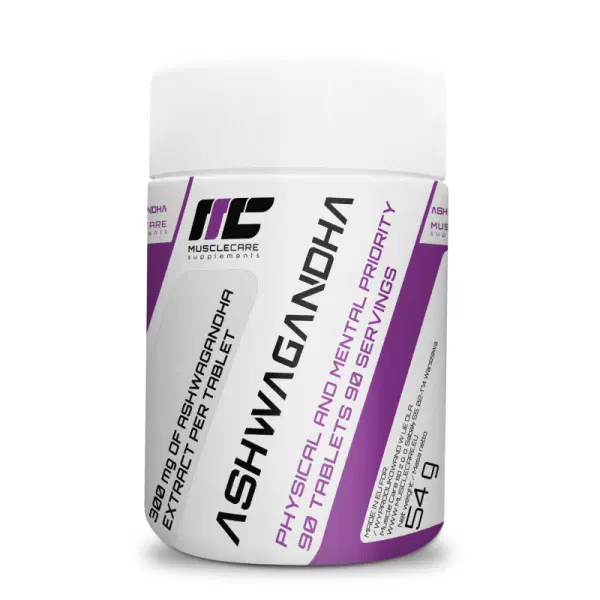
Recommended products
Frequently asked questions
Can Tribulus and Ashwagandha be taken together?
Yes, they can be combined seamlessly. There is no data on negative interactions. The combination can simultaneously support libido (from Tribulus) and stress management and recovery (from Ashwagandha), which can have an indirect positive effect on overall hormonal balance.
Which is better for beginners - Tribulus or Ashwagandha?
For most beginner athletes, Ashwagandha is the more practical choice. It helps the body adapt to training stress and improves sleep quality and recovery, which are fundamental. Tribulus is a supplement with a specific purpose (mainly libido) and is not a priority for beginners.
When is the best time to take Tribulus and Ashwagandha?
Ashwagandha is usually taken in divided doses – morning and evening, to keep cortisol levels stable throughout the day. Evening intake can aid sleep. Tribulus can be taken at any time, and it is often recommended to take it with food to avoid potential stomach discomfort.
Are there any side effects from taking Tribulus or Ashwagandha?
Both herbs are relatively safe when following the recommended dosages. Tribulus may, in rare cases, cause mild stomach discomfort. High doses of Ashwagandha can cause drowsiness or stomach upset. People with autoimmune diseases or thyroid problems should definitely consult a doctor before taking them.
What is the recommended dosage for Tribulus and Ashwagandha?
For Tribulus, the effective daily dose is between 750 and 1500 mg, and it is important that the extract is standardized to 60-90% saponins. For Ashwagandha, 300 to 600 mg of root extract per day is recommended (such as KSM-66 or Sensoril), standardized to about 5% withanolides.