Valerian vs. Melatonin: The Herbal Sedative vs. The Sleep Hormone
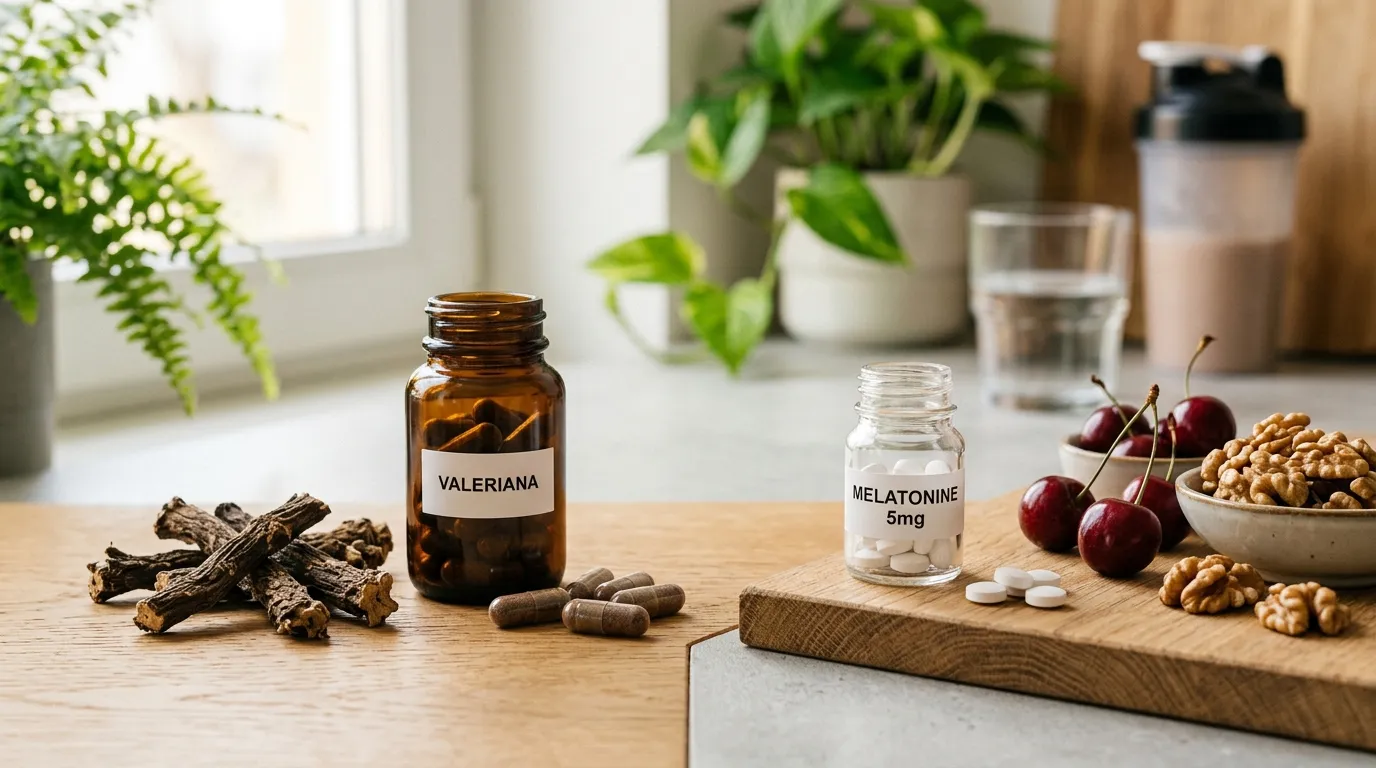
Valerian calms, and melatonin regulates sleep. The choice depends on recovery needs.
Short Answer: Melatonin is a hormone that regulates the "biological clock" and helps with falling asleep. Valerian is an herb that calms the nervous system, reduces anxiety, and improves sleep quality. Practical advice: If you need to synchronize your sleep schedule, take Melatonin (0.5-3 mg) 30-60 minutes before bed. For stress and tension that interfere with sleep, use Valerian root extract (300-600 mg).
Good sleep is key for every athlete. During sleep, the body recovers, muscles grow, and hormonal balance is regulated. When daily life and training are too demanding, we often need to seek help. Valerian and melatonin are two of the most popular supplements for this purpose.
Valerian calms the nervous system, while melatonin signals the body that it's time to sleep. The difference is important: valerian calms, melatonin regulates the biological cycle. In the following lines, I will discuss these two supplements in detail so you can understand when and how to use them for the best recovery.
This article is part of the Expert Hub for Nutritional Supplements — over 270 expertly verified articles by Petar Mitkov and the Sport Zona team.
What are the main differences between Valerian and Melatonin?
Valerian (Valeriana officinalis) is a plant extract that reduces anxiety and facilitates falling asleep by modulating GABA-A receptors, while Melatonin is a neurohormone that regulates the sleep-wake cycle by binding to MT1 and MT2 receptors in the brain.
| Criterion | Valerian (Valeriana officinalis) | Melatonin |
|---|---|---|
| Biological Status | Plant extract (herb) | Neurohormone |
| Primary Focus | Reduces anxiety and facilitates falling asleep | Regulates the sleep-wake cycle (circadian rhythm) |
| Mechanism of Action | Modulates GABA-A receptors, enhancing GABA's calming effect | Binds to MT1 and MT2 receptors in the brain, signaling "night" |
| Onset of Action | Effect is felt 30-60 minutes after intake, full effect may develop over several days/weeks | Fast-acting (20-40 minutes), most effective for schedule changes (time zone shifts, altered schedules) |
| Suitable for... | Difficulty falling asleep due to stress, "racing thoughts", general anxiety | Disrupted rhythm, shift work, travel across time zones (jet lag) |
| Additional | Reduces feelings of stress during the day as well (in some cases) | Potent antioxidant, protects cells from oxidative stress |
How do Valerian and Melatonin work?
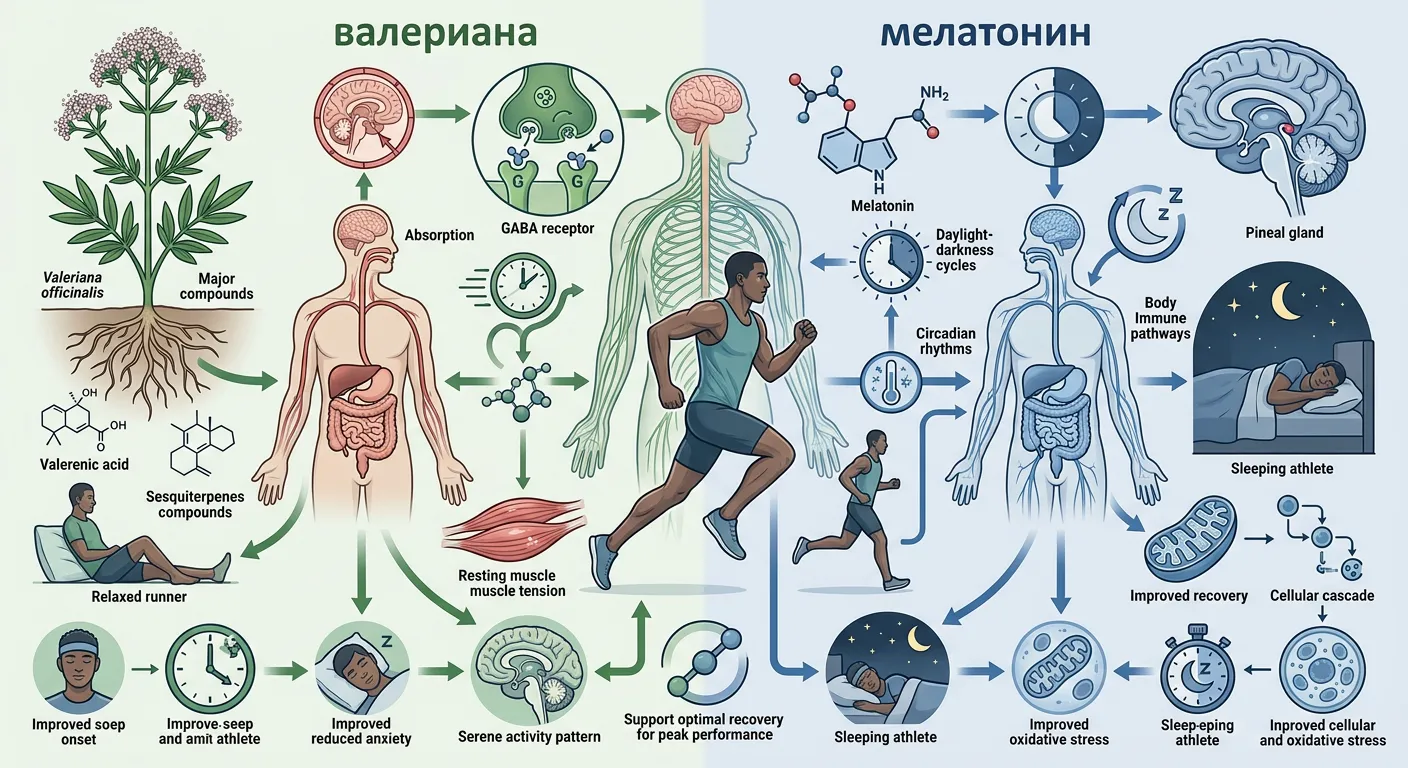
1. Valerian: The Calming Mediator
Valerian affects gamma-aminobutyric acid (GABA), which is the primary calming neurotransmitter in the central nervous system. Active compounds in valerian, such as valerenic acid, inhibit the breakdown of GABA in the brain and bind directly to GABA-A receptors. This increases GABA levels and activity, which reduces neuronal excitability, creates a sense of calm, and alleviates anxiety. The process facilitates the transition to sleep, especially when the cause of insomnia is mental tension.Valerian is an herb that reduces "noise" in the brain and calms the nervous system, allowing the body to fall asleep on its own.
2. Melatonin: The Hormone of Darkness
Melatonin is a hormone that the body produces naturally in the pineal gland, primarily at night. Its production depends on light. As darkness falls, melatonin levels rise, signaling the body that it's time to sleep. It works by binding to specific receptors (MT1 and MT2) in the suprachiasmatic nucleus (SCN) of the hypothalamus – the body's "master clock." Activation of MT1 receptors suppresses the "wakefulness signal" from the SCN, and activation of MT2 helps to "reset" the biological clock. Taking melatonin as a supplement can artificially trigger this signal and help with falling asleep, especially when the natural rhythm is disrupted.Simply put: Melatonin is a signal for the body to switch to "night mode." It doesn't calm thoughts, but directly tells the biological clock: "It's night now, time to sleep."
Scientific Sources
- Valeriana officinalis root extracts have potent anxiolytic effects in laboratory rats, 2010
- Examine.com - Valerian Root: Scientific review on usage, dosage, and side effects
- NIH Office of Dietary Supplements - Melatonin: Fact Sheet for Health Professionals
- Mayo Clinic - Valerian: An evidence-based overview
- Harvard T.H. Chan School of Public Health - The Nutrition Source: Melatonin
- Linus Pauling Institute - Micronutrient Information Center: Melatonin
The synergistic effect: Why do they work better together?
Often, sleep problems in athletes are complex. For example, an overstimulated nervous system and a slightly disrupted circadian rhythm (from late training or screen time) can interfere with sleep. In such cases, a combination of the two products is effective.
Taken together, valerian and melatonin address the problem from two angles. Valerian reduces anxiety, calms racing thoughts, and prepares the nervous system for rest. About 30-40 minutes later, when the mind is calmer, melatonin sends a hormonal signal to the biological clock that it's time to sleep. This combination can work better because melatonin is more effective when the body is not under active mental stress.
How do I choose between Valerian and Melatonin?
Choose Valerian if:
- You have trouble "shutting off" your mind at night.
- You feel tense and stressed before bed.
- You have difficulty falling asleep, but once you do, you sleep well.
- You prefer a gentler, non-hormonal approach.
🔵 Choose Melatonin if:
- You need to shift your sleep schedule (e.g., go to bed earlier).
- You are traveling across time zones (jet lag).
- You work shifts and have an irregular schedule.
- You don't feel sleepy at night, even when it's late.
Recommended Combined Protocol (Stack)
The practical algorithm for choosing when dealing with complex stress and disrupted rhythm is to take it 45-60 minutes before sleep.
- Valerian: 300-600 mg standardized extract (0.8% valerenic acid)
- Melatonin: 0.5-3 mg (start with the lowest dose)
What is the 2026 Protocol: "Foundation and Performance Stack"?
"The 2026 Protocol: Foundation and Performance Stack" represents a modern approach to sleep support, dividing interventions into daily use and specific solutions as needed.
- Daily (around dinner): For nervous system relaxation.
- Magnesium Bisglycinate: 200-400 mg. For muscle relaxation and supporting GABA function.
- L-Theanine: 200 mg. An amino acid from green tea that promotes alpha brain waves (calmness, but wakefulness).
- As needed (30-60 min before sleep): Specific stack for falling asleep.
- For stress: Valerian (300-500 mg extract).
- For disrupted rhythm: Melatonin (0.5-2 mg).
- For combined issues: Valerian (300 mg) + Melatonin (0.5-1 mg).
Expert Note
Always start with the lowest effective dose, especially with melatonin. Doses above 3 mg often lead to morning grogginess and dizziness. This is counterproductive for an athlete. The goal is to support the natural process, not to "knock it out." Consider periodic breaks from intake (e.g., 2 days a week) to maintain receptor sensitivity.
🧭 When to Choose What?
- Choose Valerian if your mind is "noisy" and you can't relax, even though you feel physically tired.
- Choose Melatonin if you feel alert in the evening or need to adjust your sleep schedule due to travel or work.
- Combine the two if you are under significant stress and your schedule is disrupted (e.g., a late, intense workout).
📖 What are Valerian and Melatonin?
Valerian (Valeriana officinalis) is a perennial plant whose root has been used for centuries as a sedative and sleep aid. It does not contain hormones and works by modulating neurotransmitters in the brain.
Melatonin is a neurohormone that the body produces naturally and plays a central role in regulating the sleep-wake cycle. As a supplement, it is used to synchronize the internal biological clock with the day-night cycle.
⚖ Pros and Cons
Valerian
| Non-hormonal product |
| Reduces feelings of stress |
| No risk of morning grogginess (usually) |
| Slower and sometimes inconsistent effect |
| Unpleasant smell/taste of the extract |
| Not effective for circadian rhythm issues |
Melatonin
| Fast-acting and predictable |
| Effective for time zone shifts |
| Potent antioxidant |
| Risk of morning grogginess at high doses |
| May suppress natural production with prolonged use |
| Does not help with anxiety if the rhythm is fine |
🗣 Explained Simply
If you're still wondering, here's the simplest comparison:
| Criterion | Valerian | Melatonin |
|---|---|---|
| Tool | Calming Agent (Anxiolytic) | Time Regulator (Chronobiotic) |
| Answers the question | "How do I calm down to fall asleep?" | "When is it time to sleep?" |
| Method | Calms the mind | Signals for sleep |
Choose the right product for your goal:
- 😴 For deep and quality sleep: Explore our Adaptogens and Herbs.
- 🧘 For calmness and focus: Check out our selection of Amino Acids, including L-Theanine.
- For foundational support: Don't miss out on Vitamins and Minerals like Magnesium.
Combined Protocol for Sleep and Recovery:
- During the day: Adaptogens like Ashwagandha for cortisol control.
- Evening: Magnesium and L-Theanine for relaxation.
- Before sleep (as needed): Valerian or Melatonin depending on the specific issue.
⚖ When to Choose Valerian
- When you are under daily stress.
- When your thoughts are racing at night.
- When you are looking for a non-hormonal, herbal alternative.
- When you want to improve your sleep quality in the long term.
⚖ When to Choose Melatonin
- When you have changed time zones (jet lag).
- When you work night shifts.
- When you want to fall asleep earlier than usual.
- When you need a fast and reliable signal for sleep.
Expert Note from Sport Zona
When working with athletes, I often see a mistake: using melatonin as a universal "sleep pill." Melatonin is a time-regulating hormone, not a calming one. If an athlete is overstimulated from late training or stressed, but their biological clock is fine, melatonin won't solve the problem. In these cases, I first recommend a combination of magnesium bisglycinate and valerian. Only if the rhythm problem persists do we add a low dose of melatonin. Correctly diagnosing the problem is 90% of the solution.
Recommended products
Frequently asked questions
Can Valerian and Melatonin be taken together?
Yes, they can be combined. Melatonin helps you fall asleep faster (regulates the cycle), and Valerian calms the nervous system and improves sleep quality. This combination is effective, but it is advisable to start with low doses and consult a specialist.
Which is better for beginners - Valerian or Melatonin?
For most beginners experiencing mild sleep difficulties due to stress, Valerian is a milder and more suitable starting option. Melatonin is a better choice for specific sleep schedule issues, such as shift work or travel.
When is the best time to take Valerian and Melatonin?
Both supplements are taken in the evening, about 30 to 60 minutes before bedtime. This gives them enough time to start working and prepare the body for sleep.
Are there any side effects from taking Valerian or Melatonin?
Yes, although rarely. Melatonin can cause morning drowsiness, headache, or dizziness, especially at higher doses. Valerian can sometimes lead to stomach discomfort or headache. Do not drive after taking them until you determine how they affect you.
What is the recommended dosage for Valerian and Melatonin?
The standard dose of Melatonin is between 0.5 mg and 5 mg. For Valerian, 300-600 mg of standardized root extract is recommended. Always start with the lowest effective dose to assess your individual tolerance.