Vitamin A vs. Beta-Carotene: The Preformed Vitamin vs. The Provitamin Precursor
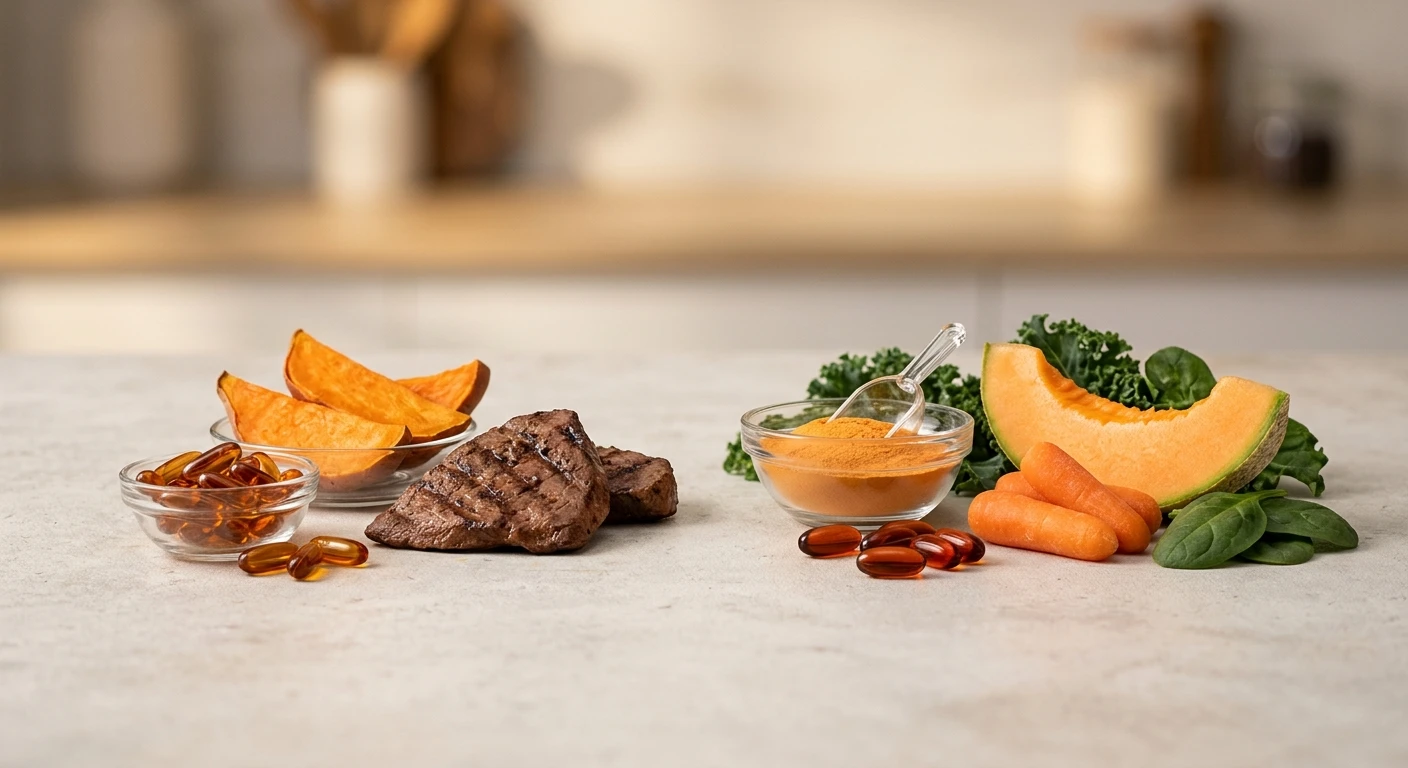
Vitamin A acts directly, and beta-carotene is its precursor. It is converted to vitamin A as needed and has additional protective functions.
Short Answer: Vitamin A (retinol) is the ready, active form, but carries a risk of toxicity at high doses (>3,000 mcg). Beta-carotene is a safer plant-based precursor (provitamin) that the body converts to Vitamin A only when needed, reducing the risk of accumulation. Practical advice: For general antioxidant support and health, choose beta-carotene in doses of 6-15 mg daily. Resort to active Vitamin A (retinyl palmitate) only for proven deficiency and with a doctor's prescription, not exceeding 10,000 IU (international units) daily.
Vitamin A and beta-carotene are important for vision, the immune system, and healthy skin. Athletes subject their bodies to constant stress, and for them, maintaining these systems in good condition is key. Although related, they are not the same thing. The differences are significant, and the right choice can impact results and safety.
Vitamin A acts directly, performing its functions immediately within the cell. Beta-carotene is a precursor that can be converted into vitamin A when needed. It also has other roles, including protecting cells from damage. Understanding when to use the ready form and when to rely on the precursor is important for effective nutrient intake.
This article is part of the Expert Hub for Food Supplements — over 270 expert-verified articles by Petar Mitkov and the Sport Zona team.
What is the systemic difference between Vitamin A and Beta-carotene?
Vitamin A (Retinol) is an active vitamin and a ready form that directly regulates genes, vision, and immunity with immediate effect, while Beta-carotene is a provitamin and precursor that provides antioxidant protection and is converted to retinal with a delayed effect.
| Criterion | Vitamin A (Retinol) | Beta-carotene |
|---|---|---|
| Biological Status | Active vitamin (ready form) | Provitamin (precursor) |
| Primary Focus | Direct regulation of genes, vision, immunity | Antioxidant protection and raw material for vitamin A |
| Mechanism | Binds to nuclear receptors (RAR/RXR) | Neutralizes free radicals; converts to retinal |
| Time Horizon | Immediate effect, high bioavailability | Delayed effect, dependent on conversion |
| Toxicity Risk | High at high doses (over 3000 mcg RAE) | Very low (safe, but can discolor skin) |
| Main Sources | Animal (liver, fish, dairy) | Plant (carrots, spinach, sweet potatoes) |
What are the mechanisms of action of Vitamin A in the body?
1. Vitamin A (Retinol): Ready for Action
Vitamin A is a fat-soluble vitamin that functions as a hormone and directly regulates gene expression by binding to specific retinoic acid receptors (RAR) and retinoid X receptors (RXR) in the cell nucleus, which alters gene activity.
This allows for the control of key processes such as cell differentiation (maturation of cells for specific functions), proliferation (growth), and apoptosis (programmed cell death). For athletes, this is important for immune response – vitamin A regulates the development of T-cells, which are the basis of adaptive immunity. In the retina of the eye, retinal (another form of vitamin A) is a key component of the photoreceptor pigment rhodopsin, needed for night vision.
Simply put: Vitamin A acts like a master system administrator for the body. It doesn't deal with minor, ongoing issues but goes directly into the "server room" (the cell nucleus) and changes the core settings (genes) to manage long-term processes like immunity, growth, and vision.
2. Beta-carotene: Precursor and Antioxidant
Beta-carotene is one of the carotenoids – pigments that give the yellow, orange, and red color to many fruits and vegetables. It has two main functions. One is as a provitamin A, meaning the body can convert it into vitamin A. This process occurs mainly in the intestines and liver with the help of the enzyme beta-carotene-15,15'-monooxygenase (BCO1). One molecule of beta-carotene can theoretically be cleaved into two molecules of retinal.
The process is strictly regulated. When the body has enough vitamin A, the activity of the BCO1 enzyme decreases, stopping or slowing down the conversion. This is a natural protective mechanism against vitamin A toxicity. Its second function is as a powerful fat-soluble antioxidant. It neutralizes free radicals, especially in the lipid membranes of cells, protecting them from oxidative stress – a process that intensifies with intense training.
Simply put: Beta-carotene is a raw material warehouse and a security system at the same time. When the body needs more vitamin A, it takes raw materials from the warehouse. At other times, the antioxidant function protects the body from external threats (free radicals).
Scientific Sources
- Vitamin A Fact Sheet for Health Professionals, National Institutes of Health (NIH) Office of Dietary Supplements, 2022
- Vitamin A, Linus Pauling Institute at Oregon State University, 2015
- Scientific Opinion on Dietary Reference Values for vitamin A, EFSA Panel on Dietetic Products, Nutrition and Allergies, 2015
- Micronutrient needs of athletes, Critical Reviews in Food Science and Nutrition, 2007
- Vitamin A Summary, Examine.com, 2023
The synergistic effect: Why do they work better together?
Taking vitamin A and beta-carotene together, through a balanced diet, offers a balance between safety and effectiveness. Beta-carotene provides a constant and safer source that the body can use when needed, creating a "buffer." This reduces the need to deplete liver stores of vitamin A and protects against the toxicity risk associated with high doses of the ready form of the vitamin.
The presence of small amounts of pre-formed vitamin A from animal sources ensures that the body's immediate needs are met. This is especially important for individuals with genetic variations that reduce the efficiency of beta-carotene conversion. Beta-carotene acts as an antioxidant shield and a regulated reservoir, while vitamin A performs essential functions directly.
How to choose Vitamin A or Beta-carotene?
Choose Vitamin A (Retinyl Palmitate)
- For proven deficiency, established by blood test.
- If you need quick and strong immune system support (short-term).
- If you are on a diet low in animal products (eggs, dairy, liver) and have poor conversion.
- By doctor's prescription for the treatment of specific dermatological problems.
🔵 Choose Beta-carotene
- As a daily preventive measure for general health and antioxidant protection.
- If you are vegan or vegetarian and rely on plant-based sources.
- If you are a smoker (high doses of vitamin A and beta-carotene as a supplement are contraindicated, but from food it is safer).
- For long-term support of skin and eye health without the risk of toxicity.
Recommended Stack for Athletes
The practical choice algorithm is to focus on a diet rich in beta-carotene (sweet potatoes, carrots, dark leafy greens) and moderate consumption of vitamin A sources (eggs, yogurt), and if a supplement is needed, combine a small dose of retinyl palmitate (e.g., 400-500 mcg RAE) with natural beta-carotene.
What is the protocol for 2026: "Foundation and Performance Stack"?
"Foundation and Performance Stack" is a recommended two-stage protocol for athletes aiming to optimize their intake.
- Daily Foundation: Focus on dietary sources. Goal: at least 5-6 mg of beta-carotene daily from food (equivalent to about one large carrot or a serving of sweet potatoes). This provides antioxidant protection and basic material for conversion.
- Pre-Competition/Immune Stack (if needed, for 7-10 days): When feeling a drop in immunity or before an important competition. Add a small dose (no more than 750-900 mcg RAE, which is about 100% of the daily requirement) of vitamin A in the form of retinyl palmitate to directly support your systems. ALWAYS take with food containing fat.
Expert Note
Be cautious with supplements containing only high-dose beta-carotene (over 20 mg), especially if you are a current or former smoker. Large-scale studies have shown an increased risk of lung cancer in this group. Therefore, I recommend beta-carotene from food sources or in lower doses as part of a multivitamin complex.
🧭 When to choose which?
- Choose ready-form Vitamin A if you have a diagnosed deficiency or need rapid, short-term immune support under medical supervision.
- Choose Beta-carotene as a safe, daily supplement for antioxidant protection and maintaining vitamin A levels, especially if your diet is plant-based.
- Combine them through a balanced diet, including both plant and animal sources. This is a natural and safe approach for most people.
📖 What are Vitamin A and Beta-carotene?
Vitamin A (Retinol) is an essential, fat-soluble vitamin found in a ready-to-absorb form in animal products. It is important for vision, immune function, reproduction, and cell communication.
Beta-carotene is a provitamin and carotenoid found in plants. It acts as an antioxidant, and the body can convert it into vitamin A when needed.
⚖ Pros and Cons
| Pros | Cons |
|---|---|
| Vitamin A | |
|
|
| Beta-carotene | |
|
|
🗣 Explained Simply
| Criterion | Vitamin A | Beta-carotene |
|---|---|---|
| Form | Ready to use | Raw material |
| Role | Direct executor | Reserve + Defender |
| Risk | High (with overdose) | Very low |
| Metaphor | Key for a door | Clay for a key |
Think of Vitamin A as a ready-made key that immediately unlocks a specific door in the body. Beta-carotene is a piece of clay – the body can make a key from it if needed, but until then, the clay can be used to plug holes (antioxidant protection). The body won't make unnecessary keys, so it's safer to have clay than a pile of unused keys.
Choose the right product for your goal:
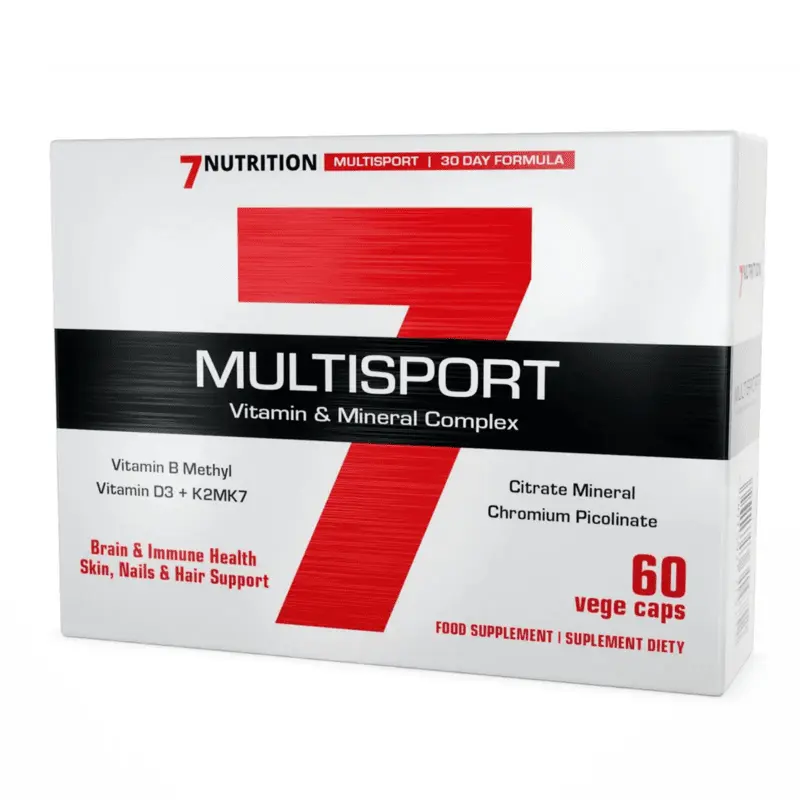
- Immunity Support: Check out our multivitamin complexes.
- 🍊 Antioxidant Protection: Combine with other antioxidants from the adaptogens and antioxidants category.
- Eye Health: Supplement with products from the Omega and Oils section.
Combined Protocol for Athletes:
1. Foundation: Quality multivitamin with beta-carotene in the morning.
2. Diet: One serving of carrots, spinach, or sweet potatoes daily.
3. If needed: A short cycle with a low dose of Vitamin A during high stress, consult a specialist.
⚖ When to choose Vitamin A
- If you need a quick effect for the immune system.
- If you have a laboratory-confirmed deficiency.
- If you know you have poor genetics for beta-carotene conversion.
- If you are undergoing specific therapy under medical supervision.
⚖ When to choose Beta-carotene
- If you are looking for long-term, safe prevention.
- If you eat primarily plant-based foods (vegan/vegetarian).
- If you aim for additional antioxidant protection.
- If you want to avoid the risk of vitamin A toxicity.
Expert Note from Sport Zona
In my practice, I often see athletes reaching for high doses of vitamin A hoping to "boost" their immunity, without realizing the risk. My advice is always to get a blood test first. In most cases, we find there is no deficiency, but the diet is unbalanced. Often, switching to a diet rich in colorful vegetables (sources of beta-carotene), combined with moderate consumption of eggs and dairy products, solves the problem much more safely and sustainably than aggressive supplementation.
Recommended products
Frequently asked questions
Can Vitamin A and Beta-carotene be taken together?
Yes, they can be taken together, especially as part of multivitamin complexes where the doses are balanced. However, caution should be exercised when taken individually. Combining high doses of active Vitamin A with beta-carotene does not offer additional benefits and increases the risk of toxicity. A safer approach is to obtain Beta-carotene, allowing the body to regulate Vitamin A production on its own.
Which is better for beginners - Vitamin A or Beta-carotene?
For beginners and for general prevention, Beta-carotene is a significantly better and safer choice. It eliminates the risk of Vitamin A overdose, as the body converts only as much as it needs. Active Vitamin A (retinol) should only be taken after consulting a doctor and in case of a diagnosed deficiency.
When is the best time to take Vitamin A and Beta-carotene?
Both Vitamin A and Beta-carotene are fat-soluble. This means that for optimal absorption, they should be taken with food containing fat. The time of day (morning or evening) is not essential, as long as they are taken during a meal.
Are there side effects from taking Vitamin A or Beta-carotene?
Yes. High doses of active Vitamin A (>3,000 mcg or 10,000 IU per day) can cause hypervitaminosis A – a condition leading to headaches, liver damage, hair loss, and bone pain. Beta-carotene is much safer, with the only known side effect at very high doses being carotenodermia – a harmless orange discoloration of the skin. It is important to note that smokers should avoid high doses of beta-carotene in supplement form due to data suggesting an increased risk of lung diseases.
What is the recommended dosage for Vitamin A and Beta-carotene?
The recommended daily intake of Vitamin A for adults is 900 mcg retinol activity equivalents (RAE) for men and 700 mcg RAE for women. The upper safe limit is 3,000 mcg RAE. There is no official recommended dose for Beta-carotene, but standard supplements contain between 6 and 15 mg, which is considered safe and effective for most people.