Vitamin C vs. Echinacea: The Daily Immune Guardian vs. The Seasonal Herbal Defender
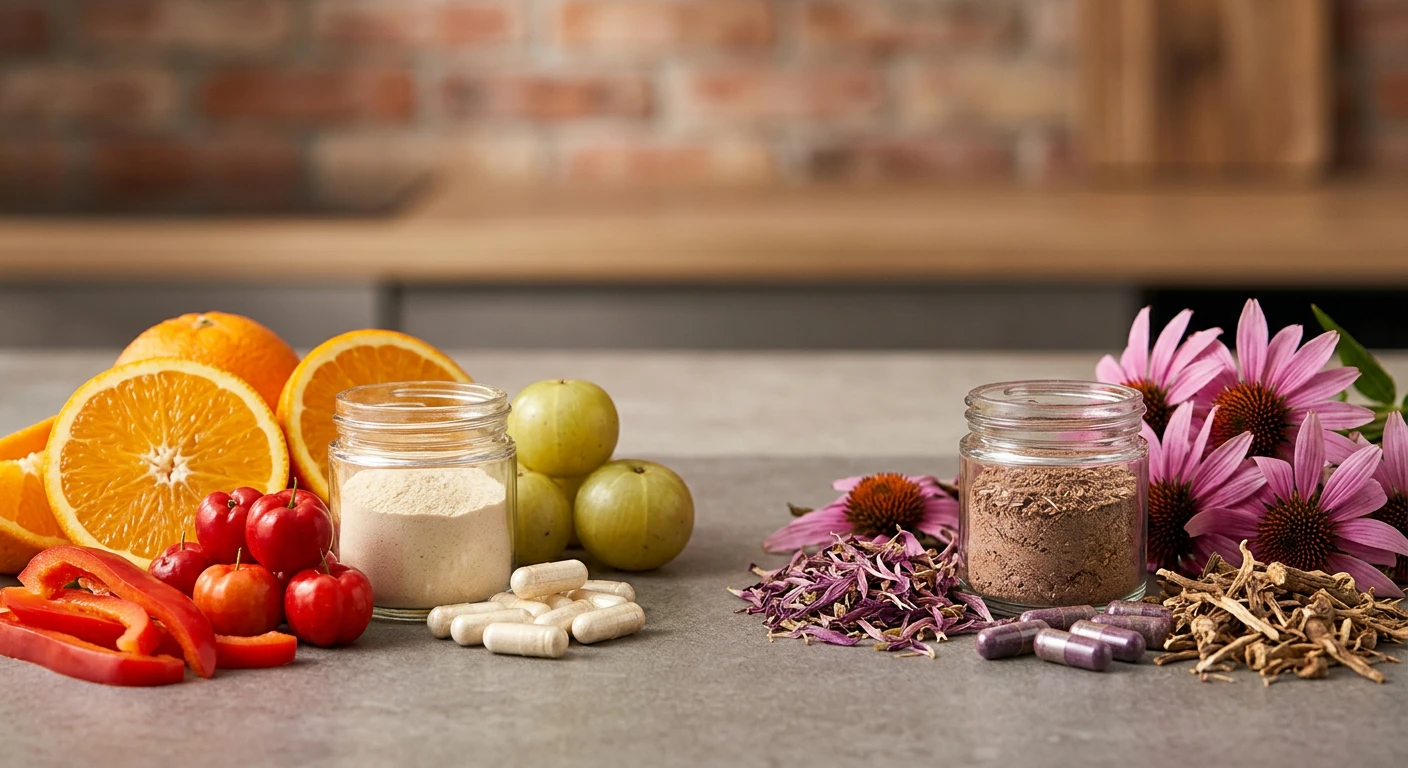
Vitamin C supports immunity daily, while Echinacea provides a quick boost for symptoms. Learn how to use them optimally for your well-being.
Short Answer: Vitamin C is a daily antioxidant and building block for collagen, while Echinacea is a short-term immune stimulant used reactively at the first signs of a cold. Vitamin C is for prevention, Echinacea is for acute intervention. Practical advice: Take 500-1000 mg of Vitamin C daily. At the first symptoms of illness, add 300-500 mg of Echinacea extract 3 times a day for no more than 10 days.
Intense training puts a strain on the immune system. A week off the gym due to a cold can erase months of hard work. That's why athletes seek support in dietary supplements. Vitamin C and Echinacea are two of the most popular. To use them correctly and stay in shape, you need to understand the difference between them.
Many people put them in the same category – "for immunity," but that's not entirely accurate. Vitamin C supports the immune system every day – it participates in collagen synthesis, provides antioxidant protection, and maintains the health of immune cells. Echinacea is more for a quick reaction to already present symptoms, providing a temporary but strong boost to immune defense.
Here we examine the two supplements: how they work, when to use them, how they interact, and how to build a prevention protocol tailored to your training goals. The aim is to make informed decisions about your health.
This article is part of the Expert Hub for Dietary Supplements — over 270 expertly verified articles by Petar Mitkov and the Sport Zona team.
What is the System Analysis of Vitamin C and Echinacea?
System analysis is a comparative matrix that examines the biological status, primary focus, mechanism of action, intake time horizon, impact on training, and other aspects of Vitamin C and Echinacea.
| Criterion | Vitamin C | Echinacea |
|---|---|---|
| Biological Status | Essential vitamin (body does not produce it) | Herb (non-essential compound) |
| Primary Focus | Prevention and maintenance | Reaction to first symptoms (acute phase) |
| Mechanism of Action | Antioxidant; cofactor for collagen; supports immune cells | Immunomodulator (stimulates immune cell activity) |
| Intake Time Horizon | Daily, continuous | Short-term, cyclical (7-14 days) |
| Impact on Training | Reduces oxidative stress and muscle soreness (DOMS) | No direct impact on athletic performance or recovery |
| Specific Bonus | Supports collagen synthesis (healthy joints, skin, blood vessels) | May shorten the duration and severity of colds |
How Does Immune Support from Vitamin C and Echinacea Work?
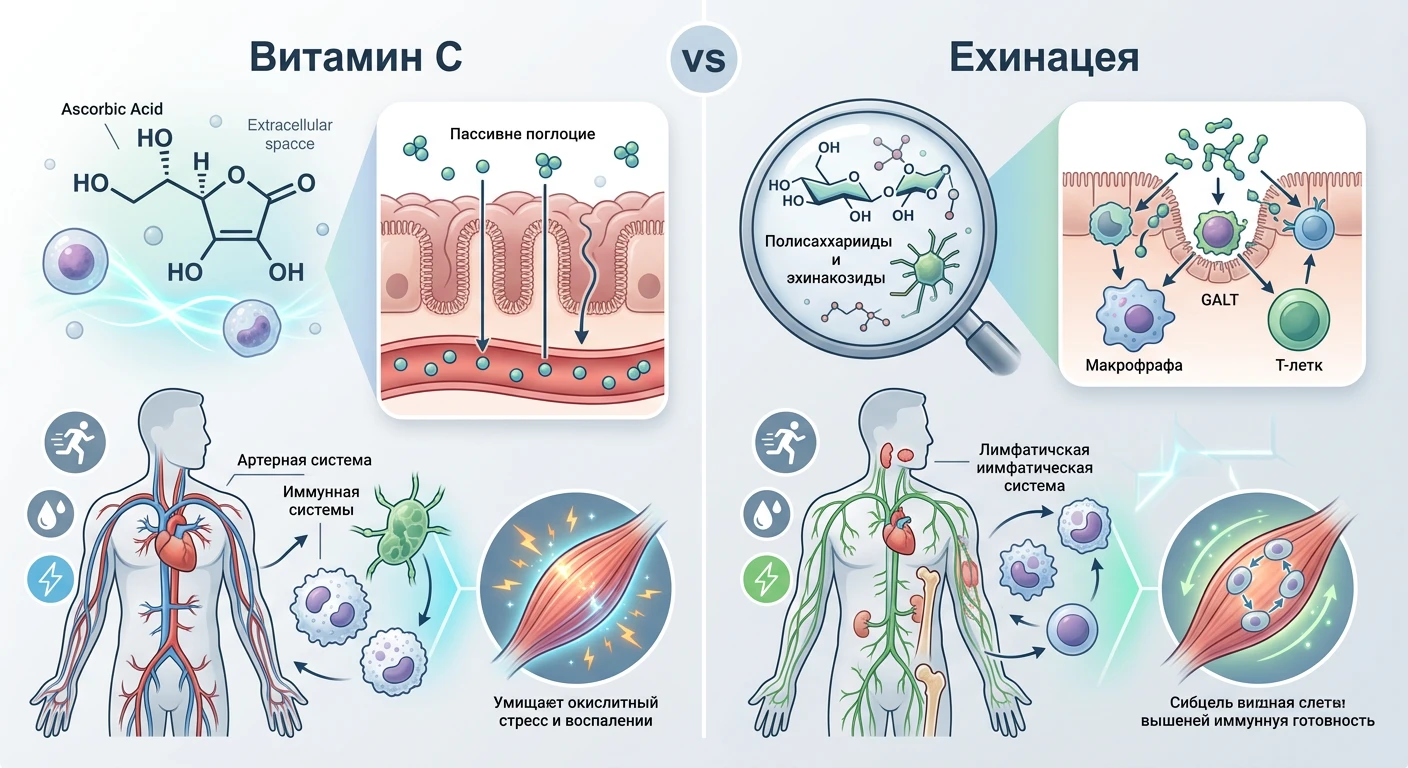
1. Vitamin C: Essential for Immune Defense
Vitamin C is a water-soluble vitamin that is key as an antioxidant and supports collagen synthesis.
Intense training produces free radicals and causes oxidative stress. Vitamin C is a powerful antioxidant that neutralizes these molecules and protects cells from damage. It also "recycles" other antioxidants like vitamin E. It is also necessary for the enzymes that produce collagen – the main protein in connective tissue, joints, tendons, and skin. Without enough vitamin C, the repair of these structures is hindered. In the immune system, it supports the function of phagocytes and neutrophils – cells that destroy pathogens.
Simply put: Vitamin C helps build healthy tissues and protects immune cells, providing them with a suitable environment to function, especially after strenuous workouts.
Scientific Sources
2. Echinacea: Immune Response Activator
Echinacea is a genus of flowering plants in the daisy family. Various parts of the plant (mainly Echinacea purpurea and Echinacea angustifolia) are used in herbal preparations. Unlike vitamin C, it is not a nutrient but contains active compounds such as alkamides, polysaccharides, and caffeic acid derivatives.
Echinacea acts as an immunomodulator – it does not "feed" the immune system but "activates" it. Its components temporarily increase the activity of immune cells, such as macrophages and natural killer (NK) cells, and can influence the production of cytokines (immune system signaling molecules). This effect is why echinacea is used at the first signs of infection to give a quick boost to the body's defenses. Continuous intake is not recommended, as it can lead to immune system "fatigue" or reduced effectiveness.
Simply put: Echinacea temporarily activates immune cells to fight pathogens more aggressively. It doesn't build defenses; it mobilizes existing ones.
Scientific Sources
The Synergistic Effect: Why Do They Work Better Together?
Vitamin C and Echinacea, although different, can work very effectively together if used correctly. This combined effect is based on the "foundation + activator" model.
Continuous intake of Vitamin C ensures that immune cells are strong, healthy, and prepared. When the body faces a threat (first symptoms of a cold), short-term intake of Echinacea acts as an engine, activating these prepared cells. This leads to a faster and more effective immune response than if the immune system is unprepared or does not receive a timely signal.
How to Choose Between Vitamin C and Echinacea?
Choosing a supplement (one or both) is an individual process that depends entirely on the specific situation and the user's personal goals.
Choose Vitamin C if:
- You are looking for constant, daily immune support and prevention.
- You train intensely and want faster recovery and reduced oxidative stress.
- You want to strengthen the health of joints, tendons, and skin through collagen synthesis.
- You are looking for a long-term health strategy.
🔵 Choose Echinacea if:
- You feel the first symptoms of a cold or flu (sore throat, runny nose).
- You are about to travel, go through a stressful period, or be exposed to many people and want temporary protection.
- You are looking for a quick and short-term immune boost.
- You already have a stable foundation and are looking for an additional tool for acute situations.
Recommended Stack for Maximum Protection
Combine the two, but asynchronously. Take 500-1000 mg of Vitamin C daily as a constant supplement. At the first symptoms of illness or before risky events, add Echinacea Extract 3 times a day for 7 to 10 days, then stop taking it, but continue with Vitamin C.
What is the Protocol for 2026: "Foundation and Performance Stack" to Follow?
"Foundation and Performance Stack" is a modern approach to immune support for athletes, characterized by dynamism and intelligent adaptation to the body's needs.
- Daily (Foundation): 500-1000 mg of Vitamin C, taken with food for better tolerance. This is your unwavering base.
- After a particularly strenuous workout: An additional 500 mg of Vitamin C to combat the peak of oxidative stress.
- At the first symptoms/risk (Reaction Stack): Add Echinacea extract (according to label instructions, usually 300-500 mg, 3 times a day) for a period of 7-10 days. Do not exceed 14 days of continuous intake.
Expert Note
This protocol views immunity as a system. The foundation (Vitamin C) is constant because the body's needs are constant. The stack (Echinacea) is dynamic and applied only when necessary. This prevents habituation to the stimulant and preserves its effectiveness when you truly need it.
🧭 When to Choose What?
- Choose Vitamin C if your goal is long-term prevention, better recovery, and maintaining healthy connective tissue. This is your daily shield.
- Choose Echinacea if you need a quick, short-term immune response at the first symptoms of illness or before risky situations like travel. This is your "ambulance."
- Combine both by using Vitamin C constantly and Echinacea tactically to get the best of both worlds: a stable foundation and a powerful response when needed.
📖 What are Vitamin C and Echinacea?
Vitamin C (ascorbic acid) is an essential water-soluble vitamin that acts as an antioxidant and is key for collagen synthesis and immune cell function. The human body cannot produce it and must obtain it through food or supplements.
Echinacea is an herb (plant) whose extracts contain active compounds that can temporarily stimulate (modulate) the immune system's activity. It is not a nutrient but rather a temporary activator.
⚖ Pros and Cons
| Supplement | Pros | Cons |
|---|---|---|
| Vitamin C |
|
|
| Echinacea |
|
|
🗣 Explained Simply
To protect yourself from storms, you build a house. Vitamin C is the building materials – bricks and cement. You need it every day to build and maintain strong walls. Without it, the house crumbles. Echinacea is the alarm system. You don't keep it on constantly; you activate it only when you see a storm approaching to prepare.
| Criterion | Vitamin C (The Building Material) | Echinacea (The Alarm System) |
|---|---|---|
| Role | Builds and maintains | Activates and alerts |
| When to use? | Every day | Only when needed |
| Purpose | Prevention | Reaction |
Choose the right product for your goal:
Explore our expert selections to find the best form for you.
Combined Protocol:
- Foundation: Choose a high-quality Vitamin C for daily intake.
- Reaction: Keep Echinacea extract on hand for first symptoms.
- Recovery: Look into joint products, which often contain Vitamin C as well.
⚖ When to Choose Vitamin C
- For daily, year-round prevention.
- If you train hard and aim for better recovery.
- To maintain healthy joints and connective tissue.
- As the foundation of your supplement regimen.
⚖ When to Choose Echinacea
- When you feel you are getting sick.
- Before or during air travel.
- For a short-term immune "boost."
- As a tactical tool, not a constant supplement.
Expert Note from Sport Zona
In my practice with athletes, I always emphasize a pyramidal approach. The base of the pyramid is sleep, nutrition, and hydration. Immediately after that come essential supplements like Vitamin D, omega-3, and Vitamin C. Echinacea is found at the very top of this pyramid – it's a specialized tool that is effective only if the foundation is stable. I've seen people take Echinacea while sleeping 5 hours and eating poorly, and wonder why it doesn't work. First, build the foundations with Vitamin C, then use Echinacea strategically.
Recommended products
Frequently asked questions
Can Vitamin C and Echinacea be taken together?
Yes, and this is a commonly recommended strategy. Vitamin C provides constant antioxidant protection, while Echinacea is added for 7-10 days at the first signs of a cold or flu for acute immune stimulation. The combination offers both preventive and reactive support.
Which is better for beginners - Vitamin C or Echinacea?
For beginner athletes building a foundation, Vitamin C is more important. It is an essential nutrient with multiple benefits beyond immunity (collagen, antioxidant protection). Echinacea is more of a situational tool, not a daily necessity.
When is the best time to take Vitamin C and Echinacea?
Vitamin C is taken daily, and doses over 500 mg are best divided (e.g., morning and evening after meals) for better absorption. Echinacea is taken only when needed (first symptoms), usually 3 times a day with food, for no more than 10-14 days.
Are there any side effects from taking Vitamin C or Echinacea?
High doses of Vitamin C (>2000 mg) can cause gastrointestinal discomfort. Echinacea can cause allergic reactions in people allergic to plants in the Asteraceae family. It is not recommended for people with autoimmune diseases without consulting a doctor.
What is the recommended dosage for Vitamin C and Echinacea?
For Vitamin C, the maintenance dose for athletes is 500-1000 mg daily. For Echinacea, when symptoms occur, a standardized extract of about 300-500 mg, taken 3 times daily, is recommended for a maximum of 7-10 days.