All About Amino Acids
Everything about amino acids — a complete guide with types, benefits, dosages, and expert recommendations. Everything in one place from SportZone.
All About Amino Acids: A Complete Guide from SportZone
Welcome to the SportZone central station for everything you need to know about amino acids! As expert professionals in sports nutrition and supplements, we understand how crucial every detail is for achieving optimal results. This page is designed to provide you with comprehensive, scientifically-backed, and easily digestible information about amino acids – the fundamental building blocks of life and key allies on your athletic journey.
Whether you're a beginner enthusiast or a seasoned athlete, understanding the role of amino acids is essential for enhancing muscle growth, recovery, endurance, and overall well-being. Here, you'll find answers to the most frequently asked questions, get acquainted with the different types of amino acids, and learn how to integrate them effectively into your regimen.
What are Amino Acids and Why are They Important for Athletes?
Amino acids are organic compounds that serve as the basic building blocks of proteins, and proteins, in turn, are vital for almost all biological processes in the body. They are involved in building muscles, enzymes, hormones, and neurotransmitters, making them indispensable for health and the normal functioning of the organism. For athletes, their role is even more critical, as they directly influence muscle growth, strength, endurance, post-exercise recovery, and even mental focus.
🔬 From SportZone's Experience
In our work with over 50,000 clients, we see that a large portion of athletes underestimate the importance of a complete amino acid profile in their diet, especially when relying solely on protein powder. A common mistake is taking BCAAs without realizing they are only 3 of the essential amino acids, while the body needs all 9 for optimal protein synthesis and recovery. We observe significantly better results in those who include a source of all EAAs.
When we train, muscle fibers undergo micro-tears, and amino acids are what provide the necessary "bricks" for them to repair and become stronger, a process known as muscle hypertrophy. Furthermore, some amino acids can act as an energy source during prolonged workouts, support the immune system, which is often stressed during intense exertion, and optimize hormonal balance. Understanding the specific functions of different amino acids can help you personalize your diet and supplement regimen for maximum results.
What Types of Amino Acids Exist and How Do We Distinguish Them?
Amino acids are primarily classified into three categories: essential, non-essential, and conditionally essential. This classification is based on the human body's ability to synthesize them independently.
📚 Scientific Sources
- Wolfe, R. R. (2017). Branched-chain amino acids and muscle protein synthesis in humans: myth or reality?. Journal of the International Society of Sports Nutrition, 14(1), 30. (DOI: 10.1186/s12970-017-0184-9)
- Morton, R. W., Murphy, K. T., McKellar, S. R., et al. (2018). Dietary protein distribution, protein intake and skeletal muscle mass and strength in physically active men. Journal of Sports Sciences, 36(20), 2351-2358. (DOI: 10.1080/02640414.2018.1466030)
- Reidy, P. T., & Rasmussen, B. B. (2016). Role of Ingestion of Essential Amino Acids and Protein in the Regulation of Muscle Protein Synthesis and Anabolic Signaling in Young and Old Persons. Journal of Nutrition, 146(2), 191-201. (DOI: 10.3945/jn.114.203208)
- Shimomura, Y., Inaguma, A., Watanabe, Y., et al. (2010). Branched-chain amino acid supplementation before squat exercise and delayed-onset muscle soreness. International Journal of Sport Nutrition and Exercise Metabolism, 20(3), 236-244. (PubMed ID: 20601741)
- Essential Amino Acids (EAA): These are amino acids that the body cannot produce on its own and must be obtained through diet or supplements. They are extremely important for the body and especially for athletes, as they are directly involved in muscle protein synthesis and recovery. Among them are:
- Leucine – A key amino acid for initiating muscle protein synthesis.
- Isoleucine
- Valine
- Lysine – Important for tissue growth and repair.
- Methionine – Involved in metabolism and detoxification.
- Phenylalanine – A precursor to neurotransmitters.
- Threonine
- Tryptophan
- Histidine
- All these amino acids, taken together, form EAA.
- Branched-Chain Amino Acids (BCAA): These are a subgroup of essential amino acids, including Leucine, Isoleucine, and Valine. They are particularly important for muscles, as they are metabolized directly in them, not in the liver. BCAAs are known for their ability to support muscle growth, reduce muscle fatigue, and accelerate recovery.
- Non-Essential Amino Acids: The body can produce them on its own, even if we don't consume them through food. However, they are also important for numerous bodily functions. Examples include:
- Alanine
- Asparagine
- Aspartic acid
- Glutamic acid
- Serine
- Glycine
- Proline
- Cysteine
- Conditionally Essential Amino Acids: Under certain conditions, such as illness, stress, or intense physical exertion, the body may not produce enough of these amino acids, and they become "essential" for that period. Some of them are:
- L-Glutamine – The most abundant amino acid in the body, crucial for the immune system and recovery.
- L-Arginine – A precursor to nitric oxide, important for blood circulation.
- Tyrosine – Involved in neurotransmitter production.
- Ornithine – Supports detoxification and growth hormone production.
- L-Citrulline – Supports nitric oxide production and reduces fatigue.
- Taurine – Supports nervous system function and hydration.
- Beta-alanine – A precursor to Carnosine, which buffers lactic acid.
- D-Aspartic acid – May influence testosterone levels.
- L-Theanine – Supports relaxation and focus.
- HMB – A metabolite of leucine, supports muscle growth and reduces breakdown.
- Agmatine – May support nitric oxide production.
How to Choose the Right Amino Acid for Our Goals?
The choice of appropriate amino acids depends entirely on your individual goals, training type, and dietary regimen. Here are some general recommendations:
- For muscle growth: EAA or BCAA (especially Leucine), as well as HMB. They directly stimulate protein synthesis and support the accumulation of lean muscle mass.
- For endurance: Beta-alanine (due to Carnosine production) and L-Citrulline. They can reduce fatigue, improve blood flow, and allow for longer and more intense workouts. L-Arginine can also be beneficial.
- For recovery: L-Glutamine, BCAA, EAA. They help reduce muscle soreness, accelerate muscle fiber repair, and support immune function.
- For weight loss: BCAA (to preserve muscle mass during a calorie deficit) and L-Glutamine (to support metabolism and immunity). Some studies suggest that L-Carnitine (unrelated to the amino acids in the list, but often discussed in this context) may also aid fat burning.
- For beginners: BCAA or EAA are a great starting point. They will provide the essential building blocks for muscle growth and recovery without overwhelming the system with too many different supplements.
- For improving focus and mood: L-Theanine, Tyrosine, Phenylalanine.
- For supporting hormonal balance: D-Aspartic acid, Ornithine.
How and When to Take Amino Acids for Maximum Results?
Proper intake of amino acids can significantly impact their effectiveness. There is no universal rule, but general principles exist that can optimize your results:
- Before training: Taking amino acids before training can prepare muscles for exertion, reduce muscle protein breakdown during exercise, and provide energy. This is especially true for BCAA, L-Citrulline (for better "pump" and endurance), and Beta-alanine (for buffering lactic acid). The dose is typically 5-10g for BCAA/EAA, 6-8g for L-Citrulline, and 2-5g for Beta-alanine, taken 20-30 minutes before training.
- After training: This is a critical period for recovery and muscle growth. Taking amino acids immediately after training helps rapidly replenish muscle glycogen stores, stimulates protein synthesis, and reduces muscle soreness. EAA (including BCAA) and L-Glutamine are particularly recommended. The dose can range from 5-10g for BCAA/EAA and 5-10g for L-Glutamine, taken within 30-60 minutes after finishing training.
- Every day (between meals or before sleep): Some amino acids can be beneficial outside the training window. For example, L-Glutamine can be taken daily to support the immune system and gut health. BCAA or EAA can be taken between meals to maintain a steady supply of building blocks and prevent muscle breakdown, especially on calorie-restricted diets. L-Theanine can be taken before sleep to improve sleep quality.
Always read product labels and follow the manufacturer's recommendations. Individual needs may vary.
What Amino Acid Combinations (Stacks) Work Best?
Combining amino acids can lead to a synergistic effect, amplifying the benefits of each individually. Here are some popular and effective combinations:
- For maximum muscle growth and recovery: EAA + L-Glutamine + HMB
- EAA: Provide all the essential amino acids needed for complete protein synthesis.
- L-Glutamine: Supports recovery, reduces muscle soreness, and maintains the immune system, which is stressed during intense training.
- HMB: A metabolite of leucine that can reduce muscle breakdown and support muscle growth.
- Intake: EAA and L-Glutamine post-workout, HMB can be divided into several doses throughout the day.
- For improved endurance and pump: L-Citrulline + Beta-alanine + L-Arginine
- L-Citrulline: Increases nitric oxide levels, improving blood flow and nutrient delivery to muscles.
- Beta-alanine: Increases Carnosine levels in muscles, buffering lactic acid and delaying fatigue.
- L-Arginine: Also supports nitric oxide production, enhancing the effect of citrulline.
- Intake: All together 20-30 minutes before training.
- For focus and anti-stress during dieting: BCAA + L-Theanine + Tyrosine
- BCAA: Help preserve muscle mass during calorie deficit and can reduce fatigue.
- L-Theanine: Supports relaxation without causing drowsiness and can improve focus.
- Tyrosine: A precursor to dopamine and norepinephrine, which can improve mood and cognitive function, especially under stress.
- Intake: BCAA between meals, L-Theanine and Tyrosine in the morning or before mental activity.
- For hormone optimization and general well-being: D-Aspartic acid + Ornithine + L-Arginine
- D-Aspartic acid: May support natural testosterone production.
- Ornithine: Involved in the urea cycle and may support growth hormone release.
- L-Arginine: May also influence growth hormone levels and improve blood circulation.
- Intake: Usually before bed or on an empty stomach in the morning.
What Are the Most Common Mistakes When Taking Amino Acids?
Despite numerous benefits, improper intake of amino acids can limit their effectiveness or even lead to undesirable consequences. Here are some of the most common mistakes:
- ❌ Expecting miraculous results without changing diet and training — Amino acids are supplements, not replacements. They optimize results from a well-structured diet and training regimen but cannot compensate for their absence. For maximum effect, ensure you consume enough protein from food and train consistently.
- ❌ Incorrect dosage — Taking too small doses may not lead to the desired effect, while excessive doses can be ineffective or even cause stomach discomfort. Always follow the manufacturer's recommendations or consult a specialist. For example, for BCAA, 5-10g per serving is often recommended, and for L-Glutamine - 5-10g.
- ❌ Incorrect timing — Timing of intake matters. For example, BCAA are most effective before, during, or after training, while L-Theanine may be more suitable for intake before sleep or to improve focus. Taking amino acids at the wrong time can reduce their absorption or not lead to optimal results.
- ❌ Ignoring product quality — Not all amino acid supplements are created equal. Choose products from reputable manufacturers that can ensure purity and quality. Check for certifications and avoid products with unnecessary fillers or artificial additives.
- ❌ Relying only on BCAA instead of EAA — While BCAA are important, they are only three of the nine essential amino acids. For complete protein synthesis and optimal recovery, the body needs all nine. In some cases, taking EAA may be more effective for overall recovery and growth.
- ❌ Taking amino acids with a high-protein meal — If you have already consumed a large amount of protein (e.g., whey protein), which is rich in amino acids, adding more amino acids may not provide significant additional benefits, as the body already has enough building blocks. Amino acids are more effective when taken on an empty stomach or between meals to ensure rapid absorption.
- ❌ Ignoring individual needs and tolerance — Every organism is different. What works for one person may not work for another. Monitor how your body reacts to different amino acids and adjust doses or types according to your sensations and results. If adverse reactions occur, discontinue use and consult a specialist.
What Should We Know About Amino Acids in Brief?
| Amino Acid Name | Main Benefit | Recommended Dosage (approximate) | Recommended Timing | Detailed Article |
|---|---|---|---|---|
| BCAA | Muscle growth, recovery, fatigue reduction | 5-10g | Before/during/after training, between meals | BCAA |
| EAA | Complete muscle protein synthesis, recovery | 7-15g | Before/after training, between meals | EAA |
| L-Glutamine | Recovery, immune support, gut health | 5-10g | After training, before sleep, morning | L-Glutamine |
| L-Arginine | Nitric oxide, circulation, pump | 3-6g | Before training, before sleep | L-Arginine |
| L-Citrulline | Endurance, pump, fatigue reduction | 6-8g (L-Citrulline Malate) | Before training | L-Citrulline |
| Beta-alanine | Endurance, lactic acid buffering | 2-5g | Before training, split doses throughout the day | Beta-alanine |
| HMB | Reduced muscle breakdown, muscle growth | 1-3g | Split doses throughout the day | HMB |
| Taurine | Hydration, nerve function, antioxidant | 1-3g | Before training, anytime | Taurine |
| L-Theanine | Relaxation, focus, stress reduction | 100-200mg | Before sleep, before mental activity | L-Theanine |
| D-Aspartic acid | Testosterone support | 2-3g | Morning, before sleep | D-Aspartic acid |
| Ornithine | Detoxification, growth hormone | 500-2000mg | Before sleep, on an empty stomach | Ornithine |
| Proline | Joint and connective tissue health | 500-1000mg | Anytime | Proline |
| Phenylalanine | Neurotransmitter precursor, mood | 500-1000mg | Morning, between meals | Phenylalanine |
| Agmatine | Pump, neuroprotection | 500-1000mg | Before training | Agmatine |
| Carnosine | Antioxidant, lactic acid buffering (derived from Beta-alanine) | No direct dosage (take Beta-alanine) | No direct intake | Carnosine |
| Leucine | Muscle protein synthesis (part of BCAA/EAA) | 2-5g (as part of BCAA/EAA) | Before/after training | Leucine |
| Cysteine | Antioxidant (glutathione precursor) | 500-1000mg | Anytime | Cysteine |
| Lysine | Tissue growth and repair, immune support | 500-1000mg | Anytime | Lysine |
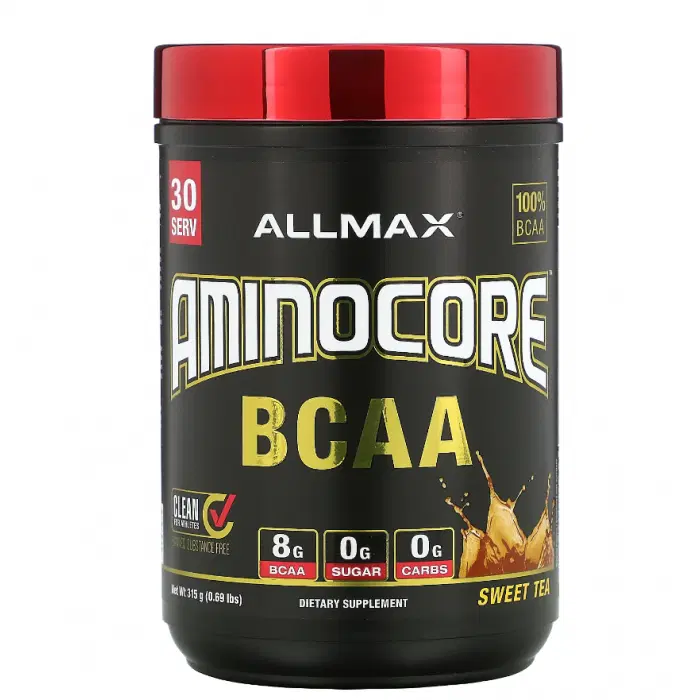
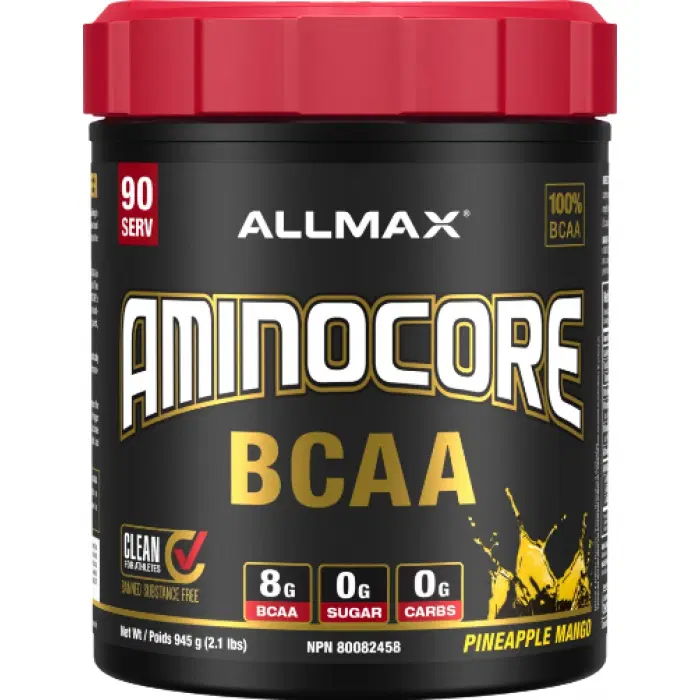
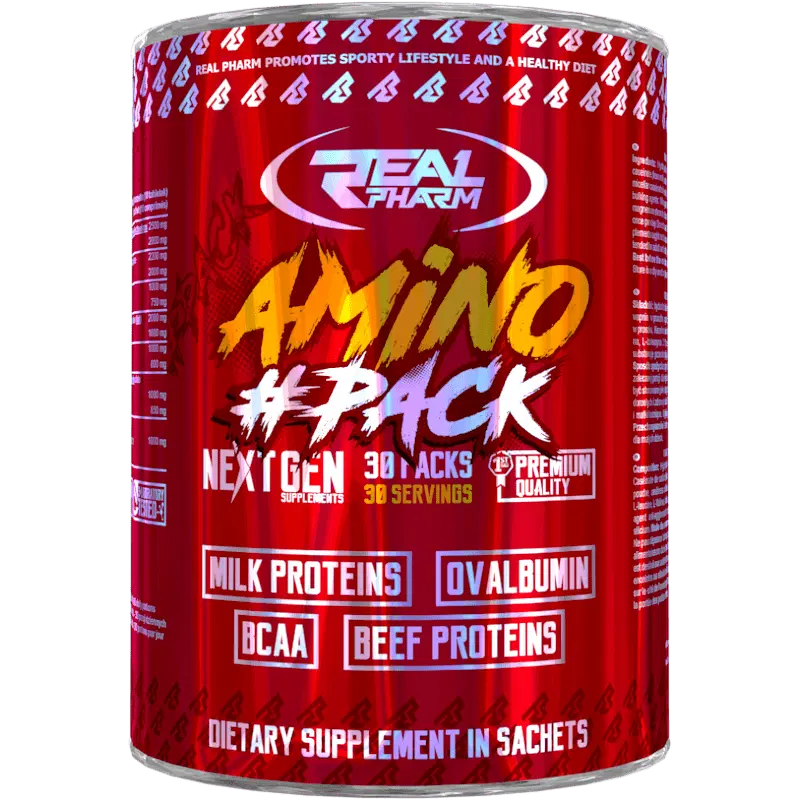
Recommended products
Frequently asked questions
What are amino acids?
Amino acids are the building blocks of proteins. They are organic compounds that contain an amino group (-NH2) and a carboxyl group (-COOH) attached to a central carbon atom.
How many types of amino acids exist?
There are 20 standard amino acids found in proteins in living organisms. These 20 amino acids are directly encoded by the genetic code.
Which are the most important amino acids?
All 20 standard amino acids are important for various bodily functions. However, some of them are classified as essential because the body cannot synthesize them and they must be obtained through diet.
What is the difference between essential and non-essential amino acids?
Essential amino acids cannot be synthesized by the body and must be obtained through diet. Non-essential amino acids can be synthesized by the body, usually from other amino acids or metabolic products.
What is the role of amino acids in the body?
Amino acids are essential for building and repairing tissues, synthesizing enzymes and hormones, and maintaining immune function. They also participate in energy metabolism.