Whey vs. Casein: The Architecture of Milk Proteins
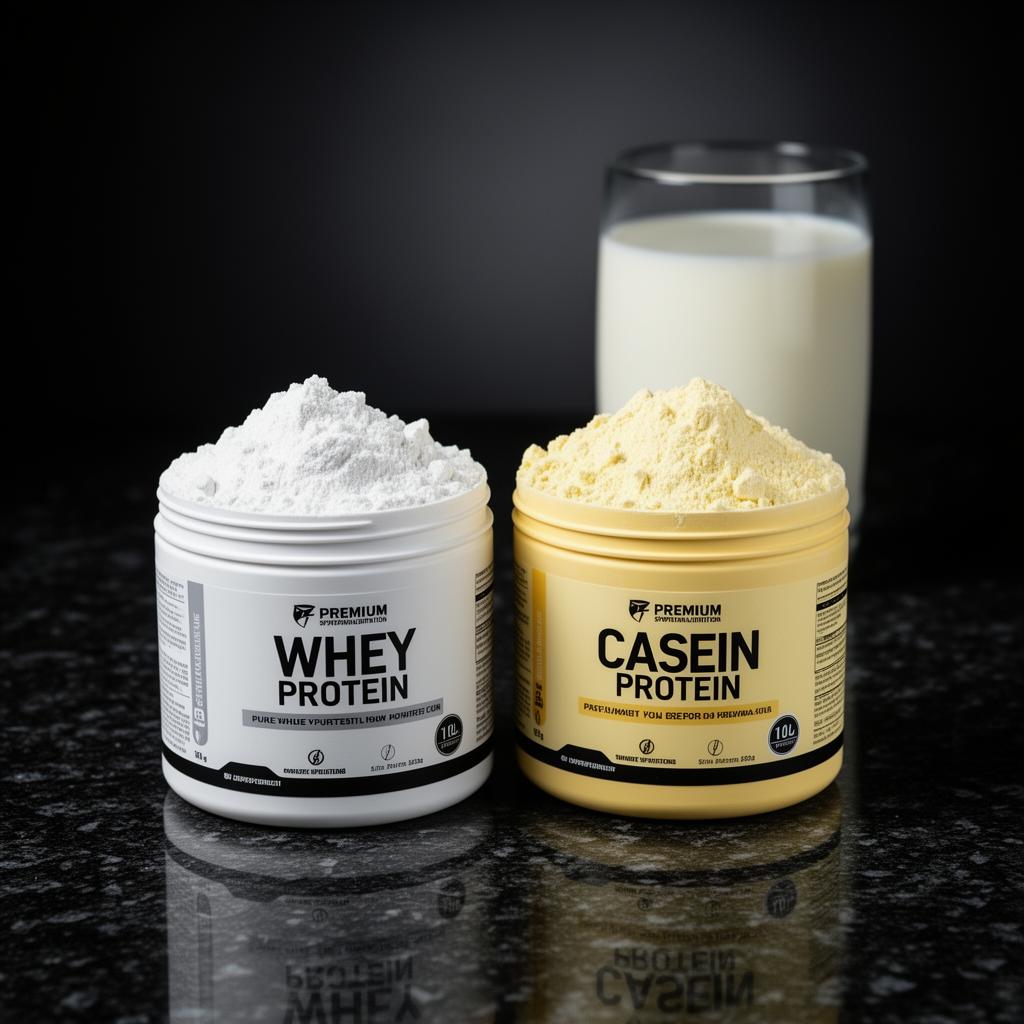
Understand the key differences between whey protein and casein – when to take each for maximum muscle growth and recovery.
Short Answer: Whey protein provides a rapid anabolic peak for 60-90 minutes, while casein maintains a steady amino acid flow for 5-8 hours. Scientific data shows that 40g of casein before sleep increases overnight protein synthesis by 22%. Practical Advice: Combine 50% whey and 50% casein post-workout for optimal muscle growth and recovery.
Within the category of dairy proteins, there are two main types. Although both originate from the same source, their absorption rates place them in fundamentally different functional roles.
See also the expert knowledge base on supplements — over 270 expert-verified articles by Petar Mitkov and the Sport Zona team.
What is the difference between whey protein and casein?
The comparison table illustrates the key differences between whey protein and casein, tracking their metabolic role, absorption rate, insulin response, key components, and physical state.

| Parameter | Whey | Casein |
|---|---|---|
| Metabolic Role | Stimulates muscle growth (anabolism) | Protects against muscle breakdown (anti-catabolism) |
| Absorption Rate | Fast – amino acid peak in 60–90 min | Slow – steady flow for 5–8 hours |
| Insulin Response | High – stimulates rapid recovery | Low – maintains stable blood sugar |
| Key Component | High concentration of Leucine | High concentration of Glutamine |
| Physical State | Liquid, rapidly soluble | Gel-like structure in stomach environment |
Why is whey protein absorbed quickly?
Whey is the water-soluble part of milk, which, due to its rapid passage through the stomach, causes a sharp spike in muscle protein synthesis (MPS), making it suitable for post-workout consumption.
Scientific Sources
- Boirie, Y., et al. (1997). Slow and fast dietary protein ingestion: effects on postprandial amino acidemia, proteinemia, and protein synthesis. PNAS, 94(26), 14930-14935. (DOI: 10.1073/pnas.94.26.14930)
- Dangin, M., et al. (2001). Rate of protein digestion affects postprandial protein retention. American Journal of Physiology-Endocrinology and Metabolism, 280(2), E340-E348. (PubMed: 11158913)
- Hoffman, J. R., & Falvo, M. J. (2004). Protein – Which is Best?. Journal of Sports Science & Medicine, 3(3), 118. (PubMed: 24696081)
- Reitelseder, S., et al. (2011). Whey and casein, labeled with 15N and 13C: effects on resting and post-exercise muscle protein synthesis in healthy young men. American Journal of Physiology-Endocrinology and Metabolism, 300(4), E856-E862. (DOI: 10.1152/ajpendo.00511.2010)
Experience Insight
We observe that the most common mistake is relying on only one type of protein. While both whey and casein protein have their advantages, optimal results are achieved with an intelligent combination tailored to the timing of intake and goals. The ratio between fast and slow proteins within a single meal for maximum muscle recovery and growth is often underestimated.
Types of Whey Protein
- Concentrate (WPC): Balanced profile with immune-supporting microfractions. Contains 70–80% protein.
- Isolate (WPI): Purified from lactose and fat, with over 90% protein content. Suitable for lactose intolerance.
- Hydrolysate (WPH): Pre-digested for maximum rapid absorption. Used when immediate recovery is needed.
An additional benefit of whey is that it increases glutathione levels – one of the most powerful antioxidants in the body.
Simply put: It's like choosing between different types of fuel for a car – each is propelling, but with different additives and burn rates that affect efficiency.
What is casein and why is it released slowly?
Casein is the main protein fraction of milk, which is a slow-release protein because it reacts with stomach acids to form a micellar gel, providing a slow and gradual release of amino acids over several hours.
When to take casein
- Before sleep: Evening intake ensures a positive nitrogen balance overnight and prevents muscle breakdown during fasting.
- Appetite control: Its high satiety index makes it suitable for calorie deficit and weight loss phases.
- Culinary use: Due to its thick texture, it's excellent for protein puddings, panna cotta, and desserts.
Can we combine whey and casein protein?
A combined approach represents a strategy for optimizing protein intake results, which involves the simultaneous use of both whey and casein protein.
- Post-workout: A combination of 50% whey and 50% casein provides both a rapid anabolic start and sustained amino acid support.
- Daily regimen: Whey in the morning (to end nocturnal catabolism) and casein in the evening (for overnight protection).
Important: For lactose intolerance, choose a highly filtered whey isolate (WPI) or micellar casein with added digestive enzymes.
What does science say about different milk proteins?
Whey and casein protein have different effects on muscle synthesis: whey causes a stronger but sharper anabolic response, while casein provides a more prolonged positive nitrogen balance. After a 12-week training period, the differences in muscle mass between them are statistically insignificant, according to a 2017 meta-analysis in the Journal of the International Society of Sports Nutrition.
A study by Res et al. (2012) in the journal Medicine & Science in Sports & Exercise demonstrated that consuming 40g of casein before sleep increases overnight protein synthesis by 22% and improves overall nitrogen balance.
What are common mistakes in protein intake?
- Excessive dose at once: More than 50g of whey per serving can cause bloating and gas. An appropriate single dose is 25–40g.
- Casein post-workout: Casein is too slow for the post-workout anabolic window. Combine with a fast source (whey or EAA).
- Ignoring total protein intake: The type of protein is secondary to the total daily amount. Aim for 1.6–2.2 g/kg body weight.
- Fear of lactose: Whey isolate (WPI) contains less than 1% lactose and is safe for most people with intolerance.
Common mistakes in protein intake include excessive single doses (over 50g of whey), consuming casein immediately post-workout, ignoring total protein intake, and unfounded fear of lactose. The recommended single dose of whey is 25–40g.
For complete recovery and muscle growth: 1 dose (approx. 25-30g) of whey protein hydrolysate immediately after training, followed by 1 dose (25-30g) of micellar casein before sleep.
When should I use a whey and casein blend?
| Time | Supplement | Dose | Goal |
|---|---|---|---|
| 07:00 (Wake-up) | Whey Isolate | 25–30 g | Breaking nocturnal catabolism |
| Post-workout | Whey Concentrate/Isolate | 30–40 g | Anabolic start |
| 22:00 (Before sleep) | Micellar Casein | 30–40 g | Overnight anti-catabolic protection |
A blend of 60% whey and 40% casein can be taken during the day for additional protein when seeking a balance between rapid absorption and sustained release.
Expert Conclusion
Whey protein is the "sprinter" – fast and powerful. Casein is the "marathon runner." Slow and steady. The right strategy is to combine them: whey post-workout and in the morning, casein before sleep. This covers both muscle recovery windows.
🧭 When to Choose Which?
- Choose Whey Protein if you need rapid absorption post-workout for immediate muscle recovery.
- Choose Casein if you seek sustained amino acid release during long periods without eating, such as before bed.
- Combine Both if you want to optimize both rapid and slow recovery, utilizing the specific benefits of each protein at different times of the day.
📖 What are Whey and Casein?
Whey protein is a fast-absorbing protein derived from milk, suitable for post-workout consumption for rapid recovery. Casein is a slow-absorbing protein, also from milk, which provides a sustained release of amino acids, suitable for consumption before sleep.
⚖ Pros and Cons
| Pros | Cons |
|---|---|
|
|
🗣 Simply Explained
Dairy proteins, whey and casein, are like different types of building materials. Whey is the fast violin – it's absorbed instantly and is great for post-workout when your muscles need quick "fuel." Casein, on the other hand, is like a slow but steady builder – it's released over a long period and is good before bed to feed muscles overnight.
Choose the right product for your goal:
→ Whey Protein
→ Casein Protein
→ Whey and Casein Protein Blend
Combined protocol for maximum effectiveness:
Combining products increases effectiveness. Based on Sport Zona practice.
⚖ When to Choose Whey
- An athlete post-workout, for a quick start to muscle growth.
- An athlete in the morning, immediately after waking up, to break nocturnal catabolism.
- An athlete needing rapid muscle recovery after intense exertion.
- For lactose intolerance, isolate is suitable for quick protein intake.
⚖ When to Choose Casein
- An athlete before sleep, for overnight anti-catabolic protection and positive nitrogen balance.
- An athlete in a calorie deficit period, for appetite control and satiety.
- An athlete seeking slow and sustained amino acid release.
- An athlete for culinary use, for preparing thick protein desserts.
Expert Note from Sport Zona
From our observations over the years, whey remains the gold standard for immediate post-workout recovery. However, for visible progress in muscle growth, especially when daily food intake is more spread out, casein often proves to be key for additional support that goes beyond the short-term effect of whey protein.
Recommended products

Frequently asked questions
When is the best time to take whey protein?
Whey protein is ideal for consumption immediately after training due to its rapid absorption, which stimulates muscle protein synthesis. It can also be taken in the morning to combat nighttime muscle breakdown.
Why is casein recommended before bed?
Casein is digested slowly, providing a sustained release of amino acids throughout the night. This helps prevent muscle breakdown and maintains a positive nitrogen balance while you sleep.
Can whey protein and casein be combined?
Yes, combining them is possible and often recommended. For example, a 50% whey and 50% casein blend can be taken post-workout for a rapid anabolic start and prolonged muscle support.
What are the main differences between whey and casein?
The primary difference lies in their absorption rate: whey is fast-acting and promotes muscle growth, while casein is slow-digesting and prevents muscle breakdown. They have different physical properties and effectiveness at different times.