Магнезий глицинат

Magnesium glycinate is a chelated form where magnesium is bound to the amino acid glycine — a combination that achieves bioavailability up to 80%, compared to only 4-10% for magnesium oxide. This makes it a preferred choice for deficiency, insomnia, muscle cramps, and stress.
Unlike magnesium citrate, glycinate does not cause diarrhea and is suitable for evening intake — glycine itself has a calming effect on the CNS.
- 7Nutrition - Magnesium Bisglycinate - 120 vege caps – 14.00 €
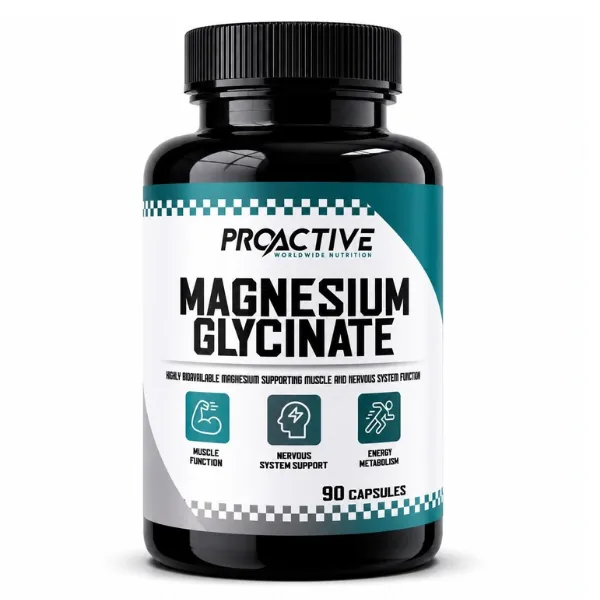 ProActive Magnesium Glycinate 90 капсули – 5.04 €
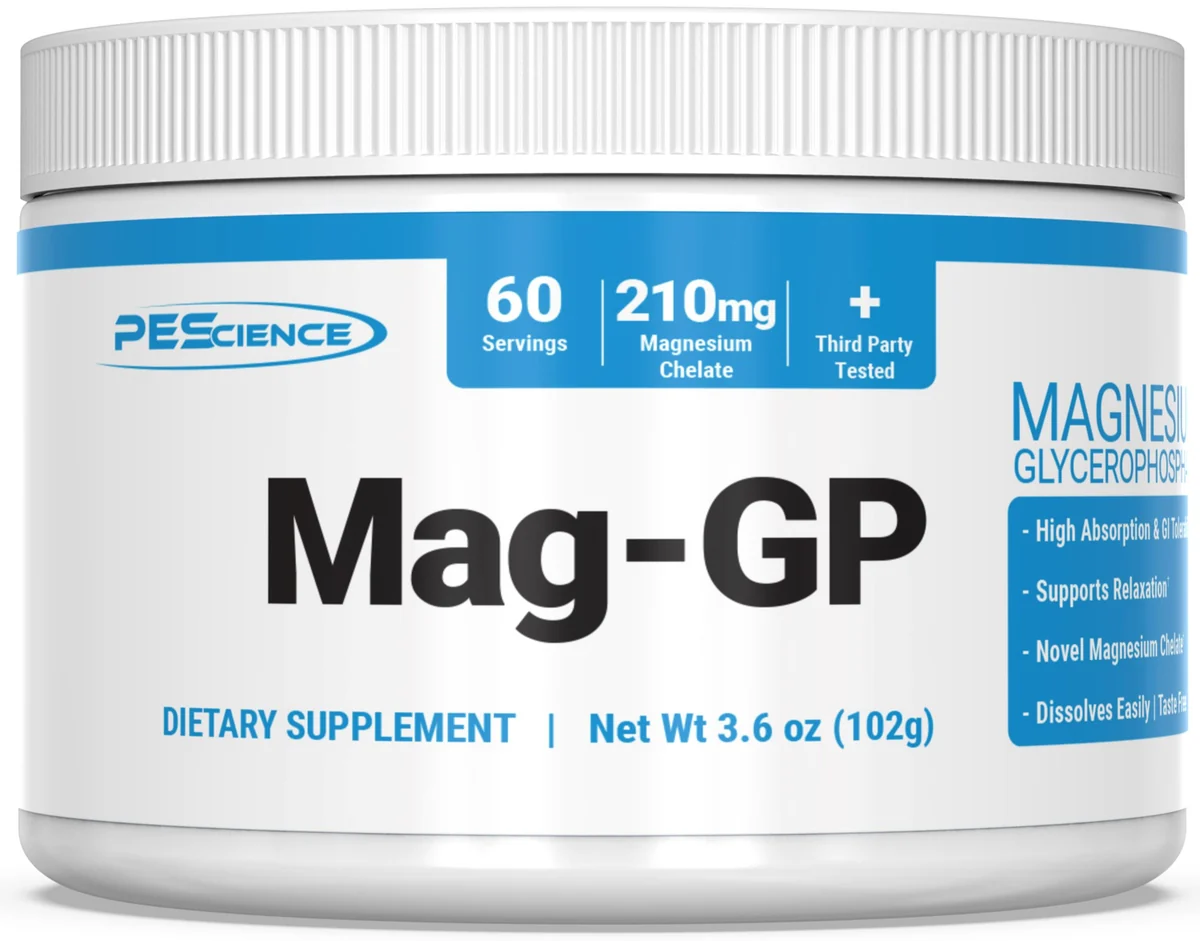 PEScience Mag-GP – 19.99 €
What is magnesium glycinate?
Magnesium glycinate (magnesium bisglycinate) is a chelated form of magnesium, where the mineral is strongly bound to two molecules of the amino acid glycine. This structure protects magnesium from binding with phytates and oxalates in the intestines and allows direct absorption through amino acid transporters — which is why bioavailability reaches 80%, compared to only 4–10% for magnesium oxide.
What does magnesium glycinate help with?
Magnesium participates in over 300 enzymatic reactions in the body — energy production (ATP), muscle contraction, nerve conduction, DNA synthesis, and blood pressure regulation. The glycinate form is particularly useful for:
- Insomnia and disturbed sleep — glycine activates GABA receptors and lowers body temperature before sleep.
- Chronic stress and anxiety — reduces cortisol and stabilizes the nervous system.
- Muscle cramps and spasms — especially nocturnal and in athletes with intense training.
- Migraine and headaches — proven effect in magnesium deficiency.
- PMS and menstrual pain — reduces fluid retention and cramps.
When and how to take it?
The recommended dose is 200–400 mg of elemental magnesium daily, preferably in the evening, 30–60 minutes before sleep. For higher doses (300–400 mg), divide the intake into two times — afternoon and evening. Taking it with food reduces the likelihood of stomach discomfort, but glycinate is well tolerated even on an empty stomach.
Magnesium glycinate vs. other forms
Unlike magnesium citrate (40% bioavailability, mild laxative effect) and magnesium oxide (4–10%, often causes diarrhea), glycinate is the most stomach-friendly and has the highest absorption. Malate is more suitable for morning intake for fatigue, and threonate — for cognitive function. Glycinate is the first choice for insomnia, stress, and recovery.