Probiotice vs. Prebiotice: Bacteriile bune vs. Hrana pentru bacterii
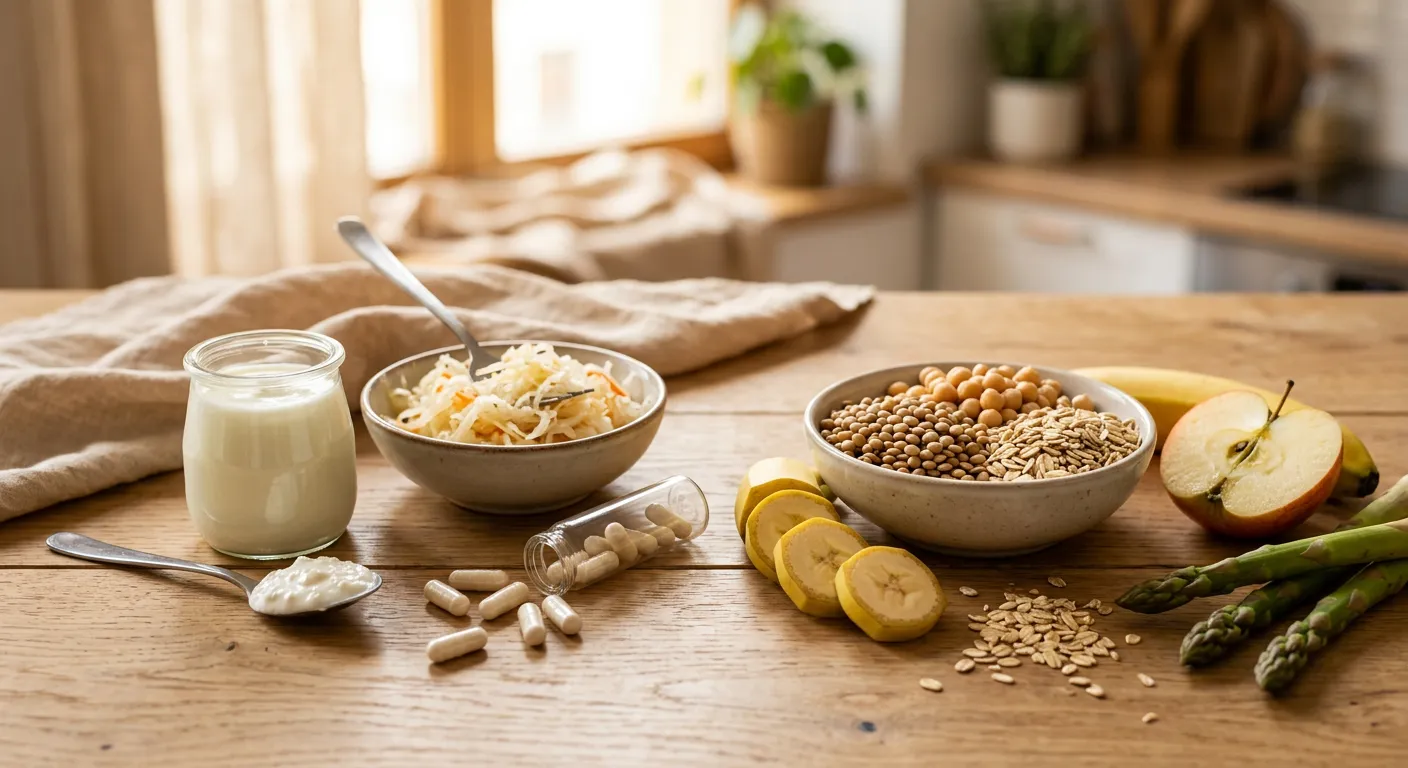
Articolul explică probioticele și prebioticele, factori adesea neglijați pentru sănătatea intestinală. Un protocol cu n=41 sportivi a arătat o reducere de 82% a problemelor gastro-intestinale.
Every third athlete I work with on a nutrition plan comes with a complaint that seemingly has nothing to do with food – "I just don't have energy," "I'm constantly getting sick," "I recover more slowly." In 9 out of 10 cases, after ruling out basic errors in calories and macros, we arrive at the same culprit: compromised gut health. Losing 5-8% of strength or endurance just because of bloating and poor digestion sounds absurd, but I see it in my practice every week. And here the battle boils down to two terms that everyone has heard of, but few understand in depth: probiotics and prebiotics.
Practice Data: Synbiotic Protocol in Athletes
During the last competitive season, we conducted an eight-week protocol with a group of n=41 athletes (primarily cycling and triathlon) who suffered from recurrent gastrointestinal problems and frequent infections during periods of high training volume. The protocol included a combination of a strain-specific probiotic and a prebiotic (partially hydrolyzed guar gum).
- 34 out of 41 athletes (82%) reported a significant reduction (over 50% on a subjective scale) in symptoms such as bloating, gas, and discomfort during training.
- The average number of days with colds/viral illnesses in the group dropped from 4.1 to 1.2 for the same eight-week period compared to the previous year.
- In a subgroup of n=12 female athletes with low ferritin levels, we observed an average increase of 9% in serum iron levels without changes in diet or additional iron intake, which I attribute to improved absorption.
Probiotics vs. Prebiotics: Special Forces or Army Support?
When I explain the difference, I always use a military analogy. It's crude, but it works. You have to decide if you need a quick, surgical intervention, or if you want to strengthen and train your own troops for long-term defense. Here's how the two approaches fundamentally differ.
Probiotics: "The Special Forces"
Probiotics are live bacteria that you introduce from the outside. They are your elite, foreign special forces. You send them on a specific mission:
- After antibiotics: Your own army has been wiped out by an "atomic bomb." The special forces must enter and occupy key positions before the enemy (pathogens, fungi) does.
- Before traveling: You send in a unit trained to fight local terrorist groups (like E. coli, which causes traveler's diarrhea). The L. rhamnosus GG strain is a classic example.
- During an acute infection: You need a rapid strike to suppress pathogens.
The problem? These soldiers are mercenaries. As long as you pay them (take the supplement), they are there. If you stop, most of them leave. Colonization, i.e., their permanent settlement, is more the exception than the rule. The effect is fast, but often dependent on continuous intake.
Prebiotics: "The Military Academy and Logistics"
Prebiotics are not alive. They are the food, weapons, and training grounds for your own, local army of good bacteria. These are specific types of fibers (inulin, FOS, GOS, PHGG) that you cannot digest, but your beneficial bacteria adore them.
The mechanism is slower, but much more fundamental:
- Nourishment: You give your Bifidobacterium and Lactobacillus their favorite food. They become stronger and multiply, naturally suppressing bad bacteria.
- Weapon Production: In the process of fermenting prebiotics, your bacteria produce short-chain fatty acids (SCFA), the most important of which is Butyrate.
And here is the key that most people miss. Butyrate is not just a local "weapon." It is the primary fuel for the cells of the colon, maintains the barrier's integrity ("seals the holes"), reduces systemic inflammation throughout the body, improves insulin sensitivity, and even affects mood via the gut-brain axis. Instead of introducing foreign soldiers, you make your own soldiers many times stronger and more effective. This is a long-term investment, not a temporary patch.
When It Doesn't Work: Failure Scenarios from Practice
The industry loves to sell probiotics and prebiotics as a panacea, but the truth is they often fail or even make things worse if applied incorrectly. Here are three classic pitfalls I see:
- Scenario 1: The Bodybuilder with a "Concrete Stomach." An athlete, 105 kg, on a high-protein diet (300+ g/day) and almost zero fiber. Complains of constipation and terrible gas. Reads that prebiotics are beneficial and starts with 15 grams of inulin per day. Result: Two weeks of agony, with bloating and pain that make him miss workouts. The Mistake: Pouring a truckload of fertilizer onto a dead garden. Without a functioning microbial population to ferment these fibers, they simply become food for pathogenic bacteria, leading to excessive gas production.
- Scenario 2: The Triathlete with a "Fragile" Immune System. A competitor who constantly gets sick during peak loads. Buys the most expensive probiotic from the pharmacy – 100 billion CFU, 15 strains, price €95. Result: Zero effect on immunity after 2 months of intake, just a lighter wallet. The Mistake: Focusing on large numbers, not quality. The product was not refrigerated, the strains were not specific for immune support (like L. plantarum or B. lactis), and the lack of prebiotics in her diet doomed the mission to failure.
- Scenario 3: The Stressed Amateur Athlete. A 42-year-old man with a demanding job who uses running to combat stress. Complains of "brain fog" and anxiety. Takes a probiotic with the idea of improving the gut-brain axis. Result: Anxiety worsens, and he also gets heart palpitations. The Mistake: In individuals predisposed to histamine intolerance or already having dysbiosis, some probiotic strains (especially in cheap blends) can produce histamine or D-lactate, worsening neurological symptoms.
Messy Human Detail: Maria's Case (Triathlon)
Maria, a 29-year-old triathlete (Ironman 70.3), came to me with the classic set of problems that ruin performance. Weight 58 kg, very fit and disciplined, but internally... Chaos. Her complaints were:
- Constant bloating "like in the 6th month" every day after 4 PM, which made evening swimming workouts torture.
- "Lead" fatigue in the morning, even though she slept 8 hours – she just didn't wake up refreshed.
- Persistent acne on her back and shoulders, which worsened sharply after heavy training blocks.
- And the most unpleasant detail, which she reluctantly admitted on our third meeting: almost zero libido for months.
Her diet was "clean," but boring and monotonous: chicken breast, rice, broccoli, protein powder, a handful of nuts. Almost no fermented foods, little fiber variety. I immediately banned all probiotics. We started from scratch.
The first step was NOT adding, but cleaning up. We stopped gluten and dairy for 3 weeks (not because they are "bad," but to reduce immune stress) and introduced slow-fermenting prebiotic fibers. Instead of aggressive inulin, we started with partially hydrolyzed guar gum (PHGG) – a much gentler option.
The first 5-7 days were uncomfortable. This is the "dirty" part that no one mentions. Initially, gas and bloating slightly worsened. Maria called me panicked, saying "things are getting worse." This is a normal reaction when the balance of power in the gut is changing. I assured her to continue.
After about 10 days, a turnaround occurred. The bloating began to disappear. By the end of the third week, she had a "flat stomach" in the evening for the first time in months. Morning energy returned. The acne began to fade. Here's what one of her days looked like around week 4:
| Meal | Maria's Sample Plan |
|---|---|
| 07:00 (Empty Stomach) | 500 ml warm water with lemon + 5g Partially Hydrolyzed Guar Gum (PHGG). |
| 08:00 (Breakfast) | Smoothie: 150g Frozen berries, 30g Vegan protein, 1 tbsp Ground flaxseed, 1/4 avocado, spinach, water. |
| 13:00 (Lunch) | 150g Baked salmon, 100g Quinoa, large salad with arugula, cucumbers, and olive oil. 2 tbsp Homemade sauerkraut (introduced after week 2). |
| 16:30 (Pre-workout) | Medium banana with some rice cakes. |
| 19:00 (Dinner) | Vegetable cream soup (zucchini, carrot, parsnip) with added collagen hydrolysate (15g), garnished with roasted pumpkin seeds. |
| 21:00 (Before Bed) | Herbal tea (chamomile/mint), 400mg magnesium bisglycinate. |
Only after 6 weeks on this regimen, when the gut environment was calm and nourished, did we introduce a multi-dose probiotic focusing on Bifidobacterium strains to build upon. Libido? Maria herself brought up the topic after 2 months with a smile. This was the best indicator that things had fallen into place.
My Final Conclusion: Food > Prebiotic > Probiotic
After over 15 years in this field, my approach has been refined to a simple hierarchy. Before thinking about supplements, look at your plate. Is it full of a variety of plant fibers? Does it contain fermented foods? Do you eat at least 30 different types of plants per week (including herbs and spices)?
If your diet is excellent, but you still have problems, my #1 choice is almost always Prebiotics. Start with a gentle one (like PHGG or acacia gum) in small doses (3-5g) and slowly increase. Give your own army a chance to cope.
Only then, in third place, comes the probiotic – as a tactical, temporary, and specific weapon for a specific purpose: after antibiotics, for acute diarrhea, for a specific immune protocol. Rushing into expensive probiotics while your diet is low in fiber is like buying a Formula 1 car to drive on a dirt road. Expensive, ineffective, and often disappointing.
Expert Note from Petar Mitkov
One of the biggest mistakes I see is loyalty to a single probiotic product. Athletes find it, it works (or they think it works), and they take it for years. This is a mistake. Think of your microbiome as a team. If you constantly put the same 5 players (strains) on the field, they might get good, but the other 100 on the bench will atrophy. A resilient and healthy microbiome is a diverse microbiome. My advice: practice Rotation. Every 2-3 months, change your "starting lineup." One cycle you're on a Lactobacillus-focused product and eating more kefir. The next cycle, switch to a Bifidobacterium-dominant product and add sauerkraut. This simple strategy promotes diversity and prevents monoculture dominance, which is a much more powerful strategy in the long run.
Produse recomandate
Întrebări frecvente
Probioticele și Prebioticele pot fi luate împreună?
Da, acest lucru este chiar recomandat. Combinația se numește „simbiotic” și este extrem de eficientă, deoarece prebioticul servește ca mediu nutritiv pentru bacteriile probiotice, ceea ce le sporește efectul și le îmbunătățește colonizarea în intestine.
Ce este mai bun pentru începători - Probiotice sau Prebiotice?
Pentru majoritatea oamenilor, începerea cu un probiotic de calitate, cu mai multe tulpini, aduce o senzație mai rapidă de ameliorare. Cu toate acestea, dacă dieta dumneavoastră este săracă în fibre, adăugarea unui prebiotic (sau a unor alimente sursă precum ceapa, usturoiul, bananele) este la fel de importantă pentru sănătatea pe termen lung a florei intestinale.
Când este cel mai bine să se ia Probioticele și Prebioticele?
Probioticele se iau cel mai bine pe stomacul gol, cu aproximativ 20-30 de minute înainte de masă, pentru a minimiza contactul lor cu acidul gastric. Prebioticele, ca un tip de fibre, pot fi luate oricând în timpul zilei, dizolvate în apă sau adăugate la alimente sau un shake.
Există efecte secundare la administrarea de Probiotice sau Prebiotice?
La începutul administrării, ambele suplimente pot provoca un ușor disconfort gastric, balonare sau gaze, în timp ce microbiomul intestinal se adaptează. Aceste simptome dispar, de obicei, în câteva zile. Începeți întotdeauna cu o doză mai mică. Persoanele cu un sistem imunitar compromis ar trebui să consulte un medic înainte de administrare.
Care este doza recomandată de Probiotice și Prebiotice?
Pentru probiotice, doza zilnică eficientă pentru sportivi variază, de obicei, între 10 și 50 de miliarde de CFU (unități formatoare de colonii). Pentru prebiotice precum inulina sau fructooligozaharidele (FOS), doza standard este între 3 și 10 grame pe zi.