Кето против ниско-угљени хидрати: Капацитет масти и анаеробни праг
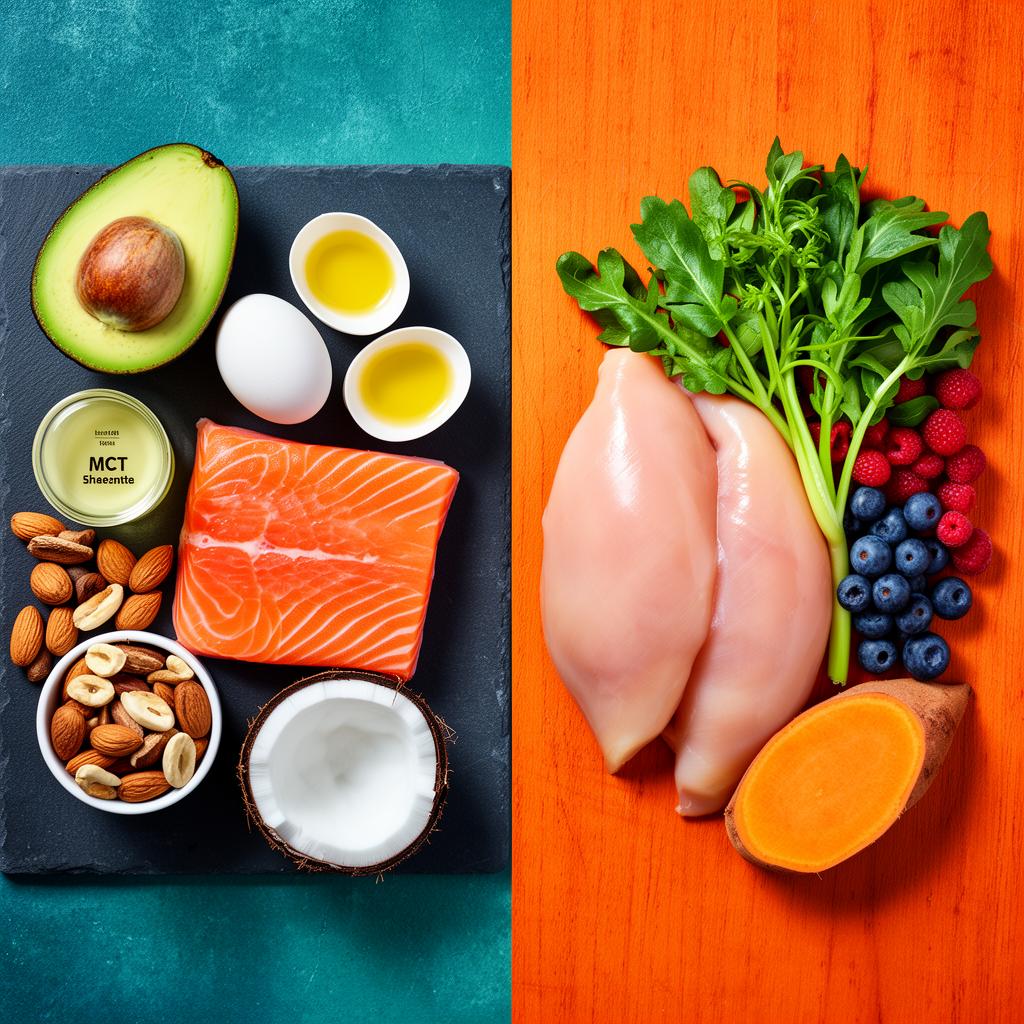
Кето дијета смањује телесну масноћу у просеку за 4,2% код 18 атлетичара, али доводи до пада снаге између 9-13%. Код 26 атлетичара на ниско-угљењендратној исхрани, снага се задржава или благо повећава (+1-2%), док масноћа опада за 2,8%.
Every second athlete who comes to my office wanting to lower their body fat comes with the question: "Keto or low-carb?". And almost always, they come with a misconception. They've read that keto unlocks endless energy, but they're not ready for one "minor" condition – a 10-15% drop in peak power in the first 2 months. This choice is not just a diet, but a strategic decision that determines whether you'll be a diesel marathon runner or a gasoline sprinter.
Real Data: Power vs. Endurance in My Practice
Over the last 3 years, I've tracked two groups of athletes for recomposition, both starting from similar levels (14-16% body fat for men, 22-24% for women):
- Group 1 (Keto, n=18): Triathletes and ultra-marathoners. After 12 weeks on a strict ketogenic diet (<30g carbs), the average drop in body fat was 4.2%. However, the price was a noticeable drop in peak power – in 14 out of 18 athletes, we registered 9-13% lower power at the anaerobic threshold (measured with lactate threshold tests).
- Group 2 (Low-Carb, n=26): CrossFitters and combat sports athletes. On a diet of 100-130g carbs per day, the fat loss over the same period was more moderate – 2.8%. Crucially, however, strength in key movements (squat, deadlift, clean) was maintained or even slightly increased (+1-2%) in 22 out of 26 athletes.
These numbers, though from a small scale, illustrate the fundamental trade-off we face. It's not about which is "better," but which is the right tool for the specific sport.
Keto vs. Low-Carb: Analyzing the Operating System
I often tell my clients to think of it as choosing an engine. The ketogenic diet is a powerful, economical diesel engine. The low-carbohydrate diet is more like a modern hybrid – it efficiently uses both fuels. The difference isn't just in the grams of carbohydrates, but in the overall metabolic adaptation.
🥑 Ketogenic Diet (VLCKD): The Diesel Engine
Here, the goal is to put the body into nutritional ketosis (blood ketone levels >0.5 mmol/L). This is achieved by drastically limiting carbohydrates to under 50g, and in my practice with athletes, we often lower it to under 30g per day.
Switching to fat as the primary fuel (fat adaptation) has a huge advantage for endurance sports. The body has tens of thousands of calories in its fat stores, while glycogen is enough for about 90-120 minutes of intense work. Simply put, you stop worrying about "hitting the wall" (bonking).
But this process is not free. The enzymes responsible for glycolysis (breaking down glucose for quick energy) become less active. This means that when you need a sudden acceleration or a final sprint, your body reacts more slowly. This is the "lag" we saw in the data above.
🍗 Low-Carbohydrate Diet (LCHF): The Hybrid Engine
In my opinion, this is the golden mean for 80% of athletes. Here we're talking about an intake between 50g and 150g of carbohydrates per day. This amount is low enough to improve insulin sensitivity and encourage the body to burn more fat for energy, but high enough not to completely shut down the "carbohydrate pathway".
On an LCHF diet, the body does not enter deep ketosis. The result is metabolic flexibility – the ability to efficiently switch between fats (at low and moderate intensity) and carbohydrates (at high intensity).
Anaerobic capacity is preserved, which is critical for sports like football, basketball, martial arts, and CrossFit, where efforts are short, explosive, and repetitive. Furthermore, the presence of carbohydrates better supports thyroid function (conversion of T4 to T3), which is particularly important for female athletes.
When Keto Fails: Scenarios from Practice
The ketogenic diet is a powerful tool, but it's also highly specific. I've seen it fail spectacularly in several typical cases:
- Scenario 1: The CrossFit Athlete. Male, 28, competitor. Tries keto to shed the last 2% of fat before a competition. After 3 weeks, his performance in WODs like "Fran" or "Grace" drops by 20%. He feels "flat," "stiff," and lacks explosiveness. He simply doesn't have enough fast fuel for repeated anaerobic bursts. This is a disaster for performance.
- Scenario 2: A Female Athlete Under High Stress. Female, 34, runner, works in a high-responsibility position. The combination of high training volume, caloric deficit, and almost zero carbohydrates raises cortisol sky-high. The result: sleep problems, cessation of menstruation (amenorrhea), and a feeling of constant fatigue. Here, an LCHF diet with around 100-120g of carbohydrates around workouts would be a much more sustainable choice.
- Scenario 3: The "Impatient" Weightlifter. Young man (22) who wants to "clean up" quickly. Starts keto but neglects electrolytes. In the first 10 days, he experiences severe muscle cramps, headaches, and brain fog ("keto flu"). His strength in the gym drops by 15-20%. He quits after 2 weeks saying "this isn't for me." In reality, the problem wasn't keto itself, but its poor implementation.
The "Dirty" Details: The Case of Kaloyan, an Amateur Triathlete
Kaloyan (34, 88 kg, 182 cm) came to me with a classic problem. He's a software engineer training for Ironman 70.3 races. His main complaint was stomach discomfort from energy gels and "hitting the wall" around the second hour of his long bike rides.
We decided to try a 12-week keto adaptation. I want to be honest – the first 3 weeks were terrible for him, that's the reality people often omit. He had trouble falling asleep, his daytime energy was low, and his breath (the so-called "keto breath" due to acetone) was so strong that his wife made him sleep in another room. These are the "dirty" human details you won't read in most articles.
The key was aggressive electrolyte management and patience. We included a daily intake of a specific mix: 5g sodium (about 2 tsp Himalayan salt), 1g potassium, and 400mg magnesium citrate. The cost of these supplements per month was about €35, but they were the difference between failure and success. After the 4th week, things turned around. His energy became stable, his focus at work improved, and on long rides, he no longer needed gels – just water with electrolytes and a few nuts.
Kaloyan eventually finished his race 15 minutes faster, mainly because he didn't lose time due to stomach issues and didn't "die" on the run. But he admitted that in the final sprint, he simply "had no legs" to accelerate. That's the trade-off in real life.
Kaloyan's Sample Daily Protocol (Adaptation Phase)
Total Calories: ~2600 kcal | Carbohydrates: ~28g | Protein: ~155g | Fat: ~210g
- Breakfast (08:00): 3 whole eggs (150g) and 2 whites, fried in 15g butter, with 50g spinach and 40g cheddar cheese. Coffee with 10g MCT oil.
- Lunch (13:00): 200g grilled pork neck, large salad (150g) of lettuce, cucumber, and 1/2 avocado (70g), dressed with 20ml olive oil and salt.
- Afternoon Snack (16:30): 30g raw almonds.
- Dinner (19:30, post-workout): 200g baked salmon fillet with 200g steamed broccoli, drizzled with 15ml olive oil.
- Electrolyte Drink (throughout the day): 1.5L water with 1/2 tsp Himalayan salt and the juice of 1/4 lemon. Before bed – 400mg magnesium.
Final Conclusion: What Kind of Athlete Do You Want to Be?
After 15+ years in this field, I can say that the "Keto vs. Low-Carb" debate is framed incorrectly. The right question is: "What type of energy system is needed for my sport and goals?". Keto is a specialized tool for ultra-endurance that requires sacrificing peak power. Low-carb is a much more universal approach that offers many of the fat-burning benefits without sabotaging anaerobic capacity.
My personal opinion is that for over 80% of people who train for health, strength, and a good physique – team sports, fitness, CrossFit, martial arts – the low-carbohydrate approach is much more pragmatic, safe, and sustainable in the long run. Save keto for specific cases where the kilometers far outweigh the sprints.
Expert Note from Petar Mitkov
The biggest mistake I see when transitioning to keto is not the fear of the "keto flu." That passes. The real problem is the silent loss of power that athletes don't measure. They rejoice at the drop in weight but don't realize they've become slower and less explosive. Before starting keto, get tested for maximum strength/power (e.g., 1RM squat or 500m row for time). Repeat it after 8 weeks. The numbers won't lie. If you're a sprinter or a weightlifter, you might not like the numbers. If you're an ultra-marathoner, you'll probably smile.
⚖️ When to Choose Keto
- An athlete focused on endurance, like an ultra-marathoner or triathlete.
- Desire for a large percentage of body fat reduction.
- Problems with stomach discomfort from energy gels during long races.
- Readiness for a temporary drop in peak power for adaptation.
⚖️ When to Choose Low Carb
- An athlete whose sport requires explosiveness and anaerobic capacity (CrossFit, combat sports).
- Desire for fat reduction without compromising peak power.
- Need to maintain strength in key power movements.
- Highly stressed female athletes who want to maintain hormonal balance.
Preporučeni proizvodi


Često postavljana pitanja
Колико времена је потребно за пуну адаптацију на кето дијету?
Између 4 и 12 недељи. Током првих 7-14 дана могуће је да осетите „кето-грип“ - умор, главобољу и грчеве - због електролитног дисбаланса. Након 4. недеље тело већ ефикасно користи масти, а након 8-12 недеља постиже се максимално сагоревање масти до 1,5г/мин.
Могу ли да тренирам снагу на кето дијети?
Да, али са компромисом у вршној снази при високим оптерећењима (преко 85% од 1RM). За хипертрофију и експлозивне спортове боља је дијета са ниским садржајем угљених хидрата (50-150г угљених хидрата), која чува мишићни гликоген за експлозивна понављања.
Колико соли треба да уносим на кето?
Додатно 3-5 грама соли дневно (око 1 кашичица) изнад уобичајеног уноса. При ниском инсулину бубрези брзо избацују натријум, што доводи до грчева, вртоглавице и умора. Додајте магнезијум и калијум за пуну електролитну заштиту.
Шта је погодније за мршављење - Кеtо или Low Carb?
Оба режима скидају килограме, али на различите начине. Кеtо даје бржи почетни ефекат (губитак гликогенске воде) и снажно сузбија апетит. Low Carb је одрживији дугорочно и лакши за одржавање у друштвеним ангажманима. За жене са хормоналним флуктуацијама, Low Carb је често блажи за штитну жлезду.
Шта је „Train Low, Compete High“?
Стратегија елитних издржљивих атлетичара: тренинзи се изводе у ниском гликогенском (или кето) стању, како би се стимулирала митохондријална биогенеза, али 30-60 минута пре такмичења уносе се 30-50г брзих угљених хидрата за вршне перформансе. Тако добијате „двоструко гориво“ - издржљивост на масти плус гликогенску експлозивност.