Eiweiß vs. Pflanzenprotein: Biologischer Standard vs. Ökologische Gesundheit
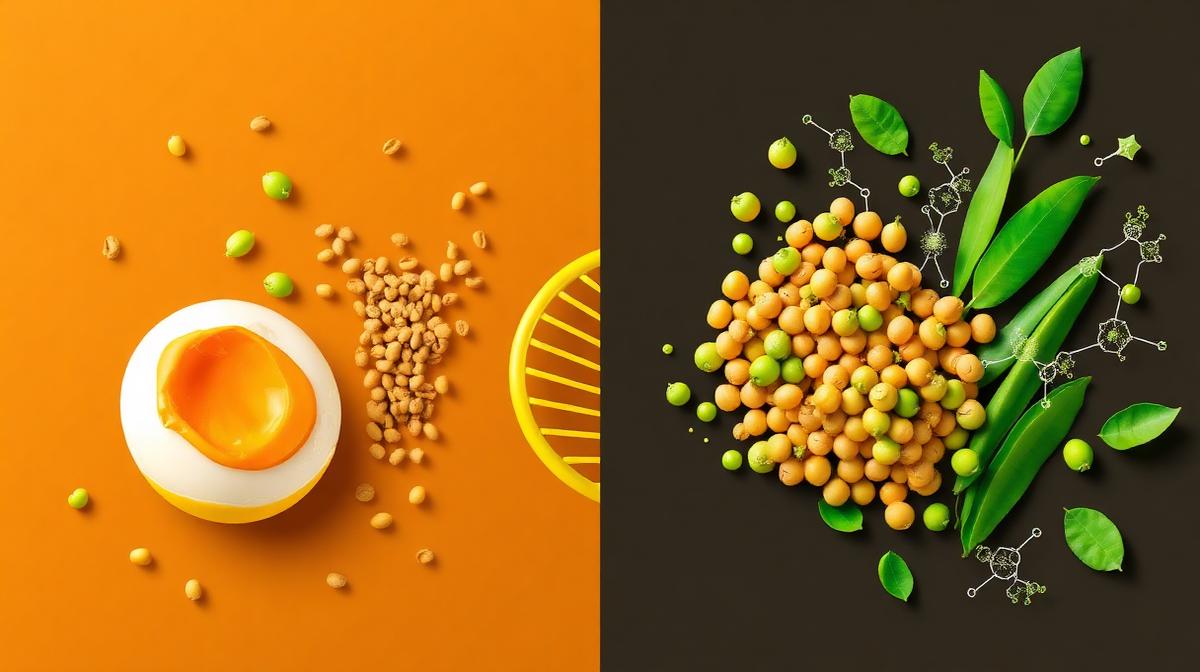
Die Wahl zwischen Eiern und pflanzlichen Quellen ist nicht mehr nur eine Frage der Ethik, sondern der strategischen Kombination. Während das Ei die höchste Verdaulichkeit bietet, bieten Pflanzen durch ihre Phytonährstoffe einen "Anti-Aging"-Effekt.
Kurze Antwort: Eiprotein (PDCAAS 1.0, BV 100) bietet maximale Verdaulichkeit und ein vollständiges Aminosäureprofil, während pflanzliche Proteine Ballaststoffe, Präbiotika und Antioxidantien für Langlebigkeit liefern. Kombinieren Sie Linsen + 1 Ei für eine vollständige Proteinaufnahme ohne Zusatzstoffe.
Die Wahl zwischen Eiern und pflanzlichen Quellen ist nicht mehr nur eine Frage der Ethik, sondern der strategischen Kombination. Während das Ei die höchste Verdaulichkeit bietet, liefern Pflanzen durch ihre Phytonährstoffe einen "Anti-Aging"-Effekt.
Dieser Artikel ist Teil des Experten-Hubs für Nahrungsergänzungsmittel – über 270 von Experten geprüfte Artikel von Petar Mitkov und dem Team von Sport Zona.
Wie sind die Qualität und Verdaulichkeit von Ei- und pflanzlichem Protein?
Hühnerei-Albumin ist der Maßstab für Proteinqualität mit einem PDCAAS-Wert von 1,0 (maximal) und einem biologischen Wert von 100, während pflanzliches Protein einen durchschnittlichen PDCAAS von 0,4–0,9 und einen biologischen Wert von 60–75 (außer Soja und Edamame) hat, aber einen hohen Ballaststoffgehalt und positive Auswirkungen auf das Mikrobiom bietet, im Gegensatz zu Eiprotein, das neutral ist.
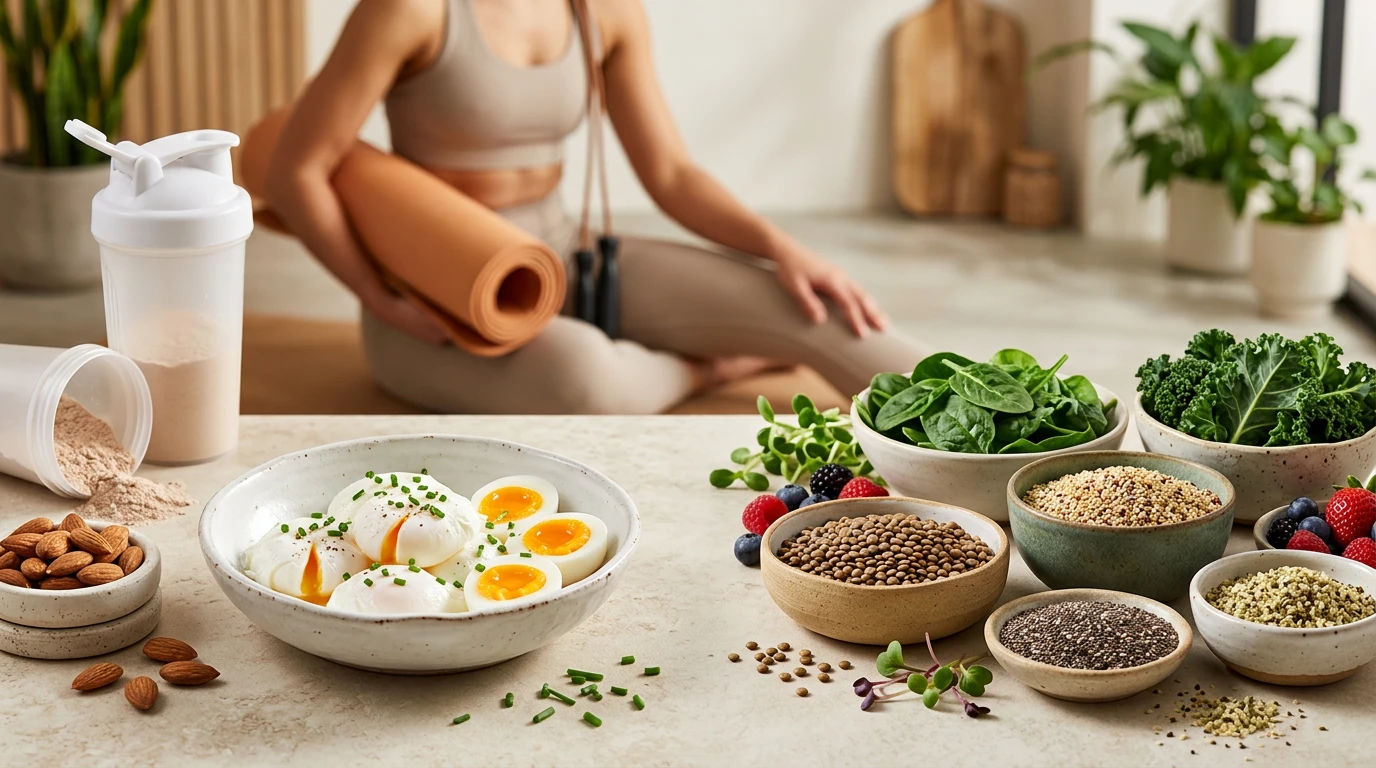
| Merkmal | Hühnerei-Albumin | Pflanzliches Protein (Durchschnitt) |
|---|---|---|
| PDCAAS-Wert | 1.0 (Maximal) | 0.4 – 0.9 (Variabel) |
| Biologischer Wert | 100 (Maßstab) | 60 – 75 (Außer Soja und Edamame) |
| Ballaststoffe | 0% | Hoher Gehalt |
| Auswirkung auf das Mikrobiom | Neutral | Stark positiv (Präbiotika) |
| Aufnahmezeit | Mittel (2–3 Stunden) | Mäßig bis langsam (wegen Ballaststoffen) |
| Antinährstoffe | Keine | Phytate, Lektine, Tannine |
Was ist die Tiefenanalyse der Mechanismen?
1. Das Ei: Effizienz ohne Rückstände
Eiprotein ist das "reinste" Protein in Bezug auf die Stickstoffretention.
Einfach gesagt: Es ist, als würde man sich ansehen, wie genau der Motor eines Autos funktioniert, anstatt nur zu wissen, dass das Auto fährt. Wir betrachten, wie Proteine auf zellulärer Ebene im Körper abgebaut und genutzt werden.
Wissenschaftliche Quellen
- Hoffman, J. R., & Falvo, M. J. (2004). Protein – Which is Best? Journal of Sports Science & Medicine, 3(3), 118–130. (PubMed: 15798790)
- Millward, D. J. (2004). Protein and Aminosäuren requirements: functional significance and safety considerations. British Journal of Nutrition, 91(4), 487-493. (DOI: 10.1079/bjn20041097)
- van Vliet, S., Burd, N. A., & van Loon, L. J. C. (2015). The Skeletal Muscle Anabolic Response to Plant- versus Animal-Based Protein Consumption. The Journal of Nutrition, 145(9), 1981–1991. (DOI: 10.3945/jn.114.204305)
- Schonfeldt, H., & Gibson, N. (2009). The nutritional impact of animal products on the diet. South African Journal of Clinical Nutrition, 22(1), 3-10.
In meiner Arbeit mit vielen Kunden sehen wir, dass sich viele Menschen nur auf die Proteinmenge konzentrieren und dabei Qualität und Verdaulichkeit vergessen. Ein häufiger Fehler ist die Vernachlässigung der Bioverfügbarkeit, insbesondere wenn man sich ausschließlich auf pflanzliche Quellen ohne angemessene Kombination verlässt. Wir beobachten, dass Sportler, die verschiedene Quellen kombinieren, bessere Ergebnisse bei der Erholung erzielen.
Aminosäuredichte: Eier sind reich an Methionin – einer Aminosäure, die in Hülsenfrüchten oft fehlt. Das macht sie gut für die Unterstützung der Immunfunktion und der Lebergesundheit.
Bioverfügbarkeit: Aufgrund des Fehlens von Zellwänden und Ballaststoffen gelangen die Aminosäuren aus dem Ei viel leichter in den Blutkreislauf, was bei der Genesung von schweren Verletzungen entscheidend ist.
2. Pflanzenprotein: Ernährungsschutz
Pflanzen gleichen ihren geringeren biologischen Wert mit gesundheitlichen "Boni" aus.
Thermischer Effekt der Nahrung (TEF): Pflanzenproteine benötigen aufgrund der Ballaststoffe mehr Energie zum Abbau. Das bedeutet, Ihr Körper verbrennt mehr Kalorien, während er sie verdaut – ein großer Vorteil beim Abnehmen.
Mikrobiom-Synergie: Pflanzenproteine (wie Linsen und Kichererbsen) dienen als Nahrung für nützliche Darmbakterien. Ein gesundes Mikrobiom verbessert wiederum die Aufnahme des Proteins selbst.
Können wir den Angriff von Antinährstoffen vermeiden?
Antinährstoffe sind natürliche Verbindungen in Pflanzen, die die Aufnahme von Nährstoffen durch den Körper beeinträchtigen können, wie z. B. Phytate und Saponine.
Die Lösung: Durch Einweichen, Keimen oder Fermentieren (wie bei Tempeh) kann die Bioverfügbarkeit von pflanzlichem Protein um bis zu 20–30 % erhöht werden.
Seitan (Weizenprotein): Obwohl er mit 75 g Protein pro 100 g einen Rekordwert aufweist, ist er arm an Lysin. Daher sollte er immer mit Hülsenfrüchten kombiniert werden.
Welches Protein sollten wir wählen: Ei- oder Pflanzenprotein?
Wählen Sie EIER, wenn:
- Ihr Hauptziel ist Hypertrophie und Kraftaufbau.
- Sie suchen nach der einfachsten Methode, um vollständiges Protein ohne Kombinationen aufzunehmen.
- Sie haben eine empfindliche Verdauung (IBD oder IBS), bei der große Mengen Hülsenfrüchte Beschwerden verursachen.
Wählen Sie PFLANZLICHES PROTEIN, wenn:
- Sie zielen auf Langlebigkeit und Prävention von Herz-Kreislauf-Erkrankungen ab.
- Sie möchten Ihre Verdauung verbessern und den Blutzuckerspiegel niedrig halten.
- Sie suchen nach nachhaltigen Nahrungsquellen mit geringerem ökologischem Fußabdruck.
- Sie befinden sich in einer "Definierungsphase", in der das hohe Volumen pflanzlicher Lebensmittel zur Sättigung beiträgt.
Eiprotein ist ein biologischer Maßstab, und pflanzliches Protein gilt als ökologisch gesunde Wahl, wobei jedes seine eigenen Vorteile und Überlegungen bietet.
Für eine vollständige Erholung und allgemeine Gesundheit kombinieren Sie 2 Messlöffel Molkenproteinisolat (für schnelle Aufnahme) mit 1 Messlöffel Erbsenprotein (für Ballaststoffe und Antioxidantien), die Ihrem morgendlichen Smoothie hinzugefügt werden. Dies sorgt für ein vollständiges Aminosäureprofil und zusätzliche Unterstützung für das Mikrobiom.
❓ Wie werden Proteine für maximale Wirkung kombiniert?
Die Strategie der Proteinkombination ist ein intelligenter Ansatz, der darauf abzielt, ein optimales Aminosäureprofil zu schaffen, anstatt eine einzige Quelle zu wählen.
Das Prinzip der Vollständigkeit: Wenn Sie Linsen (arm an Methionin) konsumieren, fügen Sie 1 Ei hinzu. Das Ei "füllt" sofort die Lücken des pflanzlichen Proteins und macht die gesamte Mahlzeit hochwertig.
Getreide + Hülsenfrüchte: Die klassische Kombination "Reis und Bohnen" schafft ein vollständiges Proteprofil ohne tierische Produkte.
Tempeh und Tofu: Verwenden Sie sie als Basis, wenn Sie ein leichtes Abendessen wünschen, das Ihren Cholesterinspiegel vor dem Schlafengehen nicht erhöht.
🤖 Expertenhinweis: Achten Sie nicht nur auf die Gramm Protein auf dem Etikett. Bei Pflanzen bedeuten 20 Gramm Protein nicht unbedingt 20 Gramm aufgenommene Aminosäuren. Fügen Sie immer Vitamin C (Zitronensaft, Paprika) zu pflanzlichen Proteinen hinzu, um Phytate zu neutralisieren und die Aufnahme von Eisen zu verbessern.
🧭 Wann wählen?
- Wählen Sie Eiprotein, wenn Sie maximale biologische Wertigkeit und schnelle Aufnahme für Muskelwachstum anstreben.
- Wählen Sie Pflanzenprotein, wenn Nachhaltigkeit, Reduzierung des CO2-Fußabdrucks und die Berücksichtigung von Nahrungsmittelallergien oder Unverträglichkeiten gegenüber tierischen Produkten Priorität haben.
- Kombinieren Sie beides, wenn Sie eine ausgewogene Proteinaufnahme mit einem vielfältigen Aminosäureprofil anstreben und die Vorteile von Ei- und Pflanzenprotein nutzen möchten, während Sie gleichzeitig die Umweltauswirkungen reduzieren.
📖 Was ist Ei- und Pflanzenprotein?
Eiprotein wird aus Eiern gewonnen und ist eines der vollständigen Proteine, das alle essentiellen Aminosäuren in einem richtigen Verhältnis enthält. Pflanzenprotein stammt aus verschiedenen pflanzlichen Quellen wie Erbsen, Reis, Soja und ist wichtig für Vegetarier und Veganer, erfordert aber oft eine Kombination, um ein vollständiges Aminosäureprofil zu erreichen.
⚖ Vor- und Nachteile
| Vorteile | Nachteile |
|---|---|
|
|
🗣 Einfach erklärt
Eiprotein ist der Goldstandard, wie ein perfekt verpacktes Set aller benötigten Aminosäuren, die Ihr Körper leicht aufnimmt. Pflanzenprotein, wie aus Erbsen oder Reis, ist besser für die Umwelt und oft für Menschen mit Allergien geeignet. Beides ist Protein, aber Eiprotein ist wie "biologisch perfekt", und pflanzliches Protein ist die "Öko-Option".
Wählen Sie das richtige Produkt für Ihr Ziel:
→ Pflanzenprotein Pulver (Soja, Erbse, Reis)
→ Eiprotein Pulver
→ Pflanzenprotein aus nachhaltigen Quellen
Kombiniertes Protokoll für maximale Effektivität:
Die Kombination von Produkten erhöht die Effektivität. Laut Sport Zona Praxis.
⚖ Wann Ei wählen
- Für Hypertrophie und starke Erholung nach intensiven Trainingseinheiten.
- Sie suchen nach vollständigem Protein ohne komplizierte Kombinationen mit anderen Lebensmitteln.
- Sie haben eine empfindliche Verdauung, bei der Hülsenfrüchte Beschwerden verursachen.
- Wenn schnelle Erholung von schweren Verletzungen erforderlich ist.
⚖ Wann Pflanzenprotein wählen
- Sie zielen auf Langlebigkeit und Prävention von Herz-Kreislauf-Erkrankungen ab.
- Sie möchten Ihre Verdauung und einen stabilen Blutzuckerspiegel verbessern.
- Sie bevorzugen nachhaltige Nahrungsquellen mit geringem ökologischem Fußabdruck.
- In einer "Definierungsphase" für mehr Sättigung bei hohem Volumen.
Expertenhinweis von Sport Zona
Aus meiner langjährigen Erfahrung bei Sport Zona kann ich sagen, dass pflanzliche Alternativen trotz der hervorragenden Verdaulichkeit von Eiprotein aufgrund ihres vollständigen Mikronährstoffprofils an Popularität gewinnen. Ich empfehle meinen Athleten immer, nicht das eine zugunsten des anderen zu wählen, sondern nach einem Gleichgewicht zu suchen. Gerade die Kombination beider liefert die besten Ergebnisse sowohl für die Leistung als auch für die allgemeine Gesundheit.
Empfohlene Produkte
Häufig gestellte Fragen
Kann Eiprotein und pflanzliches Protein kombiniert werden?
Ja, die Kombination ist ein ausgezeichneter Ansatz, um das Nährwertprofil auszugleichen. Eiprotein deckt das gesamte Aminosäurenspektrum ab, während pflanzliches Protein Ballaststoffe, Antioxidantien und nützliche Phytonährstoffe ergänzt.
Welches Protein ist besser für Anfänger geeignet - Eiprotein oder pflanzliches Protein?
Für Anfänger ist Eiprotein leichter verdaulich und liefert ein vollständiges Aminosäureprofil. Pflanzliches Protein eignet sich besser für Menschen mit diätetischen Einschränkungen oder Vorlieben für eine pflanzliche Ernährung.
Gibt es Nebenwirkungen von Eiprotein oder pflanzlichem Protein?
Eiprotein verursacht selten Nebenwirkungen, außer bei Allergien. Pflanzliche Proteine können bei empfindlichen Personen Blähungen verursachen, da sie Ballaststoffe und Antinährstoffe (Phytate, Lektine) enthalten.
Wann ist es besser, Eiprotein oder pflanzliches Protein einzunehmen?
Eiprotein eignet sich gut zur Einnahme nach dem Training oder am Morgen für eine schnelle Erholung. Pflanzliches Protein ist eine gute Option zwischen den Mahlzeiten für eine nachhaltige Zufuhr von Nährstoffen und Ballaststoffen.