Fenugreek vs. Tribulus: The Hormone Booster vs. The Muscle Powerhouse
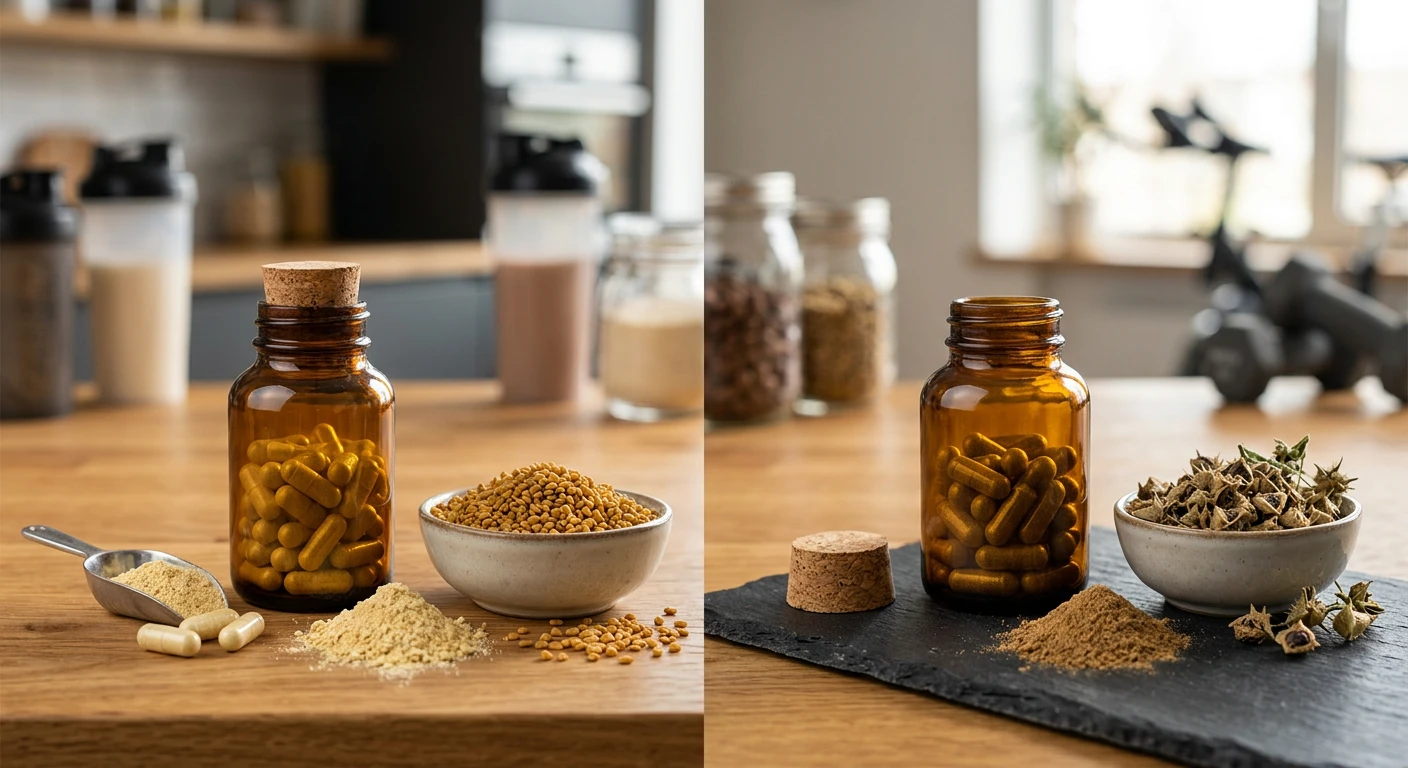
Fenugreek optimizes testosterone, while Tribulus stimulates it. Understanding their mechanisms helps in making the correct supplement choice.
Short Answer: Fenugreek primarily improves insulin sensitivity and nutrient uptake, while Tribulus aims to boost Luteinizing Hormone (LH) to support testosterone, but with mixed scientific evidence. Practical Advice: For enhanced recovery and nutrient tolerance, choose Fenugreek (500-600 mg/day). For libido and potential hormonal support, try Tribulus (750-1500 mg/day), but with realistic expectations.
In sports supplements aimed at optimizing hormonal balance and performance, two herbs are often discussed: Fenugreek and Tribulus terrestris. Both are popular among athletes for their benefits to testosterone and strength, but they work through different pathways and are suitable for different goals.
Fenugreek works as an optimizer. Its task is not to produce testosterone from scratch, but to fine-tune and protect existing testosterone. It ensures efficiency by reducing losses. Tribulus, on the other hand, is more like an engine starter. Its goal is to give the system an initial boost, to "wake it up" and prompt it to work more actively. It initiates the process, and Fenugreek optimizes it.
Understanding these differences helps in making the right choice. The wrong supplement can mean missed benefits and wasted expenses. This article analyzes both herbs, based on scientific data and practice, to help you make an informed decision for your program.
This article is part of the Expert Hub for Nutritional Supplements — over 270 expert-verified articles by Petar Mitkov and the Sport Zona team.
What is the System Analysis of Fenugreek and Tribulus?
The system analysis of Fenugreek and Tribulus is a comparative matrix between the two herbs, covering their biological status, primary focus, mechanism of action, and scientific support.
| Criterion | Fenugreek | Tribulus terrestris |
|---|---|---|
| Biological Status | Herb (plant extract) | Herb (plant extract) |
| Primary Focus | Optimization of free testosterone and metabolism | Stimulation of libido, vitality, and potential increase in LH |
| Main Mechanism | Inhibition of aromatase and 5-alpha-reductase enzymes; improvement of insulin sensitivity | Potential increase in luteinizing hormone (LH); increase in androgen receptor density |
| Scientific Support | Moderate to strong for free testosterone, strength, and body composition | Strong for libido; mixed and controversial for testosterone in young, healthy athletes |
| Time Horizon | Medium-term (effects noticeable after 4-8 weeks) | Short-term for libido (days to a week), longer for other effects |
| Specific Bonus | Improves blood sugar control and insulin response | Feeling of vitality and energy, not directly related to testosterone |
How Does Fenugreek Work?
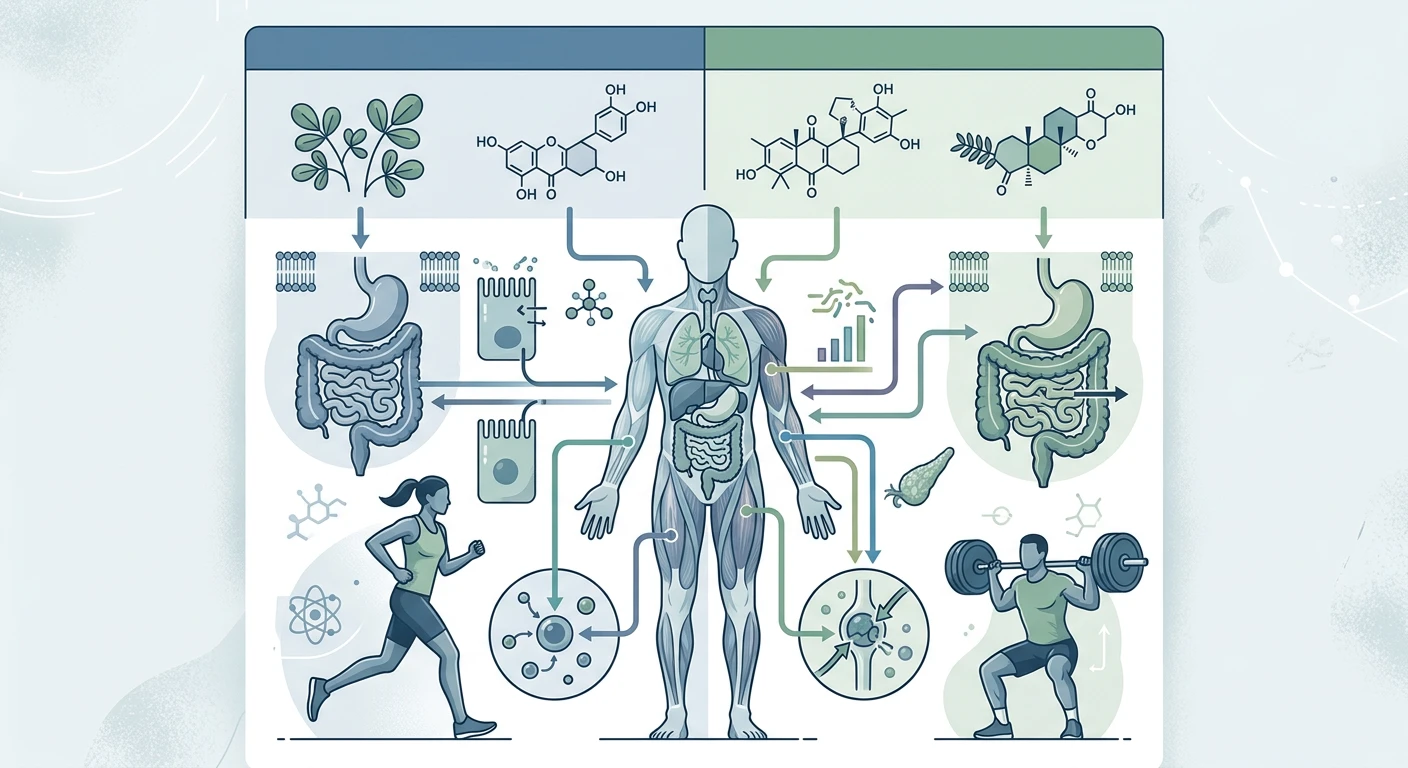
1. Fenugreek: The Hormonal Optimizer
Fenugreek (Trigonella foenum-graecum) is an herb rich in steroidal saponins, particularly protodioscin and gracilin, which have an indirect and "protective" mechanism of action.
Its primary action is related to its ability to inhibit (suppress) two key enzymes: Aromatase, which converts testosterone to estrogen, and 5-alpha-reductase, which converts it to dihydrotestosterone (DHT). By reducing these conversion processes, Fenugreek helps maintain higher levels of free (biologically active) testosterone in the blood. Importantly, it does not stimulate the production of new testosterone but preserves a larger portion of what is already produced.
An additional, important mechanism is its influence on glucose metabolism. Fenugreek improves insulin sensitivity, meaning the body can manage blood sugar more effectively and direct nutrients towards muscle cells instead of storing them as fat.
Simply put: Fenugreek doesn't create new testosterone, but protects it from converting into estrogen. Additionally, it helps muscles utilize carbohydrates better for energy.
2. Tribulus: The Signaling Engine
Tribulus terrestris is an herb whose reputation is mainly due to one active component – protodioscin (the same as in Fenugreek, but often in a different context and concentration). It is traditionally believed that Tribulus works by stimulating the pituitary gland to release more Luteinizing Hormone (LH). LH is the hormone that signals the Leydig cells in the testes to produce more testosterone.
However, this is where the biggest scientific debate lies. While this effect has been observed in animals and in men with hypogonadism (low baseline testosterone levels), studies on young, healthy, and actively training men have yielded highly contradictory results. Many of them show no significant increase in total testosterone.
A newer hypothesis suggests that the effects of Tribulus (especially on libido and vitality) may be due not so much to increased testosterone as to an increase in androgen receptor density in the brain or an influence on nitric oxide synthesis. This explains why many users feel an effect even when blood tests do not show drastic changes.
Simply put: Tribulus tries to stimulate testosterone production by sending a signal to the brain. This signal is heard best when the "engine" is running at low RPMs (in older men or those with low levels), but with an already strong engine (young athletes), the effect is debatable.
Scientific Sources
- Wankhede, S. et al. (2016). Effects of a commercially available fenugreek seed extract on testosterone, body composition and strength. Journal of the International Society of Sports Nutrition.
- Examine.com. Fenugreek - Scientific Review on Usage, Dosage, Side Effects.
- Qureshi, A. et al. (2014). A systematic review on the herbal extract Tribulus terrestris and the roots of its putative aphrodisiac and performance-enhancing effect. Journal of Ethnopharmacology.
- Rogerson, S. et al. (2007). The effect of five weeks of Tribulus terrestris supplementation on muscle strength and body composition during preseason training in elite rugby league players. Journal of Strength and Conditioning Research.
- Office of Dietary Supplements - NIH. Dietary Supplements for Exercise and Athletic Performance.
The Effect of Mutual Reinforcement: Why Do They Work Better Together?
Fenugreek and Tribulus are not competitors but partners who work in mutual reinforcement. Combining them addresses the issue of hormonal optimization from two different angles, creating a more comprehensive effect.
Here's how:
- Tribulus gives the initial signal: Even if the effect is moderate, it prompts the pituitary gland to increase LH secretion, which is a command for more testosterone production.
- Fenugreek protects and optimizes: The testosterone produced under the influence of Tribulus (or naturally produced) is "protected" by Fenugreek. It reduces its conversion into estrogen, increasing the amount of free, active testosterone.
- Metabolic bonus: Simultaneously, Fenugreek improves insulin sensitivity, which aids in better recovery and growth by directing nutrients to the muscles.
This creates a "stimulate and protect" strategy — one supplement stimulates production, and the other ensures that the newly produced amount is used as effectively as possible.
Which is Best: Fenugreek or Tribulus?
The choice between Fenugreek and Tribulus depends on individual goals, age, and current condition of the user, which dictate the choice of one or a combination of both.
Choose Fenugreek if:
- Your primary goal is to improve body composition (more muscle, less fat).
- You have good baseline testosterone levels but want to increase the Free fraction.
- You want to improve your insulin sensitivity and carbohydrate uptake.
- You are under 35 years old and looking for a scientifically supported supplement for strength and recovery.
🔵 Choose Tribulus if:
- Your main problem is a decline in libido, energy, and overall sense of vitality.
- You are over 35-40 years old, when natural testosterone production begins to decrease.
- You are looking for an "initial boost" or motivational stimulus for your workouts.
- Your blood tests show testosterone at the lower end of the normal range.
Recommended Stack for Maximum Effect:
For athletes seeking a comprehensive approach, combining the two supplements is a suitable strategy. Take 500-600 mg of standardized Fenugreek extract (e.g., Testofen®) daily and 750-1500 mg of standardized Tribulus extract (with high protodioscin content), divided into 1-2 doses, with one dose taken about 45 minutes before training.
What is the "Foundation and Performance Stack" Protocol for 2026?
The "Foundation and Performance Stack" protocol for 2026 represents a division of intake for maximum results and long-term effectiveness, ensuring constant support and sharp focus when it's most needed.
- Daily Foundation: 600 mg Fenugreek (standardized extract). Taken every morning with food. The goal is to maintain stable levels and constant optimization of metabolism and free testosterone.
- Pre-Workout: 750-1000 mg Tribulus (standardized extract). Taken about 45 minutes before training. The goal is to provide a sharp stimulus for vitality, energy, and the potential to increase androgen receptor density during exertion.
- Cycle Duration: 8 weeks of intake, followed by 4 weeks of rest, to avoid the body getting used to it and to maintain receptor sensitivity.
Expert Note
In my practice, I see athletes taking these herbs chaotically. The "foundation + stack" protocol yields the best results. Fenugreek works in the background constantly, while Tribulus is like a "turbo button" before training. Do not underestimate the 4-week break – it is important for the long-term effectiveness of the protocol.
🧭 When to Choose Which?
- Choose only Fenugreek if you are a young athlete (<35 years old) focused on strength and body composition, with no libido issues.
- Choose only Tribulus if you are an older athlete (>40 years old) or experiencing a decline in vitality and libido, and this is the main problem.
- Combine both if you want the most comprehensive approach for maximum performance, strength, vitality, and body composition optimization.
📖 What are Fenugreek and Tribulus?
Fenugreek: An herb used for millennia in traditional medicine, whose seeds are rich in saponins. Its focus is on optimizing existing hormones and improving glucose metabolism.
Tribulus terrestris: A plant whose fruits and roots are used as an aphrodisiac and vitality tonic. The theory is that it stimulates testosterone production by signaling the brain, but science is more conclusive about its effect on libido.
⚖ Pros and Cons
| Pros | Cons |
|---|---|
| Fenugreek: More scientific data for strength and composition; positively affects blood sugar. | Fenugreek: May cause a maple syrup body odor at high doses; effect is slower. |
| Tribulus: Fast effect on libido and vitality; strong subjective effect ("you can feel it"). | Tribulus: Contradictory data on testosterone effect in young, healthy men; extract quality varies greatly. |
🗣 Explained Simply
| Criterion | Fenugreek | Tribulus |
|---|---|---|
| Metaphor | Optimization Engineer | Signal Rocket |
| What it does? | Protects testosterone | Signals for production |
| Who is it best for? | Athletes seeking strength | People with low libido |
| When is it felt? | After a few weeks | After a few days |
Fenugreek is like a financial advisor for your hormones – it doesn't print new money (testosterone) for you, but it makes sure you don't lose it in bad investments (conversion to estrogen). Tribulus is like an unexpected bonus – it gives you initial capital (a signal for production), but how you use it is up to you.
Choose the right product for your goal:
- For general vitality and hormonal balance, explore our selection of high-quality adaptogens.
- For energy and focus before training, check out our pre-workout and nitric oxide boosters.
- For recovery and muscle growth, combine with proven amino acids.
Combined Protocol for Maximum Effect:
1. Foundation (morning): 600 mg Fenugreek.
2. Pre-workout: 750-1000 mg Tribulus.
3. Post-workout: 5-10 g BCAA/EAA for recovery.
⚖ When to Choose Fenugreek
- You want to increase strength and lean muscle mass.
- You aim to improve body composition.
- You want to optimize free testosterone, not total.
- You are looking for a supplement with additional metabolic benefits.
⚖ When to Choose Tribulus
- Your main problem is a decline in libido and vitality.
- You are over 40 and seeking natural support.
- You want a quick feeling of more energy and "drive".
- You are looking for a "starting boost" for your training regimen.
Expert Note from Sport Zona
For years, I've observed athletes who rely on these herbs with unrealistic expectations. It's important to know: neither Fenugreek nor Tribulus are magic pills. They are optimizers, not substitutes for hard training and proper nutrition. Individual response varies significantly. The surest way to know if they work for you is to get a blood test (total and free testosterone, LH, estradiol) before and after an 8-week cycle. Everything else is in the realm of subjective sensations.
Frequently asked questions
Can Fenugreek and Tribulus be taken together?
Yes, they can be taken together and are often found in combined formulas. They act through different mechanisms — Fenugreek primarily supports glucose metabolism, while Tribulus targets the hypothalamus-pituitary-gonadal axis. Combining them is safe, but the effect of their synergy is not convincingly proven in scientific studies.
Which is better for beginners - Fenugreek or Tribulus?
For beginner athletes, Fenugreek is the more logical and reliable choice. Its benefits for blood sugar control and better nutrient absorption are directly related to better recovery and energy. The effects of Tribulus are more uncertain, and a beginner is less likely to feel a significant result.
When is the best time to take Fenugreek and Tribulus?
Fenugreek is most effective when taken with a carbohydrate-rich meal (e.g., after training) to optimize the insulin response. Tribulus is usually recommended to be taken on an empty stomach, with the daily dose divided into 2-3 intakes (morning, afternoon, evening) to maintain stable levels.
Are there side effects from taking Fenugreek or Tribulus?
Both herbs are relatively safe. Fenugreek can cause mild gastrointestinal discomfort and a characteristic body odor (similar to maple syrup). Tribulus can also cause stomach upset. People with diabetes or hormone-sensitive conditions should consult a doctor before taking them.
What is the recommended dosage for Fenugreek and Tribulus?
For Fenugreek, the usual sports dose is 500–600 mg daily of a standardized extract (e.g., 50% saponins). For Tribulus, doses range from 750 to 1500 mg daily, divided into several intakes. It is crucial that the extract is standardized for saponin content (at least 45%) and ideally for protodioscin.