Chromium vs. Vanadium: The Sugar Balancer vs. The Metabolic Assistant
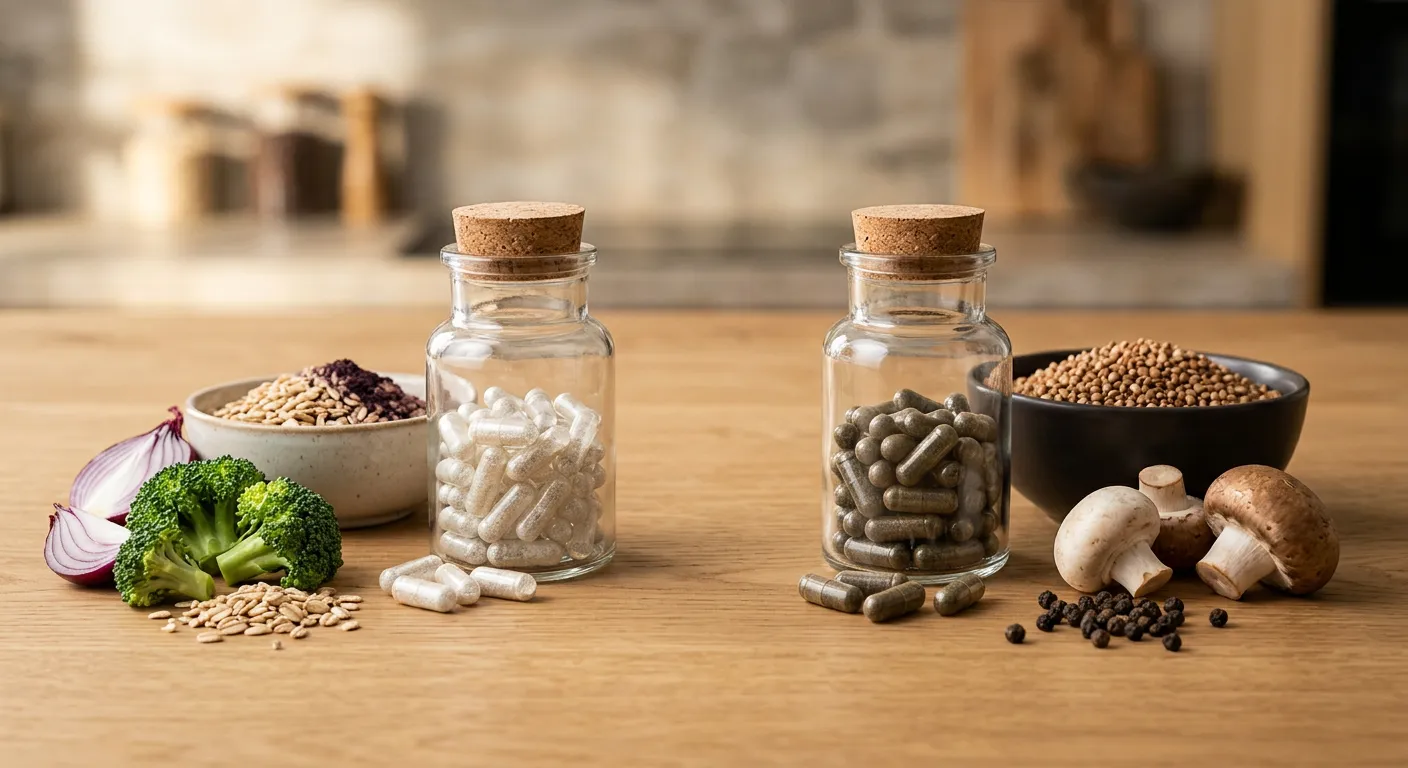
Chromium enhances insulin action, while vanadium mimics it. Both affect carbohydrate metabolism.
Short answer: Chromium (especially picolinate, 200-600 mcg) is the proven and safe choice for improving insulin sensitivity. Vanadium (vanadyl sulfate, 10-30 mg) is a more potent insulin mimetic but carries higher risks and is suitable for advanced athletes on short cycles. Practical advice: Start with 200 mcg of chromium picolinate daily with a carbohydrate meal. Consider vanadium only if chromium is insufficient, starting with no more than 10 mg daily.
In sports, controlling blood sugar and insulin is important. Stable glucose levels mean consistent energy, better recovery, and more effective muscle mass building. Chromium and vanadium are often discussed in relation to maintaining these levels. Both micronutrients affect carbohydrate metabolism, but through different mechanisms.
Insulin acts like a key that opens cells for glucose. Chromium helps this key work better by keeping the lock (insulin receptor) sensitive. It doesn't open the door itself, but makes insulin's job more effective. Vanadium, on the other hand, can directly mimic insulin's action and open the door itself, albeit in a more direct way.
Understanding these differences helps you choose correctly. Do you need fine-tuning or a powerful, direct intervention? This article analyzes chromium and vanadium to help you make an informed decision based on your goals and needs.
This article is part of the Expert Hub for Supplements — over 270 expert-verified articles by Petar Mitkov and the Sport Zona team.
What is the comparative matrix for a systematic analysis of chromium and vanadium?
The comparative matrix for Chromium and Vanadium represents a systematic analysis of these two elements based on various criteria such as biological status, primary focus, mechanism of action, time horizon, and influence on appetite.
| Criterion | Chromium | Vanadium |
|---|---|---|
| Biological Status | Essential micronutrient (necessary for life) | Ultra-trace element (not proven essential for humans) |
| Primary Focus | Improving insulin sensitivity | Direct imitation of insulin effects |
| Mechanism | Enhances insulin action via chromodulin | Inhibits enzymes (PTPs) to prolong insulin signaling |
| Time Horizon | Long-term, consistent intake for maintenance | Short-term, cyclical intake for acute effects |
| Appetite Influence | May reduce cravings for sweets and carbohydrates | Primarily affects uptake, not directly appetite |
| Safety Profile | High safety profile at recommended doses | Narrow therapeutic window; risk of toxicity at higher doses |
How do chromium and vanadium work?
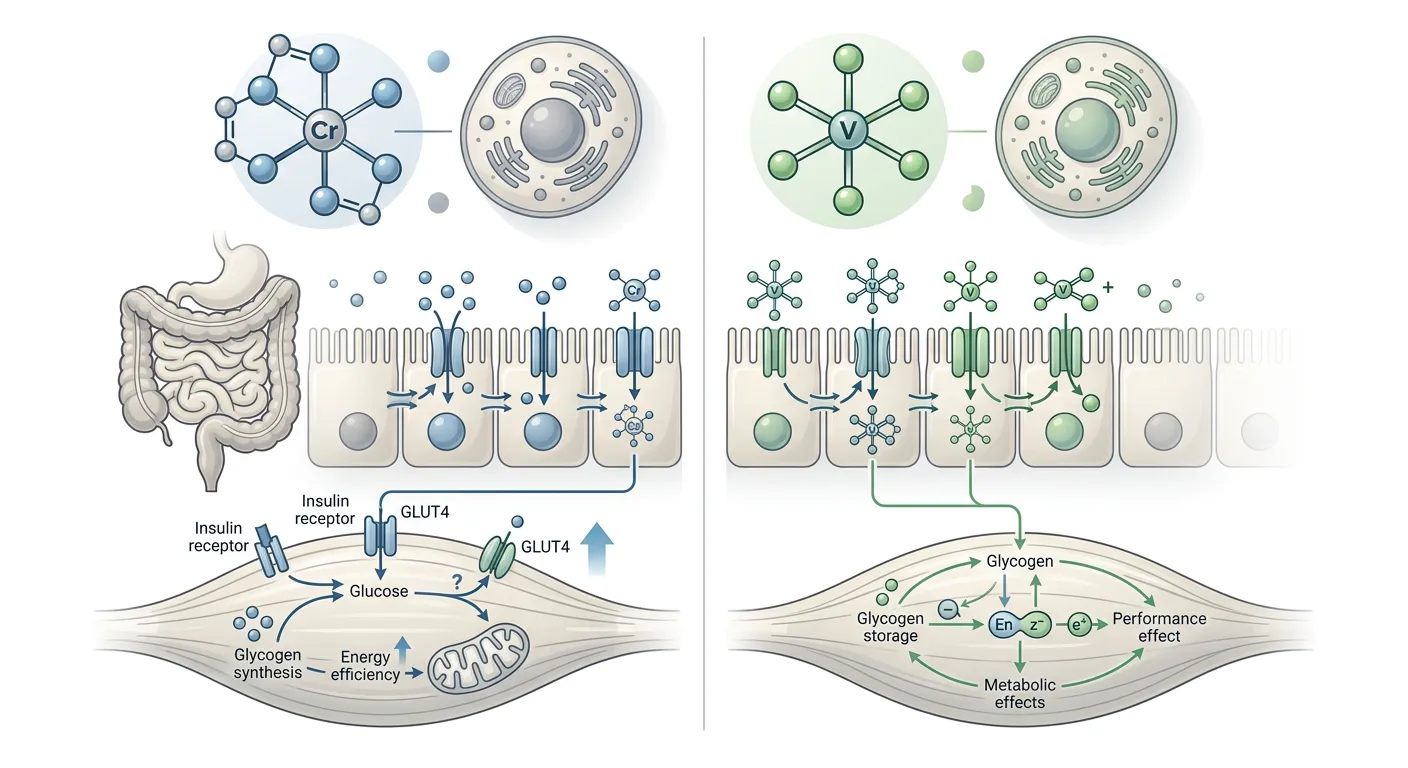
1. Chromium: The "Amplifier" of Insulin Signaling
Chromium is an essential micronutrient that plays a key role in carbohydrate metabolism, supporting insulin's action in regulating blood sugar.
Chromium intervenes here. Inside the cell, it binds to a peptide, forming chromodulin (or glucose-tolerant factor, GTF). When insulin binds to its receptor, chromodulin attaches to the intracellular part of the same receptor and significantly amplifies its activity. It acts like an engine that makes the insulin signal stronger and more prolonged. This leads to more efficient translocation of GLUT4 transporters to the cell membrane and, consequently, faster and more complete clearance of glucose from the blood.
Simply put: Chromium does not replace insulin. It helps your insulin work better. It's like lubricating the hinges of a door – the door isn't replaced, but it opens and closes more easily.
The most commonly studied and bioavailable form is chromium picolinate. Studies show that supplementation can improve glucose control, especially in individuals with insulin resistance.
2. Vanadium: The "Imitator" of Insulin
Vanadium is not classified as essential for humans, although it is found in minimal amounts in the body. Its mechanism of action is different and more direct. Vanadium, most commonly as vanadyl sulfate, can mimic many of insulin's effects, bypassing the need for a strong insulin signal.
Its primary mechanism involves inhibiting enzymes called protein tyrosine phosphatases (PTPs), particularly PTP1B. These enzymes normally deactivate the insulin receptor, stopping its signal. By blocking them, vanadium artificially keeps the insulin receptor active for longer. This keeps glucose transporters on the cell surface, and they continue to take up glucose, even with a weaker insulin stimulus. At higher concentrations, vanadium can stimulate parts of the insulin signaling pathway.
Simply put: Vanadium intervenes in the system. Instead of helping insulin, it directly affects biochemical processes to achieve an insulin-like effect and forces the cell to absorb more glucose.
However, this powerful effect comes at a cost. Vanadium has a narrower therapeutic window and can be toxic at doses not much higher than effective ones. This makes it a tool for advanced athletes and for use in short, controlled cycles, rather than for constant use.
Scientific Sources
- Chromium: Fact Sheet for Health Professionals, National Institutes of Health (NIH)
- A scientific review: the role of chromium in insulin resistance, 2006
- Vanadium, Linus Pauling Institute, Oregon State University
- Vanadium Supplement - Science-based Review on Benefits, Dosage, Side Effects, Examine.com
- Oral vanadyl sulfate improves hepatic and peripheral insulin sensitivity in patients with non-insulin-dependent diabetes mellitus, 1996
- Scientific Opinion on the safety of chromium picolinate as a source of chromium added for nutritional purposes to food for particular nutritional uses and to foods intended for the general population, EFSA Journal, 2014
The synergistic effect: Why do they work better together?
Despite their different mechanisms, chromium and vanadium can work together to achieve good glucose control. Their combination attacks the problem from two angles, which can be particularly beneficial for advanced athletes during mass-gaining phases when carbohydrate intake is very high.
Chromium provides the foundation – it keeps insulin receptors sensitive and responsive. This is a long-term strategy for health and performance. Vanadium is a tactical tool – it provides an extra "boost" for glucose uptake precisely when it's most needed, for example, around training or with a very large carbohydrate meal. Thus, vanadium can "help" the system, already optimized by chromium, to handle extreme loads, directing more glucose to the muscles for glycogen synthesis, rather than to fat stores.
What is the algorithm for choosing between chromium and vanadium?
The algorithm for choosing between chromium and vanadium (or their combination) is a process that depends entirely on an individual's goals, experience, and risk tolerance.
Choose CHROMIUM if:
- You want to improve your overall metabolism and insulin sensitivity in the long term.
- You have cravings for sweets and carbohydrate foods.
- Your goal is general health, weight management, or slow and clean muscle gain.
- You are looking for a safe and proven supplement to use consistently.
🔵 Choose VANADIUM if:
- You are an advanced athlete in a bulking phase.
- You are looking for a powerful, acute effect for maximum "pump" and glycogen loading around training.
- You already have good insulin sensitivity and are seeking an additional advantage (nutrient partitioning).
- You understand the risks and will use it in short, well-planned cycles.
Recommended Stack for Advanced Users (Bulking Phase Only):
For maximum combined effect during intense training and eating, the following combination can be used:
- Chromium Picolinate: 200-400 mcg daily, split into two doses with main meals.
- Vanadyl Sulfate: 10-20 mg daily, taken only with the largest carbohydrate meal of the day (most often post-workout). Use in cycles of 4-6 weeks, followed by at least an equal rest period.
What is the 2026 Protocol: "Foundation and Performance Stack"?
The 2026 Protocol represents a two-phase approach to properly manage glucose metabolism throughout the year.
- Daily Foundation: 200 mcg of chromium picolinate every morning with food. This is the baseline support for insulin sensitivity.
- Performance Stack (only during bulking periods): Add 10-20 mg of vanadyl sulfate to the foundation, taken with the post-workout meal. This stack is used cyclically (e.g., 8 weeks on, 8 weeks off).
Expert Note
It is important to understand that vanadium is used for "nutrient partitioning" – directing nutrients. The goal is to get glucose into the muscles after training to accelerate recovery and growth, rather than storing it as fat. This is a tactical tool, not a universal solution. Its use without intense training and high carbohydrate intake is pointless and carries dangers/threats/risks.
🧭 When to Choose Which?
- Choose only CHROMIUM if your goals are general health, weight management, and appetite control. It is a safe, long-term choice.
- Choose only VANADIUM (with caution) if you are an advanced bodybuilder on a short-term bulking cycle and seeking maximum pump and glycogen loading.
- Combine both if you are an experienced athlete who understands and manages the risks, and you want to optimize basic health (with chromium) and physical condition (with vanadium).
📖 What are Chromium and Vanadium?
Chromium: An essential micromineral important for the processing of carbohydrates, fats, and proteins. It enhances insulin action.
Vanadium: An ultra-trace element that, in higher (supplemental) doses, can mimic insulin's effects, improving glucose uptake by cells.
⚖ Pros and Cons
| Chromium | Vanadium |
|---|---|
| High safety, essential, suitable for long-term use, reduces sugar cravings. | Very powerful and fast effect, strong pump, excellent for glycogen loading. |
| Milder and subtler effect, requires consistency, may not be felt directly. | Risk of toxicity, not essential, for short cycles only, possible stomach upset. |
🗣 Explained Simply
Here's the simplest comparison:
| Criterion | Chromium | Vanadium |
|---|---|---|
| Analogy | Lubricant for the lock | Spare key/lock pick |
| Role | Helps insulin | Mimics insulin |
| Approach | Optimization (subtlety) | Intervention (brute force) |
| For whom? | For everyone | For advanced users |
Chromium is like healthy food for energy – a strategic improvement. Vanadium is like an energy drink – a powerful, short-term effect, but not a sustainable daily solution.
Choose the Right Product for Your Goal:
- For general metabolic support and mineral balance: Vitamins and Minerals
- For weight management support: Weight Loss Products
- For maximum pump and energy: Pre-Workout and Nitric Oxide Boosters
Combined Protocol for Advanced Users (Bulking Phase Only)
- Foundation: Take high-quality chromium daily with food.
- Pre-Workout: Use a nitric oxide booster for pump and endurance.
- Post-Workout: Take vanadyl sulfate with your large carbohydrate shake, containing whey protein and fast carbs.
⚖ When to Choose CHROMIUM
- You want to improve glucose control as part of a healthy lifestyle.
- You aim to reduce cravings for sweets.
- You are looking for a long-term and safe solution.
- You are in a fat-loss phase.
⚖ When to Choose VANADIUM
- You are an advanced athlete in a muscle-building cycle.
- You want to maximize pump and glycogen loading.
- You consume very large amounts of carbohydrates.
- You are prepared to use it only in short, controlled cycles.
Expert Note from Sport Zona
From over 12 years of working with athletes, I know that chromium picolinate is an often underestimated but effective supplement for anyone looking to control their appetite and improve their body composition. For most people, it is completely sufficient. Vanadium is entirely different. We reserve it as a specialized tool for competitive bodybuilders in the final weeks before a competition or during heavy bulking periods when every gram of carbohydrate needs to go into the muscle. My advice is: start with chromium. If after a few months your metabolism is optimized and you need it for a specific goal – then consider vanadium, but with caution and at low doses.
Recommended products
Frequently asked questions
Can Chromium and Vanadium be taken together?
Yes, they can be combined for a synergistic effect on glucose metabolism, but this should be done with caution and preferably under supervision. The combination can lower blood sugar too much (hypoglycemia). Start with low doses of both elements, for example, 200 mcg chromium and 5-10 mg vanadium.
Which is better for beginners - Chromium or Vanadium?
Chromium, especially in the form of chromium picolinate, is a significantly safer and better-researched option for beginners. It has a wide therapeutic window and minimal side effects at recommended doses. Vanadium is more potent but also riskier and is suitable for advanced athletes.
When is the best time to take Chromium and Vanadium?
Both trace elements are best taken with food, especially food containing carbohydrates. This supports their action on glucose metabolism and reduces the risk of stomach discomfort. Taking them around workouts (before or after) is also a good strategy for optimizing muscle nutrient loading.
Are there any side effects from taking Chromium or Vanadium?
Chromium is very safe in doses up to 1000 mcg per day. In rare cases, it can cause stomach discomfort or headache. Vanadium has a higher risk of toxicity. At doses above 30-50 mg of vanadyl sulfate per day, it can cause green discoloration of the tongue, gastrointestinal problems, and kidney damage with prolonged use.
What is the recommended dosage for Chromium and Vanadium?
For chromium picolinate, the standard effective dose for athletes is between 200 and 600 micrograms (mcg) per day. For vanadyl sulfate, the dosage is much lower and requires more attention – usually between 10 and 30 milligrams (mg) per day, taken in short cycles.