Coenzyme Q10 vs. Alpha-Lipoic Acid: The Energy Catalyst vs. The Universal Antioxidant

CoQ10 produces energy, and ALA is a versatile antioxidant that supports nutrient absorption and recycles other antioxidants.
Short Answer: Coenzyme Q10 is the "spark" for energy production (ATP) in cells, critical for endurance and heart function, while Alpha-Lipoic Acid is the "universal antioxidant" that protects against oxidative stress and improves glucose uptake. Practical tip: For optimal synergy, combine 100-200 mg of Coenzyme Q10 (with a fat-containing meal) with 300-600 mg of Alpha-Lipoic Acid (on an empty stomach or post-workout) daily.
In sports, where energy and recovery are key, Coenzyme Q10 (CoQ10) and Alpha-Lipoic Acid (ALA) are often in the spotlight. These powerful antioxidants contribute significantly to cellular metabolism, but they work differently and offer unique benefits for athletes.
CoQ10 is like the spark plug for the cell. It converts food into pure energy (ATP). Without enough CoQ10, the cell loses efficiency, especially during intense training. It is essential for energy production.
Alpha-Lipoic Acid, on the other hand, is like a support crew. It cleans up waste products (free radicals) and helps with nutrient absorption (improves insulin sensitivity). It even "recycles" other antioxidants (vitamins C and E, glutathione). It's a universal optimizer. Understanding when to use each will help you unlock your full potential.
This article is part of the Expert Supplement Hub — over 270 expert-verified articles by Petar Mitkov and the Sport Zona team.
What is the difference between Coenzyme Q10 and Alpha-Lipoic Acid systemically?
A systemic analysis shows that Coenzyme Q10 is a fat-soluble, vitamin-like compound focused on cellular energy production (ATP) through electron transport in the mitochondria, while Alpha-Lipoic Acid (ALA) is a fat- and water-soluble antioxidant whose main focus is insulin sensitivity and the antioxidant network by regenerating other antioxidants (glutathione, Vitamin C/E).
| Criterion | Coenzyme Q10 | Alpha-Lipoic Acid (ALA) |
|---|---|---|
| Biological Status | Fat-soluble vitamin-like compound | Fat- and water-soluble antioxidant |
| Primary Focus | Cellular energy production (ATP) | Insulin sensitivity and antioxidant network |
| Key Mechanism | Electron transport in mitochondria | Regeneration of other antioxidants (glutathione, Vit C/E) |
| Time Horizon | Chronic, long-term effect (weeks to months) | Acute and chronic effect (hours to weeks) |
| Glucose Impact | Indirect, by improving cellular function | Direct, by mimicking insulin and improving uptake |
| Specific Bonus | Cardiovascular support; reduces muscle fatigue | Improves nutrient partitioning |
How does Coenzyme Q10 function in the body?
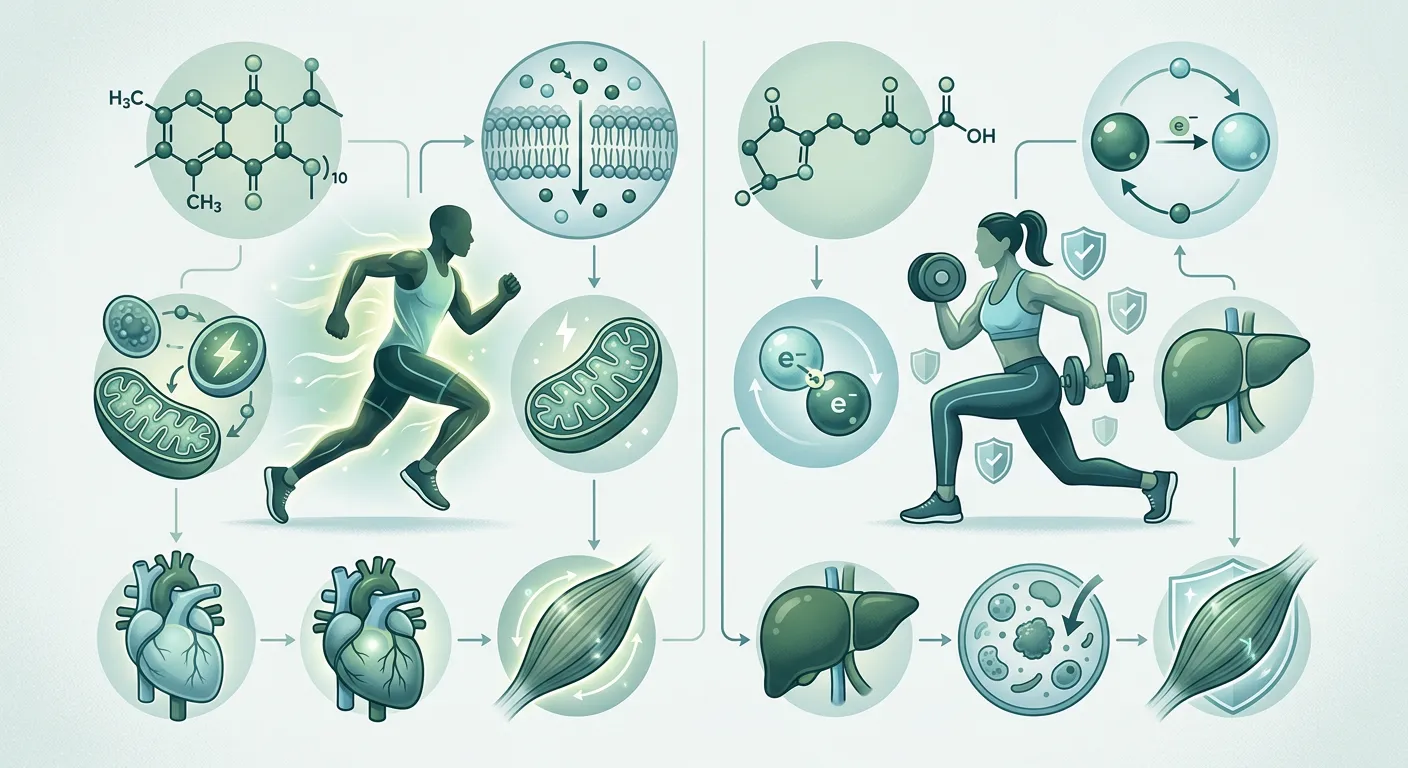
1. Coenzyme Q10: The Cellular Energy Generator
Coenzyme Q10, as Ubiquinol, is a key component of the electron transport chain in mitochondria, which transports electrons and generates over 95% of the body's energy in the form of ATP.
As a potent fat-soluble antioxidant, CoQ10 protects mitochondrial membranes and low-density lipoproteins (LDL) from oxidative damage. With age (especially after 30-35) and with certain medications (like statins), natural CoQ10 production decreases. Therefore, CoQ10 supplementation can support energy capacity and heart health.
Simply put: Coenzyme Q10 is the spark in the body's engine. Without it, food isn't converted into energy for muscles. It's fundamental to every muscle contraction.
Scientific Sources
Practical Observation
Athletes in endurance sports who take CoQ10 (especially Ubiquinol) often experience a later onset of fatigue and faster heart rate recovery after intense interval training. The effect is not immediate but is felt after 3-4 weeks.
2. Alpha-Lipoic Acid: The Universal Metabolic Regulator
Alpha-Lipoic Acid is unique because it acts as an antioxidant in both water and fat environments. This allows it to protect every part of the cell. But most importantly, it can "recycle" other key antioxidants like Vitamin C, Vitamin E, glutathione, and even Coenzyme Q10. We call it the "antioxidant of antioxidants."
For athletes, ALA's effect on glucose metabolism is particularly important. It improves insulin sensitivity and stimulates the transport of glucose to muscle cells by activating GLUT4 transporters. This means carbohydrates are stored as glycogen in the muscles (fuel for training) rather than as fat. This "nutrient partitioning" is very valuable, especially when building muscle mass.
Simply put: Alpha-Lipoic Acid is an intelligent fuel dispatcher and cleanup crew in one. It directs sugar to the muscles where it's needed, cleans up cellular "garbage," and helps other "cleaners" work longer.
Scientific Sources
Practical Observation
Athletes who are gaining weight and consuming more carbohydrates notice that R-ALA (the more bioavailable form), taken before the largest carbohydrate meal, visibly reduces lethargy ("carb coma") and improves pump in the next workout.
The Synergistic Effect: Why Do They Work Better Together?
Combining Coenzyme Q10 and Alpha-Lipoic Acid creates a powerful synergy that is more than the sum of their individual benefits. CoQ10 generates energy, but this process also creates free radicals. ALA is a suitable partner as it neutralizes these radicals. ALA is one of the few compounds capable of regenerating oxidized CoQ10 (Ubiquinone) back to its active, antioxidant form (Ubiquinol) directly within the mitochondria. This means ALA helps CoQ10 work longer and more effectively. Together, they provide a continuous cycle of energy production and protection, which is crucial for the highly stressed muscle cells of athletes.
What is the practical algorithm for choosing CoQ10 and ALA?
Choose Coenzyme Q10 if:
- You want to increase your endurance and energy capacity.
- You primarily engage in aerobic sports (running, cycling, swimming).
- You are over 35 years old, when natural production declines.
- You seek support for your cardiovascular system and cellular respiration.
🔵 Choose Alpha-Lipoic Acid if:
- Your goal is a better body composition (more muscle, less fat).
- You consume a lot of carbohydrates and want to optimize their absorption.
- You seek comprehensive antioxidant protection and nervous system support.
- You want to improve recovery by reducing oxidative stress.
Recommended Combination
The practical algorithm for choosing CoQ10 and ALA involves a combination of 100 mg of Coenzyme Q10 (Ubiquinol), taken in the morning with a fat-containing meal, and 300-600 mg of R-ALA, taken on an empty stomach 30 minutes before training or after a workout.
What is the "Protocol 2026: Foundation and Performance Stack"?
"Protocol 2026: Foundation and Performance Stack" is a modern approach that views supplementation as part of a long-term strategy for health and peak performance.
- Daily Foundation: 100-200 mg Coenzyme Q10 (Ubiquinol form) in the morning with food. This provides constant support for cellular energy production and acts as long-term "insurance" for the heart and mitochondria.
- Tactical Stack (Pre/Post-Workout): 300 mg Alpha-Lipoic Acid (R-ALA form) 30 minutes before training for better pump and energy metabolism. An additional 300 mg with post-workout nutrition to optimize glycogen replenishment and reduce oxidative stress.
Expert Note on the Protocol
This approach separates supplementation into a "strategic foundation" and a "tactical add-on." CoQ10 works slowly and consistently in the background, while ALA is used purposefully around workouts for quick, tangible effects on performance and recovery.
🧭 When to Choose Which?
- Choose Coenzyme Q10 if energy, endurance, and heart health are most important to you, especially if you are over 35.
- Choose Alpha-Lipoic Acid if your goal is better carbohydrate management, improved body composition, and combating oxidative stress.
- Combine both if you are a serious athlete looking to optimize everything – from energy production to nutrient absorption and recovery.
📖 What are Coenzyme Q10 and Alpha-Lipoic Acid?
Coenzyme Q10 (CoQ10) is a fat-soluble, vitamin-like substance found in every cell of the body, important for energy production (ATP) in the mitochondria.
Alpha-Lipoic Acid (ALA) is a unique antioxidant that is both water- and fat-soluble, and makes a significant contribution to energy metabolism and the regeneration of other antioxidants in the body.
⚖ Pros and Cons
| Product | Pros | Cons |
|---|---|---|
| Coenzyme Q10 | Directly increases cellular energy production; strong heart support; well-researched for safety. | More expensive (especially Ubiquinol form); requires fat for good absorption; effect is felt after accumulation. |
| Alpha-Lipoic Acid | Improves insulin sensitivity; universal antioxidant; aids in regenerating other antioxidants. | May cause stomach discomfort in some individuals; should be taken on an empty stomach for best effect; may lower blood sugar. |
🗣 Explained Simply with Metaphors
| Criterion | Coenzyme Q10 | Alpha-Lipoic Acid |
|---|---|---|
| Analogy | Engine Spark Plug | Master Mechanic |
| Main Job | Makes Energy | Cleans and Manages |
| Work Environment | In the "fatty" parts of the cell | Everywhere - water and fat |
If your body were a race car, Coenzyme Q10 is the high-performance ignition system ensuring maximum power from the engine. Alpha-Lipoic Acid is the mechanic who changes the oil, cleans the filters (antioxidant), and tunes the carburetor to use fuel more efficiently (insulin sensitivity).
Choose the Right Product for Your Goal:
- For Energy and Endurance: Focus on products that support ATP production. Check out our selection of energy and nitric oxide boosters.
- For Muscle Mass and Recovery: Optimize nutrient absorption. See our offers for amino acids.
- For Overall Health and Protection: Ensure your baseline nutrients. Explore our vitamins and minerals category.
Combined Protocol for Maximizers:
- Pre-Workout: 300 mg R-ALA + Pre-workout product for energy.
- During Workout: Water, possibly with BCAAs to protect muscles.
- Post-Workout: 300 mg R-ALA with a protein shake and carbohydrates for recovery.
⚖ When to Choose Coenzyme Q10
- When endurance is your main priority.
- When you are over 35 years old.
- When you want to support your heart function.
- When you are looking for a long-term investment in cellular energy.
⚖ When to Choose Alpha-Lipoic Acid
- When aiming for body composition changes.
- When you have a high carbohydrate intake.
- When you want universal antioxidant protection.
- When recovery after intense workouts is slow.
Expert Note from Sport Zona
After over 12 years of working with athletes, I see Coenzyme Q10 as almost essential for any athlete over 35, supporting their energy capacity. Alpha-Lipoic Acid, on the other hand, is more of a tactical tool – we use it purposefully when gaining weight for better carbohydrate absorption or with competitors in heavy preparation periods to reduce inflammation. For most people who train for health, Coenzyme Q10 is a better first step, and ALA is an excellent second step for those who want to optimize every detail.
Frequently asked questions
Can Coenzyme Q10 and Alpha-lipoic acid be taken together?
Yes, and it is highly recommended. The two supplements work synergistically – Coenzyme Q10 supports energy production in the mitochondria, while Alpha-lipoic acid protects cells from the oxidative stress generated by this process and improves glucose metabolism. The combination leads to better performance and recovery.
Which is better for beginners - Coenzyme Q10 or Alpha-lipoic acid?
For general health and antioxidant support, Alpha-lipoic acid is an excellent start. If the main goal is to increase energy, endurance, and combat fatigue during workouts, Coenzyme Q10 is the more direct choice. For most beginners, starting with a lower dose (300 mg) of Alpha-lipoic acid is a safe and effective approach.
When is the best time to take Coenzyme Q10 and Alpha-lipoic acid?
Coenzyme Q10 is fat-soluble, so always take it with a meal containing fat (e.g., with breakfast or lunch) for maximum absorption. Alpha-lipoic acid is best absorbed on an empty stomach, about 30-60 minutes before a meal. Alternatively, it can be taken immediately after a workout to aid recovery.
Are there any side effects from taking Coenzyme Q10 or Alpha-lipoic acid?
Both supplements are considered extremely safe at recommended doses. At very high doses (over 300 mg for CoQ10 or over 1200 mg for ALA), mild stomach upset or nausea may occur. People taking medication for diabetes or thyroid conditions should consult a doctor, as ALA can affect blood sugar and thyroid hormones.
What is the recommended dosage for Coenzyme Q10 and Alpha-lipoic acid?
For athletes, the recommended dosages are: • **Coenzyme Q10:** 100-200 mg per day, taken with food. • **Alpha-lipoic acid:** 300-600 mg per day, divided into two doses or taken at once, preferably on an empty stomach. Always start with the lower dose to assess your individual tolerance.