Coenzyme Q10 vs. Astaxanthin: Mitochondrial Energy vs. The King of Antioxidants
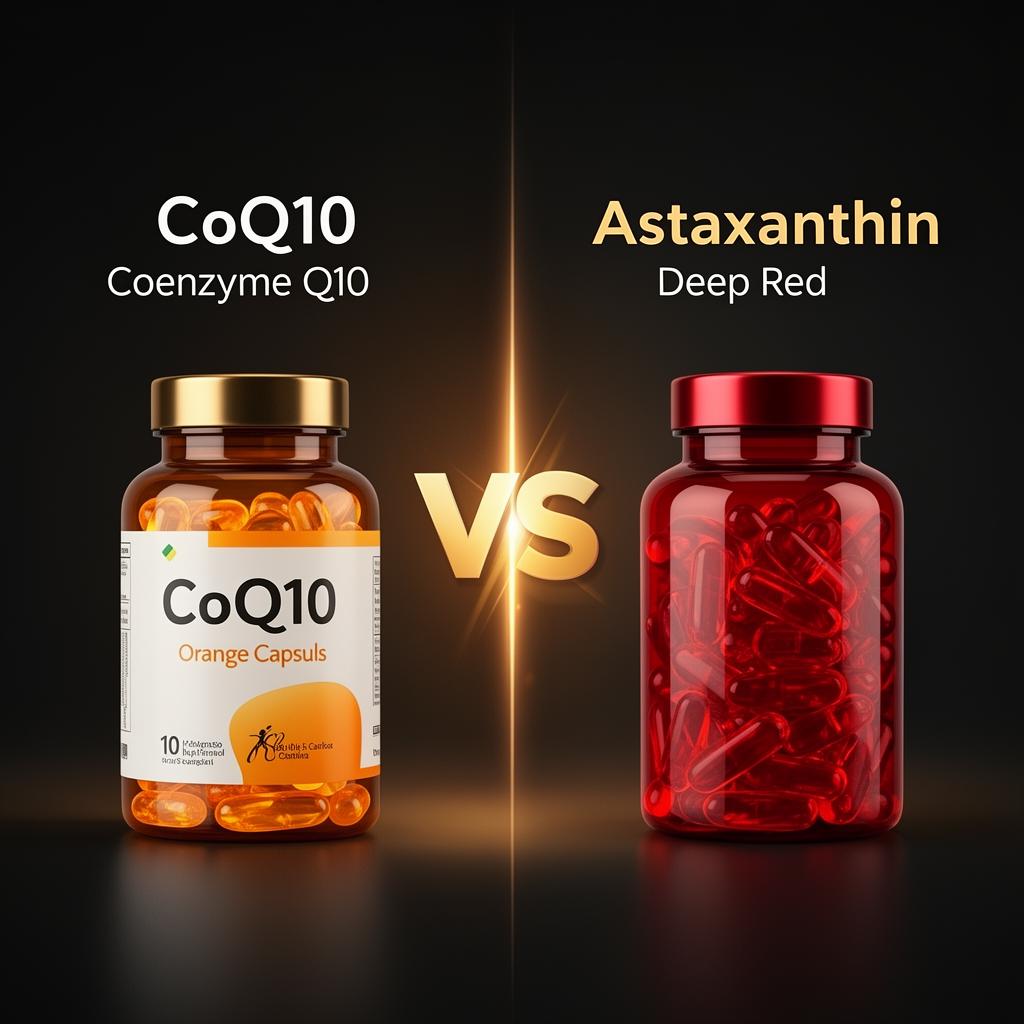
Coenzyme Q10 and Astaxanthin are powerful supplements for athletes. CoQ10 supports energy, while Astaxanthin offers superior antioxidant protection.
Short Answer: While Coenzyme Q10 (100-300 mg/day) is crucial for energy production, Astaxanthin (4-12 mg/day) excels as a potent antioxidant and anti-inflammatory agent, offering up to 6000 times stronger antioxidant protection than Vitamin C. Practical Tip: For overall optimization, combine 200 mg CoQ10 in the morning with food and 8 mg Astaxanthin after training, or before bed on rest days.
Hello, fellow athletes and healthy lifestyle enthusiasts! I am your sports nutrition expert from Sport Zona Academy, and today we will dive deep into the world of two of the most powerful antioxidants – Coenzyme Q10 and Astaxanthin. In this comprehensive article, we will explore how these supplements can enhance your performance, recovery, and overall health, specifically for the needs of active individuals.
Which is Better: Coenzyme Q10 or Astaxanthin?
Coenzyme Q10 is a key molecule supporting cellular energy production, while Astaxanthin is a potent antioxidant protecting against cellular damage. Taking both antioxidants together can lead to a synergistic effect for improving energy and body protection.
In the world of sports, where every hundredth of a second and every percentage of strength matters, optimizing physical capabilities is key. Intense training leads to increased production of free radicals, which can damage cells and slow down recovery. This is where antioxidants like Coenzyme Q10 and Astaxanthin come to the rescue. These two compounds have been widely studied for their potential benefits for athletes, including improving energy metabolism, reducing oxidative stress, and speeding up recovery. But which one is more suitable for your needs, or perhaps their combined action is the key? Let's find out.
What is Coenzyme Q10 (CoQ10)?
Coenzyme Q10 (CoQ10) is a fat-soluble, vitamin-like compound that plays a central role in the production of adenosine triphosphate (ATP) – the main energy currency of cells, especially in the mitochondria. It is also a potent antioxidant that protects cell membranes from oxidative damage.
What is Astaxanthin?
Astaxanthin is a keto-carotenoid primarily derived from the microalgae Haematococcus pluvialis. It is known as one of the most powerful natural antioxidants, providing protection to cells both from the outside and inside, thanks to its unique molecular structure that allows it to cross the entire cell membrane.
What are the Main Differences and Similarities Between Coenzyme Q10 and Astaxanthin?
Coenzyme Q10 and Astaxanthin are potent supplements taken to support health and energy, each with unique mechanisms of action and benefits.
| Characteristic | Coenzyme Q10 (CoQ10) | Astaxanthin |
|---|---|---|
| Primary function for athletes | Energy production (ATP), fatigue reduction. | Potent antioxidant protection, muscle soreness reduction. |
| Main mechanism of action | Involved in the mitochondrial electron transport chain, antioxidant. | Neutralizes free radicals, crosses the blood-brain barrier. |
| Where it's found | Meat, fish, nuts; naturally synthesized in the body. | Microalgae, salmon, shrimp, crabs. |
| Potential benefits | Improved endurance, reduced muscle fatigue, heart health. | Enhanced recovery, reduced inflammation, eye/skin protection. |
| Recommended form | Ubiquinol (more bioavailable). | Natural astaxanthin from H. pluvialis. |
| Price range (approx., for 1 month) | 15 EUR - 50 EUR. | 20 EUR - 60 EUR. |
| Key advantage | Directly impacts energy metabolism. | Exceptional antioxidant power, protects all tissues. |
What is CoQ10 for Athletes?
Mechanism of Action and Benefits:
- ATP Production: CoQ10 is essential for the electron transport chain in mitochondria, where most ATP is generated. For athletes, this means more energy for muscle contraction, improved endurance, and less muscle fatigue during high-intensity training.
- Antioxidant Protection: CoQ10 acts as a potent lipid antioxidant, protecting cell membranes and lipoproteins from oxidative damage caused by free radicals. This is particularly important after intense workouts when oxidative stress is elevated.
- Heart Health: The heart is one of the organs with the highest metabolic activity and requires large amounts of CoQ10. Maintaining adequate levels can support heart function, which is especially important for athletes undergoing prolonged cardio exertion.
- Fatigue Reduction: Several studies suggest that CoQ10 supplements can reduce the perception of fatigue and improve physical performance, especially in individuals with low baseline levels.
Advantages:
- Directly boosts energy production.
- Suitable for endurance sports and prolonged exertion.
- Supports heart health.
Disadvantages:
- Bioavailability can vary; the ubiquinol form is more effective.
- May be less effective than astaxanthin for direct inflammation control.
Scientific Resource:
CoQ10 is important for athletes as it contributes to energy production and can improve heart health, as explored in studies like "Coenzyme Q10 and Atherosclerosis".
How Does Astaxanthin Help Athletes?
Mechanism of Action and Benefits:
- Exceptional Antioxidant Power: Astaxanthin is thousands of times more potent as an antioxidant than Vitamin C and E. It eliminates free radicals, protecting mitochondria and other cellular structures from oxidative damage. This leads to reduced muscle damage and accelerated recovery after strenuous training.
- Anti-inflammatory Properties: It helps reduce inflammation, a common result of intense physical exertion. This can lead to less muscle soreness (DOMS) and a faster return to training.
- Improved Endurance and Strength: Some studies suggest astaxanthin can improve fatty acid metabolism, leading to more efficient use of fats for energy during prolonged exercise. This can conserve glycogen stores and increase endurance.
- Eye and Skin Protection: Astaxanthin can cross the blood-brain barrier and accumulate in the eyes, providing protection against damage caused by sunlight and blue light. It also improves skin elasticity and reduces the impact of UV rays.
Advantages:
- One of the most powerful antioxidants in nature.
- Fast recovery and reduced muscle soreness.
- Additional benefits for vision and skin.
- Good tolerability and few side effects.
Disadvantages:
- More expensive than some other antioxidants.
- Benefits for direct energy production are indirect.
Scientific Resource:
Astaxanthin is a powerful antioxidant and carotenoid distinguished by its unique molecular structure, allowing it to protect cells from oxidative stress and inflammation, benefits particularly important for faster recovery in athletes.
The Combined Effect: Why Take Them Together?
Combining Coenzyme Q10 and Astaxanthin offers a powerful synergy that goes beyond their individual benefits. While CoQ10 is directly linked to cellular energy production and protects mitochondria, Astaxanthin acts as a "super bodyguard" for cell membranes, protecting them from oxidative damage and reducing inflammation.
- Optimized Energy Production and Protection: CoQ10 provides the "fuel" and supports mitochondria, while Astaxanthin protects them from damage caused by free radicals generated during energy metabolism. This leads to more efficient and sustainable energy production.
- Faster and Fuller Recovery: By reducing oxidative stress and inflammation, the combination can significantly speed up post-workout recovery, allowing for more frequent and intense training sessions.
- Comprehensive Cellular Protection: The two compounds work in different parts of the cell (CoQ10 primarily in the inner mitochondrial membrane, Astaxanthin in all cell membranes), providing a wide range of protection against various types of damage.
Scientific Resource:
How Much Should We Take?
Recommended dosages depend on individual needs, training intensity, and health status, so it's important to consult a doctor or dietitian before taking new supplements.
Coenzyme Q10:
- Recommended Dose: 100-200 mg daily, preferably in the Ubiquinol form for better absorption.
- When to Take: With a meal containing fat, as CoQ10 is fat-soluble. Can be split into two doses (morning and evening).
- Who is it best for: Athletes experiencing fatigue, wanting to improve endurance, or those over 30 whose natural CoQ10 production declines.
Astaxanthin:
- Recommended Dose: 4-12 mg daily. For intensely training athletes, up to 8-12 mg can be taken.
- When to Take: With a meal containing fat for maximum absorption. Usually, one dose per day is sufficient.
- Who is it best for: Athletes seeking rapid recovery, reduced inflammation and muscle soreness, and additional protection from oxidative stress. Also beneficial for outdoor sports due to skin and eye protection.
Combined Intake (Synergistic Effect):
- Dosage: 100 mg Ubiquinol CoQ10 + 6-8 mg Astaxanthin daily.
- Intake: Simultaneously with a meal rich in healthy fats.
- Benefits: Maximum support for energy metabolism, antioxidant protection, and recovery.
When to Choose Which?
Choose Coenzyme Q10 if:
- Your primary goal is to increase Energy and Endurance.
- You frequently experience Fatigue during workouts or in daily life.
- You are older (over 30-35 years old), when natural CoQ10 levels decrease.
- You have a history of heart problems or wish to support your Cardiovascular System.
Choose Astaxanthin if:
- Your priority is Rapid Recovery and reducing muscle soreness after training.
- Your intense workouts cause significant Inflammation and Oxidative Stress.
- You spend a lot of time outdoors and want to protect your Skin and Eyes from UV rays.
- You are looking for the most potent natural antioxidant.
Choose Both if:
- You want to achieve Maximum Benefits for energy, endurance, recovery, and overall cellular protection.
- You have a High volume and intensity of training.
- You want to optimize all aspects of your athletic performance and health.
What is Important When Choosing a Product?
Choosing a quality product is essential, as the market offers countless less effective alternatives.
- For Coenzyme Q10: Look for the Ubiquinol form, which is more bioavailable and easier for the body to absorb, especially for people over 25. Manufacturers like Kaneka QH® are recognized for the quality of their ubiquinol.
- For Astaxanthin: Choose Natural Astaxanthin derived from Haematococcus pluvialis microalgae. Synthetic astaxanthin does not offer the same benefits. Check for purity and origin certifications.
- Purity and Additives: Avoid products with unnecessary fillers, artificial colors, and sweeteners. Check labels for allergens.
- Price: A higher price is often an indicator of higher quality and better bioavailability, which pays off with better results. Investing in health is investing in the future.
Is Combining Coenzyme Q10 and Astaxanthin Worth It?
Coenzyme Q10 and Astaxanthin are valuable supplements for active individuals, with CoQ10 providing energy in every cell, and Astaxanthin protecting cells from damage.
Remember that supplements are a complement to a balanced diet and regular training, not a replacement. Listen to your body and invest in high-quality products.
Sporting regards from the Sport Zona Academy team!
Recommended products
Frequently asked questions
Can Coenzyme Q10 and Astaxanthin be taken together?
Yes, Coenzyme Q10 and Astaxanthin can be safely taken together. They have different but complementary mechanisms of action, with CoQ10 supporting energy production and Astaxanthin providing powerful antioxidant protection. This combination can offer more comprehensive support for athletic performance and recovery.
Which is better for beginners?
For beginners who are just starting with more intense workouts, both supplements are beneficial. If the main focus is on overall energy and heart health, CoQ10 might be a better starting choice. However, if the goal is rapid recovery and reduction of muscle soreness from new exertion, Astaxanthin is excellent. For maximum effect, the combination is ideal.
When is the best time to take them?
Both CoQ10 and Astaxanthin are fat-soluble and are best taken with a meal containing fat for optimal absorption. CoQ10 is often taken in the morning or early afternoon to support energy throughout the day. Astaxanthin can be taken at any time of day with food, but is often recommended post-workout or in the evening to aid recovery.
Are there any side effects?
Both Coenzyme Q10 and Astaxanthin are generally considered safe and well-tolerated at recommended doses. With CoQ10, mild stomach upset, nausea, or diarrhea are rarely observed. Astaxanthin is also extremely safe, with very high doses potentially causing slight orange skin discoloration, which is reversible and harmless. Always follow the manufacturer's instructions and consult a doctor if you have concerns.
What is the dosage?
The recommended dosage for Coenzyme Q10 for athletes is typically between 100 mg and 300 mg daily, divided into one or two doses with food. For Astaxanthin, the dosage ranges from 4 mg to 12 mg daily, also taken with food. Always consult with a doctor or specialist before starting any new supplements to determine the most appropriate dosage for your individual needs and goals.