Curcumin vs. Resveratrol: The Golden Warrior vs. The Wine Youth Supporter
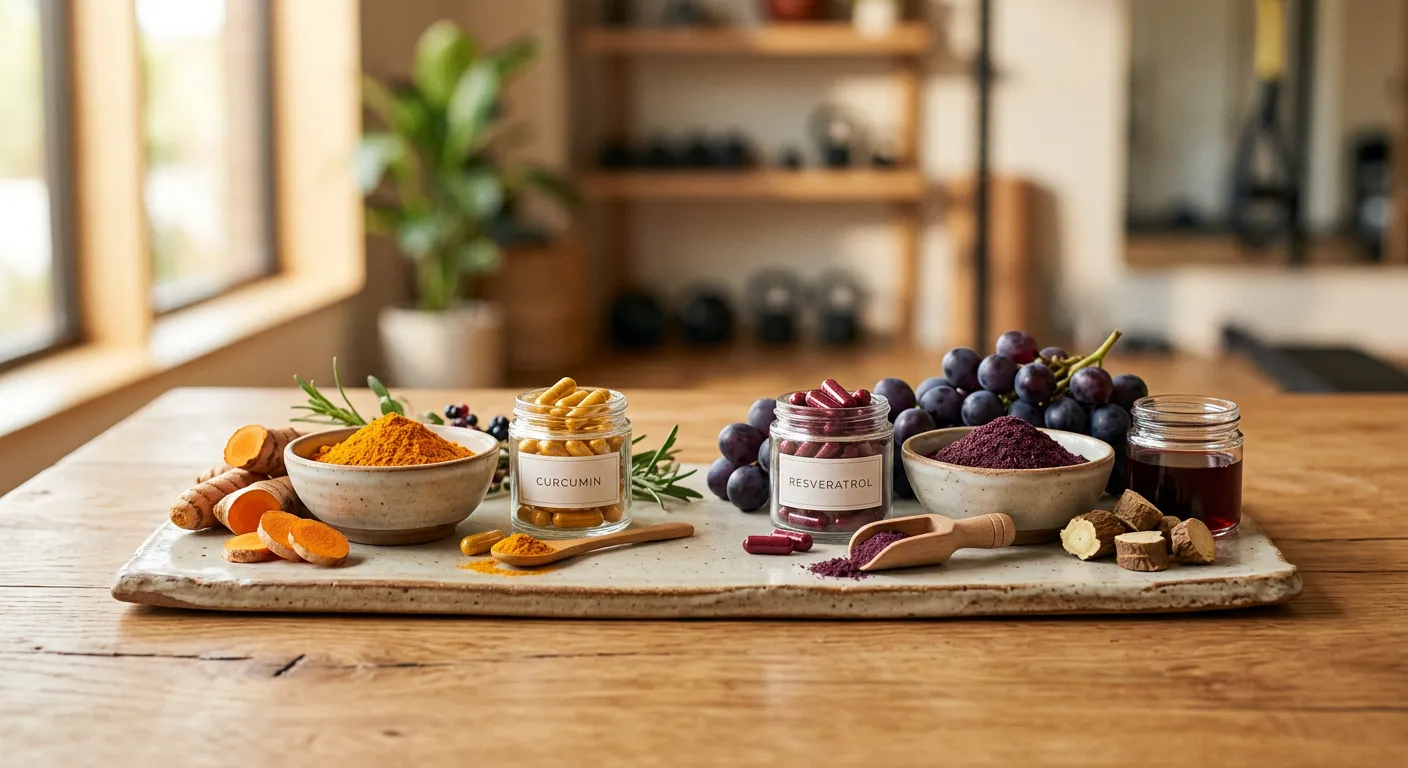
Curcumin and resveratrol are polyphenols that aid in sports recovery. Curcumin has anti-inflammatory effects, while resveratrol supports cellular protection and longevity.
Short Answer: Curcumin is a potent anti-inflammatory agent targeting muscle recovery by inhibiting the NF-κB pathway, while Resveratrol activates SIRT1 for long-term cellular health and endurance. Practical Tip: For muscle soreness relief, take 500-1000 mg of curcumin with piperine post-workout. For endurance support and cellular protection, take 150-500 mg of trans-resveratrol daily.
In sports, where recovery is as crucial as the training itself, athletes are constantly seeking ways to optimize their health at a cellular level. Curcumin and Resveratrol are two of the most discussed natural compounds in this field. Both are potent polyphenols with proven benefits, acting in different yet complementary ways.
This article is part of the Expert Hub for Nutritional Supplements — over 270 expertly verified articles by Petar Mitkov and the Sport Zona team.
Which is Better: Curcumin or Resveratrol?
Curcumin is a polyphenol (curcuminoid) extracted from turmeric root, focusing on powerful anti-inflammatory action by inhibiting NF-κB and the COX-2 enzyme. Resveratrol is a polyphenol (stilbenoid) from grape skins and berries, providing cellular protection and activating longevity genes via SIRT1 and AMPK pathways.
| Criterion | Curcumin | Resveratrol |
|---|---|---|
| Biological Status | Polyphenol (curcuminoid) from turmeric root. | Polyphenol (stilbenoid) from grape skins, berries. |
| Primary Focus | Potent anti-inflammatory action. | Cellular protection, activation of longevity genes. |
| Key Mechanism | Inhibition of NF-κB and COX-2 enzyme (pro-inflammatory pathways). | Activation of SIRT1 and AMPK (cellular energy and repair pathways). |
| Time Horizon | Faster effect, suitable for acute conditions (muscle soreness, joint pain). | Long-term, preventive effect on cellular aging and metabolism. |
| Impact on Joints | Direct and strong, reduces pain and stiffness. | Indirect, through general reduction of oxidative stress. |
| Specific Bonus | Supports digestion and liver health. | Improves insulin sensitivity and heart health. |
What are the Mechanisms of Action?
1. Curcumin: The Targeted Inflammation Fighter
Curcumin's primary strength lies in its ability to directly combat inflammatory processes by blocking NF-κB – a signaling pathway that initiates the production of inflammatory molecules like cytokines and the COX-2 enzyme after intense training. This leads to a faster reduction in delayed onset muscle soreness (DOMS), less swelling, and reduced joint pain.
Curcumin often has low bioavailability – the body struggles to absorb it. Therefore, modern supplements use formulas with piperine (black pepper extract), liposomal, or micellar technologies that significantly increase its absorption.
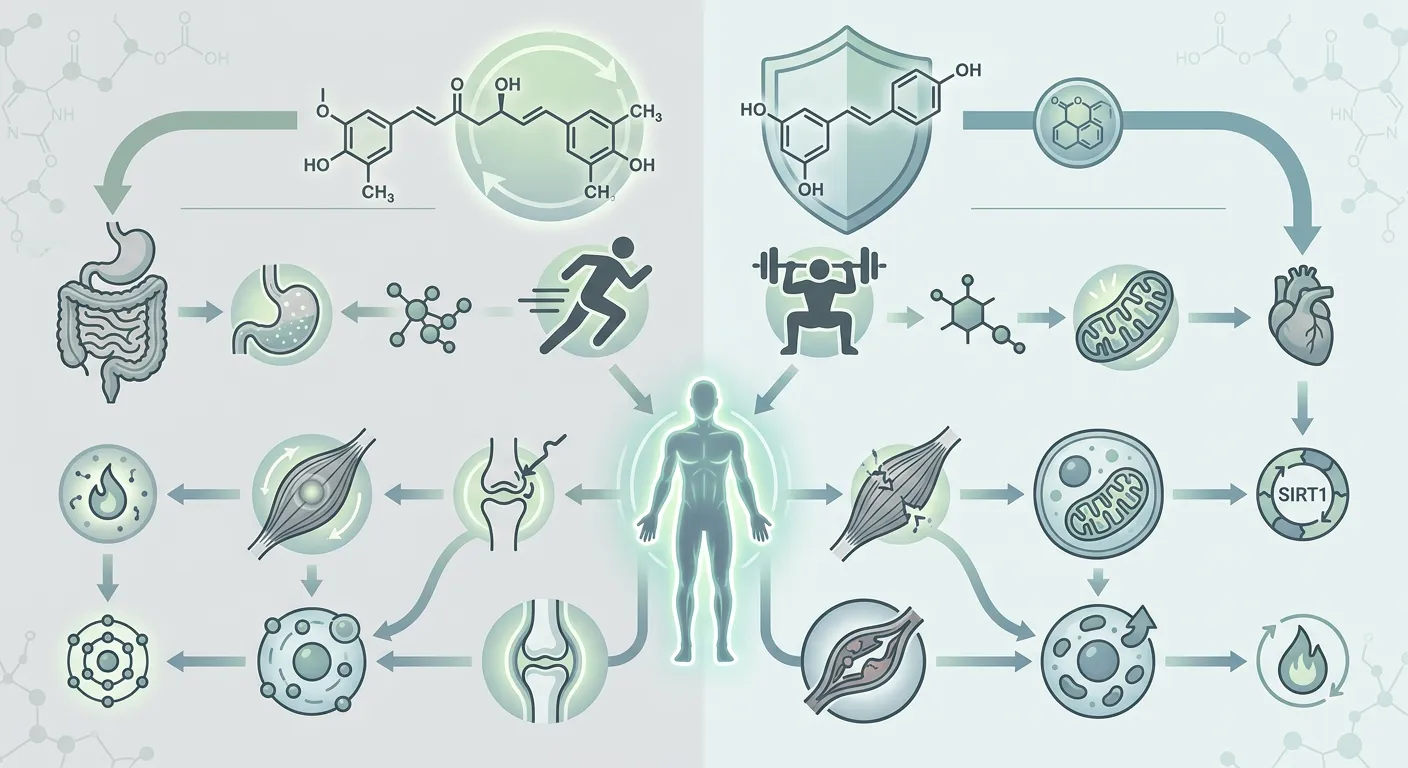
Simply put: Curcumin acts like an internal "firefighter." When training causes "sparks" of inflammation, it immediately intervenes and extinguishes them before they escalate into major problems of pain and stiffness.
2. Resveratrol: The Cellular Defender and Longevity Activator
Resveratrol works on a more fundamental level. It doesn't focus as much on inflammation itself as it does on enhancing cellular defense and energy efficiency. Its primary mechanism is activating proteins called sirtuins, particularly SIRT1. SIRT1 is a crucial regulator of cellular health that improves mitochondrial function (the cell's powerhouses), increases resistance to oxidative stress, and supports autophagy processes (cellular self-cleaning).
Resveratrol also activates AMPK – an enzyme that acts as an energy sensor in the cell. When active, AMPK signals the body to enter a "save and repair" mode, improving insulin sensitivity and fat burning. For athletes, this means more efficient energy utilization and better adaptation to training stress in the long run.
Scientific Sources
- Curcumin: A Review of Its Effects on Human Health, Foods, 2017
- Resveratrol, Linus Pauling Institute, Oregon State University
- The effect of curcumin supplementation on delayed onset muscle soreness, European Journal of Applied Physiology, 2020
- Health effects of resveratrol: A promise for functional foods?, Journal of Functional Foods, 2018
- Curcumin Scientific Review, Examine.com
- Resveratrol Fact Sheet for Health Professionals, NIH Office of Dietary Supplements
The Synergistic Effect: Why Do They Work Better Together?
Combining curcumin and resveratrol offers a two-pronged approach to recovery and athletic longevity. Curcumin provides relief by addressing acute inflammation and post-workout pain. This creates a more favorable environment for recovery processes.
In this "cleaner" environment, resveratrol can work more effectively. It strengthens cells from the inside out, improves energy metabolism, and makes them more resilient to future stress. Curcumin "clears the ground," and resveratrol "builds a stronger foundation." This combination accelerates short-term recovery but contributes to better adaptation and less wear and tear on the body in the long run.
What is the Selection Algorithm?
Choose Curcumin if:
- You suffer from joint pain or stiffness after training.
- You experience severe muscle soreness (DOMS) that hinders your next workouts.
- You seek rapid reduction of inflammation and pain.
- You are looking for support for your digestive system as well.
🔵 Choose Resveratrol if:
- Your focus is on long-term health and preventing cellular aging.
- You want to improve metabolic efficiency and insulin sensitivity.
- You aim for better cardiovascular function and endurance.
- You are an athlete over 35-40 years old and want to extend your sports career.
Recommended Combined Intake (Stack):
The practical algorithm for choosing curcumin and resveratrol is to combine 500-1000 mg of curcumin (with high bioavailability) with 250-500 mg of trans-resveratrol daily, taking them with a meal containing a small amount of fat to improve absorption.
What is the 2026 Protocol: "Foundation and Performance Stack"?
The 2026 Protocol represents a modern strategy that views curcumin and resveratrol as foundational supplements and as specific compounds that can be added as needed.
- Daily Foundation: 500 mg bioavailable curcumin + 250 mg trans-resveratrol. This dose maintains low levels of systemic inflammation and strengthens cellular defense mechanisms. Taken in the morning with food.
- Post-Intense Workout: An additional 500 mg of curcumin taken within an hour after finishing the session. The goal is to counteract the acute inflammation caused by the workout and speed up recovery.
- On Rest Days: Stick only to the daily foundation. The body needs time to adapt, and mild inflammation is a signal for growth.
Expert Note
Take these supplements as part of a comprehensive strategy that includes quality sleep, balanced nutrition, and intelligent training planning. They are factors, not substitutes for the fundamentals.
🧭 When to Choose Which?
- Choose Curcumin if your main problem is acute pain, joint issues, or slow recovery from muscle soreness.
- Choose Resveratrol if your goal is prevention, athletic longevity, and improving cellular energy.
- Combine both if you want a complete approach that addresses both current issues (inflammation) and future resilience (cellular health).
📖 What are Curcumin and Resveratrol?
Curcumin is the active compound in the spice turmeric. It is a potent polyphenol known for its strong anti-inflammatory properties, primarily acting by blocking key inflammatory pathways in the body.
Resveratrol is a polyphenol found in the skins of red grapes, berries, and peanuts. It acts as an antioxidant and an activator of specific genes (sirtuins) associated with longevity, cellular energy, and protection against oxidative stress.
⚖ Pros and Cons
| Pros | Cons |
|---|---|
| Curcumin: Potent and rapid anti-inflammatory effect, effective for joint pain, aids digestion. | Curcumin: Low natural bioavailability, requires special formulations (with piperine, liposomal) for effectiveness. |
| Resveratrol: Improves cellular health and longevity, supports cardiovascular system, enhances metabolism. | Resveratrol: Effects are more subtle and long-term, does not offer rapid pain relief. |
🗣 Explained Simply
If your body were a car that just finished a tough race:
| Criterion | Curcumin (The Firefighter) | Resveratrol (The Engineer) |
| Role | Puts out the flames (inflammation) on the engine and chassis. | Retunes the engine for better efficiency and applies protective coating. |
| Action | Immediate, reactive. | Long-term, preventive. |
| Result | The car stops smoking and is ready for repairs. | In the next race, the car will be more durable and consume less fuel. |
Choose the Right Product for Your Goal:
- 🩹 For Joints and Recovery: Browse joint products, often containing curcumin.
- For Cellular Health: See the adaptogens and antioxidants section.
- Combined Protocol for Maximum Performance:
- Pre-Workout: Pre-workout product for energy and focus.
- During Workout: Amino acids (EAA/BCAA) to reduce muscle breakdown.
- Post-Workout: A combination of curcumin and resveratrol along with a protein shake for recovery.
⚖ When to Choose Curcumin
- You need quick pain relief.
- Your main goal is to combat inflammation.
- You suffer from joint stiffness or pain.
- You want to reduce the severity of muscle soreness.
⚖ When to Choose Resveratrol
- You are investing in your long-term health.
- You are seeking prevention.
- You want to improve metabolic function.
- Your goal is to strengthen your cells against stress.
Expert Note from Sport Zona
From my work with athletes, I see that the effect of curcumin is almost immediately noticeable, especially in people with chronic joint problems or after heavy strength cycles. Pain and stiffness visibly decrease. Resveratrol is a supplement whose effects are not felt day-to-day. But in athletes who take it regularly for months, I observe better tolerance to high training volume and less frequent illness. In my opinion, the good strategy is not "either/or," but a combination - curcumin is the tactical tool for the battles, and resveratrol is the strategic one for winning the war against athletic wear and tear.
Recommended products
Frequently asked questions
Can Curcumin and Resveratrol be taken together?
Yes, the combination is popular and considered safe. They act through complementary pathways – Curcumin reduces systemic inflammation, while Resveratrol improves cellular function. This achieves a synergistic effect for better recovery and overall health.
Which is better for beginners - Curcumin or Resveratrol?
For beginner athletes who often experience severe muscle soreness (DOMS), Curcumin is usually more beneficial in the short term. It directly helps reduce post-workout inflammation and pain, making it easier to stick to a training regimen.
When is the best time to take Curcumin and Resveratrol?
Curcumin is best absorbed with food containing fats. Take it after a workout or with a main meal to support recovery. Resveratrol can be taken at any time of day, but some prefer it in the morning for energy or in the evening for cellular cleaning during sleep.
Are there side effects of taking Curcumin or Resveratrol?
At recommended doses, both are safe. At very high doses, Curcumin can cause stomach discomfort. Resveratrol may have a mild blood-thinning effect, so consult a doctor if you are taking anticoagulants.
What is the recommended dosage of Curcumin and Resveratrol?
For Curcumin, 500-1000 mg daily of a standardized extract with high bioavailability (e.g., with added piperine) is recommended. For Resveratrol, the effective dose is between 150-500 mg of trans-resveratrol daily. Always start with a lower dose to assess tolerance.