Magnesium vs. Potassium: The Muscle Brake vs. The Heart Regulator

Magnesium and potassium are key for athletes, with each having a different role. Potassium conducts nerve impulses, while magnesium calms the system.
Short answer: Magnesium is the "relaxing" mineral, key for muscle relaxation, the nervous system, and over 300 enzymatic reactions. Potassium is a major electrolyte responsible for hydration, nerve impulses, and muscle contractions. Practical tip: For optimal recovery, combine 400 mg of elemental Magnesium (bisglycinate) in the evening before sleep and 1000–1500 mg of Potassium (citrate) after training to replenish electrolytes.
Magnesium and potassium are essential minerals for any athlete. They are often associated with muscle cramps, but their functions in the body differ. Potassium is like the main conductor for nerve impulses, while magnesium regulates and calms the system to prevent overload.
Understanding their specific roles helps improve performance, speed up recovery, and avoid fatigue, muscle weakness, and cramps. Many athletes resort to magnesium for cramps, but sometimes the cause is a potassium deficiency, especially during prolonged and intense training in hot weather. This article will delve into both minerals to help you choose which one, or both, to use and why.
This article is part of the Expert Hub for Supplements — over 270 expert-verified articles by Petar Mitkov and the Sport Zona team.
What is the Systemic Analysis of Magnesium and Potassium?
The systemic analysis of magnesium and potassium presents a comparison of their key characteristics, with magnesium being a major mineral and cofactor in over 300 enzymatic reactions, while potassium is a major electrolyte and mineral. Magnesium's primary focus is muscle relaxation, energy production (ATP), and the nervous system, while potassium's focus is hydration, nerve impulses, and muscle contractions.
| Criterion | Magnesium | Potassium |
|---|---|---|
| Biological Status | Major mineral, cofactor in over 300 enzymatic reactions. | Major electrolyte and mineral. |
| Primary Focus | Muscle relaxation, energy production (ATP), nervous system. | Hydration, nerve impulses, muscle contractions. |
| Mechanism | Stabilizes ATP, acts as a calcium antagonist (relaxes muscle). | Primary driver of the sodium-potassium pump, which maintains cell voltage. |
| Type of Cramps | Resting cramps, nocturnal cramps, muscle twitches. | Cramps during exertion, related to dehydration and salt loss. |
| Time Horizon | Chronic, effect accumulates over time. Taken daily. | Acute, effect is rapid. Taken around training or as needed. |
| Specific Bonus | Improves sleep, reduces stress, aids insulin sensitivity. | Regulates blood pressure, counteracts high sodium intake. |
What are the Mechanisms of Action for Magnesium and Potassium?
The mechanisms of action for magnesium and potassium are critical for muscle function and achieve this through various biochemical pathways, understanding which is key to their proper use.
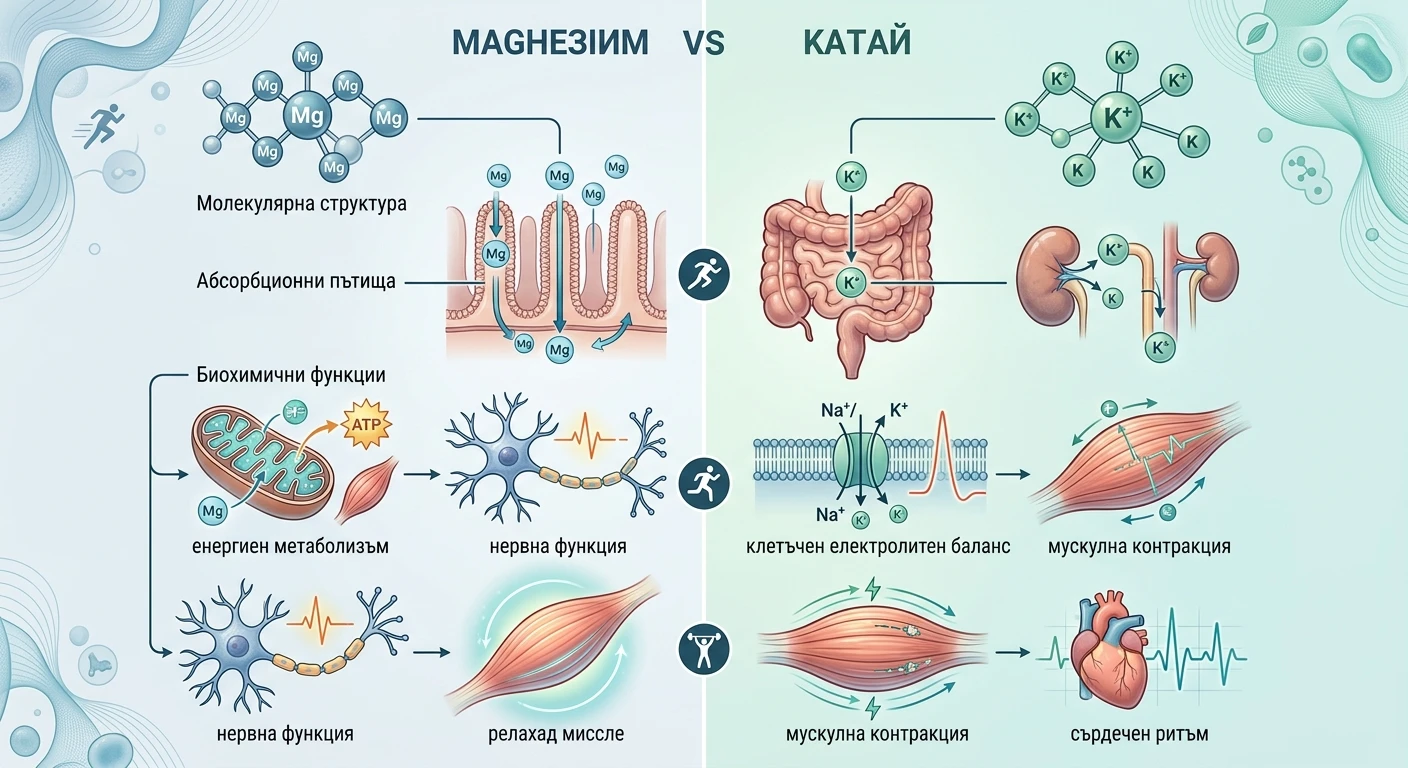
1. Magnesium: The Master of Relaxation and Energy
Magnesium is a cofactor in over 300 enzyme systems that regulate energy production, protein and DNA synthesis, and muscle and nerve function. For athletes, its most important functions are:
- ATP Production: The energy currency of the cell, adenosine triphosphate (ATP), is biologically active only when bound to a magnesium ion (Mg-ATP). Without sufficient magnesium, your ability to produce energy during intense efforts drops dramatically.
- Muscle Relaxation: Magnesium acts as a natural physiological calcium channel blocker. Calcium initiates muscle contraction, and magnesium competes with it for receptor binding to induce relaxation. Magnesium deficiency leads to increased calcium influx into cells, causing hyperexcitability and cramps, even at rest.
- Nervous System: Magnesium regulates neurotransmitters like glutamate and GABA, helping to calm the nervous system. Therefore, it aids sleep and reduces feelings of stress and anxiety.
Simply put: Magnesium is the "brake" on muscle contraction and the "charger" for your cells' batteries (ATP). Without it, muscles remain tense, and energy levels drop.
2. Potassium: The Cell's Electrical Engineer
Potassium is the main intracellular cation and a key electrolyte. Its role is related to maintaining the electrical gradient across cell membranes, which is fundamental for almost all bodily functions.
- Sodium-Potassium Pump: This pump is active in every cell of the body and uses energy (ATP) to pump sodium out of the cell and potassium into it. This process creates an electrochemical gradient known as the membrane potential, which is necessary for nerve impulses, muscle contractions, and heart rhythm.
- Hydration and Cell Volume: Potassium is the primary ion that determines the volume of fluid inside cells. The correct balance between potassium (inside) and sodium (outside) is critical for maintaining overall body hydration. During profuse sweating, we lose both electrolytes, disrupting this balance.
- Muscle Function: The transmission of a nerve impulse to a muscle, causing it to contract, directly depends on the rapid change in sodium and potassium concentrations across the cell membrane. Potassium deficiency can disrupt this process and lead to muscle weakness, fatigue, and cramps during physical exertion.
Simply put: Potassium is the "spark" that allows nerves to "talk" to muscles. It also ensures cells are properly "hydrated" and function appropriately.
Scientific Sources
- Magnesium in Prevention and Therapy, 2015
- Magnesium Fact Sheet for Health Professionals - NIH Office of Dietary Supplements
- Potassium Fact Sheet for Health Professionals - NIH Office of Dietary Supplements
- Potassium - Linus Pauling Institute, Oregon State University
- The Importance of Magnesium in Clinical Healthcare, 2015
The Synergistic Effect: Why Do They Work Better Together?
Magnesium and potassium are not just independent players; they interact. Their most important connection is related to the sodium-potassium pump. This pump, which sustains cell life, requires ATP (energy) for its operation. As we already know, ATP is active only as an Mg-ATP complex. Therefore, Magnesium deficiency directly impairs the function of the sodium-potassium pump.
When the pump's function is inefficient due to a lack of magnesium, cells cannot retain potassium. This leads to refractory hypokalemia (low potassium levels), which cannot be corrected solely by potassium intake. Magnesium levels must first be restored for the body to effectively manage its potassium balance again. In sports, this means that chronic magnesium deficiency can make you more vulnerable to acute potassium problems during training.
What is the Best Algorithm for Selection?
Choose Magnesium if:
- You have trouble sleeping, difficulty falling asleep, or wake up frequently.
- You experience frequent muscle twitches or cramps at rest (e.g., during the night).
- You feel constantly tense, stressed, or anxious.
- You have a strong craving for chocolate (dark chocolate is rich in magnesium).
🔵 Choose Potassium if:
- You get cramps during long and intense workouts, especially in the heat.
- You feel general muscle weakness and fatigue during physical exertion.
- You consume a diet high in sodium (processed foods).
- You often feel dehydrated, even though you drink water.
Recommended Stack for Proper Function:
The practical algorithm for selection involves a combination of Magnesium and Potassium for most athletes who train intensely. Magnesium (in a chelated form like bisglycinate or citrate) is taken in the evening for better recovery and sleep, while Potassium (in citrate form or in an electrolyte drink) is taken around training to maintain hydration and muscle function.
What is the 2026 Protocol: "Foundation and Performance Stack"?
The 2026 Protocol: "Foundation and Performance Stack" is designed for serious athletes aiming for maximum performance and recovery. It provides a stable foundation and adequate support during exertion.
- Daily Foundation (Evening): 300-400 mg of elemental magnesium in the form of magnesium bisglycinate or citrate. This dose covers daily needs, supports sleep, and systemic relaxation.
- During Training (>90 minutes or in heat): An electrolyte drink containing 300-500 mg of potassium and 250-400 mg of sodium per liter. This compensates for sweat losses and maintains electrolyte balance.
- Post-Training: Focus on potassium-rich foods like bananas, potatoes, spinach, and avocados. Additional intake is only needed for extreme exertion or double training sessions.
Expert Note
Do not rely solely on supplements. The foundation must be food. Spinach, almonds, avocados, salmon, and dark chocolate are good sources of magnesium. Potatoes, bananas, tomatoes, and legumes are rich in potassium. Supplements are for filling the gaps that intense sport creates, not for replacing a balanced diet.
🧭 When to Choose Which?
- Choose Magnesium if your main problem is related to chronic stress, poor sleep, and muscle tension outside of training.
- Choose Potassium if the problems (cramps, weakness) occur mainly during or immediately after prolonged physical exertion and sweating.
- Combine Both if you train intensely and regularly to ensure systemic support (magnesium) and acute protection during exertion (potassium).
📖 What are Magnesium and Potassium?
Magnesium (Mg) is the fourth most abundant mineral in the body, acting as a cofactor in hundreds of biochemical reactions, including energy production and muscle relaxation. It is important for the structural integrity of bones and for calming the nervous system.
Potassium (K) is the main intracellular electrolyte that maintains fluid and electrochemical balance in the body. It is significant for nerve impulse conduction, muscle contractions, and maintaining normal blood pressure.
⚖ Pros and Cons
| Pros | Cons |
|---|---|
| Magnesium: Improves sleep, reduces stress, helps with cramps at rest. | Magnesium: High doses can cause gastrointestinal discomfort (especially oxide). |
| Potassium: Acts quickly on cramps from dehydration, regulates blood pressure. | Potassium: High doses can be dangerous, especially with kidney problems. Difficult to dose in supplements. |
🗣 Explained Simply
If we are building a house (muscle), Magnesium is the site manager who ensures the workers rest and energy is used efficiently. Potassium is the wiring – without it, electricity (nerve impulse) cannot reach the lights and machines for them to work.
| Criterion | Magnesium | Potassium |
|---|---|---|
| Role | Relaxation, Energy | Impulse, Hydration |
| When is it needed? | At night, during stress | During sweating |
| Metaphor | Brake / Charger | Spark / Conductor |
Choose the Right Product for Your Goal:
- For general health and recovery: Browse our high-quality vitamins and minerals.
- For hydration during training: Choose from our selection of energy and hydration drinks.
Combined Protocol:
- Before/During Training: Electrolyte drink with Potassium and Sodium.
- After Training: Banana or potato to restore potassium.
- Evening Before Bed: 300-400mg Magnesium Bisglycinate.
⚖ When to Choose Magnesium
- You want to improve your sleep quality.
- You experience muscle twitches (fasciculations).
- You need support for high mental stress.
- You get calf cramps at night.
⚖ When to Choose Potassium
- You train for extended periods in hot conditions and sweat profusely.
- You experience sudden muscle weakness during exertion.
- Your diet is high in salt and processed foods.
- You want to support cellular hydration.
Expert Note from Sport Zona
In over 12 years of working with athletes, I've seen many cases of misdiagnosed "magnesium deficiency." Often, especially in endurance sports, the problem is a potassium-sodium imbalance due to heavy sweating. My advice: if cramps appear primarily after the 90th minute of training, consider potassium and hydration. If twitches and stiffness occur even on rest days or at night, then the focus should be on magnesium.
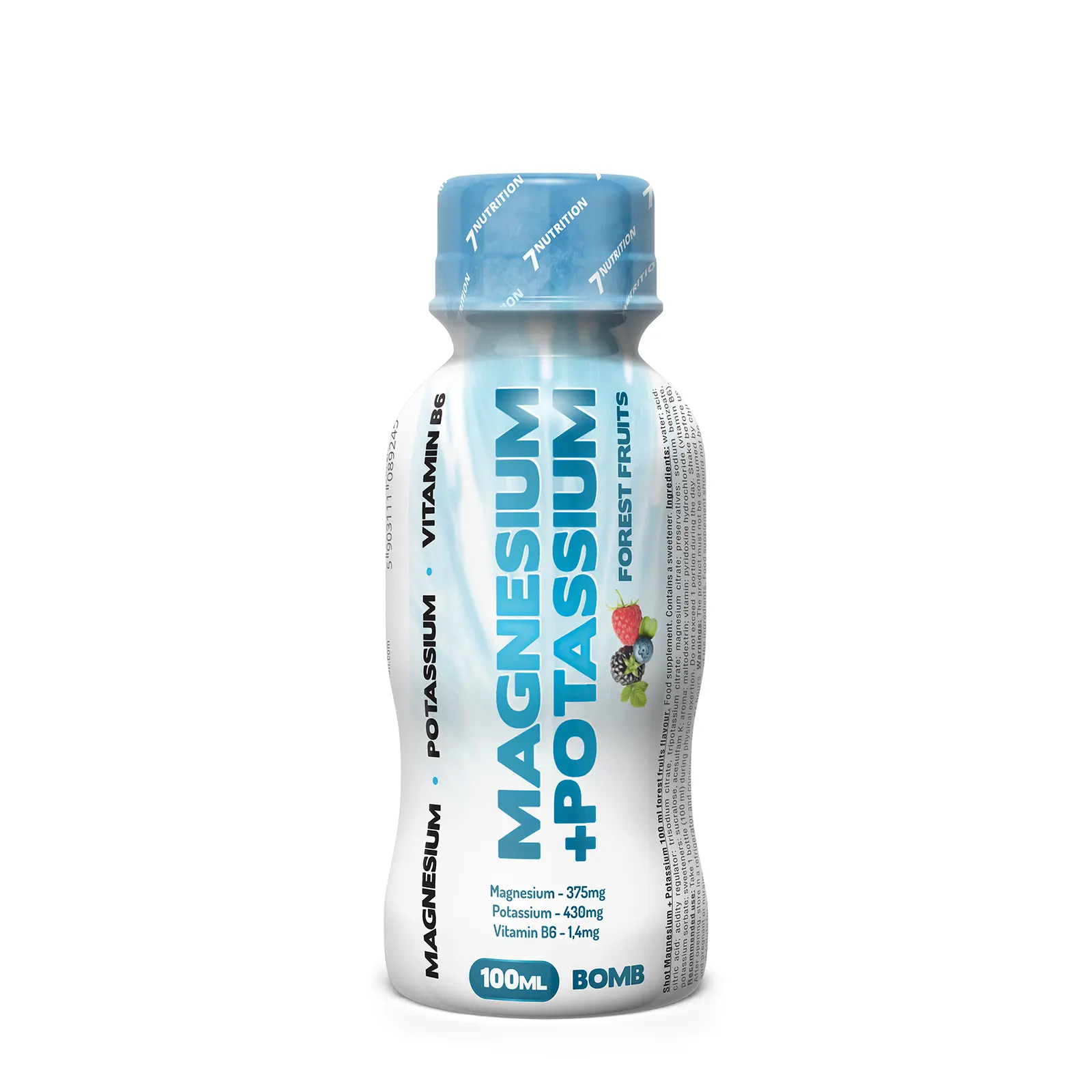
Recommended products

Frequently asked questions
Can Magnesium and Potassium be taken together?
Yes, and it is even recommended. They work in synergy – magnesium helps cells retain potassium, which improves hydration. For maximum effect, you can split the intake: Potassium after training and Magnesium in the evening before sleep.
Which is better for beginners - Magnesium or Potassium?
For most beginners, Magnesium is more universally beneficial. Its deficiency is more common in the modern diet and affects basic functions such as sleep, stress, and muscle cramps. Potassium becomes more critical during intense and prolonged training with significant fluid loss.
When is the best time to take Magnesium and Potassium?
The best time to take Magnesium is in the evening, about 30-60 minutes before sleep, due to its calming effect on the nervous system. Potassium is most effective when taken after training to restore electrolytes, or in smaller doses with food throughout the day.
Are there side effects from taking Magnesium or Potassium?
Yes, mainly if the recommended doses are exceeded. High doses of Magnesium can cause digestive discomfort (diarrhea). Potassium overdose is more dangerous and can lead to hyperkalemia (high blood potassium levels), especially in people with kidney problems. Always follow the label's recommendations.
What is the recommended dosage of Magnesium and Potassium?
For athletes, the recommended daily dose of elemental Magnesium is about 400-500 mg. For Potassium, total needs are high (3500-4700 mg), but most should come from food. Potassium supplements are usually in the range of 500-2000 mg daily, mainly to compensate for sweat losses.