Maca vs. Ashwagandha: The Energy Adaptogen vs. The Calming Balancer

Maca and Ashwagandha are adaptogens with different benefits: Maca increases energy and endurance, while Ashwagandha reduces stress and improves recovery.
Short Answer: Maca is a stimulant for energy, endurance, and libido, while Ashwagandha is an adaptogen that reduces stress, controls cortisol, and improves recovery. Maca "steps on the gas," and Ashwagandha "applies the brakes" to stress. Practical advice: Take 1.5-3g of Maca in the morning for energy and 300-600mg of standardized Ashwagandha extract (KSM-66) in the evening for better recovery and sleep.
In the natural world of sports supplements, Maca and Ashwagandha stand out. Both roots come from ancient traditions – one from the high Andes of Peru, the other from Ayurvedic medicine in India. We often categorize them as "adaptogens," but their primary functions differ, serving opposite yet complementary purposes in an athlete's preparation.
The choice between the two, or the decision to combine them, depends on which system in your body needs the most support at the moment. This article analyzes the mechanisms, benefits, and how to use each supplement to make an informed decision for your training regimen.
This article is part of the Expert Hub for Nutritional Supplements — over 270 expert-verified articles by Petar Mitkov and the Sport Zona team.
What is the Comparative Matrix for System Analysis?
The Comparative Matrix for System Analysis provides a detailed comparison of Maca (Lepidium meyenii) and Ashwagandha (Withania somnifera) based on key criteria such as biological status, primary focus, key mechanism of action, and the sensation these adaptogens evoke.
| Criterion | Maca (Lepidium meyenii) | Ashwagandha (Withania somnifera) |
|---|---|---|
| Biological Status | Adaptogen, nutritional root (cruciferous plant) | Adaptogen, medicinal herb (Solanaceae family) |
| Primary Focus | Energy, endurance, libido, vitality | Stress reduction, cortisol control, sleep, recovery |
| Key Mechanism | Indirect endocrine modulation, neurotransmitter support | Hypothalamic-Pituitary-Adrenal (HPA) axis modulation, cortisol reduction |
| Sensation | Energizing, stimulating (without caffeine) | Calming, balancing, restorative |
| Time Horizon | Faster effect (days to a week) | Slower, cumulative effect (2-4+ weeks) |
| Best Intake Time | Morning or pre-workout | Evening or split into two doses (morning and evening) |
What are the Mechanisms of Action of Maca?
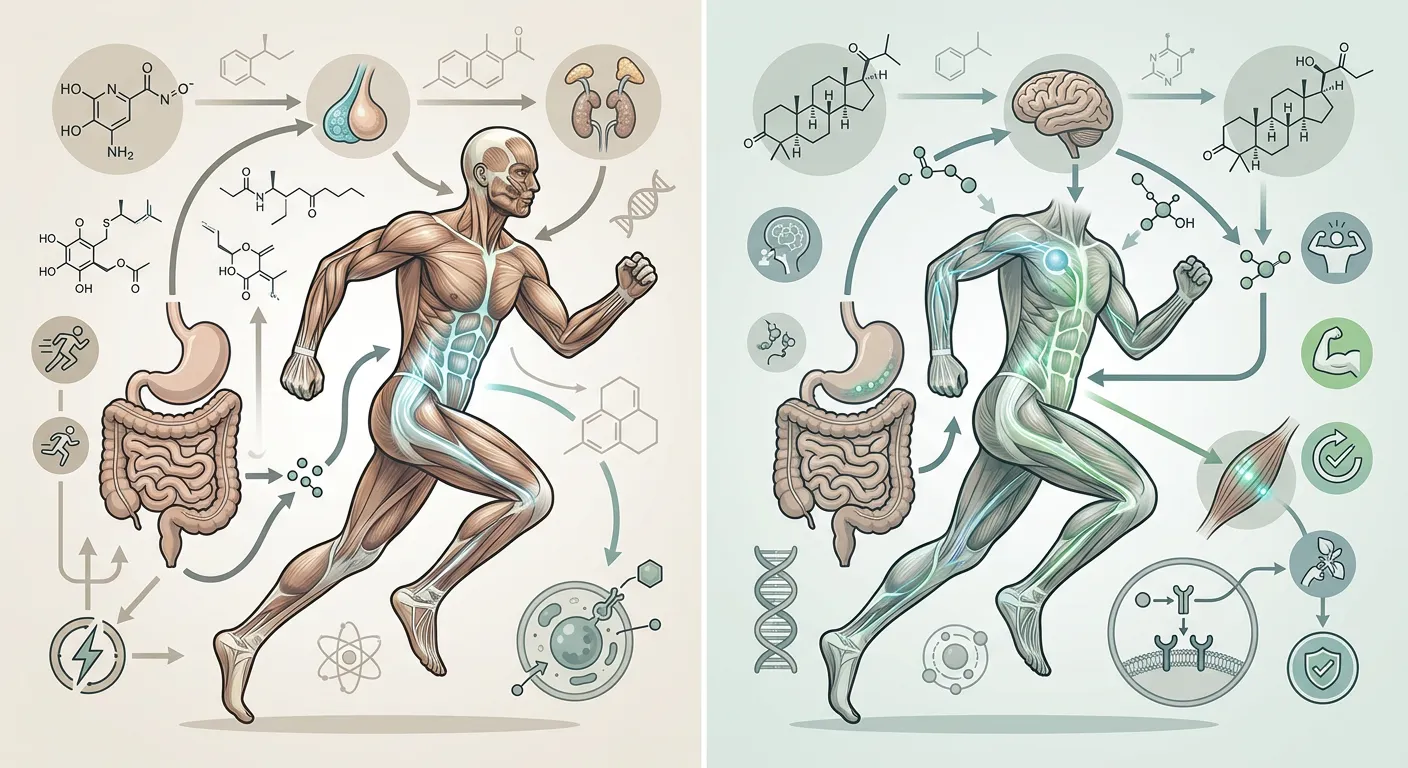
1. Maca: The Energy Optimizer
Maca is an adaptogen that optimizes the endocrine system by interacting its active compounds (macamides and macaenes) with the hypothalamus and pituitary gland, helping the body produce and utilize its own hormones more effectively.
Simply put: Maca doesn't add new fuel; it optimizes existing systems to work more efficiently and produce more energy from the same resources.
2. Ashwagandha: The Stress Regulator
Ashwagandha is an adaptogen whose primary role is to modulate the body's stress response. Its main mechanism of action is regulating the Hypothalamic-Pituitary-Adrenal (HPA) axis. Under chronic stress – physical (heavy training) or mental (work, personal life) – this axis becomes overactive, leading to persistently high levels of the stress hormone cortisol. The active compounds in ashwagandha, called withanolides, help to "calm down" this axis. They reduce the body's sensitivity to stress signals and directly lower cortisol production. For athletes, this is crucial because chronically high cortisol is catabolic (breaks down muscle), hinders recovery, and impairs sleep quality.
Simply put: Ashwagandha acts like a thermostat for stress. When cortisol levels get too high, it "turns them down" to normal limits, protecting the body from the negative effects of chronic tension.
Scientific Sources
- Lopresti, A. L., Smith, S. J., Malvi, H., & Drummond, P. D. (2019). An investigation into the stress-relieving and pharmacological actions of an ashwagandha (Withania somnifera) extract. Medicine, 98(37).
- Gonzales, G. F., Córdova, A., Vega, K., Chung, A., Villena, A., Góñez, C., & Castillo, S. (2002). Effect of Lepidium meyenii (MACA) on sexual desire and its absent relationship with serum testosterone levels in adult healthy men. Andrologia, 34(6), 367-372.
- Wankhede, S., Langade, D., Joshi, K., Sinha, S. R., & Bhattacharyya, S. (2015). Examining the effect of Withania somnifera supplementation on muscle strength and recovery: a randomized controlled trial. Journal of the International Society of Sports Nutrition, 12(1), 43.
- Office of Dietary Supplements - NIH. (2023). Ashwagandha - Health Professional Fact Sheet.
- Tota, K., et al. (2019). The Effect of Maca (Lepidium meyenii) Supplementation on Physical Performance in Trained Male Cyclists. Nutrients, 11(9), 2246.
The Synergistic Effect: Why Do They Work Better Together?
Maca and Ashwagandha have different goals, but they work well together. An athlete needs energy for action and calmness for recovery. Their combination addresses both needs.
Maca in the morning or pre-workout provides energy and focus for peak performance. This allows you to train more intensely and for longer. Ashwagandha in the evening counteracts the stress from heavy training. It lowers cortisol, facilitates falling asleep, and improves the quality of deep sleep – the time for recovery and muscle growth. This creates a cycle of "optimal performance and complete recovery," which is the foundation of any successful training plan.
When to Combine Maca and Ashwagandha?
Choose Maca if...
- You experience constant fatigue and lack of energy, without signs of high stress or anxiety.
- You are looking for a natural alternative to pre-workout stimulants to improve endurance.
- You want to improve your libido and overall vitality.
- Your main goal is to improve performance in fitness or on the field.
🔵 Choose Ashwagandha if...
- You have high physical or mental stress and feel "on edge."
- You have trouble falling asleep or wake up frequently.
- You suspect symptoms of overtraining (increased resting heart rate, irritability).
- Your goal is better recovery, reduced anxiety, and overall balance.
Recommended Stack for Maximum Effect:
Combining Maca and Ashwagandha is a successful approach for athletes who want the benefits of both, by taking Maca in the morning for daytime energy and Ashwagandha in the evening to lower cortisol and prepare for restful sleep, creating a 24-hour cycle of body support.
What is Key for Maximum Effect from Maca and Ashwagandha?
To get the most out of Maca and Ashwagandha, the right protocol, aligned with the body's daily rhythm, is important.
- Daily, Morning (Foundation for Energy): Take between 1500mg and 3000mg of gelatinized Maca with food. Gelatinized form is easier to digest and has better bioavailability. Start with a lower dose and gradually increase.
- Daily, Evening (Foundation for Recovery): Take between 300mg and 600mg of standardized Ashwagandha extract (like KSM-66® or Sensoril®), about an hour before bed. Standardized extracts guarantee a consistent percentage of active ingredients (withanolides).
- Around Workout Intake (Performance Stack): If you train in the afternoon, you can take your Maca dose about 60-90 minutes before your workout for an extra boost.
Expert Note
I recommend a cyclical intake for both supplements. For example, 8 weeks of intake followed by a 2-4 week break. This helps the body not to adapt completely and preserves receptor sensitivity, making the effect stronger upon resuming intake.
🧭 When to Choose Which?
- Choose Maca only if you feel well-rested but lack energy for workouts and daily life.
- Choose Ashwagandha only if you have enough energy but are constantly stressed, sleep poorly, and don't recover.
- Combine both if you are a serious athlete undergoing heavy training and want to increase your work capacity and accelerate recovery.
📖 What are Maca and Ashwagandha?
Maca (Lepidium meyenii) is a root from a plant in the cruciferous family (like broccoli and cabbage) that grows in the Peruvian Andes. It is traditionally used as food to increase energy, fertility, and endurance.
Ashwagandha (Withania somnifera) is the root of a small evergreen shrub native to India and Southeast Asia. It is an important herb in Ayurveda and has been used for thousands of years to reduce stress, improve concentration, and increase energy levels.
⚖ Pros and Cons
| Pros | Cons |
|---|---|
| Maca: • Quick energy boost • Improves libido • Contains no stimulants • Rich in nutrients |
Maca: • Can be overstimulating for some individuals • Distinct earthy taste • Raw form may cause stomach discomfort |
| Ashwagandha: • Effectively reduces cortisol • Improves sleep quality • Reduces anxiety • Supports muscle strength and recovery |
Ashwagandha: • Requires accumulation (slower effect) • May cause drowsiness if taken during the day • Not recommended for autoimmune diseases |
🗣 Simply Explained
If we had to explain the difference in one word:
- Maca = Fuel (gives you the energy to move forward)
- Ashwagandha = Shield (protects you from damage along the way)
| Criterion | Maca | Ashwagandha |
|---|---|---|
| Analogy | Gas Pedal | Shock Absorbers and Brakes |
| When to Take It? | When you need energy (morning) | When you need rest (evening) |
| What Will I Feel? | More endurance, tone | More calmness, less tension |
Choose the Right Product for Your Goal:
- For an energy boost before training: Check out our pre-workout products.
- For overall body support: Explore all adaptogens.
- For muscle recovery: Browse our selection of amino acids.
Combined Protocol:
- Pre-workout: Add Maca to your pre-workout shake.
- During workout: Hydrate with BCAA or EAA for endurance.
- Post-workout / Evening: Take Ashwagandha with dinner or before bed to kickstart recovery.
⚖ When to Choose Maca
- You want more "drive" and energy in your daily life.
- You are looking for better endurance during cardio or strength training.
- You want to support libido and hormonal balance.
- You avoid caffeine stimulants but seek an energy boost.
⚖ When to Choose Ashwagandha
- You feel overwhelmed, anxious, and constantly stressed.
- Your recovery is slow, and your sleep is poor.
- You train very hard and are on the verge of overtraining.
- You want to improve your focus by reducing the "noise" of stress.
Expert Note from Sport Zona
When working with athletes, I notice that most come with a recovery-related problem, not a lack of motivation to train. Therefore, I often recommend starting with Ashwagandha first for 4-6 weeks. This helps build a solid foundation – regulating sleep and reducing chronic cortisol. Only after the system is stabilized do we add Maca as a tool to enhance performance during key moments. Trying to add "gas" (Maca) to an exhausted and stressed system often leads to burnout even faster.
Recommended products
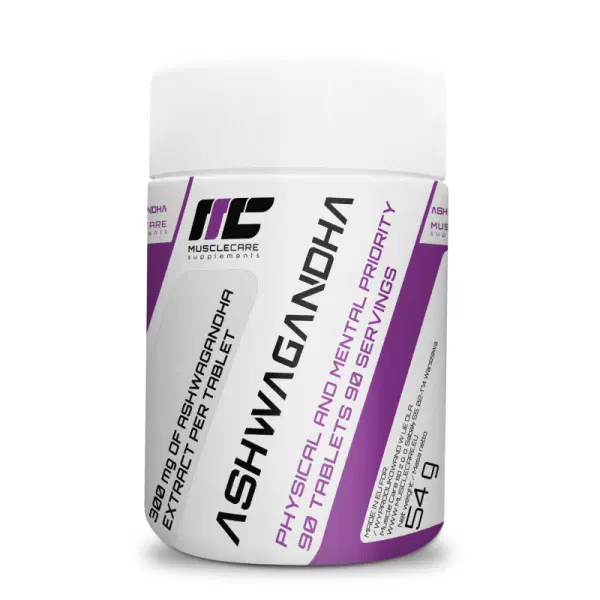
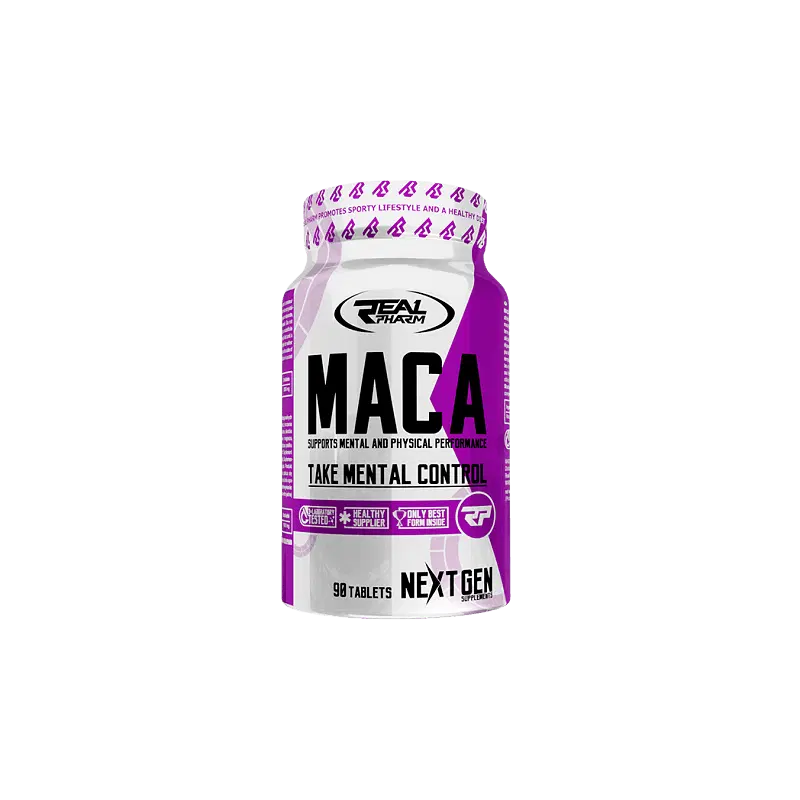
Frequently asked questions
Can Maca and Ashwagandha be taken together?
Yes, the two herbs can be combined and often have a complementary effect. Maca can be taken in the morning for energy and tone throughout the day, while Ashwagandha is suitable for the evening to reduce stress, improve recovery, and sleep quality.
Which is better for beginners - Maca or Ashwagandha?
It depends on the primary goal. If the problem is lack of energy, Maca is a good start. If stress, anxiety, and poor sleep are dominant and interfere with training, Ashwagandha is the more suitable choice. In general, Ashwagandha is considered a very safe adaptogen for beginners who want to improve their overall stress resilience.
When is the best time to take Maca and Ashwagandha?
Maca has an energizing effect, so it is best taken in the morning or before early afternoon to avoid interfering with sleep. Ashwagandha has a calming effect and helps control cortisol, making it ideal for evening intake or post-workout for better recovery.
Are there any side effects from taking Maca or Ashwagandha?
Both are considered safe when following recommended doses. Maca can sometimes cause mild stomach discomfort or overstimulation in more sensitive individuals. Ashwagandha is very well tolerated, but high doses can lead to drowsiness or an upset stomach. People with thyroid conditions should consult a doctor before taking Ashwagandha.
What is the recommended dosage for Maca and Ashwagandha?
For Maca powder, the standard dose is between 1.5 and 3 grams per day. For Ashwagandha, standardized extracts (like KSM-66) are preferred, with a dose of 300–600 mg per day, sometimes divided into two intakes. Always start with a lower dose to assess your individual tolerance.