Honey vs. Zinc: The Immunity Balancer vs. The All-Round Metabolic Catalyst

Copper and zinc are key for active athletes. Zinc supports recovery and immunity, while copper aids energy and connective tissue. It is important to maintain a balance between them, as one can hinder the absorption of the other.
Short answer: Zinc is critical for immunity and testosterone (up to 30 mg/day), and Copper for energy production (ATP) and connective tissue strength (up to 2 mg/day). They compete for absorption, so balance is essential. Practical advice: Take Zinc (15-30 mg) in the evening, before sleep. Take Copper (1-2 mg) in the morning or at noon, with at least 6 hours difference from zinc, to ensure maximum absorption of both minerals.
Copper and zinc are two micronutrients that often go underestimated, overshadowed by more popular vitamins and minerals. For the active athlete, however, they function as key players on a team: zinc is the manager, coordinating all building and repair processes (like growth, recovery, immunity), while copper is the energy inspector, ensuring power supply and maintaining infrastructure (energy production, connective tissue strength).
These two minerals work together in many bodily processes, but at the same time, they compete for absorption. Taking too much of one mineral can lead to a deficiency in the other, making their balance particularly important. Understanding when to prioritize zinc, when to prioritize copper, or how to combine them is key to improving performance, recovery, and overall health.
This article is part of the Expert Supplement Hub — over 270 expert-verified articles by Petar Mitkov and the Sport Zona team.
What is a Comparative Matrix from Systems Analysis?
A comparative matrix from systems analysis is a tool that provides a systematic overview of copper and zinc, analyzing them by criteria such as biological status, primary focus, key mechanism, and time horizon for action. Copper is an essential micronutrient (needed in small doses) with a primary focus on energy metabolism, connective tissue, and iron metabolism, acting as a cofactor for enzymes like cytochrome C oxidase and lysyl oxidase, with long-term support for structure and energy. Zinc is an essential micronutrient (needed in larger doses than copper) with a primary focus on immune function, hormonal balance, and protein synthesis, acting as a structural and catalytic cofactor for over 300 enzymes, with a faster effect on immunity and recovery.
| Criterion | Copper | Zinc |
|---|---|---|
| Biological Status | Essential micronutrient (needed in small doses) | Essential micronutrient (needed in larger doses than copper) |
| Primary Focus | Energy metabolism, connective tissue, iron metabolism | Immune function, hormonal balance, protein synthesis |
| Key Mechanism | Cofactor for enzymes like cytochrome C oxidase and lysyl oxidase | Structural and catalytic cofactor for over 300 enzymes |
| Time Horizon | Long-term support for structure and energy | Faster effect on immunity and recovery |
| Antagonism | High doses can reduce zinc and iron absorption | High doses (over 40-50 mg) reduce copper absorption |
| Specific Bonus | Supports blood vessel elasticity and tendon strength | Optimizes testosterone levels and improves sleep quality |
What are the In-depth Mechanisms of Copper and Zinc?
1. Copper: The Energy Engine and Connective Tissue Protector
Copper is a critical component of several key enzymes called cuproenzymes, among which the most important for athletes is Cytochrome C oxidase, as it is the final enzyme in the mitochondrial respiratory chain and plays a major role in the production of adenosine triphosphate (ATP) – the energy currency of the cell.
Another important enzyme is Lysyl oxidase. It is responsible for the cross-linking of collagen and elastin fibers. This process gives strength and elasticity to connective tissue – tendons, ligaments, skin, and blood vessels. Adequate copper intake protects against soft tissue injuries. Copper also participates in iron metabolism, aiding in its transport and absorption, which is important for preventing anemia.
Simply put: Copper acts as the "spark" for energy production in muscles and the "cement" for tendons and ligaments. It helps the body use energy efficiently and protects it from structural damage.
2. Zinc: The Regulator of Growth and Immune Response
Zinc is perhaps the most important mineral for the immune system and hormonal balance. It is a cofactor for hundreds of enzymatic reactions, including those related to DNA synthesis, cell division, and protein metabolism. Therefore, it is indispensable for muscle recovery and growth after intense workouts.
Zinc is necessary for the development and function of T-cells in the immune system, which are important participants in the fight against viral and bacterial infections. Zinc deficiency leads to more frequent illnesses, which can disrupt training cycles. Furthermore, zinc is involved in testosterone production in men and the regulation of the hormonal cycle in women. It also helps convert vitamin A into its active form, which is important for vision.
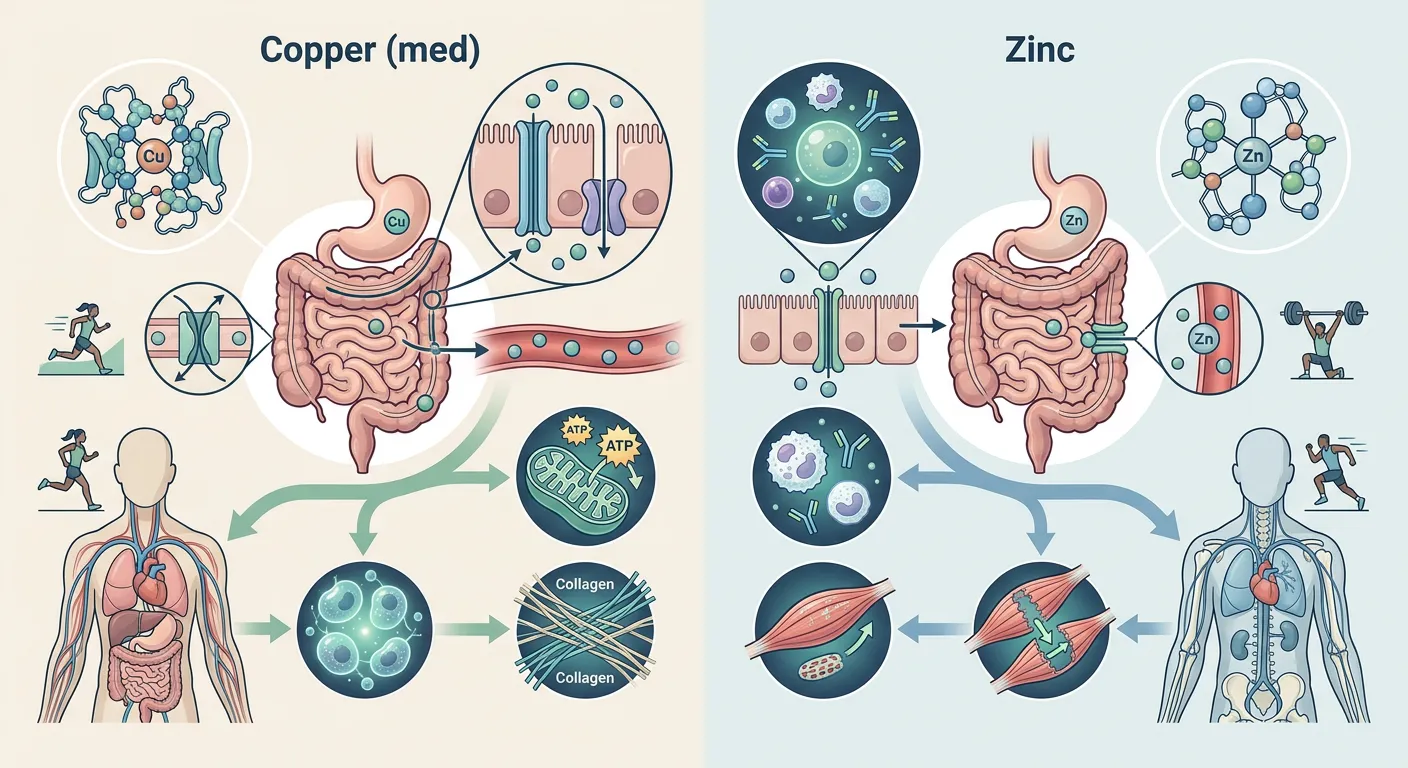
Simply put: Zinc is the "chief manager" of recovery. It instructs cells when to divide and build new muscle tissue, keeps your immune system on high alert, and helps optimize anabolic hormones.
Scientific Sources
- Zinc Fact Sheet for Health Professionals, National Institutes of Health
- Copper, Linus Pauling Institute at Oregon State University
- Zinc and the immune system, Prasad AS, 2008
- Zinc - Scientific Review on Usage, Dosage, Side Effects, Examine.com
- Scientific Opinion on Dietary Reference Values for copper, EFSA Panel on Dietetic Products, 2015
- The Effect of Zinc and Selenium Supplementation on Parameters of Anemia, Oxidant-Antioxidant Balance and... in β-Thalassemia, 2015
What is the Synergistic Effect Between Copper and Zinc?
The synergistic effect between copper and zinc refers to the competition for absorption between the two minerals through the same transport proteins in the intestines, even though they work together in the enzyme Copper-Zinc Superoxide Dismutase (Cu/Zn-SOD), which is the first line of defense against oxidative stress during intense training.
The true combined effect comes from maintaining the correct balance. Healthy diets typically provide a zinc to copper ratio between 8:1 and 15:1. When taking high doses of zinc (e.g., over 30 mg daily to boost immunity), it's important to also supplement with a small amount of copper (1-2 mg) to avoid deficiency. This combination ensures that the immune system, energy metabolism, and the structural integrity of tissues are supported simultaneously.
What is the Most Effective Approach When Choosing Copper and Zinc Supplements?
Choose Additional Copper Supplementation If:
- You are taking high doses of zinc (over 30 mg/day) long-term.
- You have a history of problems with tendons, ligaments, or connective tissue.
- You follow a strict vegan or vegetarian diet (many plant-based foods are rich in phytates that block absorption).
- Blood test results show low levels of ceruloplasmin or copper.
🔵 Choose Additional Zinc Supplementation If:
- You get sick often or feel your immune system is weakened.
- You recover slowly after workouts and often experience severe muscle soreness.
- You have symptoms of low testosterone (in men) or hormonal imbalance.
- You consume a lot of grains and legumes without proper soaking.
Recommended Stack for Balance:
Long-term intake of copper and zinc is most effective and safe when choosing a product that combines both minerals in the correct ratio. This could be a ZMA-type supplement (Zinc, Magnesium, and Vitamin B6) with 1-2 mg of copper included, or by adding 1 mg of copper for every 15 mg of zinc when taken separately.
Should We Use the 2026 Protocol: "Foundation and Performance Stack"?
The protocol for an 80 kg athlete represents a sample protocol focusing on strength and recovery.
- Daily Foundation (Year-round): 15-20 mg Zinc (as bisglycinate or picolinate) and 1-1.5 mg Copper (as gluconate). Take in the evening before bed on an empty stomach for better absorption and sleep effect. You will often find them in a quality ZMA product.
- Immunity/Recovery Stack (As needed, for 2-4 weeks): At the first signs of a cold or during a very heavy training block, the zinc dose can be increased to 30-40 mg daily (divided into two doses). The copper dose should be proportionally increased to 2-3 mg.
- Interactions: Take zinc and copper at least 2 hours after supplements with iron or calcium, as they compete for absorption.
Expert Note
I do not recommend high doses of zinc (over 40 mg/day) for more than a month without medical supervision. The upper limit of safe intake (UL) for adults is 40 mg of zinc from all sources (food + supplements). Overdosing can cause copper deficiency, gastrointestinal problems, and even suppress immune function. Always start with a lower dose.
🧭 When to Choose What?
- Zinc Only, If... your primary focus is improving immunity, hormonal status, and muscle recovery.
- Copper (or a supplement with copper), If... you are already taking zinc, have connective tissue issues, or eat a predominantly plant-based diet.
- Combine Both, If... you are looking for comprehensive, long-term support for optimal performance and health, maintaining a ratio of about 10-15:1 in favor of zinc.
📖 What are Copper and Zinc?
Copper (Cu): An essential trace mineral that acts as a cofactor for enzymes involved in energy production, iron metabolism, nervous system function, and the maintenance of connective tissue.
Zinc (Zn): An essential trace mineral that has catalytic, structural, and regulatory roles in over 300 enzymes. It is crucial for immune function, protein and DNA synthesis, wound healing, and normal growth.
⚖ Pros and Cons
| Copper | Zinc |
|---|---|
| Pros: Supports energy (ATP), tendon strength, iron absorption. | Pros: Boosts immunity, supports testosterone, accelerates recovery. |
| Cons: Needed in very small doses, risk of toxicity at high doses, can block zinc absorption. | Cons: High doses cause copper deficiency, can cause stomach discomfort. |
🗣 Explained Simply
If your body were a construction site:
- Zinc is the Site Supervisor. It gives orders to the workers (cells) to build (protein synthesis), multiply (cell division), and guard the site (immune system).
- Copper is the Chief Electrician. It lays the wires and provides the electricity (ATP) for all the machinery on site. It also ensures the rebar in the concrete (collagen) is strong and doesn't break.
You can't build without electricity. There's no point in electricity if there's no one to build. You need both, but the Supervisor has more tasks and needs more resources (higher zinc dose), while the Electrician is more specialized (lower copper dose).
Choose the Right Product for Your Goal:
- For Immunity and Hormones: Products with high Zinc content.
- For Energy and Joints: Combined joint formulas, often containing copper, manganese, and collagen.
- ⚖ For Overall Balance: ZMA complexes with added copper.
Combined Protocol for Maximum Effect:
1. Pre-workout: Fuel up with energy using a nitric oxide booster.
2. Post-workout Recovery: Whey protein for building blocks.
3. Before Bed: ZMA with copper to optimize hormones and recovery overnight.
⚖ When to Choose Copper
- You are taking high doses of zinc.
- You need support for connective tissue.
- You participate in endurance sports (marathon, cycling).
- You have low iron levels that are not responding to iron supplementation.
⚖ When to Choose Zinc
- You feel like you're getting sick or are in contact with sick people.
- You want to optimize muscle growth and recovery.
- You aim to improve sleep quality.
- You want natural support for hormonal balance (testosterone).
Expert Note from Sport Zona
In my practice, I have seen dozens of cases of athletes taking high doses of zinc (50 mg and more) for months, thinking "more is better" for immunity. Inevitably, after a few months, complaints arise such as unexplained fatigue or Achilles tendon pain. A blood test almost always shows low copper levels. My advice is simple: do not take only one mineral in isolation for a long time. If the goal is general health, choose a quality multivitamin complex or ZMA with added copper. The "little but consistent" approach is much more sustainable and safer than aggressive supplementation.
Recommended products
Frequently asked questions
Can Copper and Zinc be taken together?
Not recommended. Zinc and Copper compete for the same absorption pathways in the gut. Taking high doses of Zinc can suppress Copper absorption. For best results, take them at least 4-6 hours apart.
Which is better for beginners - Copper or Zinc?
For most beginner athletes, Zinc supplementation is more often necessary as it is lost through sweat and is key for immunity and recovery. Copper deficiency is less common, except in cases of an unbalanced diet or prolonged intake of high doses of Zinc without added Copper.
When is the best time to take Copper and Zinc?
The best practice is to take Zinc in the evening, about 30-60 minutes before sleep, as it can support sleep quality. Copper can be taken in the morning or at noon, with food, to avoid potential stomach discomfort.
Are there side effects from taking Copper or Zinc?
Yes, if recommended doses are exceeded. High intake of Zinc (over 40 mg daily for a long period) can lead to Copper deficiency, nausea, and stomach pain. Copper toxicity is rare from food intake, but high doses from supplements (over 10 mg daily) can damage the liver.
What is the recommended dosage of Copper and Zinc?
For active individuals, the recommended daily doses are: Zinc: 15-30 mg for men and 8-15 mg for women; Copper: 1-2 mg. It is important to maintain a ratio of about 10:1 to 15:1 between Zinc and Copper to avoid imbalance.