Melatonin vs. Ashwagandha: The Sleep Regulator vs. The Adaptogenic Stress Balancer

Melatonin regulates sleep, Ashwagandha helps with stress. The difference in their effects is important for your choice.
Short Answer: Melatonin is a fast-acting hormone for regulating the biological clock, effective for sleep onset issues. Ashwagandha is an adaptogenic herb that works long-term to reduce chronic stress and improve recovery. Practical advice: Use Melatonin (0.5–3 mg) 30 min before sleep for specific needs (travel, shifts). Take Ashwagandha (300–600 mg extract) daily for at least 4–8 weeks for sustainable stress management.
Recovery is just as important as the workout itself. For many active individuals, quality sleep and effective stress management are constant challenges. Intense training combined with daily responsibilities often leads to elevated cortisol levels and disrupted circadian rhythms. This is where two popular supplements come into play, each with its own approach: melatonin and ashwagandha.
Many people put them in the same category – "for sleep and relaxation" – but this is an oversimplification. Melatonin sends a clear signal when it's time to sleep. Ashwagandha helps the body cope better with stress, which interferes with rest. Understanding the fundamental difference between their mechanisms is crucial for making the right choice based on your goals.
This article is part of the Expert Hub for Nutritional Supplements — over 270 expertly verified articles by Petar Mitkov and the Sport Zona team.
What is the comparative matrix between Melatonin and Ashwagandha?
The comparative matrix presents a systematic analysis of Melatonin, a neurohormone primarily focused on regulating the circadian rhythm (sleep onset), and Ashwagandha, an adaptogenic herb that regulates the hypothalamic-pituitary-adrenal axis and modulates the stress response (cortisol).
| Criterion | Melatonin | Ashwagandha |
|---|---|---|
| Biological Status | Neurohormone | Adaptogenic herb (plant) |
| Primary Focus | Circadian rhythm regulation (sleep onset) | Stress response modulation (cortisol) |
| Mechanism of Action | Direct binding to MT1/MT2 receptors in the brain | Regulation of the hypothalamic-pituitary-adrenal axis |
| Time Horizon | Fast-acting (30-90 minutes) | Cumulative effect (2-8 weeks) |
| Primary Effect | Reduces time to fall asleep | Reduces feelings of stress and anxiety |
| Specific Bonus for Athletes | Synchronizes rhythm during travel (jet lag) | Improves strength and VO2max |
What are the mechanisms of action of melatonin?
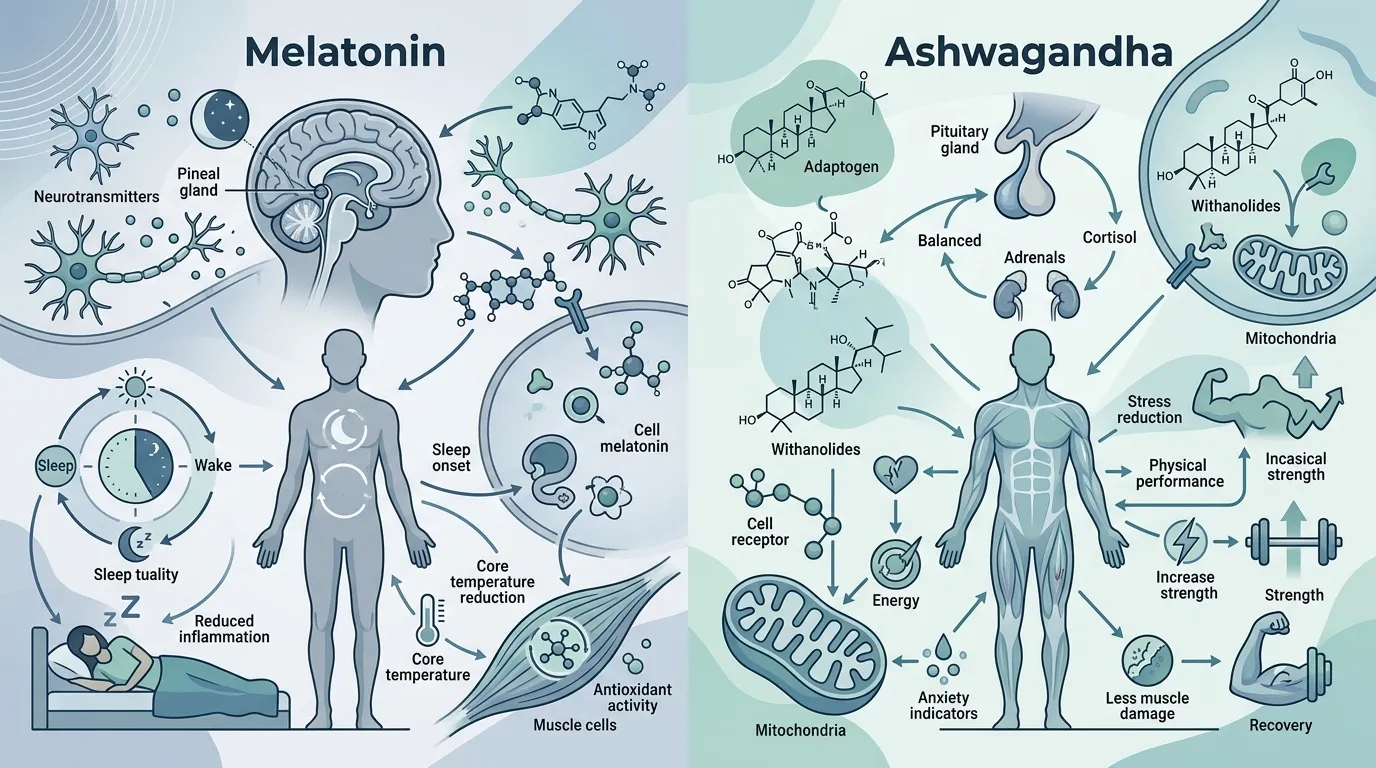
1. Melatonin: The Hormone of Darkness
Melatonin is a neurohormone naturally produced in the pineal gland of the brain, whose production is regulated by light. It acts by binding to specific MT1 and MT2 receptors in the suprachiasmatic nucleus, suppressing neural activity and inducing sleepiness.
In athletes, especially those who train late in the evening or travel across time zones, natural melatonin synthesis can be disrupted. Taking it as a supplement is a direct external intervention – it bypasses the problem and directly activates the receptors that tell the brain: "It's time to sleep, regardless of what your internal clock is currently saying."
Simply put: Melatonin initiates the process of falling asleep. It doesn't solve the stress problem but directly triggers sleep.
2. Ashwagandha: The Systemic Stress Regulator
Ashwagandha (Withania somnifera) is one of the most important herbs in Ayurveda, classified as an adaptogen. Adaptogens are substances that help the body adapt to physical and mental stress. Ashwagandha works systemically to normalize physiological processes, rather than having a single direct effect.
Its primary mechanism is modulating the hypothalamic-pituitary-adrenal axis (HPA axis) — the central stress response system. In chronic stress (including from heavy training), this axis is overactive, leading to persistently high cortisol levels. Ashwagandha helps calm this axis by reducing excessive cortisol production. Additionally, some of its active ingredients (withanolides) influence GABA receptors in the brain, which have a calming and anxiolytic (anti-anxiety) effect. Thus, it doesn't just help you sleep; it reduces the root cause of poor sleep – stress.
Simply put: Ashwagandha improves the functioning of the nervous system. It doesn't just suppress insomnia; it tunes the entire body to work more smoothly and be more resilient to stress.
Scientific Sources
- An investigation into the stress-relieving and pharmacological actions of an ashwagandha (Withania somnifera) extract, 2019
- A Double-Blind, Randomized, Placebo-Controlled Trial on the Effect of Ashwagandha (Withania somnifera dunal) Root Extract in Improving Cardiorespiratory Endurance and Quality of Life in Healthy Athletic Adults, 2015
- Melatonin: What You Need To Know - National Institutes of Health (NIH)
- Ashwagandha - Scientific review on usage, dosage, side effects | Examine.com
- The effectiveness of melatonin for promoting healthy sleep: a rapid evidence assessment, 2014
- Melatonin - Linus Pauling Institute, Oregon State University
The effect of mutual enhancement: Why do they work better together?
Although they have different mechanisms, melatonin and ashwagandha can work synergistically, especially for athletes under significant stress. Their combination addresses the problem of poor recovery from two different angles:
- Ashwagandha (long-term): Taken regularly, it reduces baseline stress and cortisol levels throughout the day. This creates a calmer "internal environment" and prevents the "tired but wired" state that often interferes with falling asleep at night.
- Melatonin (short-term): Taken before sleep, it provides the direct, sharp signal to fall asleep that may be needed even when stress is partially managed. It helps establish a clear and consistent sleep rhythm.
Ashwagandha prepares the body for sleep by reducing daytime stress. Melatonin in the evening ensures the final signal to fall asleep.
How to choose between melatonin and ashwagandha for sleep and stress?
Choose Melatonin if:
- You have a specific problem with falling asleep, but you are calm during the day.
- You work shifts or your sleep schedule is frequently disrupted.
- You travel and suffer from jet lag.
- You need a fast-acting, situational solution for a sleepless night.
🔵 Choose Ashwagandha if:
- You feel constantly tense, anxious, or on edge.
- You have symptoms of high cortisol (e.g., abdominal fat accumulation).
- You are looking for a long-term solution for managing stress from training and daily life.
- You want to improve other aspects like strength, endurance, and libido.
The recommended stack for maximum recovery is a combination of 300-600 mg of standardized ashwagandha extract, taken in the morning or after training, and 0.5-2 mg of melatonin, taken 30-60 minutes before bed, which provides systemic support against stress and a direct sleep stimulus.
What is the 2026 Protocol: "Foundation and Performance Stack"?
The 2026 Protocol: "Foundation and Performance Stack" is a sample protocol for complete recovery and adaptation to training stress.
- Daily in the morning: 300 mg of standardized Ashwagandha extract (e.g., KSM-66) to modulate daytime cortisol response.
- After heavy training (optional): An additional 300 mg of Ashwagandha to support recovery and manage training-induced stress.
- 30-60 minutes before sleep: 1-3 mg of Melatonin to facilitate falling asleep and regulate the circadian rhythm. Start with the lowest dose (1 mg) and increase only if needed.
Expert Note
Do not rely solely on supplements. The protocol works best when combined with good sleep hygiene: avoid blue light from screens at least an hour before bed, keep the bedroom cool and dark, and try to go to bed at the same time every night.
🧭 When to choose which?
- Choose only Melatonin if your problem is purely mechanical — disrupted schedule, travel, late training.
- Choose only Ashwagandha if you sleep well but feel overwhelmed and stressed during the day and want to improve your adaptation.
- Combine both if you are in a heavy training period, experience chronic stress, and have trouble falling asleep at night.
📖 What are Melatonin and Ashwagandha?
Melatonin is a hormone produced by the pineal gland that regulates the sleep-wake cycle. It signals the body that it's time to rest, with levels rising in the evening and falling in the morning.
Ashwagandha (Withania Somnifera) is an adaptogenic herb from Ayurvedic medicine. It helps the body adapt to stress by modulating hormonal responses (primarily cortisol) and supporting the nervous system.
⚖ Pros and Cons
| Pros | Cons |
|---|---|
| Melatonin | |
| Fast-acting; effective for jet lag; non-habit forming. | Can cause next-day drowsiness at high doses; does not address the root cause (stress). |
| Ashwagandha | |
| Addresses the root of the problem (stress); has additional benefits for strength and performance; improves overall well-being. | Requires accumulation (weeks); may cause mild stomach discomfort in some individuals; not a quick fix for insomnia. |
🗣 Simply Explained
| Criterion | Melatonin | Ashwagandha |
|---|---|---|
| Analogy | Light switch | Voltage regulator |
| When to use? | When you want to fall asleep immediately | When you want to be calmer constantly |
| What does it do? | Tells the brain "It's dark, sleep" | Tells the body "Relax, everything is okay" |
If you are under constant stress, ashwagandha stabilizes the entire system. Melatonin is the switch that turns off the light. You can turn it off, but if the tension is high, you will still be restless. It's good to use both.
Choose the right product for your goal:
- 🧘 For stress management: browse our adaptogens.
- For sleep support: melatonin and other specialized formulas in nutritional supplements.
- For overall recovery: combine with quality protein and amino acids.
Combined Protocol for Athletes:
- Morning: Ashwagandha for cortisol control.
- After training: Protein shake + Creatine for muscle recovery.
- Before sleep: Melatonin for quick sleep onset and quality sleep.
⚖ When to choose Melatonin
- You need an immediate effect.
- Your main problem is falling asleep itself.
- You travel frequently and battle jet lag.
- Your schedule is irregular and you need a "reset button" for sleep.
⚖ When to choose Ashwagandha
- Your problem is chronic stress, not just insomnia.
- You are looking for a long-term and sustainable solution.
- You want to improve physical performance as well.
- You feel more "tense" than just awake.
Expert Note from Sport Zona
In my practice, I notice that many athletes reach for melatonin as a panacea for poor sleep without addressing the root cause. Often, the problem isn't a lack of a "sleep signal" but excessively high "noise" from stress and cortisol. My recommendation is almost always to introduce ashwagandha first for a period of 4-6 weeks. In many cases, this alone solves the sleep problem. Melatonin should be considered more of a tactical tool for specific situations rather than a daily primary choice for recovery.
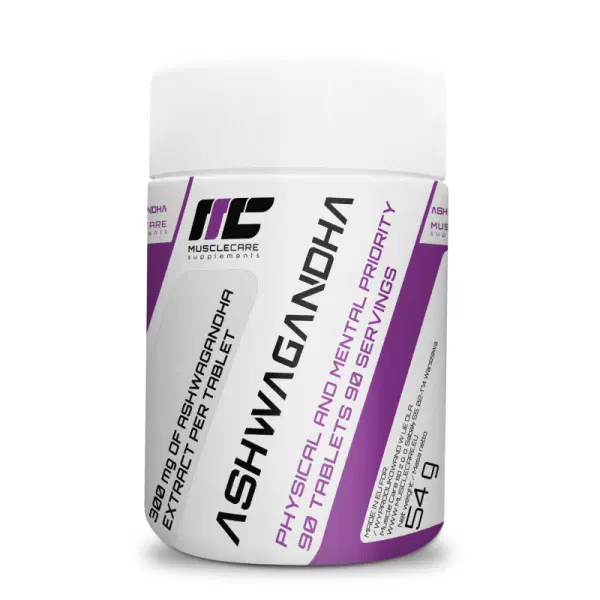
Recommended products
Frequently asked questions
Can Melatonin and Ashwagandha be taken together?
Yes, they can be combined. Melatonin helps you fall asleep faster, while ashwagandha works to reduce overall stress and improve sleep quality in the long run. Their mechanisms are complementary, not contradictory.
Which is better for beginners - Melatonin or Ashwagandha?
Ashwagandha is a more suitable choice for beginners as it acts more gently and addresses a wider range of stress-related issues. Melatonin is a stronger agent and should be used more specifically for particular sleep problems.
When is the best time to take Melatonin and Ashwagandha?
Melatonin should be taken 30-60 minutes before bedtime. Ashwagandha can be taken at any time of the day, but many people prefer evening intake to aid relaxation before sleep. It can also be split into two doses - morning and evening.
Are there any side effects from taking Melatonin or Ashwagandha?
Possible side effects of melatonin include morning drowsiness or vivid dreams, especially at higher doses. Ashwagandha is generally well-tolerated, but some individuals may experience mild stomach discomfort. It is not recommended for autoimmune diseases without medical consultation.
What is the recommended dosage for Melatonin and Ashwagandha?
For melatonin, the effective dose is between 0.5 mg and 5 mg, and it's best to start with the lowest dose. For ashwagandha, 300–600 mg daily of a standardized root extract (e.g., KSM-66 or Sensoril) is recommended.