Molybdenum vs. Zinc: The Detoxifier vs. The Immune Master
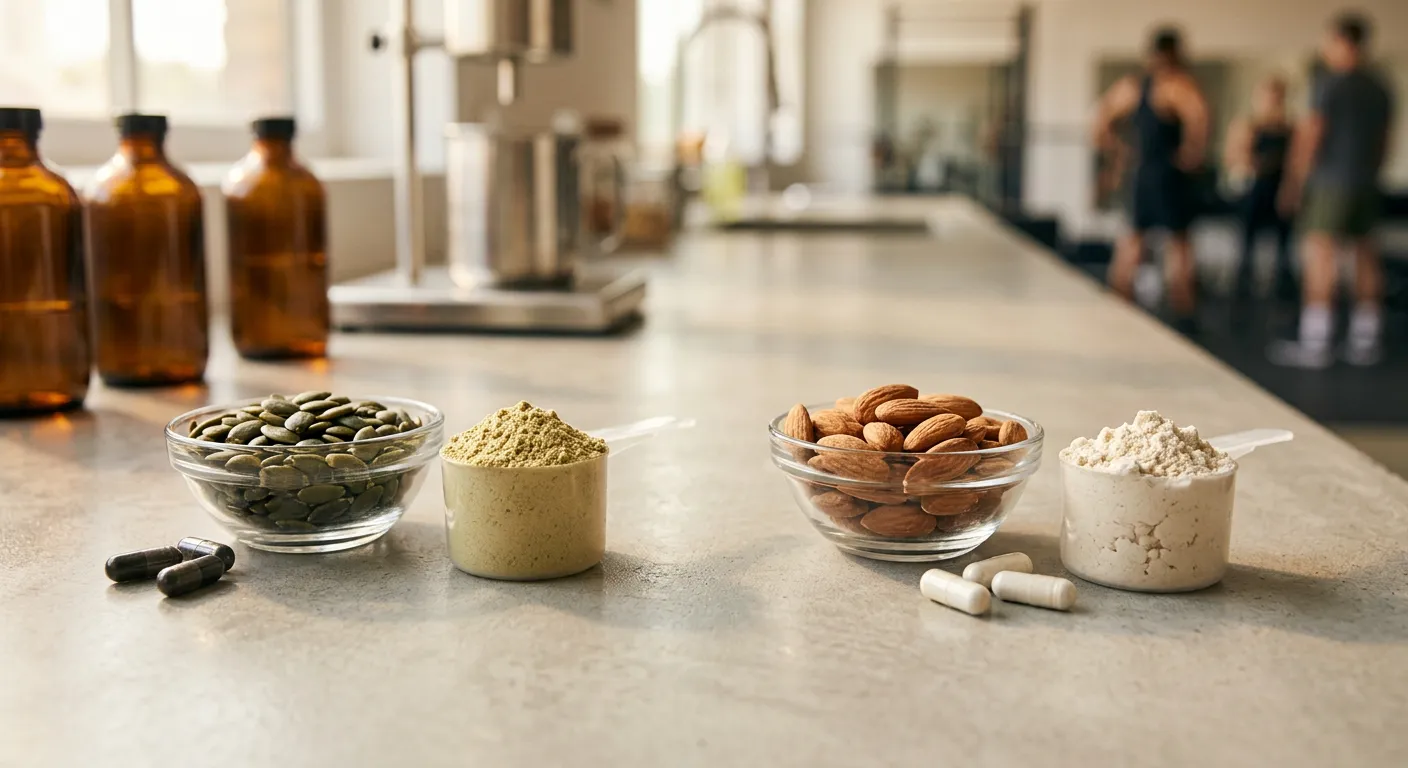
Molybdenum and zinc are important trace elements for metabolism and immunity. Zinc supports the immune system and hormonal balance, while molybdenum acts as an "off-screen technician," detoxifying and activating enzymes.
Short answer: Zinc is critical for athletes as it directly supports testosterone, the immune system, and protein synthesis. Molybdenum is a trace element with an important role in detoxification, but its needs are easily met through diet and supplementation is rarely necessary. Practical advice: Prioritize Zinc intake at a dose of 15 to 30 mg daily, preferably in the evening on an empty stomach. Take Molybdenum (45-75 mcg) only if it's part of a comprehensive multivitamin product or if a deficiency is proven.
We focus on macronutrients and popular vitamins when discussing athletic performance and health. Within the realm of micronutrients lie important players that, although needed in small quantities, strongly influence metabolism, recovery, and immunity. Such are zinc and molybdenum.
Zinc is known as the "general" of the immune system and hormonal balance, and its role is valued by athletes. It works on the front lines, with a visible effect. Molybdenum is more of a "biochemical technician" that works behind the scenes, detoxifying and activating enzymes. Many people haven't heard of it, but the system struggles to function without it.
For the serious athlete, it's important to understand the functions of these two elements. This article will delve into molybdenum and zinc to help you decide which one (or both) is suitable for your goals, diet, and training regimen.
This article is part of the expert hub for dietary supplements — over 270 expertly verified articles by Petar Mitkov and the Sport Zona team.
How Important Are Molybdenum and Zinc in the Body?
Molybdenum and Zinc are essential trace elements that act as cofactors for enzymatic reactions, detoxification of sulfites, purine metabolism (molybdenum), and immunity, hormonal balance, protein synthesis, and skin health (zinc).
| Criterion | Molybdenum | Zinc |
|---|---|---|
| Biological Status | Essential trace element | Essential trace element |
| Main Focus | Enzymatic reactions, sulfite detoxification, purine metabolism | Immunity, hormonal balance (testosterone), protein synthesis, skin health |
| Mechanism | Cofactor for 4 key enzymes (sulfite oxidase, xanthine oxidase, etc.) | Cofactor for over 300 enzymes, structural role in proteins ("zinc finger") |
| Time Horizon | Long-term, preventive; effects are subtle and hard to perceive | Short to medium-term; effects on immunity and recovery are noticeable |
| Impact on Training | Indirect: improves metabolic efficiency and tolerance to foods with sulfites | Direct: supports recovery, maintains testosterone levels and strength |
| Specific Bonus | Helps with sulfite sensitivity (from wine, dried fruits) | Improves skin, hair, and nail health |
What Are the Mechanisms of Molybdenum?
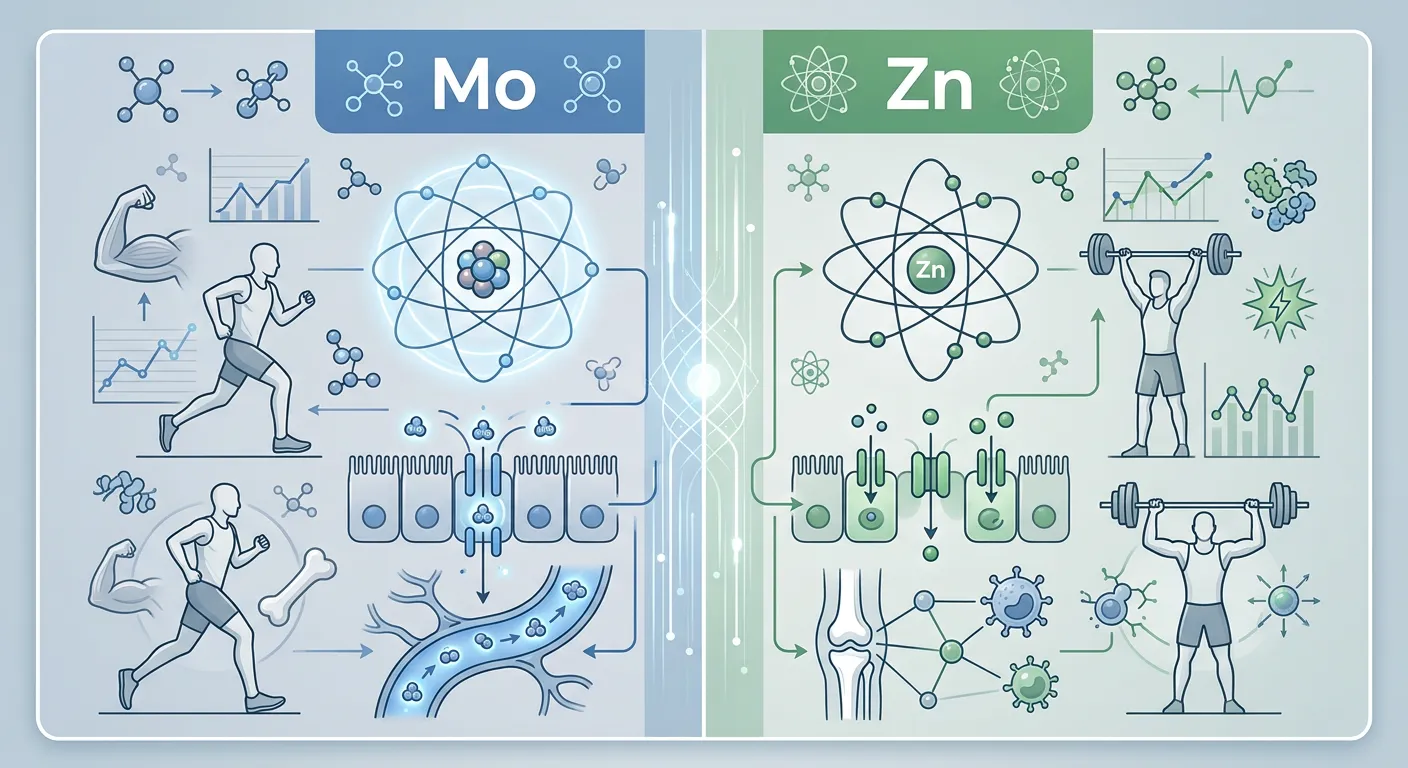
1. Molybdenum: Supports Detoxification
Molybdenum is a cofactor for four key enzymes in the human body; without it, these enzymes cannot perform their functions. For athletes, the crucial enzyme is Sulfite oxidase, which converts toxic sulfites into safer sulfates that enter the body from food or are formed during the breakdown of sulfur-rich amino acids.
Other enzymes that depend on molybdenum include Xanthine oxidase (involved in purine metabolism to uric acid) and Aldehyde oxidase (helps break down alcohol and other toxic compounds).
Simply put: Molybdenum is a specialized key that fits only a few, but vital, "machines" in the body. Its job is to help the body get rid of metabolic waste and external toxins, especially sulfites.
2. Zinc: Supports Immunity and Hormones
Zinc is a multifunctional element. It is a cofactor for over 300 enzymes involved in almost every major biological process. For athletes, the most important functions are:
- Immune function: Zinc is key for the development and function of immune cells, especially T-cells, which fight infections. Its deficiency leads to a weaker immune response.
- Protein and DNA synthesis: Zinc is necessary for enzymes that read the genetic code and build new proteins. This supports muscle growth and recovery.
- Hormonal balance: Zinc plays a significant role in the production and regulation of hormones, including testosterone. Adequate zinc levels are associated with appropriate testosterone levels in men.
- Structural role: Through structures called "zinc fingers," zinc helps proteins bind to DNA to regulate gene expression.
Simply put: Zinc has numerous functions for the body. It's a builder (for muscles), supports immune cells, and regulates hormonal balance.
Scientific Sources
- Molybdenum Fact Sheet for Health Professionals, NIH Office of Dietary Supplements
- Zinc, Linus Pauling Institute at Oregon State University
- Zinc as a Gatekeeper of Immune Function, 2017
- The science behind Zinc, Examine.com
- Scientific Opinion on Dietary Reference Values for molybdenum, EFSA Journal, 2014
- Zinc Supplement (Oral Route, Parenteral Route), Mayo Clinic
The Synergistic Effect: Why Do They Work Better Together?
Molybdenum and zinc have different functions, but they work well together, especially with high-protein diets popular among athletes. When you eat a lot of protein, your body breaks down amino acids like methionine and cysteine. This process produces sulfites as a byproduct.
Molybdenum, through sulfite oxidase, neutralizes sulfites. At the same time, zinc uses these amino acids to build new muscle protein and support recovery. Without molybdenum, the body can be burdened with toxic sulfites. Without zinc, amino acids cannot be effectively used for growth. One "cleans," while the other "builds."
What is the Optimal Ratio When Combining Molybdenum and Zinc?
Choose Molybdenum if:
- You get headaches or feel unwell after consuming wine or dried fruits (a sign of sulfite sensitivity).
- You consume a lot of protein supplements and want to optimize amino acid metabolism.
- Your diet includes few legumes, lentils, and nuts, which are primary sources of molybdenum.
- You are looking for subtle optimization of detoxification processes.
🔵 Choose Zinc if:
- You get sick often or want to boost your immune system before winter or a heavy training cycle.
- You aim to maintain proper testosterone levels, strength, and libido.
- You want to accelerate recovery and muscle growth.
- You have skin problems (acne), hair loss, or slow-healing wounds.
The recommended stack for overall health is a combination of 15-25 mg of Zinc (preferred forms are picolinate, bisglycinate, or citrate) and 50-100 mcg of Molybdenum (as glycinate or sodium molybdate), which helps cover the athlete's basic needs without the risk of overdose.
What is Key for Protocol 2026: "Foundation and Performance Stack"?
- Daily Foundation: Take 15 mg of Zinc (bisglycinate) and 50 mcg of Molybdenum with your evening meal. This covers your basic needs and supports overnight recovery. Taking it with food reduces stomach irritation from zinc.
- During Periods of Intense Training: Increase the zinc dose to 25-30 mg to support the immune system and the hormonal response to stress. The molybdenum dose remains the same.
- For Specific Needs (Sulfite Sensitivity): You can take an additional 50-100 mcg of Molybdenum before consuming foods rich in sulfites.
🧭 When to Choose Which?
- Choose Molybdenum if your main issue is related to metabolic efficiency, detoxification, or you have sulfite sensitivity.
- Choose Zinc if your priority is immunity, hormonal balance, strength, and faster recovery.
- Combine both in supportive doses for overall cellular and metabolic support, especially if you are an active athlete with high protein intake.
📖 What are Molybdenum and Zinc?
Molybdenum is an essential trace element that acts as a cofactor for enzymes responsible for processing sulfites and breaking down certain compounds, requiring very small amounts (micrograms).
Zinc is an essential mineral involved in hundreds of enzymatic reactions related to immunity, cell growth, macronutrient metabolism, and hormone production. It is needed in larger amounts (milligrams).
⚖ Pros and Cons
| Pros | Cons | |
|---|---|---|
| Molybdenum | Specific role in detoxification, low toxicity, small dose required. | Effects are not palpable, deficiency is rare, high doses may interfere with copper absorption. |
| Zinc | Fast and noticeable effect on immunity and recovery, supports hormones and skin health. | Risk of stomach irritation, antagonist to copper and iron at high doses, easy to overdose. |
🗣 Explained Simply
The body is like a high-tech factory. Zinc is the chief engineer who designs the products (muscles), manages the staff (immune cells), and maintains the machinery. Molybdenum is the waste management team that ensures dangerous byproducts (sulfites) are safely disposed of so they don't harm the factory.
| Criterion | Molybdenum | Zinc |
|---|---|---|
| Metaphor | Sanitation Worker / Waste Technician | Engineer / General |
| Scope | Specialized | Broad-spectrum |
| Main Goal | Cleaning and Prevention | Building and Protection |
Choose the Right Product for Your Goal:
- For overall metabolic and immune support: Explore our comprehensive vitamins and minerals.
- For maximum recovery: Combine zinc with quality amino acids to provide both the building blocks and the "master" for them.
- For proper detoxification and hydration: Ensure your diet is nutrient-rich, supplementing with electrolytes and energy products that support metabolism.
Combined Protocol:
⚖ When to Choose Molybdenum
- You regularly consume wine or dried fruits.
- You have a very high-protein diet.
- You are looking for optimization, not solving an acute problem.
- Your diet is low in legumes and grains.
⚖ When to Choose Zinc
- You feel your immunity weakening.
- You seek support for hormonal balance and strength.
- You have high training volume and slow recovery.
- You are vegan or follow a restrictive diet.
Expert Note from Sport Zona
In my practice, I rarely recommend molybdenum as a standalone supplement, as deficiency is uncommon. It's more for fine-tuning for elite athletes or individuals with specific sulfite sensitivity. However, subclinical zinc deficiency is common in athletes due to sweat losses and increased recovery needs. Therefore, I always prioritize ensuring adequate zinc levels as a foundation, and molybdenum becomes an intelligent addition to an already well-established nutritional strategy.
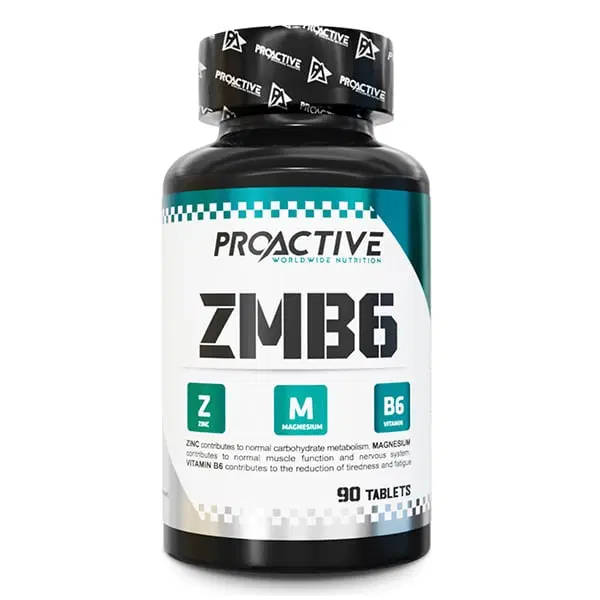
Recommended products
Frequently asked questions
Can Molybdenum and Zinc be taken together?
Yes, they can be taken together as they do not have a direct negative interaction in absorption at standard doses. However, very high doses of Zinc (over 50 mg) can hinder copper absorption, and extremely high doses of Molybdenum can have a similar effect. The best practice is to take them at different times or as part of a balanced multivitamin formula.
Which is better for beginners - Molybdenum or Zinc?
Zinc is significantly more important and has a more direct effect for beginner athletes. It is directly involved in muscle recovery, immune system support, and energy metabolism. Molybdenum needs are almost always met by a varied diet, and additional intake is rarely necessary.
When is the best time to take Molybdenum and Zinc?
Zinc is best absorbed in the evening, on an empty stomach or with food that is not rich in calcium, iron, or phytates (legumes, whole grains). Molybdenum can be taken at any time of day, usually with food, as its absorption is not as sensitive.
Are there side effects from taking Molybdenum or Zinc?
Yes. Prolonged intake of high doses of Zinc (over 40-50 mg daily) can cause stomach discomfort, nausea, and lead to copper deficiency in the long term. Molybdenum overdose is very rare, but doses over 2000 micrograms (mcg) per day can cause gout-like symptoms. Always follow the recommended dosages.
What is the recommended dosage of Molybdenum and Zinc?
For active athletes, the recommended daily dose of Zinc is between 15 and 30 mg. For Molybdenum, the recommended daily intake is around 45-75 micrograms (mcg) – an amount easily obtained through food (legumes, nuts, grains).