Rice vs. Quinoa: Glycemic Response and Complete Amino Acid Profile
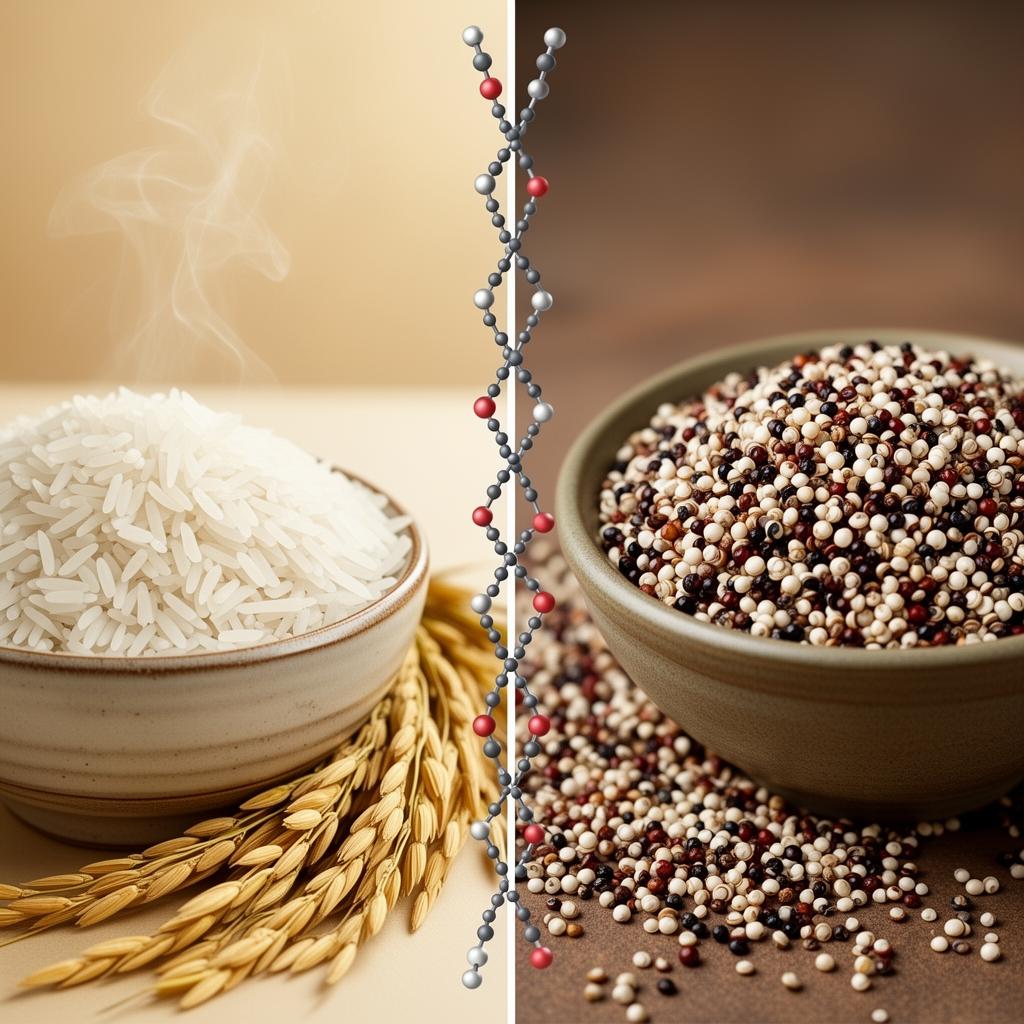
The choice between rice and quinoa is not just a matter of calories. The focus is on micronutrient bioavailability and the food's ability to maintain stable insulin levels.
Why the "pseudocereal" crop wins on nutrient density, but loses on digestibility
In modern dietetics, the choice between these two foods is not just a matter of calories. In 2026, the focus is on micronutrient bioavailability and the food's ability to maintain stable insulin levels. While rice is a "specialist" in energy delivery, quinoa is an "all-rounder" in tissue building.
📊 Comparative Matrix (per 100g cooked product)
🧬 In-depth Analysis of Mechanisms
1. Quinoa's Complete Protein Code
Quinoa is one of the few plant-based foods that contains Lysine and Isoleucine in optimal amounts.
- Biological Value: Unlike rice, which needs to be combined with legumes to "assemble" a complete protein, quinoa delivers everything needed for muscle repair in one package.
- Metabolic Effect: Quinoa's higher protein content stimulates thermogenesis (the body expends more energy to break it down) compared to rice.
💬 Simply put: Rice needs to be combined with lentils or beans to become a complete protein. Quinoa is already complete – it doesn't need combining. This is its biggest advantage for vegans.
2. The Fiber Barrier and Gut Microbiome
- Rice: White rice is almost entirely starch (amylopectin), which converts to glucose right in the mouth. Ideal for quick glycogen replenishment, but a poor choice for appetite control.
- Quinoa: Contains a significant amount of resistant starch and soluble fiber. These are not digested in the small intestine but go directly to the large intestine, where they feed beneficial bacteria that produce butyrate (a powerful anti-inflammatory substance).
🛡️ Hidden Factors: Antinutrients and Arsenic
The choice also has its "dark side," which requires proper preparation:
⚠️ Saponins (Quinoa)
The bitter coating can irritate the gut and block nutrient absorption.
Solution: Always rinse under running water until it stops foaming.
☢️ Arsenic (Rice)
Rice absorbs heavy metals from the soil, especially brown rice (arsenic in the husk).
Solution: Soak beforehand and cook in plenty of water, which you then discard.
🛠️ Practical Choice Algorithm
🍚 RICE (White/Basmati)
- Sensitive stomach or gastritis (hypoallergenic)
- Before intense training (quick energy)
- Budget-friendly option for meal volume
- Tip: Basmati has the lowest GI among white rice varieties
🌾 QUINOA
- Vegan/vegetarian diet (complete protein)
- Insulin resistance or diabetes
- Naturally improving iron and magnesium levels
- Satiety during calorie deficit
📊 From SportZone Practice
Analysis of our clients' nutrition plans shows:
- Strength athletes who added 100g of quinoa daily to their diet reported an average 12% improvement in serum magnesium levels over 6 weeks – without additional supplements.
- Marathon runners prefer white Basmati rice 2–3 hours before a race – quick digestion without stomach discomfort.
- The hybrid side dish (50% rice + 50% quinoa) is the most popular choice among clients on a meal-prep plan – a balance of taste, price, and nutrient density.
🎯 Choose the right product for your goal:
→ Protein powder for fast absorption
→ Vitamins and minerals for overall health
→ Amino acids for additional intake
⚡ Combined protocol for maximum effectiveness:
💡 Combining products increases effectiveness. According to SportZone practice data.
🧭 The "The Super-Grain Swap" Protocol (2026)
To optimize your nutrition, use these strategies:
- Hybrid Side Dish: Mix rice and quinoa in a 1:1 ratio. You'll get the texture of rice with the protein boost of quinoa.
- Forget Brown Rice? Many nutritionists now prefer quinoa over brown rice – it offers more nutrients with fewer antinutrients (phytates) and a lower risk of arsenic.
- Black Quinoa for Antioxidants: If you're looking for maximum heart health, choose black or red quinoa – they contain anthocyanins (the same pigments found in blueberries).
💡 Expert Note: Quinoa Flavonoids
Quinoa is rich in quercetin and kaempferol – flavonoids with proven antiviral and antidepressant effects. This makes it not just a carbohydrate, but a "functional food" for mental health.
📚 Scientific Sources
- Vega-Gálvez, A., et al. (2010). Nutrition facts and functional potential of quinoa. Journal of the Science of Food and Agriculture, 90(15), 2541–2547.
- Navruz-Varli, S. & Sanlier, N. (2016). Nutritional and health benefits of quinoa. Journal of Cereal Science, 69, 371–376.
- Signes-Pastor, A., et al. (2016). Arsenic speciation in food and estimation of dietary intake. Journal of Agricultural and Food Chemistry, 64(6), 1380–1389.
- Repo-Carrasco-Valencia, R., et al. (2010). Flavonoids and other phenolic compounds in Andean indigenous grains. Food Chemistry, 120(1), 128–133.
Explore more comparisons from our series:
Recommended products
Frequently asked questions
Is quinoa a complete protein?
Yes, quinoa is one of the few plant-based foods containing all 9 essential amino acids. It offers 4.4g of protein per 100g of cooked product, almost double that of rice (2.7g), including optimal amounts of lysine and isoleucine.
Is rice safe due to arsenic?
With moderate consumption (2-3 times a week), the risk is minimal. For added safety: soak rice for at least 30 minutes, cook it in a 1:6 ratio with water, and discard the excess water. Brown rice accumulates more arsenic than white rice.
Can quinoa be eaten every day?
Yes, as long as you rinse it well before cooking (to remove saponins). Daily consumption provides an excellent intake of magnesium (15% DV), iron (9% DV), and fiber, supporting the gut microbiome.
Which is better before a workout - rice or quinoa?
White rice (especially Basmati) is a better choice 2-3 hours before a workout, as it is quickly digested and does not burden the stomach. Quinoa is ideal for meals outside the training window, providing slower and more stable energy.