Wheat vs. Rye Bread: Gluten Architecture and Glycemic Control
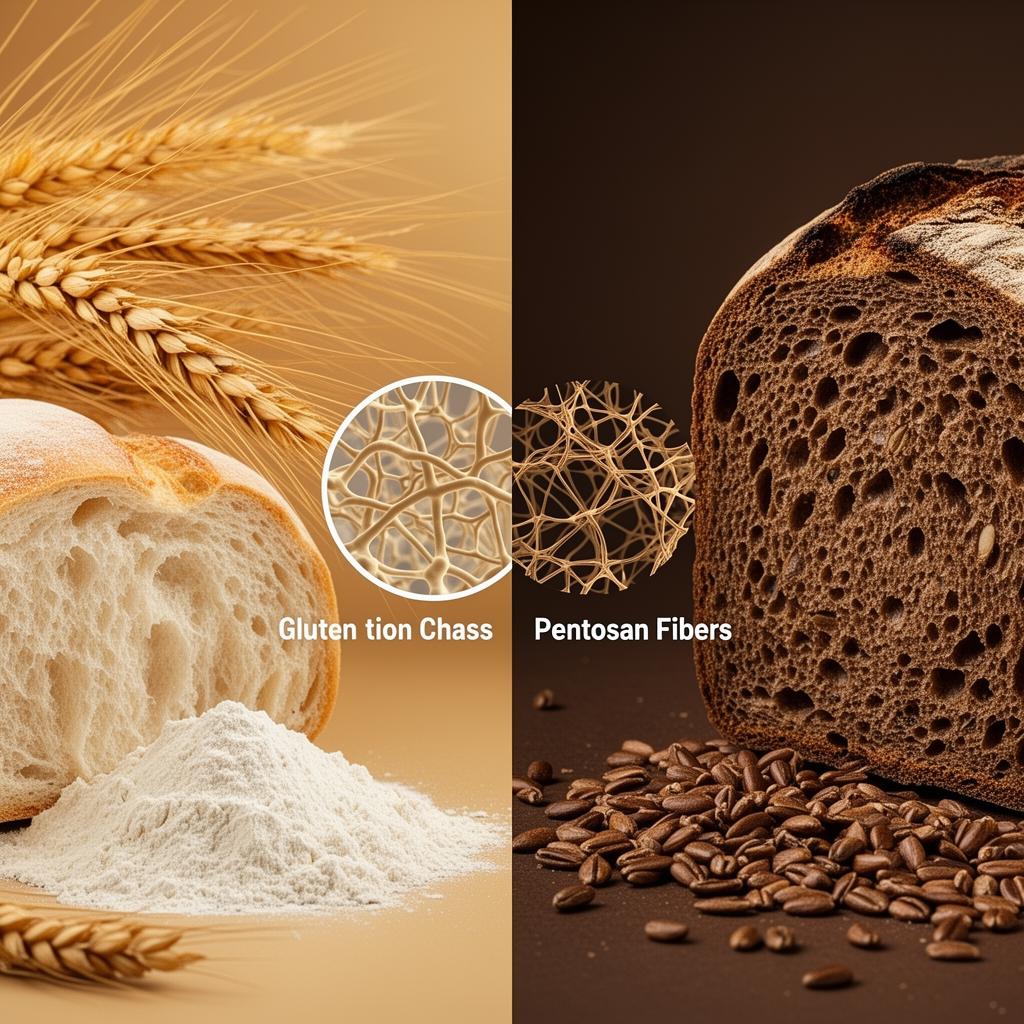
The difference is not in the color, but in the pentosans (in rye) versus gluten (in wheat) and how the molecules interact with water in the body and enzymes in the stomach.
Why bread density determines your metabolism speed
The difference between the two breads is not just in color. It all comes down to pentosans (in rye) versus gluten (in wheat) and how these molecules interact with the water in your body and the enzymes in your stomach.
📊 Comparison Matrix: System Analysis
🧬 In-depth Mechanism Analysis
1. Pentosans vs. Gluten: The Battle for Water
Wheat relies on gluten to trap gas and "puff up". Rye, however, contains high amounts of pentosans (complex sugars).
- Effect in Dough: Pentosans prevent the formation of a strong gluten network, which is why rye bread is dense.
- Effect in the Body: These fibers absorb water and form a thick gel in the stomach. This slows down stomach emptying and physically blocks enzymes from accessing starch, preventing sharp blood sugar spikes.
💬 Simply put: Pentosans in rye are like a sponge – they absorb water and form a gel in the stomach that physically slows down sugar absorption. That's why rye bread keeps you full for hours, while white bread only for minutes.
2. Insulin Response and the "Second Meal Effect"
Rye bread possesses a unique property known as the "second meal effect".
- Stability: Consuming real rye bread in the morning improves your body's insulin response even at your next meal (lunch), thanks to the fermentation of its fibers in the large intestine.
- Wheat: White wheat bread is digested almost as quickly as pure sugar, leading to an energy crash and hunger just 90 minutes after eating.
🛡️ The Hidden Trap: When is Rye Bread Not Rye?
Industrial production often uses tricks to make rye bread more appealing:
⚠️ Watch the Label
- Caramel and Malt: Used to artificially darken white flour
- Added Gluten: To make the bread fluffy, isolated wheat gluten is often added to rye flour
- Look for: "100% Rye" or "Whole Rye Meal". If the first ingredient is "wheat flour type 500" – it's disguised white bread
🛠️ Practical Choice Algorithm
🌾 WHEAT BREAD
- Extremely sensitive digestion
- Light meal before cardio (quick carbs)
- Delicate sandwiches (texture is key)
- Tip: Always whole grain or sourdough
🍞 RYE BREAD
- Weight loss/management (satiety)
- Type 2 diabetes or insulin resistance
- Improving peristalsis
- Longer shelf life (natural acidity)
📊 From SportZone Practice
Analysis of client food diaries shows:
- Endurance athletes who switched from white bread to rye in the morning reported 40% more stable energy during afternoon training sessions and reduced "hitting the wall" incidents.
- Type 2 diabetes clients consuming sourdough rye bread reduced HbA1c by an average of 0.5% in 3 months with the same caloric intake.
- "Fake rye bread" (with caramel and wheat flour) showed a glycemic response almost identical to white bread – dark color means nothing without the right biochemistry.
🎯 Choose the right product for your goal:
→ Chromium Picolinate to maintain normal blood sugar levels
→ Probiotics for healthy gut flora
→ Whey protein for rapid absorption
⚡ Combined Protocol for Maximum Effectiveness:
💡 Combining products increases effectiveness. According to SportZone practice data.
🧭 Recommended Products from SportZone
🧭 The "Bread Guard" Protocol (2026)
How to consume bread in the healthiest way:
- Freezing: Freezing bread and then toasting it turns some of the starch into resistant starch. This further reduces its glycemic index.
- Combination: Never eat bread "plain". Add fat (olive oil, avocado) or protein (egg, cheese) to further slow down sugar absorption.
- Sourdough is a must: Long sourdough fermentation breaks down gluten and anti-nutrients, making even wheat bread much easier for the body to process.
💡 Expert Note: Phytoestrogens
Rye contains phytoestrogens (lignans), which in epidemiological studies are associated with a lower risk of breast and prostate cancer. This makes rye bread not just food, but a "functional food".
📚 Scientific Sources
- Juntunen, K., et al. (2002). Postprandial glucose, insulin, and incretin responses to grain products. American Journal of Clinical Nutrition, 75(2), 254–262.
- Rosen, L., et al. (2009). The effect of the glycemic index of a test meal on satiety. Nutrition Journal, 8(1), 35.
- Nordlund, E., et al. (2012). Rye aleurone induces metabolic changes in gut microbiota. Journal of Agricultural and Food Chemistry, 60(36), 9031–9040.
- Landberg, R., et al. (2014). Human exposure to rye lignans. Journal of Agricultural and Food Chemistry, 62(5), 1253–1260.
Want to explore more food comparisons?
Recommended products
Frequently asked questions
Is rye bread gluten-free?
No. Rye contains gluten, although in a lower concentration than wheat. People with celiac disease should also avoid rye bread. In non-celiac gluten sensitivity, sourdough rye bread may be more tolerable, as fermentation breaks down some of the gluten.
Which bread is better for weight loss?
Rye bread is a significantly better choice for a diet. It keeps you full 2-3 times longer than white wheat bread due to its high content of soluble fiber (pentosans), which slows down stomach emptying.
Why is rye bread so dense?
Rye contains pentosans, which compete with gluten for water in the dough, preventing the formation of an elastic gluten network. The result is a denser structure, which, however, slows down digestion and lowers the glycemic index.
How can I recognize real rye bread in the store?
Check the label: the first ingredient should be rye flour or whole grain rye meal. If you see wheat flour listed first, and the bread is simply darkened with caramel or malt, it is not real rye bread. The color is misleading; the composition is leading.