Vitamin B12 vs. Iron: The Energy Factor vs. The Oxygen Carrier
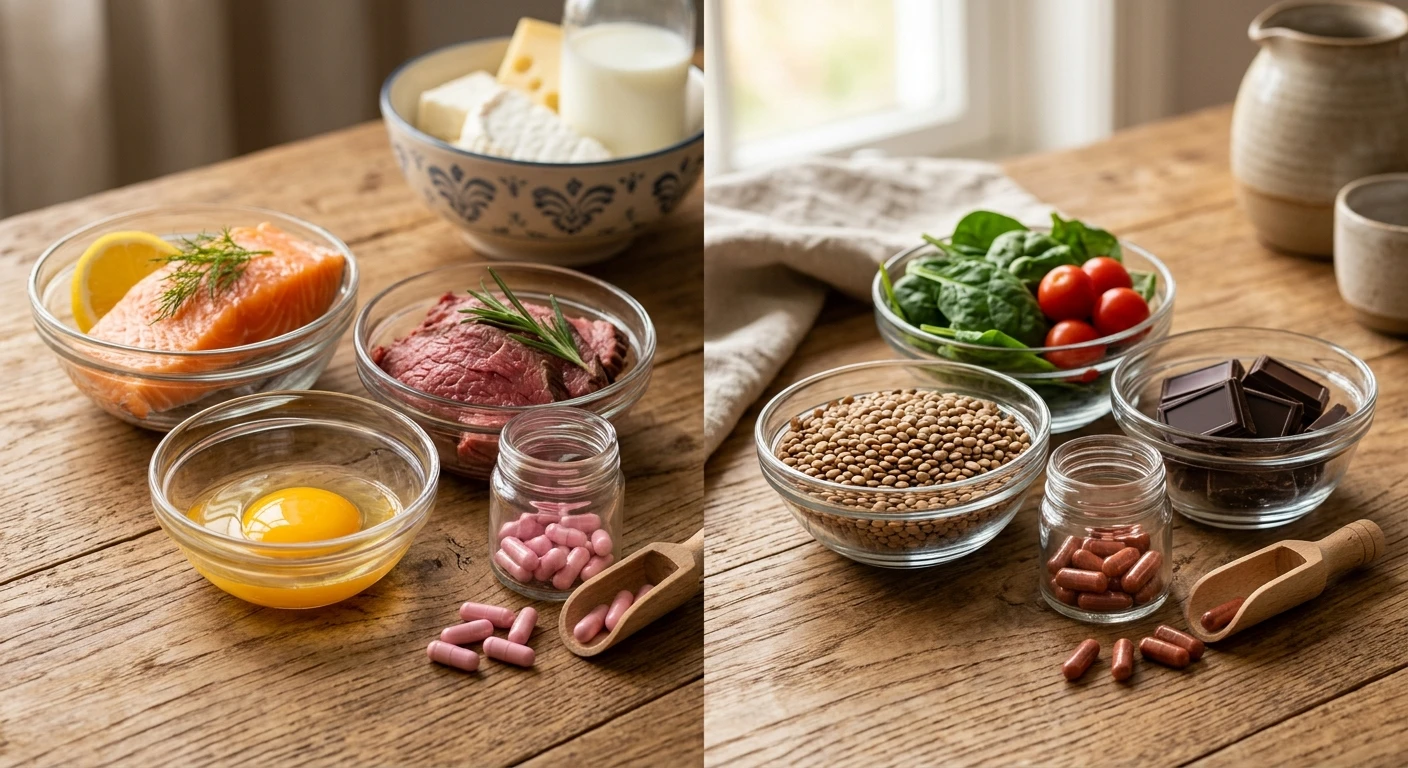
Vitamin B12 and iron are key for athletes. B12 helps with energy absorption, while iron transports oxygen. Deficiencies harm performance.
Short answer: Vitamin B12 is vital for cellular energy production and nervous system health, while Iron is essential for oxygen transport via hemoglobin. A deficiency in either leads to anemia and a drastic drop in athletic performance. Practical advice: For athletes, a daily intake of 1000-2500 mcg of Vitamin B12 (methylcobalamin) is recommended. Iron (18-27 mg, iron bisglycinate) should only be taken after a blood test proving deficiency, to avoid toxicity.
Vitamin B12 and iron are essential for any athlete struggling with fatigue and aiming for peak performance. We often associate them with energy, but their functions in the body are different. A deficiency in either can ruin athletic performance, but to fix the problem, we need to know exactly what is lacking and why.
Iron transports oxygen to the muscles. Without enough iron, muscles receive less oxygen and cannot work at full capacity. Vitamin B12 is important for the nervous system and for cellular energy production. Without it, the body may have enough "fuel" but be unable to use it effectively.
Understanding these functions helps you choose the right supplements. This article analyzes both nutrients so you can understand which one you need, when, and in what form, to maintain your energy and recover better.
This article is part of the Expert Hub for Food Supplements.
What is a Comparative Matrix for System Analysis?
A comparative matrix for system analysis is a tool for detailed comparison of Vitamin B12 (Cobalamin) and Iron based on key criteria such as biological status, main functions, mechanisms of action, and deficiency symptoms, providing a structured overview of their differences and similarities.
| Criterion | Vitamin B12 (Cobalamin) | Iron |
|---|---|---|
| Biological Status | Water-soluble vitamin | Essential mineral |
| Main Function | Nervous system, DNA synthesis, red blood cell production | Oxygen transport, energy metabolism |
| Mechanism | Coenzyme in fatty acid and amino acid metabolism | Central component of hemoglobin and myoglobin |
| Deficiency Symptoms | Neurological fatigue, numbness, memory problems, megaloblastic anemia | Physical fatigue, shortness of breath, pale skin, cold extremities, iron-deficiency anemia |
| Risk Groups | Vegans, vegetarians, elderly, people with gastrointestinal diseases | Women of reproductive age, athletes (especially runners), vegetarians |
| Active Forms | Methylcobalamin, adenosylcobalamin (active forms) | Iron bisglycinate (chelated form) |
What are the Mechanisms of Action of Vitamin B12?
1. Vitamin B12 (Cobalamin): The Cellular "Energy Spark"
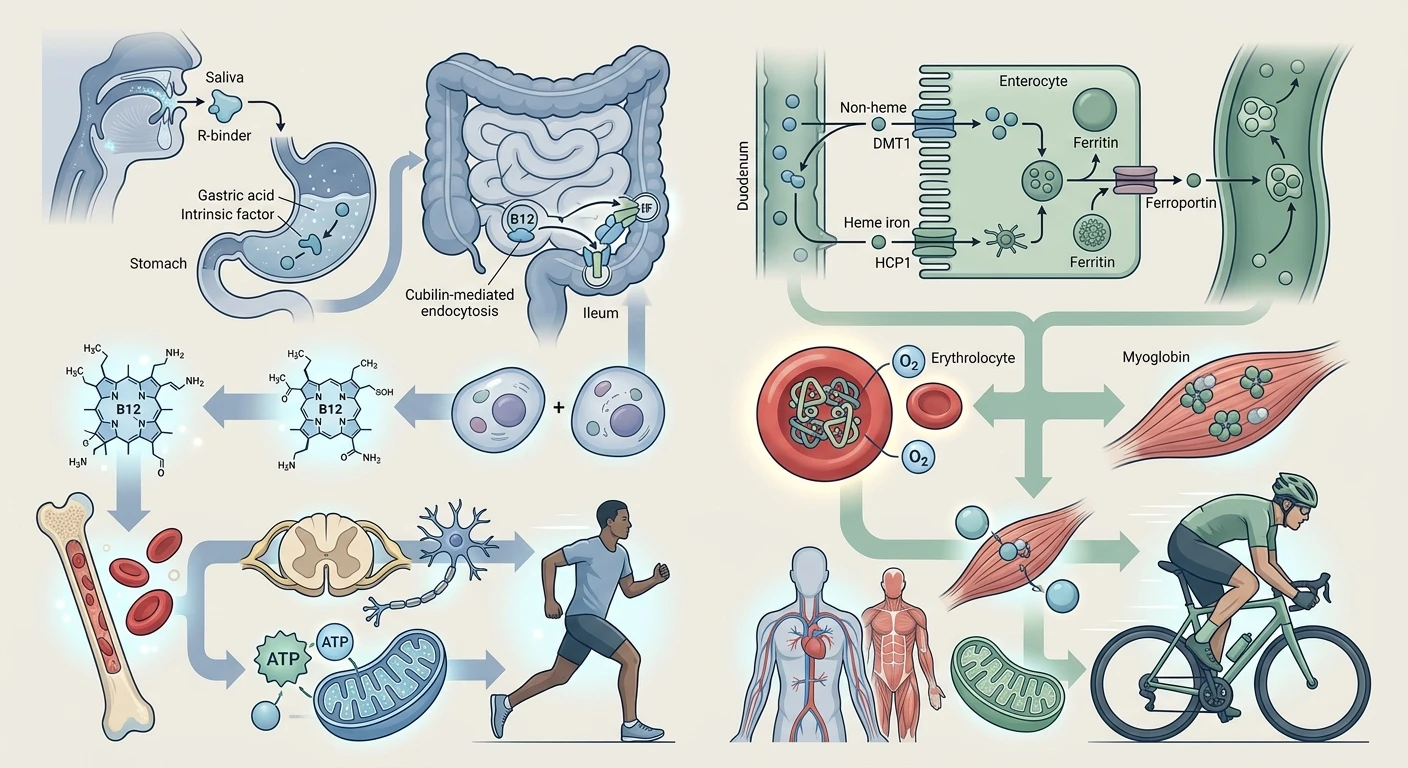
Vitamin B12 is an important coenzyme involved in two main metabolic processes: the conversion of homocysteine to methionine (key for DNA, RNA, and neurotransmitter synthesis) and as a cofactor for the enzyme that converts L-methylmalonyl-CoA to succinyl-CoA (a step in the Krebs cycle for energy production from fats and proteins).
B12 is also absolutely necessary for maintaining the myelin sheath, which insulates nerve fibers. Its deficiency leads to demyelination, which interferes with nerve impulse transmission and causes neurological symptoms such as numbness, weakness, and memory problems. For athletes, this means poorer coordination and slower reflexes. Methylcobalamin and adenosylcobalamin are highly bioavailable forms, while cyanocobalamin must be converted in the body before absorption.
In short: Vitamin B12 helps cells convert food into energy and keeps the nervous system running smoothly. Without it, nerve signals slow down and energy production stalls.
2. Iron: The Oxygen Transport System
Iron's most well-known role is as the central atom in hemoglobin in red blood cells and myoglobin in muscle cells. Hemoglobin transports oxygen from the lungs to all tissues, including working muscles. Myoglobin serves as an oxygen reservoir within the muscles themselves. During intense exercise, the demand for oxygen significantly increases. Iron deficiency means less hemoglobin, less oxygen, and consequently lower aerobic performance (VO2max), faster lactate buildup, and severe fatigue.
Iron is a component of many enzymes involved in the production of adenosine triphosphate (ATP) – the cell's primary energy currency. There are two types of iron in food: heme iron (from animal sources), which is better absorbed, and non-heme iron (from plant sources), whose absorption is lower and depends on vitamin C. In supplements, forms like iron bisglycinate are preferred as they are gentler on the stomach and better absorbed than ferrous sulfate.
Scientific Sources
- Vitamin B12 in Health and Disease, Langan RC & Goodbred AJ, 2017
- Iron: Fact Sheet for Health Professionals, National Institutes of Health, Office of Dietary Supplements, 2023
- The role of vitamin B12 in the critically ill—a review, Shipton MJ & Thachil J, 2015
- Iron, Linus Pauling Institute, Oregon State University, 2016
- Scientific Opinion on Dietary Reference Values for iron, EFSA Panel on Dietetic Products, Nutrition and Allergies, 2015
- Vitamin B12 - Health benefits, dosage, and side effects, Examine.com, 2023
The Synergistic Effect: Why Do They Work Better Together?
Vitamin B12 and iron interact biochemically. A deficiency in either can cause anemia, but they do so in different ways. Iron-deficiency anemia is characterized by small, pale red blood cells (microcytic anemia). B12 deficiency (or folate deficiency) leads to megaloblastic anemia, where the cells are large, immature, and non-functional because DNA synthesis is impaired and they cannot divide properly.
Red blood cell production (erythropoiesis) requires both nutrients. Iron is the raw material for hemoglobin, and B12 is necessary for the proper maturation and division of precursor cells in the bone marrow. Taking only iron with a hidden B12 deficiency may temporarily improve some blood parameters but does not solve the underlying problem of cell maturation. Therefore, when anemia is diagnosed, it is important to test the levels of both nutrients (along with ferritin and folate) for a comprehensive strategy.
What is Key When Choosing Between B12 and Iron?
The key to choosing between B12 and iron (or a combination) is the individual's profile, diet, and symptoms.
Choose Vitamin B12 if:
- You follow a vegan or predominantly plant-based diet.
- You have neurological symptoms such as numbness, tingling, or problems with balance and memory.
- You are over 50 years old (when absorption decreases).
- You have gastrointestinal issues (e.g., Crohn's disease, atrophic gastritis) or are taking medications that suppress stomach acid (e.g., Metformin, proton pump inhibitors).
🔵 Choose Iron if:
- You have diagnosed iron-deficiency anemia or low ferritin (which indicates iron stores).
- You experience severe physical fatigue, shortness of breath with mild exertion, and have pale skin.
- You are a woman with heavy menstrual periods or are pregnant.
- You are an endurance athlete (runners, triathletes) and regularly donate blood.
Recommended stack for general fatigue and prevention (after blood tests): For adequate support, combine Methylcobalamin (B12) with Iron Bisglycinate. A small dose of Vitamin C taken with iron improves its absorption.
What is Protocol 2026: "The Foundation for Performance"?
Protocol 2026: "The Foundation for Performance" is designed for active athletes aiming to optimize energy levels and prevent deficiencies. You should always consult a doctor and get blood tests before starting iron supplementation.
- Daily (morning): 1000 mcg Vitamin B12 (as methylcobalamin, sublingual tablets for better absorption). This dose is completely safe, and excess is excreted in urine.
- As needed and with proven iron deficiency: 25-50 mg elemental iron (as iron bisglycinate) with lunch or dinner that includes a source of vitamin C (e.g., peppers, broccoli, citrus fruits). Take iron at least 2 hours after coffee, tea, or dairy products, as they reduce its absorption.
- After intense training (within 1 hour): If your diet is predominantly plant-based, take iron with a carbohydrate and protein-rich post-workout shake (with added vitamin C). Avoid if the shake contains calcium.
Expert Note
With iron, always follow the principle of "test, don't guess." Unlike B12, where toxicity is almost impossible, excessive iron intake can lead to hemochromatosis – a condition of iron accumulation in organs, which is toxic. Always request a Ferritin test, not just serum iron. Ferritin indicates stores, while serum iron can fluctuate throughout the day.
🧭 When to Choose Which?
- Choose Vitamin B12 if fatigue is accompanied by neurological symptoms (numbness, poor memory) or you are on a plant-based diet.
- Choose Iron if fatigue is primarily physical, you get short of breath easily, and your blood tests show low hemoglobin or ferritin.
- Combine both after consulting a doctor if you have anemia or a deficiency in both nutrients, which is common in athletes with restrictive diets.
📖 What are Vitamin B12 and Iron?
Vitamin B12 (Cobalamin) is a water-soluble vitamin containing the mineral cobalt. It is important for nervous system function, DNA formation, and red blood cell production. It is found primarily in animal products.
Iron is an essential mineral that is a key component of hemoglobin and myoglobin – the proteins responsible for transporting oxygen in the blood and muscles. Its deficiency is the most common nutritional deficiency worldwide.
⚖ Pros and Cons
| Pros | Cons |
|---|---|
| Vitamin B12 | |
|
|
| Iron | |
|
|
🗣 Simply Explained
If you're still wondering, here's the simplest comparison:
| Criterion | Vitamin B12 | Iron |
|---|---|---|
| Metaphor | Electric spark, software | Fuel truck, hardware |
| Type of Fatigue | Nervous, brain fog | Physical, muscular |
| "Partner" | Folic acid (B9) | Vitamin C |
| What blocks absorption? | Low stomach acid | Coffee, tea, calcium |
Iron delivers oxygen to the muscle, and B12 helps the nervous system make the muscle contract and the cell use energy efficiently. You need both to function at 100%.
Choose the right product for your goal:
- For more energy and focus: Explore our energy and nitric oxide boosters, which often contain B vitamins.
- For a healthy foundation and prevention: Ensure you have quality vitamins and minerals, including B12 and iron.
- ♂ For more endurance and recovery: Support your muscles with complete amino acids.
Combined protocol for maximum effectiveness:
- Pre-workout: Energy stimulant with B-complex for mental focus from our pre-workout products.
- During workout: Hydration with electrolytes to maintain nerve and muscle function.
- Post-workout: Quality protein for recovery, accompanied by a meal rich in iron and vitamin C.
⚖ When to Choose Vitamin B12
- Your diet is entirely or predominantly plant-based.
- You feel fatigue that is more "brain" and nervous in nature.
- You experience unexplained numbness or tingling in your limbs.
- You want to support your cognitive function and memory.
⚖ When to Choose Iron
- Your blood test shows low ferritin or hemoglobin.
- You get short of breath climbing stairs or with mild exertion.
- You train intensely in endurance sports (running, cycling).
- Your skin is pale, and your hands and feet are constantly cold.
Expert Note from Sport Zona
From my work with athletes, I know that fatigue rarely has a single cause. Self-diagnosis is a common mistake: someone feels tired, reads online, decides they lack iron, and starts supplementing. Months later, the fatigue persists because the real problem was a B12 deficiency due to a plant-based diet. My advice is to always start with a complete blood count, including hemoglobin, ferritin, vitamin B12, and vitamin D. This is the best investment that will save you months of guesswork and guide you to the right supplement.
Frequently asked questions
Can Vitamin B12 and Iron be taken together?
Yes, they can be taken together and are often found in combination formulas such as multivitamins or B-complex. There is no data on negative interactions at standard doses. However, for optimal absorption, it is advisable to take iron with Vitamin C and to avoid simultaneous intake with calcium or coffee.
Which is better for beginners - Vitamin B12 or Iron?
Neither is "better" in principle. The choice depends entirely on individual needs, which are best determined by a blood test. Vegans and vegetarians are more prone to B12 deficiency, while female athletes (especially in endurance sports) are at higher risk of iron deficiency. Without testing, it is not recommended to take iron.
When is the best time to take Vitamin B12 and Iron?
Vitamin B12 is water-soluble and can be taken at any time of the day, but many people prefer mornings due to its role in energy metabolism. Iron is best absorbed on an empty stomach, but it can cause stomach discomfort. If this happens, take it with a small amount of food rich in Vitamin C (e.g., orange juice), and avoid dairy products, tea, or coffee around the time of intake.
Are there side effects from taking Vitamin B12 or Iron?
Vitamin B12 is considered extremely safe, even in high doses, as excess is excreted in the urine. However, taking iron carries risks. Common side effects include constipation, nausea, and stomach pain. Taking excessively high doses without a deficiency can lead to a condition called hemochromatosis (iron overload), which is toxic to organs.
What is the recommended dosage for Vitamin B12 and Iron?
For Vitamin B12, the recommended daily intake is about 2.4 mcg, but for athletes or in cases of diagnosed deficiency, therapeutic doses range from 500 to 2500 mcg. For iron, the recommended intake is about 8 mg for men and 18 mg for women of reproductive age. Actively training women may need up to 27 mg daily, but the dosage should be determined by a doctor based on blood tests.