Vitamin B6 vs. Vitamin B12: The Neurotransmitter vs. The Energy Booster

Vitamin B6 supports protein and energy metabolism. B12 produces red blood cells and supports the nervous system. Your choice depends on your needs.
Short answer: Vitamin B6 (pyridoxine) is essential for amino acid metabolism and neurotransmitter synthesis, making it critical for recovery and strength. Vitamin B12 (cobalamin) is vital for red blood cell production and nervous system maintenance, directly impacting energy and endurance. Practical tip: For optimal athletic performance, take them together. Aim for about 1.7-2.5 mg of Vitamin B6 (in P-5-P form) and 2.4-10 mcg of Vitamin B12 (in methylcobalamin form) daily, preferably as part of a quality B-complex.
B vitamins are fundamental to human metabolism, each with its own role. Vitamin B6 (pyridoxine) and Vitamin B12 (cobalamin) are often considered together. While their functions overlap, they also have distinct differences. Every athlete aiming for proper performance, recovery, and good health should understand these nuances.
Vitamin B6 is important for the metabolism of protein and amino acids – it aids in building and repairing muscle tissue. It releases energy by utilizing stored muscle glycogen when rapid bursts are needed. Vitamin B12 produces red blood cells, which transport oxygen to muscles, and keeps the nervous system healthy, ensuring rapid communication between the brain and muscles.
When choosing supplements, the question isn't which is better, but which is more necessary for your goal and physiology. This article will delve into the details of both vitamins to help you make an informed decision based on scientific facts.
This article is part of the Expert Hub for Supplements — over 270 expertly reviewed articles by Petar Mitkov and the Sport Zona team.
What is the main difference between Vitamin B6 and B12?
Vitamin B6 is a water-soluble vitamin primarily focused on amino acid, neurotransmitter, and glucose metabolism, acting as a coenzyme in over 100 enzymatic reactions, vital for protein synthesis and repair, as well as for releasing energy from glycogen in athletes, whereas Vitamin B12 is a water-soluble vitamin crucial for red blood cell formation, nerve function, and DNA synthesis, serving as a coenzyme in methylation cycles and myelin synthesis, critical for oxygen transport and endurance.
| Criterion | Vitamin B6 (Pyridoxine) | Vitamin B12 (Cobalamin) |
|---|---|---|
| Biological Status | Water-soluble vitamin | Water-soluble vitamin |
| Primary Focus | Amino acid, neurotransmitter, glucose metabolism | Red blood cell formation, nerve function, DNA synthesis |
| Mechanism of Action | Coenzyme (pyridoxal-5'-phosphate) in over 100 enzymatic reactions | Coenzyme in methylation cycles and myelin synthesis |
| Key for Athletes | Protein synthesis and repair, energy release from glycogen | Oxygen transport (endurance), fatigue prevention, nerve coordination |
| Typical Sources | Chickpeas, liver, tuna, salmon, chicken, potatoes, bananas | Clams, liver, beef, fish, eggs, dairy products (animal sources only) |
| Risk of Overdose | High (over 100 mg/day) - can cause irreversible nerve damage | Very low (no established upper intake level) |
What is the mechanism of action of Vitamin B6?
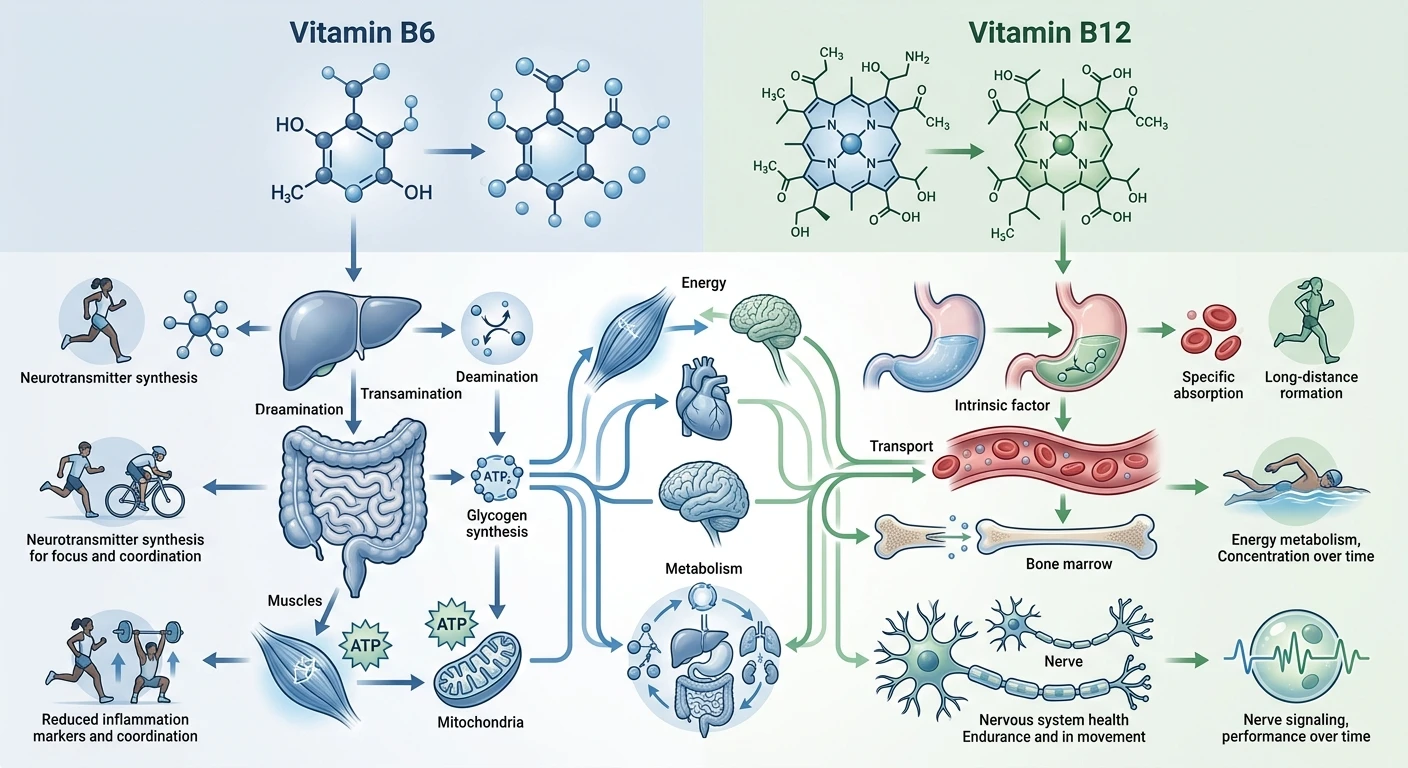
1. Vitamin B6: The Metabolic Regulator
Vitamin B6 acts in the body through its active coenzyme form – Pyridoxal-5'-phosphate (P-5-P), which as a coenzyme participates in over 100 metabolic reactions, primarily related to amino acid metabolism.
Two important functions:
- Protein Metabolism: P-5-P is needed for transamination and deamination reactions. These processes help the body synthesize non-essential amino acids and process dietary proteins into building blocks for muscle tissue. High protein intake increases the need for vitamin B6.
- Energy Release: B6 is important for glycogenolysis – the process of breaking down muscle glycogen into glucose. This glucose provides quick fuel during intense workouts. Without sufficient B6, the body struggles to utilize these energy reserves.
Vitamin B6 is also involved in the synthesis of neurotransmitters like serotonin, dopamine, and GABA, which regulate mood, motivation, and sleep – factors that influence athletic performance.
Simply put: Vitamin B6 helps the body use protein to build muscle and releases the quick energy stored within it. The more protein you consume, the greater your need for B6.
2. Vitamin B12: The Blood and Nerve Engineer
Vitamin B12 is a vitamin with a complex structure and the only one that contains a metal element – cobalt. Its functions are specific and vital, especially for endurance-focused athletes.
Its two main roles are:
- Hematopoiesis (Red Blood Cell Production): B12, along with folate (B9), is important for DNA synthesis and the maturation of red blood cells in the bone marrow. Deficiency leads to megaloblastic anemia – a condition where a low number of large, non-functional red blood cells are produced. This reduces the blood's capacity to carry oxygen, leading to fatigue and reduced endurance.
- Nerve Function: B12 is a cofactor for the enzyme that produces myelin. Myelin is a fatty sheath that insulates nerve fibers and ensures rapid and efficient transmission of nerve impulses. Without enough B12, the myelin sheath can be damaged, leading to neurological symptoms like numbness, muscle weakness, and coordination problems.
Since B12 is primarily found in animal products, vegans and vegetarians are at higher risk of deficiency.
Simply put: Vitamin B12 is key for producing healthy red blood cells that deliver oxygen to your muscles and for "insulating" your nerves for fast brain-muscle communication.
The Synergistic Effect: Why Do They Work Better Together?
Despite their primary functions, B6 and B12 (along with Vitamin B9, folate) work together in a crucial metabolic pathway: homocysteine metabolism. Homocysteine is an amino acid that, in moderate amounts, is normal, but at high levels becomes toxic and is linked to an increased risk of cardiovascular disease.
Vitamins B6, B9, and B12 act as a team to "detoxify" excess homocysteine, converting it into other useful compounds. B6 is needed to convert it to cysteine, while B12 and B9 work together to convert it back to methionine. Maintaining this cycle properly is important for the long-term health of any athlete. This is why quality formulas often offer them in combination as a B-complex.
What is the practical step for choosing?
Which of the two vitamins to choose (one, the other, or both) depends on your diet, your goals, and any potential deficiency symptoms.
Choose Vitamin B6 if:
- You consume a high-protein diet (>1.8 g/kg) for muscle building.
- Your main focus is strength training, sprints, or other anaerobic activities.
- You want to support mood and sleep related to neurotransmitter synthesis.
- You use oral contraceptives, which can deplete B6 levels.
🔵 Choose Vitamin B12 if:
- You follow a vegan or predominantly plant-based diet.
- Your main focus is endurance sports (running, cycling, swimming).
- You experience unexplained fatigue, weakness, or have symptoms of anemia.
- You are over 50 years old, as absorption decreases.
Recommended Stack for Comprehensive Support
The most sensible approach for most athletes is to start with a Quality B-complex, which provides baseline levels of all B vitamins in bioactive forms, and then add an extra dose for specific needs.
- For Strength and Mass: An additional 10-25 mg of P-5-P (active B6) post-workout.
- For Vegans/Endurance: An additional 500-1000 mcg of Methylcobalamin (active B12) a few times a week.
What is the 2026 Protocol: "Foundation and Performance Stack"?
The 2026 Protocol represents a modern approach to B-vitamin supplementation, focusing on synergy and bioavailability, building a stable foundation and layering on top according to individual goals.
| Timing | Protocol | Dosage and Form |
|---|---|---|
| Daily (Foundation) | Take B-complex with food | 1 capsule B-complex (containing P-5-P and Methylcobalamin) |
| Post-Strength Training (Specific Stack) | Additional B6 for protein synthesis | 10–25 mg P-5-P (Pyridoxal-5'-phosphate) with protein shake |
| As Needed (Vegans/Fatigue) | Additional B12 for energy and nervous system | 500–1000 mcg Methylcobalamin (sublingual) 2-3 times per week |
Expert Note
Always pay attention to the form. "Pyridoxine hydrochloride" is a standard, but not always the most effective form of B6. Look for P-5-P. Similarly, "Cyanocobalamin" is a synthetic form of B12; prefer Methylcobalamin or Adenosylcobalamin, which the body uses directly. Safety is also important: while B12 is not toxic, long-term intake of B6 above 100 mg daily can lead to serious neurological problems.
🧭 When to Choose What?
- Choose Vitamin B6 (or a stack focusing on it) if your priority is muscle mass, strength, and recovery from intense training with high protein intake.
- Choose Vitamin B12 (or a stack focusing on it) if you follow a plant-based diet, engage in endurance sports, or experience persistent fatigue and lack of energy.
- Combine them in a B-complex as a foundation for overall health and metabolic efficiency, which is the best approach for most athletes.
📖 What are Vitamin B6 and Vitamin B12?
Vitamin B6 (Pyridoxine) is a water-soluble vitamin that acts as a coenzyme in dozens of reactions, primarily related to protein and carbohydrate metabolism. It is key for muscle building and energy release.
Vitamin B12 (Cobalamin) is a water-soluble vitamin containing cobalt, which is vital for red blood cell production, nervous system maintenance, and DNA synthesis. It is responsible for oxygen transport and nerve signaling.
⚖ Pros and Cons
| Product | Pros | Cons |
|---|---|---|
| Vitamin B6 | Directly supports protein synthesis; improves energy utilization from glycogen; affects mood and sleep. | Risk of toxicity (nerve damage) at high doses (>100 mg/day) for prolonged periods. |
| Vitamin B12 | Important for endurance and anemia prevention; supports the nervous system; very safe, with no upper intake limit. | Absorption is complex and decreases with age; deficiency is common in plant-based diets; its effect is slower and cumulative. |
🗣 Explained Simply
If your body were a construction site:
- Vitamin B6 is the foreman: He directs the workers (enzymes) on how to assemble the bricks (amino acids) into walls (muscles) and how to use the generator's fuel (glycogen).
- Vitamin B12 is logistics and communications: It ensures the trucks (red blood cells) deliver oxygen everywhere and keeps the phone lines (nerves) in good working order so the central office (brain) can issue commands.
Choose the right product for your goal:
- General Health and Foundation: Start with Vitamins and Minerals, choosing a quality B-complex.
- Muscle Mass: Combine B-complex with Proteins and Amino Acids, considering adding P-5-P.
- Endurance and Energy: Focus on a B-complex with high B12 or a separate B12 supplement, combined with Energy and Nitric Oxide Boosters.
⚖ When to Choose Vitamin B6
- You have a high protein intake.
- Your main goal is strength and muscle mass.
- You want to support the nervous system and mood.
- You train primarily anaerobically (weightlifting, sprints).
⚖ When to Choose Vitamin B12
- You are vegan or vegetarian.
- You feel constantly tired and lack energy.
- Your focus is endurance and aerobic sports.
- You are over 50 years old.
Scientific Sources
- Woolf K, Manore MM. B-vitamins and exercise: does exercise alter requirements? Int J Sport Nutr Exerc Metab. 2006
- Office of Dietary Supplements - NIH. Vitamin B6 Fact Sheet for Health Professionals.
- Office of Dietary Supplements - NIH. Vitamin B12 Fact Sheet for Health Professionals.
- Linus Pauling Institute, Oregon State University. Vitamin B12.
- Harvard T.H. Chan School of Public Health. The Nutrition Source: Vitamin B12.
- Examine.com. Vitamin B6 Health Benefits, Dosage, and Side Effects.
Expert Note from Sport Zona
In my practice, I notice that many athletes underestimate vitamin B6 while focusing too much on B12. When working with strength athletes whose diet is rich in protein, adding a small dose of P-5-P (active B6) often leads to better recovery and less feeling of "overtraining." My advice is simple: don't guess. Start with a quality B-complex as a foundation. If you have specific risk factors (veganism for B12, high protein for B6), then consider targeted supplementation, preferably after consultation and a blood test.
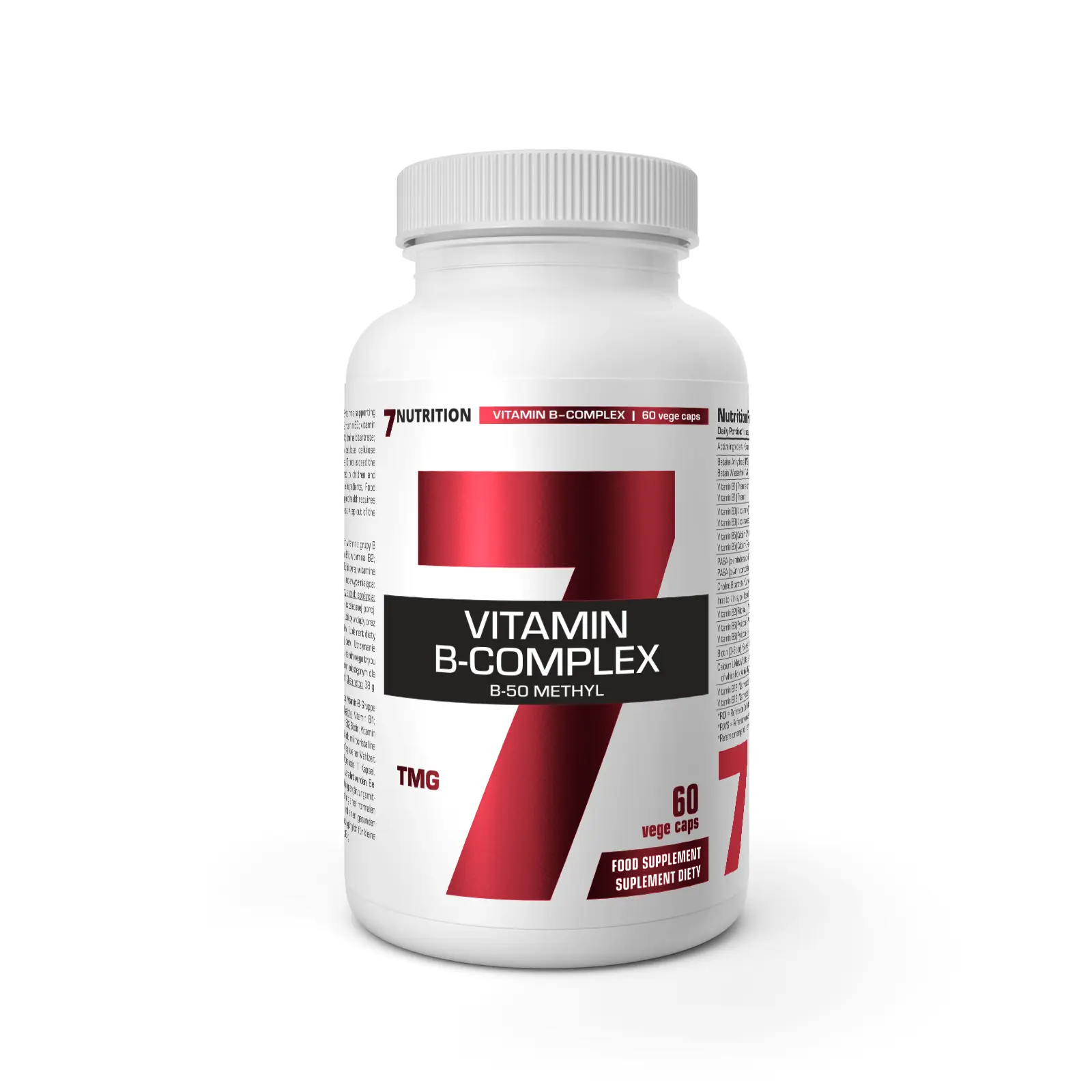
Recommended products
Frequently asked questions
Can Vitamin B6 and Vitamin B12 be taken together?
Yes, absolutely. They are often found together in food sources and work synergistically. Taking them in a B-complex formula is highly recommended, as B vitamins interact and complement each other for optimal effects on energy metabolism and the nervous system.
Which is better for beginners - Vitamin B6 or Vitamin B12?
For beginner athletes who are just establishing their diet, it is important to ensure adequate intake of both. Instead of choosing one, the best approach is to focus on a balanced diet or a quality B-complex. If a choice must be made, B12 deficiency is more common in vegan/vegetarian diets, while the need for B6 increases with high-protein diets.
When is the best time to take Vitamin B6 and Vitamin B12?
It is best to take them in the morning or around noon, along with food. Since they are actively involved in energy production, taking them late in the evening could theoretically affect sleep in more sensitive individuals. Taking them with food improves their absorption.
Are there side effects from taking Vitamin B6 or Vitamin B12?
Vitamin B12 is water-soluble and considered extremely safe, even in high doses, as the body easily excretes the excess. However, with Vitamin B6, prolonged intake of very high doses (over 100 mg daily of the pyridoxine hydrochloride form) can lead to peripheral neuropathy. Always adhere to the recommended dosages.
What is the recommended dosage for Vitamin B6 and Vitamin B12?
The recommended daily intake for adults is around 1.3-1.7 mg for B6 and 2.4 mcg (micrograms) for B12. Athletes may need slightly more: up to 2.5 mg of B6 and up to 10 mcg of B12 daily. For optimal bioavailability, choose the active forms: pyridoxal-5-phosphate (P-5-P) for B6 and methylcobalamin or adenosylcobalamin for B12.