Vitamin C vs. Vitamin D: The Immune Booster vs. The Hormone Modulator

Vitamin C is an antioxidant that repairs damage. Vitamin D is a strategist, strengthening bones and muscle functions. Optimize your intake for peak performance.
Short answer: Vitamin C is a water-soluble antioxidant for rapid immune support and collagen synthesis, while Vitamin D is a fat-soluble vitamin with hormone-like action, key for long-term bone density, immunity, and hormonal balance. Practical advice: For athletes, a daily intake of 2000-4000 IU of Vitamin D3 (preferably with K2) and 500-1000 mg of Vitamin C is recommended, especially after training or during periods of high stress.
Vitamin C and Vitamin D are perhaps the most popular vitamins, but their functions in an athlete's body differ significantly. People often confuse them or think they can be substituted for each other as immune boosters. However, this is an oversimplification of their complex biochemistry. When you understand their specific roles, you can better optimize your recovery, performance, and long-term health.
Training puts the body under constant stress. Vitamin C acts like an emergency response team. It neutralizes oxidative stress and repairs damage by participating in collagen synthesis. Vitamin D is more of a strategist. It works in the background to strengthen bone foundations, regulate the immune system, and ensure proper muscle and nerve function.
This article compares the two vitamins to clarify when to focus on one, when on the other, and how to combine them for the best results. We will look at their mechanisms, intake methods, and situations where each is particularly beneficial.
This article is part of the Expert Hub for Food Supplements — over 270 expert-verified articles by Petar Mitkov and the Sport Zona team.
What are the key differences between Vitamin C and Vitamin D?
The comparative matrix presents a systematic analysis, distinguishing Vitamin C (Ascorbic Acid) as a water-soluble vitamin with antioxidant protection and rapid effect, while Vitamin D (Cholecalciferol) is a fat-soluble prohormone regulating calcium metabolism with a slow, cumulative effect.
| Criterion | Vitamin C (Ascorbic Acid) | Vitamin D (Cholecalciferol) |
|---|---|---|
| Biological Status | Water-soluble vitamin | Fat-soluble prohormone |
| Primary Focus | Antioxidant protection, collagen synthesis | Calcium metabolism, bone density, muscle function |
| Mechanism of Action | Direct neutralization of free radicals | Binding to nuclear receptors (VDR) and regulation of gene expression |
| Time Horizon | Rapid, short-term effect (hours) | Slow, cumulative effect (weeks, months) |
| Immune Role | Support in the acute phase (reduces duration of colds) | Long-term modulation and prevention of autoimmune conditions |
| Specific Bonus | Improves absorption of non-heme iron | Optimizes testosterone levels, improves mood |
What are the mechanisms of action of Vitamin C in sports?
1. Vitamin C: Antioxidant Protection and Collagen Interaction
The primary role of Vitamin C in sports is its potent antioxidant activity, which neutralizes free radicals generated during intense training before they can damage cells, proteins, and DNA.
Its second important function is as a cofactor for the enzymes prolyl and lysyl hydroxylase, which are necessary for collagen synthesis. Collagen is the main structural protein in connective tissue – tendons, ligaments, cartilage, and skin. Without sufficient Vitamin C, the body cannot effectively produce and repair these tissues, increasing the risk of injuries for athletes.
Simply put: Vitamin C is like the "rapid response team" in the body. It puts out the "fires" of oxidative stress after training and delivers key materials for repairing joints and tendons (collagen).
2. Vitamin D: Hormonal Regulator for Bones and Strength
Vitamin D functions more like a steroid hormone than a classic vitamin. After being synthesized in the skin under the influence of UVB rays or ingested with food, it is converted in the liver and kidneys into its active form, calcitriol. Calcitriol travels through the body and binds to vitamin D receptors (VDR), which are found in the nuclei of almost all our cells, including muscle cells.
Through VDR, Vitamin D regulates the expression of over 200 genes. For athletes, its most important functions are:
- Calcium Metabolism: Increases the absorption of calcium and phosphorus in the intestines, providing the "raw material" for healthy and dense bones. This is critical for preventing stress fractures.
- Muscle Function: Directly affects muscle cells by improving calcium transport in the sarcoplasmic reticulum, which is the basis of muscle contraction. Adequate levels are associated with greater strength and power.
- Immune Modulation: Regulates innate and adaptive immunity, reducing the risk of upper respiratory tract infections, which are common in athletes with high training loads.
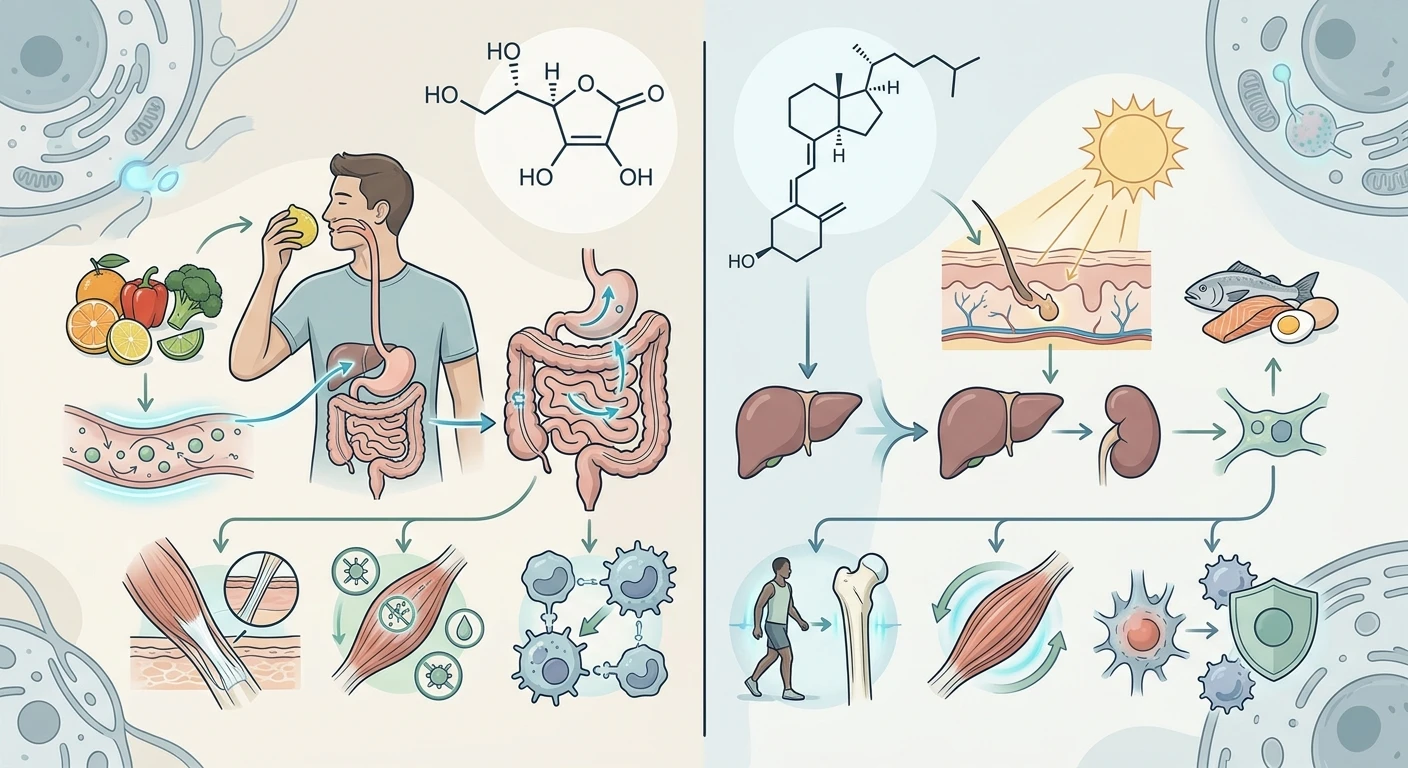
Simply put: Vitamin D is the body's "chief architect." It doesn't directly participate in repairing immediate damage but gives long-term commands to cells to build stronger bones, stronger muscles, and maintain a balanced immune system.
Scientific Sources
- Vitamin C and Immune Function, Nutrients, 2017
- Vitamin C, Linus Pauling Institute at Oregon State University
- Vitamin D Fact Sheet for Health Professionals, National Institutes of Health (NIH)
- Vitamin D and athletic performance, Medicine & Science in Sports & Exercise, 2009
- Dietary reference values for vitamin C, EFSA Journal, 2013
- Vitamin D - Scientific Review on Usage, Dosage, Side Effects, Examine.com
The synergistic effect: Why do they work better together?
Despite their different mechanisms, Vitamin C and D have a strong combined effect, especially for musculoskeletal health. Building strong bone is like constructing a reinforced concrete structure:
- Vitamin C is responsible for creating the "rebar" – the flexible collagen matrix that gives bone resistance to bending and twisting.
- Vitamin D is responsible for delivering and incorporating the "concrete" – calcium and phosphorus, which fill the matrix and make it hard and dense.
Without strong rebar (collagen), the concrete (calcium) will be brittle. Without enough concrete, the rebar will be weak. Together, they create a structure that is both strong and elastic, reducing the risk of injuries.
How to choose Vitamin C or Vitamin D?
The choice between Vitamin C, Vitamin D, or a combination of both is a decision that depends on individual goals, lifestyle, and current health status.
Take Vitamin C if:
- You train with high volume or have intense sessions.
- You want to support the health of your joints, tendons, and skin.
- You often feel "drained" and recover slowly after training.
- You want to improve iron absorption from plant-based sources.
🔵 Take Vitamin D if:
- You live in northern latitudes (like Bulgaria) with little sun in winter.
- You have a history of stress fractures or aim for stronger bones.
- You want to increase muscle strength and power.
- You get sick often or want to improve your mood during the dark months.
Recommended Combined Intake: Most athletes achieve maximum results with a combination of both vitamins. Take Vitamin D daily for systemic support and add Vitamin C strategically after your hardest workouts for rapid recovery.
What is the 2026 Protocol: "Foundation and Performance Stack"?
The 2026 Protocol: "Foundation and Performance Stack" is a baseline protocol that covers the basic needs of most athletes, always recommending consultation with a specialist and blood tests for Vitamin D levels (25(OH)D).
-
Daily (Foundation):
- Vitamin D3: 2000–4000 IU (50-100 mcg), taken with the fattiest meal of the day (e.g., Lunch or Dinner) to improve absorption.
-
♂ On Heavy Training Days (Performance Stack):
- Vitamin C: 500–1000 mg, taken 1-2 hours after training or in the evening. Avoid taking it immediately before or right after training to avoid interfering with the adaptive signals from oxidative stress.
Expert Note on Dosage
The upper limit for safe intake (UL) of Vitamin D is 4000 IU/day, and for Vitamin C it is 2000 mg/day. Slightly exceeding the UL for Vitamin D for short periods in case of deficiency under medical supervision is possible, but long-term high doses can be toxic. With Vitamin C, high doses usually only lead to gastrointestinal discomfort, as it is water-soluble and excess is easily excreted.
🧭 When to Choose What?
- Choose only Vitamin C if you are sure of your Vitamin D levels (proper blood tests, sufficient sun exposure) and are looking for antioxidant support after intense workouts.
- Choose only Vitamin D if you train with moderate intensity but live in a cloudy climate and your main goal is injury prevention and maintaining immunity during winter.
- Combine both if you are a serious athlete who trains intensely year-round, especially in Bulgaria, where winter Vitamin D deficiency is almost certain.
📖 What are Vitamin C and Vitamin D?
Vitamin C (Ascorbic Acid) is an essential water-soluble vitamin that acts as a powerful antioxidant and is critical for collagen synthesis and immune cell function.
Vitamin D (Cholecalciferol) is a fat-soluble prohormone that the body can synthesize with sun exposure. It regulates calcium metabolism, bone density, muscle function, and the immune system at a genetic level.
⚖ Pros and Cons
| Pros | Cons |
|---|---|
| Vitamin C: Rapid action, low toxicity risk (water-soluble), aids iron absorption, supports connective tissue. | Vitamin C: Short half-life in the body, high doses can cause stomach discomfort, may interfere with training adaptation if taken incorrectly. |
| Vitamin D: Long-term systemic effect, important for bones and strength, improves mood and immunity, linked to optimal hormonal levels. | Vitamin D: Fat-soluble (risk of toxicity with overdose), requires fat for absorption, its action is slow and cumulative, deficiency is much more common. |
🗣 Explained Simply
If your body were a race car: Vitamin C is the pit crew that quickly changes tires and fixes aerodynamics after each lap. Vitamin D is the engineer in the garage who spends months designing a stronger engine and a more durable chassis.
| Criterion | Vitamin C | Vitamin D |
|---|---|---|
| Role | Repairman / Shield | Architect / Regulator |
| Speed | Fast (hours) | Slow (weeks) |
| Primary Goal | Damage management | Structure building |
| Intake | Strategic, post-stress | Consistent, for foundation |
Choose the right product for your goal:
- For healthy bones and joints: Joint products and Collagen.
- For a comprehensive health foundation: Quality vitamins and minerals.
- For energy and recovery: Creatine products and Proteins.
⚖ When to choose Vitamin C
- When rapid antioxidant support is needed.
- To support collagen synthesis in joints and skin.
- During periods of intense training stress.
- If you consume few fresh fruits and vegetables.
⚖ When to choose Vitamin D
- During the autumn-winter season in Bulgaria (September to April).
- If you spend most of your day indoors.
- When aiming to increase bone density and muscle strength.
- As a long-term strategy for maintaining immunity.
Expert Note from Sport Zona
In my work with athletes, I notice that Vitamin D deficiency is an almost universal problem in Bulgaria, especially from October to May. I recommend testing 25(OH)D at least once a year to determine the correct dosage. Regarding Vitamin C, my advice is not to rely on megadoses. A dose of 500 mg, taken a few hours after the hardest workout of the day, is sufficient for most athletes without interfering with the body's natural adaptation processes.
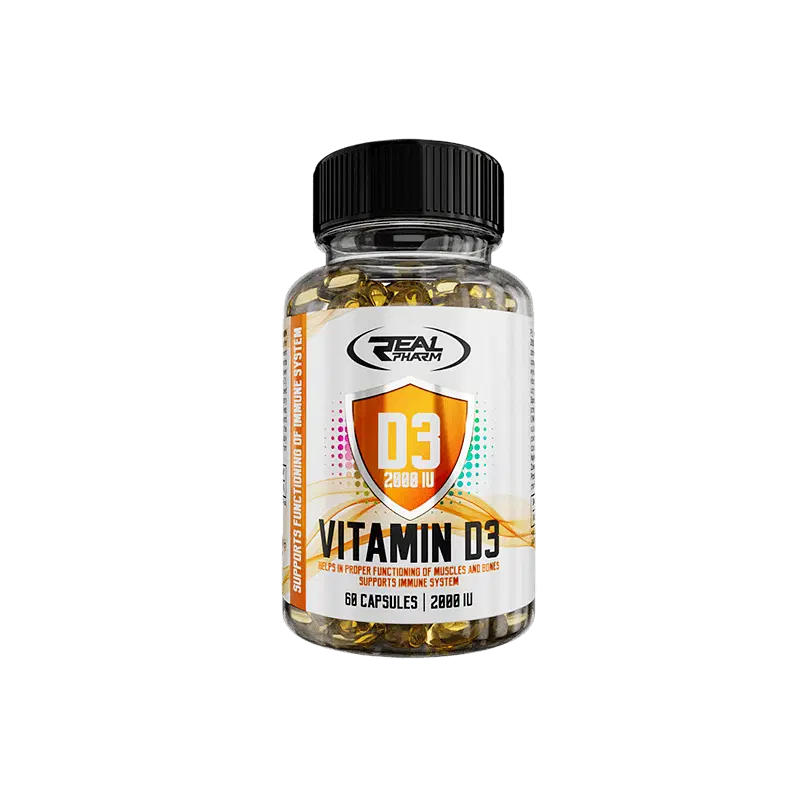
Recommended products
Frequently asked questions
Can Vitamin C and Vitamin D be taken together?
Yes, absolutely. They perform different functions and do not interfere with each other. There are no negative interactions between them. Vitamin D is fat-soluble and is best absorbed with food containing fats. Vitamin C is water-soluble and can be taken at any time.
Which is better for beginners - Vitamin C or Vitamin D?
Both vitamins are important, but Vitamin D deficiency is extremely common, especially in Bulgaria during the autumn-winter period. For this reason, ensuring an adequate intake of Vitamin D (e.g., 2000 IU daily) is often a higher priority for overall health. Vitamin C can be more easily obtained from food, but a supplement is beneficial during intense training or illness.
When is the best time to take Vitamin C and Vitamin D?
It is best to take Vitamin D with one of the main meals of the day (e.g., lunch or dinner) that contains fats, as this improves its absorption. Vitamin C can be taken at any time, but to maintain stable blood levels, it is a good idea to split the dose, for example, morning and evening. Taking it after training is also popular due to its antioxidant effect.
Are there any side effects from taking Vitamin C or Vitamin D?
When following the recommended doses, both vitamins are safe. Excessively high doses of Vitamin C (over 2000 mg daily) can cause gastrointestinal discomfort. Vitamin D toxicity is very rare but possible with prolonged intake of extremely high doses (over 10,000 IU daily for months) and can lead to hypercalcemia (dangerously high calcium levels in the blood).
What is the recommended dosage of Vitamin C and Vitamin D for athletes?
For active athletes, the recommended dose of Vitamin C is between 500 mg and 1000 mg daily. For Vitamin D, the maintenance dose is usually between 2000 and 4000 IU (international units) daily. The most accurate approach for dosing Vitamin D is through a blood test for 25-hydroxyvitamin D levels.