Vitamin E vs. Selenium: The Cellular Fat Antioxidant vs. The Mineral Protecting Enzyme
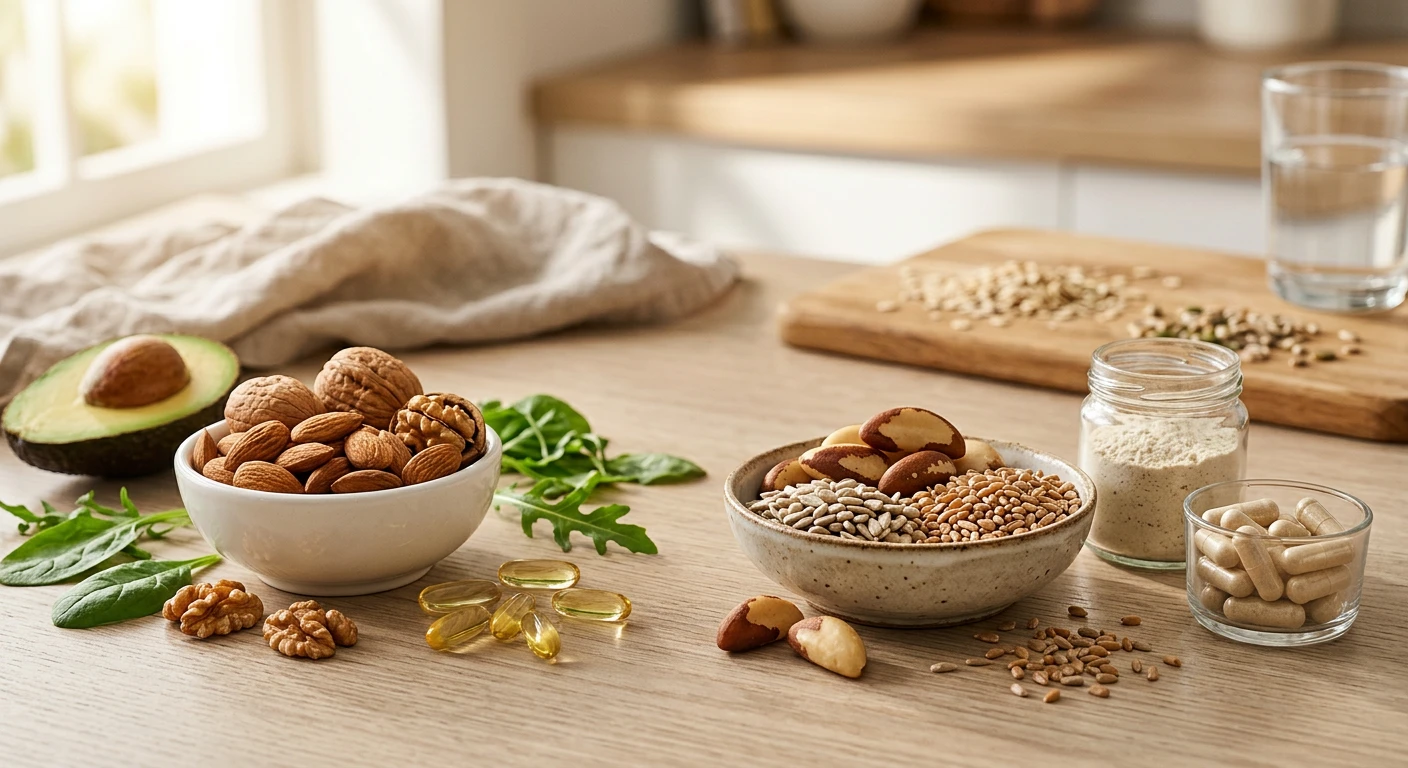
Vitamin E and selenium are antioxidants that fight free radicals. Their different actions require intelligent intake for optimal results.
Short Answer: Vitamin E is a fat-soluble antioxidant that directly protects cell membranes. Selenium is a mineral crucial for the enzyme glutathione peroxidase, which "recycles" antioxidants. They work synergistically—Vitamin E takes the first hit, and Selenium helps neutralize secondary products. Practical advice: Take 15-50 mg (22-75 IU) of Vitamin E (mixed tocopherols) and 55-200 mcg of Selenium (L-selenomethionine) daily, with a fat-containing meal.
Every athlete wants faster recovery and protection from the strain of intense training. The accumulation of free radicals, which damage cells, is a common problem. The body deals with this through an antioxidant system in which Vitamin E and Selenium play important but different roles.
Understanding these different yet complementary functions is key to intelligent supplementation. An analysis of the two micronutrients will help you decide when to use one, the other, or both together for the best effect.
This article is part of the Expert Hub for Food Supplements — over 270 expertly verified articles by Petar Mitkov and the Sport Zona team.
What is the Systemic Analysis of Vitamin E vs. Selenium?
Vitamin E is a fat-soluble molecule that integrates into cell membranes, while Selenium is an essential trace element integrated into protein structures and acting as a cofactor for antioxidant enzymes like glutathione peroxidase.
| Criterion | Vitamin E | Selenium |
|---|---|---|
| Biological Status | Fat-soluble vitamin | Essential trace element |
| Primary Focus | Protection of cell membranes | Synthesis of antioxidant enzymes |
| Mechanism of Action | Direct antioxidant (interrupts chain reaction) | Cofactor for enzymes (glutathione peroxidase) |
| Time Horizon | Immediate action at the site | Systemic and long-term maintenance |
| Specific Bonus | Protects polyunsaturated fats | Important for thyroid function and immunity |
| Risk of Excess | Moderate (can become pro-oxidant) | High (narrow therapeutic window, toxicity) |
What are the Mechanisms of Action of Vitamin E?
1. Vitamin E: The Direct Defender of Cell Membranes
Vitamin E is a general term for a group of eight fat-soluble compounds (four tocopherols and four tocotrienols), with alpha-tocopherol being the most active form in the human body, whose role is to protect lipids in cell membranes from lipid peroxidation.
This is where Vitamin E intervenes. Being fat-soluble, it integrates directly into the membrane. When a lipid radical appears, Vitamin E quickly "donates" a hydrogen atom to it, neutralizing it and interrupting the chain reaction immediately. Vitamin E itself becomes a relatively stable radical, which is subsequently "recycled" by other antioxidants like Vitamin C. This ability makes it indispensable for protecting cells, especially muscle cells, which are subjected to significant oxidative stress during training.
Simply put: Vitamin E is like personal security for every fat molecule in the body. It stands by it and takes the hit from free radicals before they can cause damage, thus saving the cell membrane from destruction.
2. Selenium: The Architect of Antioxidant Defense
Selenium is a trace element that does not have direct antioxidant properties on its own. Its strength lies in its role as a fundamental building block for over 25 enzymes called selenoproteins. The most important of these for athletes is Glutathione Peroxidase (GPx).
GPx enzymes are the body's "workshop" for neutralizing hydrogen peroxide and lipid hydroperoxides – two of the most dangerous byproducts of metabolism and oxidative stress. In the absence of sufficient selenium, the body cannot produce enough GPx. This means that even if Vitamin E stops the initial chain reaction, the accumulated "waste" (hydroperoxides) remains and can cause damage. Selenium is critical for converting the thyroid hormone T4 to its active form T3, which directly affects metabolism and energy levels.
Simply put: Selenium doesn't put out fires directly. It's the engineer who builds and maintains the fire suppression system (the GPx enzyme) throughout the building. Without it, the whole system would be ineffective.
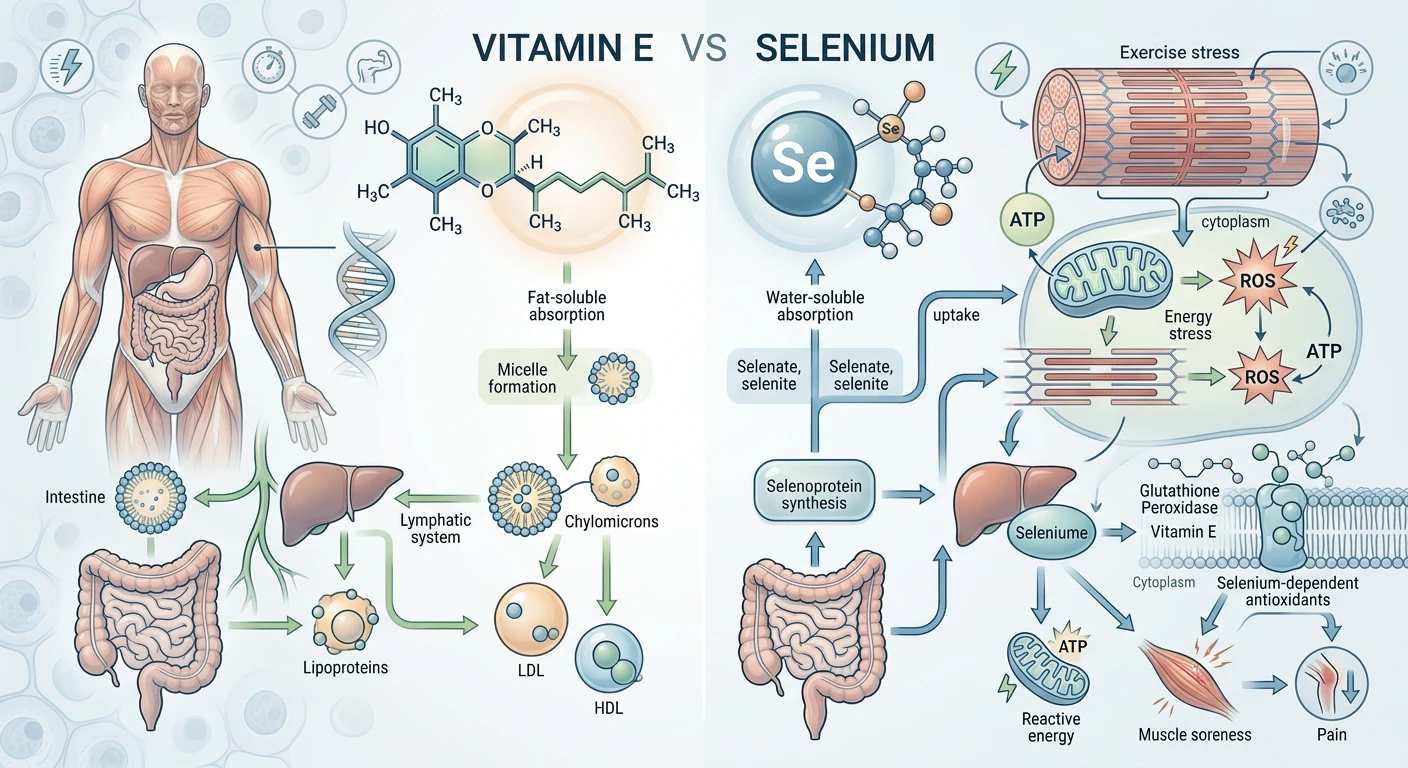
Interaction: Why Do They Work Better Together?
Vitamin E and Selenium exhibit a synergistic antioxidant effect. They do not compete but complement each other, creating multi-layered protection:
- First Line (Vitamin E): Embedded in the membrane, it stops lipid peroxidation at its very inception.
- Second Line (Selenium-dependent GPx): The GPx enzyme works in the aqueous environment of the cell (cytosol) and in the mitochondria, where it neutralizes peroxides that Vitamin E missed or that formed through other pathways.
- Mutual Conservation: By keeping peroxide levels low, GPx (Selenium) reduces the burden on Vitamin E. This allows it to more effectively handle direct attacks on the membrane. Vitamin E, by stopping chain reactions, reduces the production of substrates that GPx has to combat.
Together, they provide comprehensive protection for both the fat-soluble (membranes) and water-soluble (cytosol) parts of the cell. If you take only one, the other flank remains unprotected.
When to Choose Vitamin E or Selenium?
The choice between Vitamin E and Selenium is a decision that depends on the individual's specific needs, dietary habits, and overall lifestyle.
Choose Vitamin E if:
- You seek direct protection. You want to protect muscle cells from direct damage after a very heavy, eccentric workout (e.g., Leg Day with heavy squats).
- Your diet includes a lot of PUFAs. You consume polyunsaturated fats (omega-3, omega-6) from nuts, seeds, and oils, which are susceptible to oxidation.
- You are exposed to external oxidants. You train frequently outdoors, exposed to UV rays, or live in a heavily polluted urban environment.
- You want skin benefits. You want to support skin health and protect it from photoaging.
🔵 Choose Selenium if:
- You seek systemic support. You want to boost the body's overall antioxidant capacity in the long term, not just "patch up" damage.
- You have concerns about thyroid function. You feel sluggish, your metabolism is slow, or you have a family history of thyroid problems.
- Your diet is low in selenium. You consume little meat, seafood, eggs, or live in a region with selenium-poor soils (common in many parts of Europe).
- You seek an immune boost. You want to support your immune system, as selenoproteins are also important for its function.
Recommended Stack with Combined Effect for Athletes
color:#713f12;">For appropriate and comprehensive protection, especially during intense training, a combined intake is the best approach. This provides both direct and systemic support. Example daily dose: 100-200 IU Vitamin E (mixed tocopherols) + 100-200 mcg Selenium (L-selenomethionine), taken with a fat-rich meal, post-workout.What is the 2026 Protocol: "Foundation and Performance Stack"?
The 2026 protocol represents a modern approach to supplementation that divides consumption into foundational and training-specific, based on current understanding of the roles of Vitamin E and Selenium and their mutual enhancement.
| Timing | Supplement and Dose | Rationale |
|---|---|---|
| Daily (Morning) | Selenium: 100 mcg (L-selenomethionine) | Maintenance of baseline GPx levels and thyroid function. Constant systemic readiness. |
| Post-Workout (with food) | Vitamin E: 200 IU (mixed tocopherols) | Targeted protection of muscle membranes during the period of highest oxidative stress. |
Expert Note on the Protocol
This split protocol makes sense because the roles of the two nutrients are different. Selenium builds the "infrastructure" (enzymes), which is a slow and steady process. Its daily intake is logical. Vitamin E acts as "emergency aid" directly after damage. Taking it post-workout delivers it precisely when and where it's most needed to neutralize the peak of free radicals from physical exertion.
🧭 When to Choose What?
- Choose Vitamin E (alone) if you already consume enough selenium from your diet (e.g., 2-3 Brazil nuts per day) and want targeted protection after intense workouts.
- Choose Selenium (alone) if you have a diagnosed deficiency or want to support your thyroid function, and your intake of antioxidants from food (fruits, vegetables, nuts) is high.
- Combine the two if you are a serious athlete, subjected to daily stress, and seeking complete recovery and a comprehensive antioxidant strategy.
📖 What are Vitamin E and Selenium?
Vitamin E is a fat-soluble vitamin that acts as a direct antioxidant, integrating into cell membranes to protect them from oxidative damage.
Selenium is an essential trace element that serves as a cofactor for the production of powerful antioxidant enzymes (selenoproteins), the most important of which is glutathione peroxidase.
⚖ Pros and Cons
| Pros | Cons |
|---|---|
| Vitamin E | |
| Direct and rapid protection of cell membranes. | High doses can act pro-oxidantly and disrupt balance. |
| Protects fats (incl. Omega-3) from rancidity. | Effectiveness decreases with deficiency of other nutrients (e.g., Vitamin C). |
| Selenium | |
| Builds systemic, long-term antioxidant defense. | Narrow therapeutic window – toxicity is easily reached. |
| Important for thyroid function and immunity. | Does not act directly and immediately in acute need. |
🗣 Simply Explained: Bodyguard vs. Engineer
| Criterion | Vitamin E | Selenium |
|---|---|---|
| Role | Shield | Forge |
| Location | On the battlefield (membrane) | In the workshop (cell) |
| Type of Action | Reactive (responds to attack) | Proactive (builds defense) |
| Analogy | Personal bodyguard | Maintenance engineer |
Think of Vitamin E as a bodyguard who jumps in front of you to take a bullet. He's there, in the moment, to save you. Selenium is the person who designed and manufactured the bulletproof vest (the GPx enzyme) that you wear. Without it, the bodyguard would be less effective in the long run.
Choose the Right Product for Your Goal:
- Basic Health and Prevention: Ensure baseline levels with a quality multivitamin complex. Browse vitamins and minerals.
- Post-Workout Recovery: Combine this combination with a fast-absorbing protein for maximum effect. View protein powders.
- Cognitive Function and Nervous System: Combine Vitamin E with Omega-3 to protect the delicate fats in the brain. Find Omega oils.
Combined Protocol for Maximalists:
- Pre-Workout: Nitric oxide booster for pump and focus. (See here)
- During Workout: BCAA or EAA to reduce catabolism. (See here)
- Post-Workout: Protein shake + 100-200 mcg Selenium and 200 IU Vitamin E for recovery and antioxidant protection.
When to Choose Vitamin E
- When seeking a targeted strike against oxidative stress immediately after training.
- If your diet is rich in omega fatty acids that need protection.
- When you want healthy skin and protection from UV rays.
- If you are already sure that your selenium intake is adequate.
⛔ When to Choose Selenium
- When you want to build the foundation of your antioxidant system.
- If you are concerned about your thyroid function or metabolism.
- When your diet is limited in meat, eggs, and seafood.
- If you seek long-term, systemic support for immunity.
Scientific Sources
- National Institutes of Health (NIH), Office of Dietary Supplements – Vitamin E Fact Sheet for Health Professionals
- Linus Pauling Institute at Oregon State University – Vitamin E
- National Institutes of Health (NIH), Office of Dietary Supplements – Selenium Fact Sheet for Health Professionals
- EFSA Panel on Dietetic Products, Nutrition and Allergies (NDA). "Scientific Opinion on Dietary Reference Values for selenium." EFSA Journal, 2014.
- Krotkiewski M. "Effect of supplementing diet with selenium and other antioxidants on athletic performance." Pol Merkur Lekarski, 2001.
- Examine.com - An independent and unbiased encyclopedia on supplementation and nutrition - Vitamin E.
- Harvard T.H. Chan School of Public Health - The Nutrition Source: Selenium.
Expert Note from Sport Zona
Many athletes focus on high doses of isolated Vitamin E, expecting rapid recovery. This often leads to disappointment. Much more lasting results are seen in those who first ensure adequate selenium levels – sometimes it's as simple as 1-2 Brazil nuts per day (but no more, due to toxicity risk!). When this "infrastructure" is in place, adding a moderate intake of Vitamin E, especially mixed tocopherols post-intense workout, works much better. The foundation is always more important than immediate tactics.
Recommended products
Frequently asked questions
Can Vitamin E and Selenium be taken together?
Yes, and it is even recommended. Vitamin E and Selenium have a synergistic effect – they work together to provide more powerful antioxidant protection than if taken separately. Vitamin E protects cell membranes, and Selenium is a component of enzymes that regenerate the body's antioxidant capacity.
Which is better for beginners - Vitamin E or Selenium?
For beginners, the focus should be on diet. Both nutrients are important. If supplementation is necessary, it is often more sensible to start with Selenium (around 55-100 mcg), as its deficiency is more common and it has a clear role in thyroid function. High doses of Vitamin E without a clear need carry more risks. The best approach is a combined product with low doses of both.
When is the best time to take Vitamin E and Selenium?
It is best to take them together with food that contains fats (e.g., nuts, avocado, olive oil). Vitamin E is fat-soluble and needs fats for optimal absorption. Taking them during a meal also reduces the likelihood of potential stomach discomfort.
Are there side effects from taking Vitamin E or Selenium?
Yes, both can be toxic in high doses. Selenium overdose (over 400 mcg daily) can lead to hair loss, brittle nails, and neurological problems. Very high doses of Vitamin E (over 250-300 mg) can interfere with blood clotting and have a pro-oxidant effect. Always follow the recommended dosages.
What is the recommended dosage of Vitamin E and Selenium?
For Vitamin E, the recommended daily intake is 15 mg (22.4 IU). For athletes, doses up to 50-100 mg (of mixed tocopherols) are common. For Selenium, the recommended intake is 55 mcg, with a safe upper limit of 400 mcg. For active individuals, doses of 100-200 mcg daily are common and effective.