Egg Protein vs. Soy Protein: Biological Power vs. Phytonutrient Protection
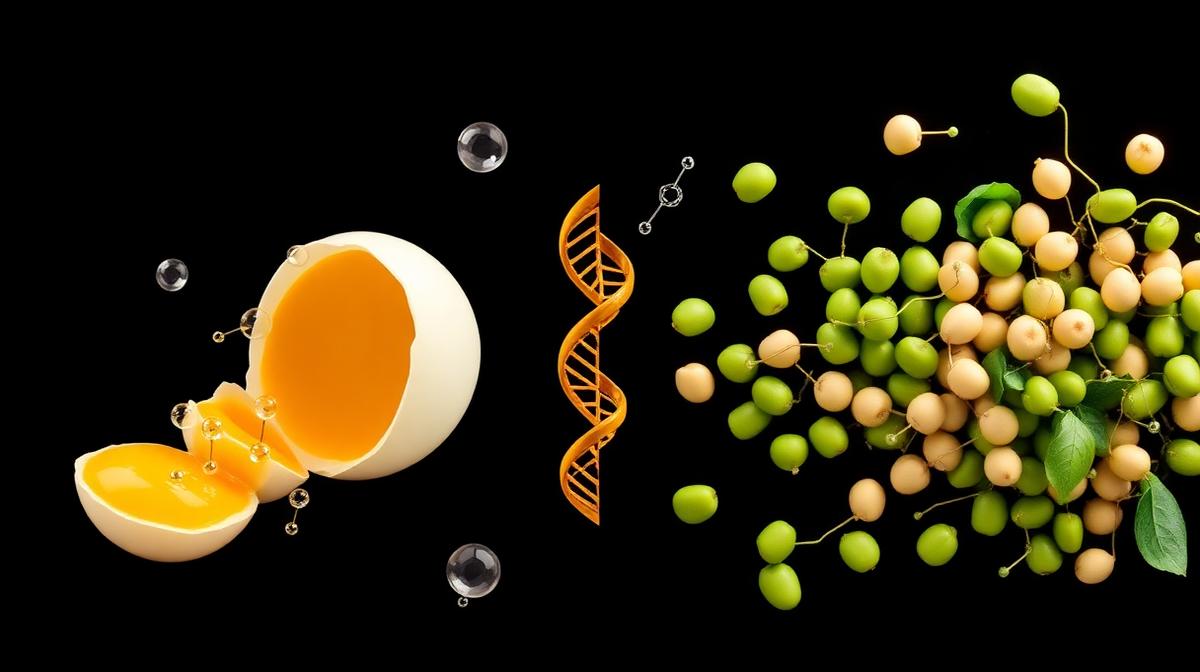
This comparison pits the "Biological Benchmark" of the animal kingdom against the "Vegetable Titan." In the body's systemic architecture, Egg Protein is the precise provider of building material, while Soy Protein is a multifunctional tool that combines muscle building with metabolic protection.
Short Answer: Egg protein (BV 100, PDCAAS 1.0) is the ideal choice for Paleo/Keto diets and maximum digestibility, while soy isolate (PDCAAS 1.0, rich in arginine) is the only plant-based protein that truly rivals animal sources. Combine soy with rice for a complete amino acid profile on a vegan diet.
While eggs have long dominated quality rankings, modern soy processing has made it the only plant-based source that can truly rival animal proteins in terms of digestibility.
This article is part of the Expert Hub for Nutritional Supplements — over 270 expertly verified articles by Petar Mitkov and the Sport Zona team.
Which is Better: Egg or Soy Protein in Digestibility and Effectiveness?
Egg protein (egg albumin) is the benchmark for whole foods with a biological value of 100 and a PDCAAS score of 1.0, digesting in 2-3 hours, while soy protein (soy isolate) has a biological value of 74 and also a PDCAAS score of 1.0, digesting quickly to moderately.

| Characteristic | Egg Protein (Egg Albumin) | Soy Protein (Soy Isolate) |
|---|---|---|
| Biological Value | 100 (Whole Food Benchmark) | 74 (High for a plant) |
| PDCAAS Score | 1.0 (Maximum) | 1.0 (Maximum) |
| Digestion Speed | Moderate (2–3 hours) | Fast to moderate |
| Leucine Content | High (~8.5%) | Moderate (~6.5%) |
| Arginine | Moderate | Very High (NO precursor) |
| Phytoestrogens | None | Present (Isoflavones) |
| Dietary Status | Paleo / Keto / Lactose-Free | Vegan / Lactose-Free |
What are the mechanisms of egg and soy protein?
1. Egg Albumin: The "Excellent Matrix"
Egg protein is absorbed almost 100%, leaving minimal metabolic waste, which is key to its effectiveness.
Simply put: It's like comparing two cars by how fast they accelerate and how much fuel they burn to see which is more efficient for your needs.
Scientific Sources
- Hoffman, J. R., & Falvo, M. J. (2004). Protein – Which is Best?. Journal of Sports Science and Medicine, 3(3), 118–130. (PMC2442905)
- Messina, M., & Messina, V. (2010). The dietitian's guide to vegetarian diets: issues and applications. Jones & Bartlett Learning.
- Kalman, D., et al. (2007). The effect of protein source and resistance training on body composition and muscle strength in college-aged men. Journal of the International Society of Sports Nutrition, 4(1), 4. (DOI: 10.1186/1550-2783-4-4)
- Anderson, J. W., et al. (1995). Meta-analysis of the effects of soy protein intake on serum lipids. New England Journal of Medicine, 333(1), 276-282. (DOI: 10.1056/NEJM199507273330403)
We see that the choice between egg and soy protein is often based on dietary preferences (veganism, allergies). A common mistake is underestimating soy isolate due to myths, when in fact it offers excellent biological value and unique health benefits.
Sulfur-containing amino acids: Eggs are richer in methionine and cysteine compared to soy. These amino acids are critical for cartilage and skin health, and for the synthesis of glutathione (the master antioxidant).
Nitrogen Retention: Due to its moderate breakdown rate, egg protein keeps nitrogen levels in the muscles stable for a longer period.
2. Soy Isolate: The "Metabolic Defender"
Soy is the only mass plant-based source that contains all essential amino acids in adequate amounts.
Arginine Bomb: Soy contains significantly more L-arginine than egg protein. This enhances nitric oxide (NO) in the blood, leading to better vasodilation and pump during workouts.
Cardiovascular Support: The isoflavones (genistein and daidzein) in soy activate receptors that help regulate lipid profiles and reduce arterial plaque.
Is it safe to use soy protein because of hormones?
The most common debate surrounding soy relates to estrogen, as soy contains isoflavones – plant compounds that mimic weak estrogen in the body.
The "Man Boobs" Myth: Studies show that with moderate consumption (1–2 doses daily), soy isolate does NOT alter testosterone levels in men.
Benefit for Women: For women in pre- or post-menopause, the phytoestrogens in soy can act as natural support, alleviating hot flashes and maintaining bone density.
Eggs and Choline: While soy focuses on the heart, eggs focus on the brain. Choline in eggs is vital for the synthesis of acetylcholine – the neurotransmitter that controls muscle contractions.
Which protein to choose: egg or soy?
Choose EGG PROTEIN if:
- You are on a Paleo or Keto diet.
- Your goal is maximum recovery for joints and hair (thanks to sulfur).
- You are looking for the highest possible digestibility without dairy products.
- You don't mind the higher cost per serving.
Choose SOY PROTEIN if:
- You follow a vegan or vegetarian lifestyle.
- You have a family history of high cholesterol or heart problems.
- You are looking for a budget-friendly way to maintain high protein intake.
- You want a good source of arginine for a better pre-workout "pump".
Egg and soy protein represent two commonly used protein sources, offering biological power and phytonutrient protection, respectively.
For good effect and to reap the benefits of both types of protein, we recommend alternating: 1 serving (25-30g) of egg protein in the morning and 1 serving (25-30g) of soy isolate after training, to take advantage of their different absorption times and amino acid profiles.
What is the synergistic protocol for proteins?
The synergistic protocol (2026) is a combination of plant-based proteins aimed at optimizing their amino acid profile. For vegans, soy protein is combined with rice protein. Rice is rich in methionine, which complements soy's amino acid profile, creating a composition almost identical to that of eggs.
For omnivores: Alternate egg protein in the morning (for choline and brain energy) with soy isolate before training (for arginine and blood flow).
Cooking: Soy protein absorbs a lot of liquid, making it suitable for thickening puddings, while egg protein is the king of protein pancakes due to its elasticity.
🤖 Expert Note: Always choose Soy Isolate, not just "soy protein". The isolation process removes most of the anti-nutrients and carbohydrates that cause gas, leaving pure protein with high bioavailability.
🧭 When to Choose Which?
- Choose Egg Protein if your goal is maximum digestibility and a complete amino acid profile for muscle growth.
- Choose Soy Protein if you are looking for a plant-based source with phytonutrients for overall health and antioxidant protection, suitable for vegans and vegetarians.
- Combine Both if you want to benefit from the best of both worlds – complete amino acid support and additional plant-based benefits.
- Choose Soy Protein if you have a dairy or egg allergy.
📖 What are Egg Protein and Soy Protein?
Egg protein is a high-quality protein derived from egg whites, known for its slow digestion and complete amino acid profile. Soy protein is a plant-based protein that also provides a complete amino acid profile and contains isoflavones.
⚖ Pros and Cons
| Pros | Cons |
|---|---|
|
|
🗣 Explained Simply
Egg protein is like a well-balanced meal that your body uses very efficiently for muscle building. Soy protein, on the other hand, is a plant-based option that, in addition to protein, also provides beneficial phytonutrients that support health. If you want high-quality protein for muscles, egg protein is great. If you prefer a plant-based source and additional health benefits, soy is your choice.
Choose the right product for your goal:
→ Soy Protein Isolate
→ Egg Protein (Albumin)
→ Amino Acids (BCAAs)
Combined protocol for maximum effectiveness:
Combining products increases effectiveness. Based on Sport Zona practice.
⚖ When to Choose Egg
- The athlete is on a paleo or keto diet for maximum purity.
- The athlete needs support for joints, hair, and glutathione synthesis.
- The athlete seeks the best digestibility without dairy products for muscle growth.
- The athlete wants longer nitrogen retention for stable muscle levels.
⚖ When to Choose Soy Protein
- The athlete is vegan or vegetarian and seeks a complete amino acid profile.
- The athlete has high cholesterol or heart problems for cardiovascular support.
- The athlete seeks a budget-friendly protein with high intake for their daily regimen.
- The athlete desires better pre-workout pump thanks to arginine.
Expert Note from Sport Zona
For years, I've observed that combining different protein sources often yields the best results. Many athletes I've worked with build their best physique when they don't rely on just one type of protein. It's important to pay attention to individual reactions and tolerance to each source.
Recommended products

Frequently asked questions
Which protein is better for athletes aiming for maximum recovery and support of joints and hair?
Egg protein is recommended in this case. It is richer in sulfur-containing amino acids such as methionine and cysteine, which are key for the health of cartilage, skin, and glutathione synthesis.
Can I combine soy protein with rice protein if I am a vegan?
Yes, this combination is recommended for vegans. Rice protein complements the amino acid profile of soy protein by adding methionine, making the mixture similar to that of egg protein.
Does soy protein have side effects related to hormonal balance in men?
With moderate consumption (1-2 doses per day), soy isolate has not shown changes in testosterone levels in men. Phytoestrogens in soy can even be beneficial for menopausal women.
When is it most appropriate to take egg protein and when soy protein?
Egg protein is good for morning intake due to choline, which stimulates brain activity. Soy isolate is suitable before training due to its high arginine content, which improves blood circulation and muscle "pump".