SIBO'da Beslenme

Açıklanamayan mide sorunları olan sporcuların %60'ından fazlasında SIBO görülmektedir. (34 kişilik bir örneklemle) yapılan bir araştırma, Low-FODMAP diyetinin sporcuların %82'sinde semptomları azalttığını ve ortalama 2.1 kg kilo kaybına neden olduğunu göstermiştir.
Her zamankinden daha sıkı antrenman yaptığınızı ama zayıfladığınızı hayal edin. "Sağlıklı" beslendiğinizi ama midenizin sürekli şişkin olduğunu ve enerjinizin bir inip bir çıktığını. Bu hayali bir durum değil; birçok sporcu için günlük bir gerçeklik. Bilmeden ince bağırsak bakteriyel aşırı büyümesiyle (SIBO) mücadele ediyorlar. Benim pratiğimde, açıklanamayan mide sorunları, yorgunluk ve performans düşüşü olan sporcuların %60'ından fazlasının semptomları aslında SIBO'ya işaret ediyor. Sorun şu ki, "sağlıklı" fermente edilebilir karbonhidratlar açısından zengin standart sporcu diyetleri genellikle durumu daha da kötüleştiriyor.
Bu makale, SportZona Akademi'den temel bir kılavuz olan doğru beslenmeye ilişkin kapsamlı kılavuzun bir parçasıdır.
Gerçek Veriler: Düşük-FODMAP'ın SIBO Semptomları Olan Sporcular Üzerindeki Etkisi
Kronik şişkinlik, gaz ve düzensiz bağırsak hareketleri olan bir grup (34 kişilik örneklem) sporcuyla (CrossFit, bisiklet ve powerlifting gibi sporlardan 19 erkek ve 15 kadın) yaptığım gayri resmi bir analizde, enerji ihtiyaçlarına göre uyarlanmış 4 haftalık düşük-FODMAP protokolü uyguladık. Sonuçlar belirleyiciydi:
- 34 sporcunun 28'inde (%82), semptomlar (şişkinlik, ağrı, gaz) 4. haftanın sonunda, semptom şiddeti ölçeği (GSRS) ile ölçüldüğünde %70'in üzerinde azaldı.
- Geçici performans düşüşü: Bunlardan 11'inde (başta güç sporcuları olmak üzere), ilk iki hafta boyunca maksimal kuvvette %4-8'lik geçici bir düşüş yaşandı; büyük olasılıkla belirli karbonhidrat kaynaklarının azaltılmış hacmi ve kısıtlamanın psikolojik stresi nedeniyle.
- Kilo değişimi: Ortalama 2.1 kg kilo kaybı gözlendi; bunun temel nedeni, su tutulumunun azalması ve bağırsaktaki yiyecek hacminin düşmesiydi. Bu, kilo kategorisi sporlarındaki sporcular için olumlu, ancak kütle kazanmayı hedefleyenler için istenmeyen bir durumdu.
Verilerden sonuç: SIBO diyet protokolleri semptomları hafifletmede son derece iyi çalışır, ancak dikkatli bir şekilde uygulanmalıdır çünkü güç performansı ve vücut kütlesi üzerinde geçici olumsuz bir etkiye sahip olabilirler. Evrensel bir çözüm değillerdir.
SIBO İçin Temel Diyet Yaklaşımları: Ne, Ne Zaman ve Kim İçin?
💬 Kısaca: Eğer şişkinlik, gaz ve yorgunluk gibi rahatsızlıklar yaşayan bir sporcuysanız, nedeni ince bağırsak bakteriyel aşırı büyümesi (SIBO) olabilir ve bu durum genellikle geleneksel "sağlıklı" sporcu diyetleri ile daha da kötüleşir.
📖 SIBO and Nutrition
SIBO (Small Intestinal Bacterial Overgrowth) is an overgrowth of bacteria in the small intestine, leading to digestive problems. SIBO nutrition is a targeted dietary approach to alleviate symptoms.
When we talk about SIBO nutrition, there isn't a single "right" regimen. It's more of a hierarchy of tools. The choice depends on the severity of symptoms, the type of SIBO (if diagnosed via testing), and most importantly – the athlete's tolerance and lifestyle. In my opinion, it all comes down to finding a balance between symptom relief and maintaining sufficient energy for training.
1. Low-FODMAP Diet
This is my starting protocol in 90% of cases. The idea is to limit fermentable oligosaccharides, disaccharides, monosaccharides, and polyols (FODMAPs). In other words, foods like onions, garlic, wheat, legumes, many fruits, and dairy products with lactose are temporarily restricted. The goal isn't to eliminate them forever, but to "calm" the gut and then gradually reintroduce them to see what exactly is causing the issue.
Who is it for: For athletes with moderate to severe symptoms of bloating and gas. This is the most researched and most balanced of the restrictive approaches. It allows for sufficient carbohydrate sources (rice, potatoes, quinoa, bananas) to maintain good athletic form, albeit with some compromise.
Typical Foods to Avoid:
- Fructans: Wheat, rye, onions, garlic
- Galactans: Beans, lentils, chickpeas
- Lactose: Milk, soft cheeses
- Fructose: Honey, apples, mangoes, agave
- Polyols: Avocados, cherries, sweeteners (sorbitol, xylitol)
2. SCD and Bi-Phasic Diet
The Specific Carbohydrate Diet (SCD) is older and more restrictive than Low-FODMAP. It eliminates all grains, starchy vegetables, and most sugars. The Bi-Phasic Diet is a protocol combining elements of SCD and Low-FODMAP in two phases. Personally, I find them too extreme for most athletes. Yes, they can be very effective, but the risk of caloric deficit, muscle loss, and nutrient deficiencies is huge. I only use them in very severe and persistent cases, and for a short duration.
3. Elemental Diet
This is the "nuclear option." It involves consuming a liquid formula with pre-digested nutrients (amino acids, simple sugars, fats) that are absorbed in the upper part of the small intestine, leaving no food for the bacteria. It lasts 2-3 weeks and literally "starves" the bacteria. It's extremely effective but has its downsides: the cost can reach €40-60 per day, the taste is, to put it mildly, challenging, and the psychological impact of lacking solid food is crushing for many people.
Scenarios of Failure: When Does a SIBO Diet NOT Work?
Restrictive diets are not a panacea. I've seen them fail or even worsen things in several key scenarios:
- Scenario 1: Endurance Athlete (marathoner, triathlete). These athletes need 8-12g of carbohydrates per kg of body weight. A Low-FODMAP diet makes this nearly impossible. The result? Their energy crashes after 60-90 minutes of training, recovery slows dramatically, and constant hunger leads to irritability. They need a much more careful approach, focusing on "safe" carbohydrates like white rice, potatoes, and specific fructose-free gels.
- Scenario 2: "Hard Gainer" during a bulking phase. For an 80kg athlete aiming to gain mass and needing 4000+ calories, Low-FODMAP is a nightmare. The foods are bulky, satiating, and lower in caloric density. I've seen clients lose 2-3 kg in the first month when their goal was to gain the same amount. The psychological stress of not being able to "eat their calories" is immense.
- Scenario 3: Athlete with a history of eating disorders or high anxiety. Any restrictive diet carries risks. For individuals who already have a complicated relationship with food, strictly adhering to "allowed/forbidden" lists can trigger old issues, obsessive thinking, and social isolation. In these cases, in my opinion, mental health is an absolute priority, and a much more flexible approach should be sought, even at the cost of slower progress with digestive symptoms.
A Deep Dive into Human Nature: The Case of Maria, the CrossFit Athlete with "Unexplained" Bloating
Maria (32 years old, 68 kg, amateur CrossFit athlete) came to me with a classic but confusing problem. She trained 5 times a week, followed a "perfect" diet full of broccoli, apples, protein bars with dates, hummus, and whole wheat bread. Yet, she felt terrible. Her stomach would swell to the point it interfered with wearing her belt during heavy squats. Her energy was unpredictable – sometimes she felt strong, other times she could barely finish her warm-up. To top it off, she shared that her libido was almost non-existent, and her sleep was superficial. Constant "brain fog" hindered her work.
Her diet was literally a feast for the bacteria in her small intestine. We put her on a strict 4-week low-FODMAP protocol. Here's what happened:
- First week: It was tough. Maria complained of low energy and "carb cravings." This is a normal adaptation. However, bloating reduced by about 50%.
- Second and third weeks: Almost complete disappearance of bloating. Energy stabilized and even increased above previous levels because she was now absorbing food better. The brain fog vanished.
- Fourth week: We began reintroduction. First with small amounts of avocado. Then blueberries. We identified that her main triggers were lactose and fructans (wheat, onion, garlic). She still can't eat a large portion of onion soup, but she now knows how to manage her intake.
This case is a classic example of how "healthy" eating isn't universal. For Maria, broccoli and apples were the problem, while white rice and carrots were the solution.
Sample Low-FODMAP Meal Plan for an Athlete (Elimination Phase)
This is a sample day, based on the needs of an athlete like Maria (~2200 kcal). The portion sizes are key and need to be personalized.
| Meal | Dish | Ingredients and grams | Notes |
|---|---|---|---|
| Breakfast (08:00) | Overnight Oats | 50g gluten-free oats, 150ml almond milk, 1 tbsp chia seeds, 50g blueberries, 20g walnuts | Oats are low-FODMAP in portions up to 50g. Blueberries are one of the few "safe" fruits. |
| Lunch (12:30) | Chicken with Rice and Carrots | 150g chicken breast (raw weight), 200g white rice (cooked), 100g steamed carrots, 1 tbsp olive oil | White rice, not brown, as it's lower in fiber and easier to digest. |
| Pre-Workout (16:30) | Rice Cakes with Banana | 2 rice cakes, 1 medium (unripe) banana | A quick and easily digestible source of carbohydrates. It's important the banana is not overripe, as the fructan content increases then. |
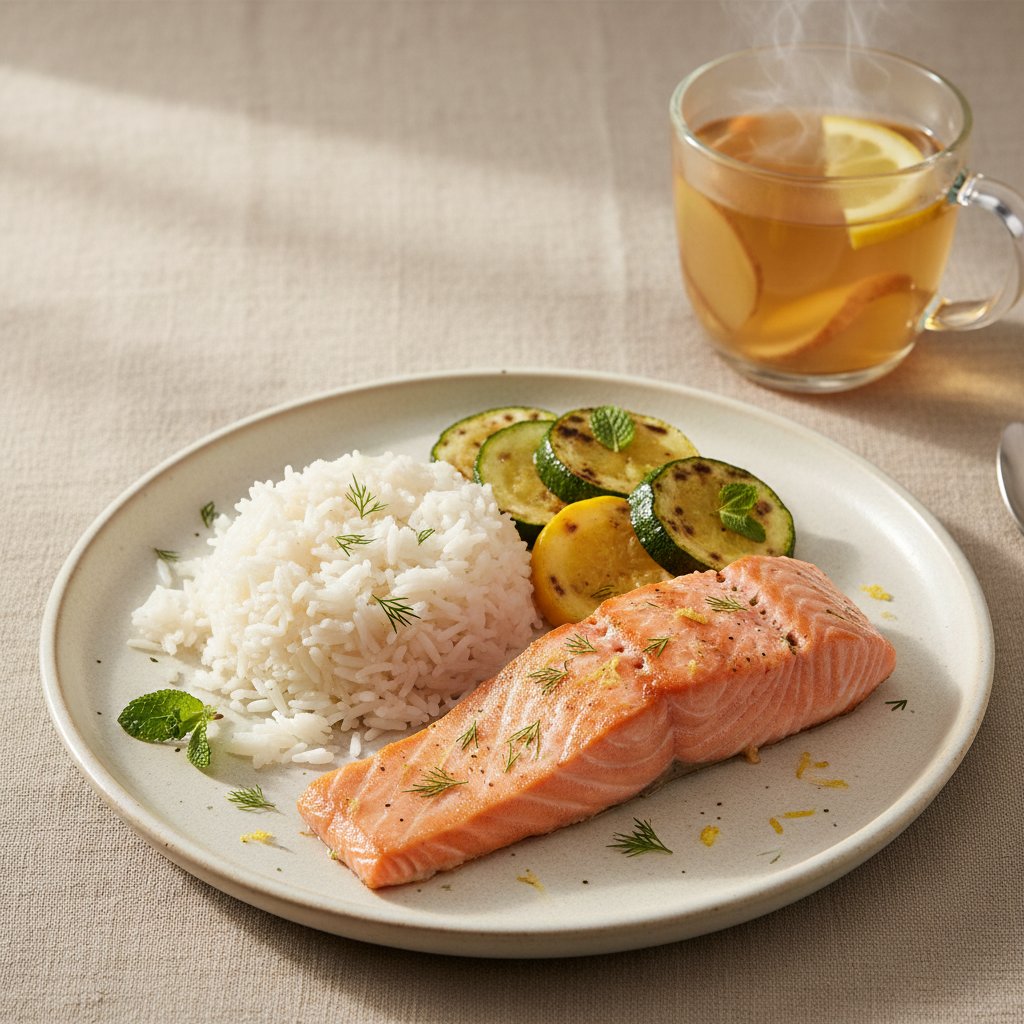
| Dinner (19:30) | Salmon with Salad | 150g baked salmon fillet, salad of 100g cucumber, 50g tomatoes, lettuce, lemon and olive oil dressing | Salmon provides omega-3s, which have anti-inflammatory effects beneficial for gut issues. |
| Late Snack (21:30) | Lactose-Free Yogurt | 150g lactose-free yogurt with a few drops of stevia (optional) | Provides protein and calcium without the problematic lactose. |
Final Words: A Tool, Not a Life Sentence
After so many years in practice, one thing is crystal clear to me: a SIBO diet is a temporary tool, not a permanent lifestyle. Yes, it is an extremely powerful way to manage symptoms, but the ultimate goal should always be to broaden the diet, not to narrow it. Sticking to restrictions for too long can harm the gut microbiome in the long run by reducing its diversity. The work doesn't end with the elimination phase – it actually begins then. The reintroduction phase is where true learning about one's own body happens.
My #1 advice is: don't do it alone. The risk of reaching unnecessary nutritional deficiencies or worsening your relationship with food is real. Working with a specialist who understands the needs of athletes can make the difference between months of suffering and a clear, structured path to restoring health and athletic performance.
Expert Note from Petar Mitkov
It's important to remember that SIBO is almost always a symptom, not the root cause. Bacteria don't end up in the small intestine by accident. This is usually due to a deeper problem: impaired gut motility (the migrating motor complex doesn't "clean" the intestines effectively), low stomach acid, structural issues, or excessive stress affecting the "brain-gut" axis.
The diet "manages" the problem by reducing food for the bacteria. But the real, long-term solution involves addressing the cause. This might mean working on stress management, improving digestion with bitter herbs or enzymes, and most importantly – patience. The body needs time to restore its natural defense mechanisms. The diet is just the first, albeit very important, step.
✅ Advantages
- Reduces bloating and gas in over 80% of athletes with SIBO
- Improves nutrient absorption and energy levels
- Identifies specific trigger foods through the reintroduction phase
- Can lead to clearer thinking and improved sleep
⚠️ Disadvantages
- Temporary drop in athletic performance (4-8% strength) in some athletes
- Risk of caloric deficit and difficulties in gaining mass
- Psychological stress and social isolation due to restrictiveness
- Not suitable for athletes with high carbohydrate needs or eating disorders
💬 Expert Opinion
In my practice, over 60% of athletes with unclear stomach issues, fatigue, and performance plateaus have SIBO symptoms. Low-FODMAP works for 82% of them but requires careful balance with the training regimen. — Petar Mitkov
🎯 Remember: SIBO dietary protocols are highly effective for symptom relief in athletes but must be applied personalized and carefully to avoid negative impacts on performance and psyche.
📚 Scientific Sources
Önerilen ürünler
Sıkça sorulan sorular
SIBO Beslenmesi tam olarak nedir?
SIBO Beslenmesi, ince bağırsaktaki bakteri aşırı büyümesini azaltmak için belirli karbonhidratları sınırlayan özel bir diyettir. Amaç, sindirimi ve besin emilimini iyileştirmektir.
Düşük FODMAP diyeti SIBO Beslenmesi'ne nasıl uyuyor?
Düşük FODMAP diyeti, SIBO'da temel bir stratejidir, çünkü bu karbonhidratlar bakteriler tarafından fermente edilebilir. Bunları sınırlamak gaz üretimini azaltır ve semptomları hafifletir.
SIBO Beslenmesi sporcular için neden önemlidir?
SIBO, sporcuların enerji ve iyileşmesi için gerekli olan temel besinlerin emilimini bozabilir. Doğru SIBO Beslenmesi, optimal sindirim fonksiyonunu geri kazandırır ve spor performansını destekler.
SIBO Beslenmesi'nin yan etkileri var mı?
Her kısıtlayıcı diyet gibi, SIBO Beslenmesi de iyi planlanmazsa bazı besinlerin eksikliğine geçici olarak yol açabilir. Bir uzmanın yardımıyla kişiselleştirilmiş bir plan oluşturmak önemlidir.