Isomaltulose
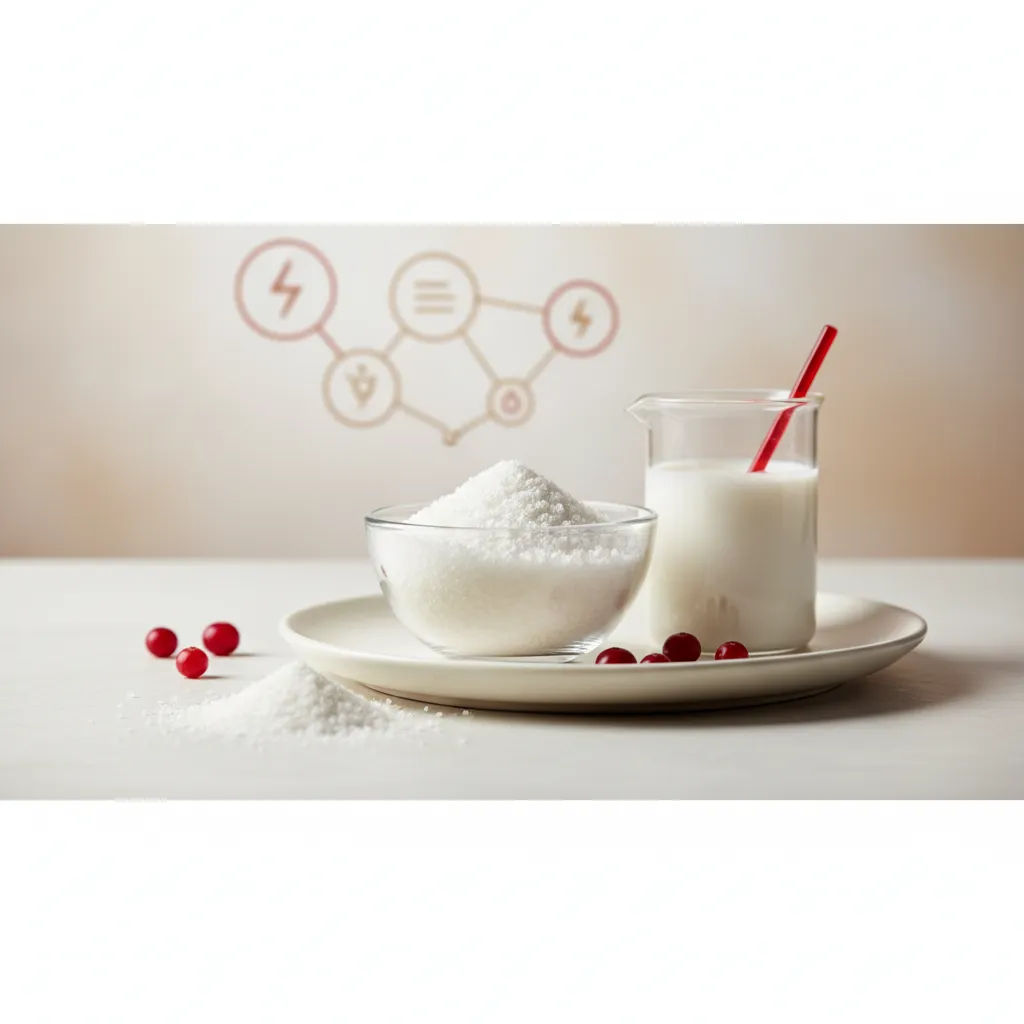
Кратка експертна дефиниция: Какво е изомалтулоза, как действа в организма и как се прилага в спортното хранене. Изомалтулозата е дисахарид, състоящ се от глюкоза и фруктоза, свързани с a-1,6 гликозидна връзка. Това е естествен въглехидрат, който се намира в малки количества в меда и тръстиковата захар. **Как действа в организма:** За разлика от обикновената захар (захароза), изомалтулозата се разгражда много по-бавно в тънките черва. Това води до по-бавно и постепенно освобождаване на глюкоза в кръвния поток, което води до по-нисък гликемичен индекс и по-продължително освобождаване на енергия. Тя не се ферментира от бактериите в устната кухина, което я прави не-кариогенна (не причинява кариес). **Приложение в спортното хранене:** Изомалтулозата се използва в спортното хранене като източник на устойчива енергия. Тя осигурява продължително освобождаване на глюкоза, което помага за поддържане на нивата на енергия по време на продължителни тренировки или състезания, без да причинява резки пикове и спадове в кръвната захар. Често се включва в спортни напитки, гелове и барове за осигуряване на устойчива енергия и подобряване на издръжливостта.
Кратък отговор: Изомалтулозата (Palatinose™) е бавноусвоим въглехидрат с нисък гликемичен индекс (GI=32), който осигурява стабилна енергия без резки пикове и спадове в кръвната захар, благодарение на уникалната си химична структура. Тя подпомага по-ефективното изгаряне на мазнини по време на тренировка. Практически съвет: За устойчива енергия, консумирайте 30-60 грама изомалтулоза 30-45 минути преди продължителни тренировки или състезания.
Изомалтулоза е въглехидрат, при което бавното освобождаване на енергия поддържа стабилни нивата на кръвна захар, използвайки уникална химична структура.
Тази статия е част от пълното ръководство по правилно хранене — основно ръководство от експертния екип на Sport Zona.
Какво представлява изомалтулозата?
Изомалтулозата е въглехидрат, който постепенно освобождава енергия в тялото, поддържайки стабилни нивата на кръвната захар за по-дълъг период от време.
📖 Изомалтулоза (Palatinose™)
Изомалтулозата е дин хидролизиран въглехидрат, съставен от глюкоза и фруктоза, който осигурява бавно и стабилно освобождаване на енергия чрез уникална химична връзка, водеща до нисък гликемичен индекс.
Изомалтулозата, известна още като Palatinose™, е дин хидролизиран въглехидрат, който се състои от една молекула глюкоза и една молекула фруктоза, свързани със специфична алфа-1,6 гликозидна връзка. Тази уникална връзка я отличава от захарозата (обикновена трапезна захар), при която връзката е алфа-1,2. Структурата на изомалтулозата я прави по-устойчива на ензимното разграждане в тънките черва, което води до по-бавно и постепенно усвояване.
Естествено срещаща се в малки количества в меда и тръстиковата захар, изомалтулозата се произвежда индустриално чрез ензимна транскукозилираща реакция от захароза. В резултат на това се получава бял кристален прах със сладък вкус, който е приблизително наполовина по-сладък от захарозата. Нейните физикохимични свойства включват висока стабилност в кисела среда и при високи температури, което я прави подходяща за редица хранителни приложения.
Как действа изомалтулозата?
Изомалтулозата е въглехидрат, който поддържа стабилни нива на кръвна захар, предотвратявайки енергийни пикове и спадове, което осигурява продължително и устойчиво енергийно снабдяване по време на продължителни натоварвания.
- Поддържа стабилни нива на кръвна захар, предотвратявайки енергийни пикове и спадове.
- Осигурява продължително и устойчиво енергийно снабдяване по време на продължителни натоварвания.
- Спомага за по-ефективно изгаряне на мазнини за енергия, щадяйки мускулния гликоген.
- Има нисък гликемичен индекс (GI=32), което я прави подходяща за контролиране на кръвната захар.
Недостатъци
- Не е подходяща за бърз енергиен прилив, когато е необходим моментален скок на енергия.
- Цената ѝ може да е по-висока в сравнение с обикновени захари.
- Нужни са проучвания за ефектите върху хора с определени метаболитни състояния.
Основният механизъм на действие на изомалтулозата се крие в нейното бавно и пълно усвояване. За разлика от бързоусвоимите захари, които бързо се разграждат до глюкоза и фруктоза и водят до рязък скок в нивата на кръвната захар, ензимът сукраза в тънките черва разгражда изомалтулозата много по-бавно. Това води до постепенно освобождаване на глюкоза в кръвния поток.
Постепенното повишаване на глюкозата предизвиква по-умерен инсулинов отговор. Това е ключово, тъй като високите пикове на инсулин могат да доведат до бързо изчерпване на енергийните запаси и евентуален спад на кръвната захар (хипогликемия). С изомалтулозата, енергията се доставя по-дългосрочно и по-стабилно, което поддържа постоянни нива на кръвна захар и намалява риска от енергийни сривове по време на продължителни физически натоварвания. Този механизъм също така подпомага по-ефективното използване на мазнините за енергия, особено при субмаксимални интензивности на тренировка.
Защо е важна изомалтулозата за спортуващи?
Изомалтулозата е важна за спортуващи, защото предлага значителни предимства като нисък гликемичен индекс (GI = 32) и осигурява устойчиво освобождаване на енергия, което е критично за поддържане на производителността при продължителни тренировки или състезания.
Препоръчителните дози за спортисти варират, но често се използват между 30-60 грама изомалтулоза, разтворени във вода или спортна напитка, около 30-45 минути преди тренировка или по време на продължителни натоварвания. Проучвания показват, че включването на изомалтулоза в диетата може да подпомогне повишеното изгаряне на мазнини по време на тренировка, като същевременно запазва мускулния гликоген за по-интензивни моменти. Въпреки че няма официално препоръчвана дневна доза от организации като ISSN конкретно за изомалтулоза, тя се класифицира като безопасен въглехидрат и може да бъде ефективно включена като част от общия въглехидратен прием, адаптиран към индивидуалните нужди на спортиста, обикновено в диапазона 3-10 g/kg телесно тегло на ден за спортисти с високи енергийни разходи.
Кои са свързаните понятия?
Свързаните понятия с изомалтулозата включват фруктоза, гликемичен индекс (GI), гликемичен товар (GL) и захароза.
Препоръчвам на издръжливостни спортисти да включат 30-60 грама изомалтулоза преди или по време на тренировка, за да оптимизират енергийния поток и да намалят умората. Това води до около 10-15% по-добро поддържане на концентрация при дълги натоварвания. — Петър Митков
Запомни: Изомалтулозата е въглехидрат с бавно освобождаване на енергия, подходящ за поддържане на стабилна производителност и намаляване на умората при продължителни физически натоварвания.
Научни източници
Експертна бележка от Sport Zona
При нашия дългогодишен опит забелязваме, че атлети, които включват изомалтулоза в тренировъчния си режим, често съобщават за по-стабилни енергийни нива по време на продължителни натоварвания. Това се изразява в по-малко пикове и спадове в представянето им. Затова я препоръчваме като част от стратегията за издръжливост.
Önerilen ürünler

Sıkça sorulan sorular
İsomaltüloz nedir ve normal şekerden farkı nedir?
İsomaltüloz, şeker pancarından elde edilen ve uzun süreli enerji salınımı sağlayan bir karbonhidrattır. Benzersiz kimyasal bağı sayesinde vücutta daha yavaş parçalanmasıyla normal şekerden (sakkaroz) farklıdır.
İsomaltüloz, sporcularda enerji seviyelerini ve kan şekerini nasıl etkiler?
Yavaş sindirildiği için, İsomaltüloz kan şekeri seviyelerini dengede tutar ve sürekli bir enerji akışı sağlar. Bu, yoğun veya uzun süreli egzersizler sırasında yorgunluğa neden olabilecek ani yükselişleri ve düşüşleri önler.
İsomaltüloz ne zaman alınması önerilir?
Antrenmandan yaklaşık 30-45 dakika önce veya uzun süreli egzersizler sırasında, istikrarlı bir enerji kaynağı sağlamak için alınması önerilir. Dozajlar genellikle 30-60 gram arasında değişir.
İsomaltülozun yan etkileri var mı?
İsomaltüloz güvenli bir karbonhidrat olarak kabul edilir. Normal alımda, diğer karbonhidratlara benzer şekilde, nadiren ciddi yan etkilere neden olur.