Güç ve Kuvvet Rehberi: Powerlifting Temelleri ve Programlama
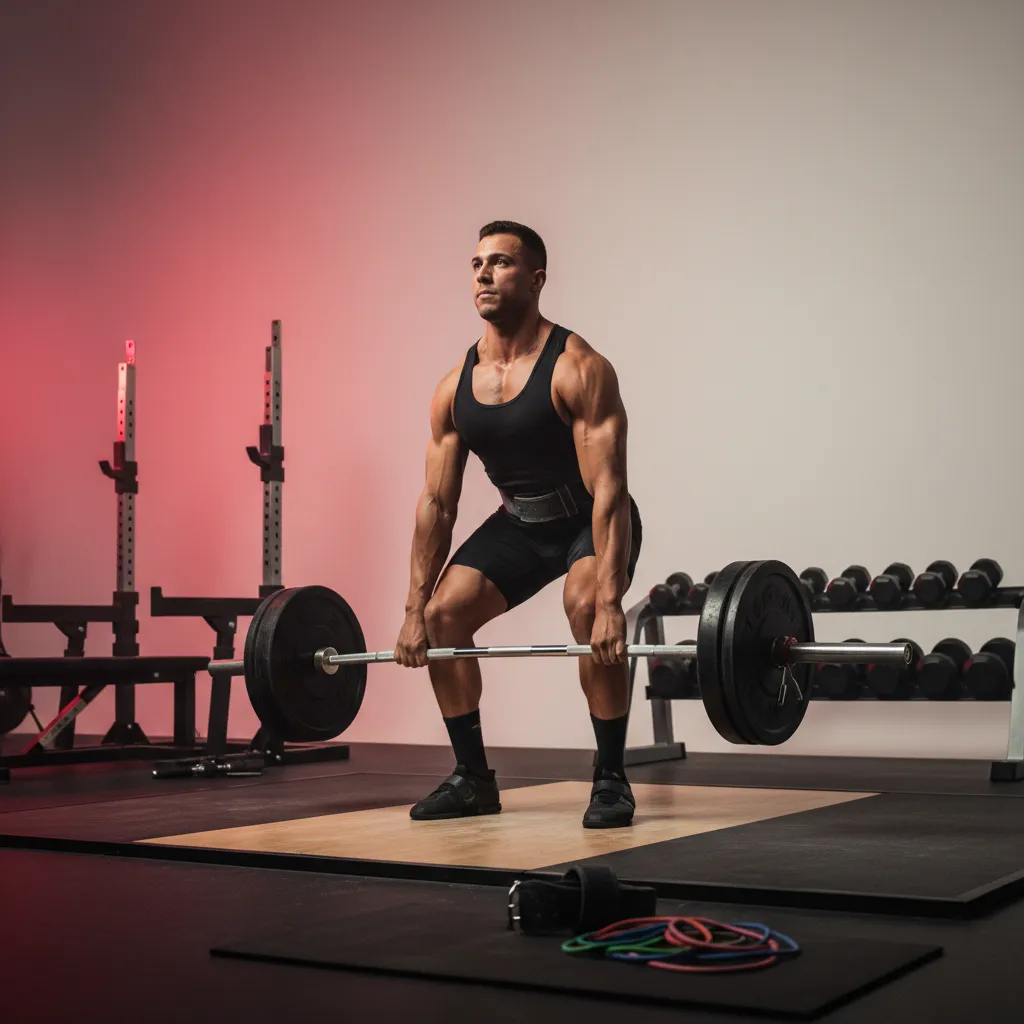
güç ve patlayıcı kuvvet — 1RM, periyodizasyon, temel egzersizler, sinirsel adaptasyon
Powerlifting is a strength sport focused on achieving the maximum weight for one repetition in three main movements: squat, bench press, and deadlift.
Defining Strength: Maximal Strength (1RM) vs. Strength Endurance
💬 Simply put: Powerlifting is a strength sport that aims to lift the maximum weight only once on the squat, bench press, and deadlift, showcasing pure maximal strength.
📖 Powerlifting
A strength sport focused on achieving the maximum weight for one repetition in the squat, bench press, and deadlift. It is a pure demonstration of maximal strength, measured by 1RM.
In the context of strength training, the term "strength" is often used too generally. From a clinical and sports science perspective, it is crucial to distinguish between two main types: maximal strength and strength endurance. Maximal strength, measured by the one-repetition maximum (1RM - one-rep max), represents the highest neuromuscular effort an athlete can generate for a single movement. This is the pinnacle – a pure, explosive demonstration of the central nervous system's (CNS) capacity to activate a maximum number of motor units simultaneously and at high frequency. 1RM is the gold standard in powerlifting.
Strength endurance, on the other hand, is the ability to overcome submaximal resistance for a prolonged period or for multiple reps. Here, we are talking about sets of 8, 12, 15 or more repetitions with a weight that is typically between 40% and 70% of 1RM. While maximal strength depends primarily on neural efficiency and fast-twitch muscle fibers (Type IIb), strength endurance engages metabolic processes in the muscle to a greater extent – glycogen stores and the ability to cope with lactate buildup. I often see in my practice athletes who can do 30 push-ups but cannot bench press more than 70 kg because they only train one aspect of strength.
In my opinion, beginners should first focus on building basic strength endurance and technique with lighter weights (e.g., 3 sets of 8-10 reps) before systematically working on increasing their 1RM. Pursuing maximal weights too early without a built-up muscle foundation and motor control is a recipe for plateaus and potential injuries. For example, if an 80 kg man can squat 90 kg for 10 reps, his theoretical 1RM is around 120 kg. Another man of the same weight can squat 130 kg for 1 rep but fails at 90 kg for more than 4-5 reps. The first has better strength endurance, the second – higher maximal strength.
The Big Three: Technique and Biomechanics of Squat, Bench Press, and Deadlift
✅ Advantages
- Building maximal strength and muscle mass
- Improving bone density and strength
- Developing discipline and consistency in training
- Opportunity for competitive development and progression
⚠️ Disadvantages
- High risk of injury with improper technique
- Requires strict adherence to training regimen and recovery
- Need to build basic strength endurance before pursuing 1RM
- Rapid overload leads to plateaus or injuries
Success in powerlifting is based on the perfect execution of the three main movements. Technique is not just a matter of "right" or "wrong," but of biomechanical efficiency and safety. In the squat (squat (squat)), key elements include the bar position (high on the traps for a more upright torso or low on the rear deltoids for greater posterior chain involvement), stance width, and depth. A competitive squat requires the hip joint to descend below the knee level. I often see athletes initiating the movement with their knees instead of their hips (hip hinge), which unnecessarily loads the knee joints and limits strength. A proper squat starts with simultaneous flexion at the hips and knees, maintaining a neutral spine. Maintaining full-body tension (bracing) is absolutely essential.
In the bench press (bench press (bench press)), the most common mistake is positioning the elbows at a 90-degree angle to the torso. This places the shoulder joint in an extremely vulnerable position (internal rotation and abduction). In my opinion, the optimal trajectory involves tucking the elbows to about 45-75 degrees, which allows for greater triceps involvement and protects the shoulders. Grip width should be such that in the bottom position, the forearms are perpendicular to the floor. Another key, but often overlooked, aspect is "leg drive" – the active use of the legs to create stability and generate force "from the ground up." A slight arch in the back is not cheating, but a technique that shortens the range of motion and places the shoulders in a safer position.
The deadlift (deadlift (deadlift)) is perhaps the most complex of the three movements. We distinguish two main styles: conventional (feet shoulder-width apart, hands outside) and sumo (wide stance, hands between the legs). The choice depends on individual anthropometry – athletes with longer torsos and shorter arms often prefer sumo. Regardless of style, the fundamental principles are the same: the movement is a hip hinge, not a squat. The back must remain neutral at all times, and the bar should travel as close to the body as possible, literally "scraping" the shins and thighs. I often see people "squatting" the weight or allowing their lower back to round, which is the fastest route to a herniated disc. The starting position is critical – the shoulders should be over or slightly in front of the bar, and the hips higher than the knees but lower than the shoulders.
The Principle of Progressive Overload in Strength Training
The body only adapts to stressors that challenge it. In strength training, this stressor is the load. The principle of progressive overload states that to continue getting stronger and bigger, you must systematically increase the stimulus you apply to your muscles. This is the most fundamental law in weight training. The most obvious way to apply it is by increasing the working weight. If this week you squat 100 kg for 5 reps, next week you might aim for 102.5 kg for 5 reps. These small, consistent steps add up to huge results over time.
However, overload is not limited to the weight on the bar. There are other variables we can manipulate. Increasing volume is another powerful stimulus. This could mean adding another rep to each set (from 3x5 to 3x6 with the same weight) or adding a whole new set (from 3x5 to 4x5). Increasing training frequency (e.g., squatting 3 times a week instead of 2) is also a form of progressive overload. A less commonly used but effective method is reducing rest time between sets. If you perform sets of 8 reps with 3 minutes of rest, try doing them with 2 minutes and 30 seconds. This increases metabolic stress and improves work capacity.
I often see trainees make one of two cardinal mistakes. The first is the lack of any overload – they use the same weights, sets, and reps for months and wonder why they aren't progressing. The second, more dangerous mistake, is overly aggressive overload. This is the so-called "ego lifting," where 5-10 kg are added to a lift every week. This is unsustainable. Initially, there is progress, but it is quickly followed by a breakdown in technique, overtraining, and injuries. In my opinion, the most sustainable approach is to focus on improving one variable at a time. For example, in a 4-week block, you might aim to increase the weight, and in the next, to increase the volume with slightly reduced weight.
⚠️ Common Mistakes
- Ego lifting: Sacrificing proper technique and full range of motion just to lift more weight. This increases the risk of injury and reduces the effectiveness of the training stimulus.
- Program hopping: Changing the training program every 1-2 weeks without giving the body time to adapt to the stimulus. Consistency is key to accumulating results.
- Neglecting warm-up and mobility: Directly starting with heavy sets without adequate dynamic warm-up and mobility work for key joints (hips, shoulders, ankles) is a sure prerequisite for injuries.
- Inadequate recovery: Neglecting sleep (under 7-8 hours per night) and nutrition (insufficient calorie intake and protein). Strength is built during rest, not in the gym.
The Nervous System and Strength Adaptation: Why You Get Stronger Before You Get Bigger
One of the most frequently asked questions by beginners is: "Why does my strength increase so quickly at the beginning, but my muscles don't?". The answer lies in the central nervous system (CNS). In the first 4 to 8 weeks of a strength program, most of the strength gains (up to 70-80%) are due to neural adaptations, not muscle hypertrophy (increase in muscle fiber size). In practice, your brain learns to use the muscles you already have more efficiently. This process is fundamental and often underestimated.
Neural adaptation manifests in several ways. First, intermuscular coordination improves – the brain learns to better activate agonist muscles (those that perform the movement) while simultaneously relaxing antagonist muscles (those that oppose the movement). Second, and more importantly, intramuscular coordination improves. This involves two key things: increased motor unit activation (recruitment) and higher firing frequency of neural impulses (rate coding). A motor unit consists of a single motor neuron and all the muscle fibers it innervates. With training, the CNS learns to "turn on" more of these units, especially the larger ones that innervate powerful, fast-twitch fibers.
In my opinion, this is the most beautiful part of strength training, illustrating that strength is a skill, just like playing the piano. Every rep with good technique is practice that "cleans up" the signal from the brain to the muscles. That's why it's so important to train with focus and concentration. I often see people in the gym lifting mechanically while looking at their phones. They might achieve some hypertrophy, but they miss a huge part of their strength adaptation potential. Strength training is a neurological activity. For example, when you prepare for a heavy squat, the mental setup, visualization of the movement, and conscious bracing before descending are active CNS processes that directly impact the final result.
Programming Fundamentals: Periodization for Powerlifting
Following a structured program is what separates purposeful training from random "gym hopping." Periodization is the logical planning of the training process into cycles (blocks) to maximize progress, manage fatigue, and reach peak form at a specific time (e.g., a competition). Instead of doing the same thing week after week, you manipulate variables like intensity (% of 1RM) and volume (sets x reps) within different phases.
The most basic model is linear periodization. In this model, training volume gradually decreases while intensity increases. A classic example is a 12-week cycle: Weeks 1-4 are a hypertrophy phase (e.g., 3-4 sets of 8-12 reps with ~65-75% of 1RM), Weeks 5-8 are a strength phase (e.g., 4-5 sets of 4-6 reps with ~75-85% of 1RM), and Weeks 9-12 are a peaking phase (e.g., sets of 1-3 reps with 85-95%+ of 1RM). This model is very effective for beginners and intermediates because it is easy to follow and allows for clear progression.
For more advanced athletes, more complex models like block or undulating periodization are often used. Block periodization (popularized by methodologies like Westside Barbell) focuses on developing one specific quality in a given block (e.g., 4 weeks of hypertrophy, followed by 4 weeks of maximal strength, followed by 2 weeks of speed and power). Undulating periodization varies the stimulus at shorter intervals – weekly (Weekly Undulating Periodization - WUP) or even daily (Daily Undulating Periodization - DUP). For example, with DUP in one week, you might have a heavy strength day (Monday: 5 sets of 3 reps at 88% of 1RM), a volume/hypertrophy day (Wednesday: 4 sets of 10 reps at 70%), and a speed/power day (Friday: 6 sets of 2 reps at 75%, performed maximally explosively). This approach is excellent for managing fatigue and preventing adaptation resistance.
🔬 From Practice
I worked with a 28-year-old amateur powerlifter, "Ivan," who had been plateaued on his squat (140 kg) for 6 months. He followed a simple linear program and complained of constant fatigue and joint pain. After analyzing his training log, we found that the cumulative fatigue from high intensity at the end of his cycle was preventing him from recovering. We changed his approach to Daily Undulating Periodization (DUP). His squat program became: Day 1 (Strength): 5x4 @ ~85% 1RM; Day 2 (Power): 6x3 @ 70% 1RM focusing on speed; Day 3 (Hypertrophy): 3x10 @ 65% 1RM. This variation of stimulus within the week allowed for better fatigue management. The heavy day was followed by lighter, recovery days. Within 8 weeks, Ivan felt more refreshed and even managed to squat 150 kg for a clean rep, breaking his long-standing plateau.
RPE (Rate of Perceived Exertion) and RIR (Reps in Reserve): Tools for Auto-regulating Load
Programs based on percentages of 1RM are a great guide, but they have one major drawback: they don't account for your daily fluctuations in form. Poor sleep, work stress, inadequate nutrition – all affect your ability to generate force on a given day. This is where auto-regulation tools come in: Rate of Perceived Exertion (RPE) and Reps in Reserve (RIR). They allow you to adjust the weight for the day based on your current state.
RPE is a subjective scale from 1 to 10 that describes how difficult a given set was. RPE 10 means maximal effort, with no possibility of another rep. RPE 9 means you could have done one more rep. RPE 8 – two more, and so on. RIR is simply the flip side of the coin: RIR 1 means one rep in reserve (equivalent to RPE 9), RIR 2 means two reps in reserve (RPE 8). Instead of the program saying "Do 5 reps at 85% of 1RM," a smarter approach is for it to say "Do a set of 5 reps at RPE 8." On a day when you feel strong, this might be 87% of your max. On a day when you are tired, it might only be 82%. Either way, the training stimulus (effort) remains constant, which is more important for adaptation.
In my opinion, mastering RPE/RIR is a skill that every serious athlete should develop. It's difficult to judge accurately at first, but with practice, it becomes intuitive. Start by rating your last heavy sets of the day. After finishing, honestly ask yourself: "How many more reps could I have done with perfect technique?". I often see trainees blindly following percentages. Their program says 160 kg for a triple, they feel terrible, but they still try. The result is broken technique, a poor quality set, and a huge risk of injury. With auto-regulation, on such a day, they would reduce the weight to 152.5 kg to achieve the prescribed RPE 9, thus still getting a quality stimulus while managing fatigue and risk. This is the difference between intelligent training and simply lifting weights.
Assistance and Accessory Exercises: How to Build Muscle and Strengthen Weak Links
While the squat, bench press, and deadlift are at the heart of powerlifting, a program cannot consist solely of them. Assistance and accessory exercises play a critical role in long-term progress. It's important to distinguish between the two. Assistance exercises are variations of the main lifts aimed at strengthening a specific weak part of the movement. Examples include pause squats (for strength out of the hole), close-grip bench press (for triceps), or deficit deadlifts (for a stronger lockout off the floor).
Accessory exercises, on the other hand, are more general purpose. Their goal is to build muscle mass (hypertrophy) in key groups, correct muscle imbalances, and improve overall stability. This includes exercises like lunges, RDLs (Romanian deadlifts), barbell or dumbbell rows, dips, overhead presses, and core exercises. For example, if your back rounds at the bottom of the deadlift, it's a sign of a weak posterior chain and core muscles. Accessory work like good mornings, hip thrusts, and plank variations will directly address this problem.
In my opinion, the distribution of effort should follow the 80/20 rule. About 80% of your energy and focus should be directed towards perfecting and progressing in the main three lifts. The remaining 20% should be invested in smart, targeted assistance and accessory exercises. I often see the mistake of trainees overdoing accessory work, performing 5-6 back exercises after heavy deadlift sets. This leads to excessive fatigue that hinders recovery for the next heavy workout. Instead, choose 2 to 4 accessory exercises per workout that directly support your weak points. If your bench press lockout is a problem, instead of 5 types of bicep exercises, do 3-4 heavy sets of dips or triceps extensions. This is strategic thinking.
| Periodization Type | Main Principle | Suitable For | Advantages | Disadvantages |
|---|---|---|---|---|
| Linear | Volume decreases while intensity increases over long cycles (mesocycles). | Beginners and intermediates | Easy to program and follow; clear progression. | Can lead to loss of adaptations from previous phases; monotonous. |
| Block (Conjugate) | Focus on one dominant quality in separate blocks (e.g., hypertrophy, strength, power). | Advanced athletes | Allows concentrated development of specific qualities; high specificity. | Complex to program; higher risk of overtraining in concentrated blocks. |
| Undulating (DUP/WUP) | Frequent variation of volume and intensity (daily or weekly). | Intermediate and advanced | Better fatigue management; maintains various adaptations simultaneously; prevents plateaus. | Requires more planning and organization; can be confusing for beginners. |
| Reverse Linear | Intensity decreases while volume increases. | Off-season athletes; bodybuilders. | Good for building work capacity and hypertrophy. | Not optimal for peaking maximal strength (1RM). |
- How often should I test my 1RM (one-rep max)?
- True 1RM testing is extremely taxing on the nervous system and should be done rarely, typically no more than 1-2 times per year after the end of a peak training cycle. In daily training, it is much more practical to use 1RM derivatives (e1RM) calculated by calculators based on heavy sets of 3-5 reps. This gives a sufficiently good idea of your current strength without the risk and fatigue of a true max.
- Should I do cardio if my main goal is strength?
- Yes, but it should be intelligently integrated. Low to moderate intensity cardio (like incline brisk walking or stationary cycling) for 20-30 minutes, 2-3 times a week, can significantly improve recovery, cardiovascular health, and work capacity. High-intensity cardio should be avoided immediately before or after heavy strength training sessions, as it can interfere with strength adaptations (interference effect).
- Do belts, straps, and knee sleeves help or hurt?
- These are tools, not crutches. A weightlifting belt helps increase intra-abdominal pressure, which stabilizes the torso and allows for lifting heavier weights; it's recommended to use it only on the heaviest sets (above 85% of 1RM). Straps help when grip is the limiting factor, but they shouldn't replace working on grip strength. Knee sleeves provide compression and warmth, which can help with comfort during squats, but they shouldn't be relied upon to compensate for poor technique.
- What is the main difference between powerlifting and bodybuilding?
- Although both disciplines use weight training, their goals are fundamentally different, dictating the methodology. Powerlifting is a performance sport whose sole goal is to lift maximal weight (strength). Bodybuilding is an aesthetic sport whose goal is to build maximal muscle mass, symmetry, and definition (hypertrophy). Powerlifters train with fewer reps and higher intensity, while bodybuilders often use higher volume and moderate intensity.
🎯 Remember: To get stronger and bigger, you must systematically increase the training stimulus through progressive overload, but always with proper technique and adequate recovery.
See more in the fitness guides of Sport Zona Academy.
🔬 Expert Note from Sport Zona
Having worked with Bulgarian athletes for over 12 years, I've noticed that the key to success in powerlifting is the lifting itself, as well as quality recovery. We often underestimate the importance of sleep and proper nutrition, which are just as crucial as the workouts. Pay attention to these aspects if you want long-term progress.
See more in the fitness guides of Sport Zona Academy.
Önerilen ürünler



Sıkça sorulan sorular
Maksimum güç ve kuvvet dayanıklılığı arasındaki temel fark nedir?
Maksimum güç (1RM), sinir sistemine güvenerek tek bir seferde kaldırabileceğiniz en büyük ağırlıktır. Kuvvet dayanıklılığı, kaslara daha fazla güvenerek daha hafif ağırlıklarla daha fazla tekrar yapabilme yeteneğidir.
Yeni başlayanlar için hangisi daha önemlidir - maksimum güç mü yoksa kuvvet dayanıklılığı mı?
Yeni başlayanlar için, daha hafif ağırlıklarla kuvvet dayanıklılığı oluşturmaya ve tekniği geliştirmeye odaklanmak daha iyidir. Bu, maksimum ağırlıkların peşinden gitmeden önce iyi bir temel oluşturur.
Çömelme hareketini yaparken yapılan temel hatalar nelerdir?
Yaygın bir hata, kalçalar yerine dizlerle harekete başlamaktır, bu da dizleri aşırı yükler. Omurganın nötr pozisyonunu ve tüm vücutta doğru gerilimi (bracing) korumak önemlidir.
Bench press yaparken dirseklerin doğru pozisyonu nedir?
Vücuda göre 90 derecenin altında dirsek pozisyonundan kaçının. Omuzları korumak ve tricepsleri daha iyi aktive etmek için dirseklerin 45 ila 75 derece arasında bir açıyla vücuda yakın olması optimaldir.