Probiyotikler ve Enzimler: Canlı Yardımcılar ve Parçalayıcı Hızlandırıcılar
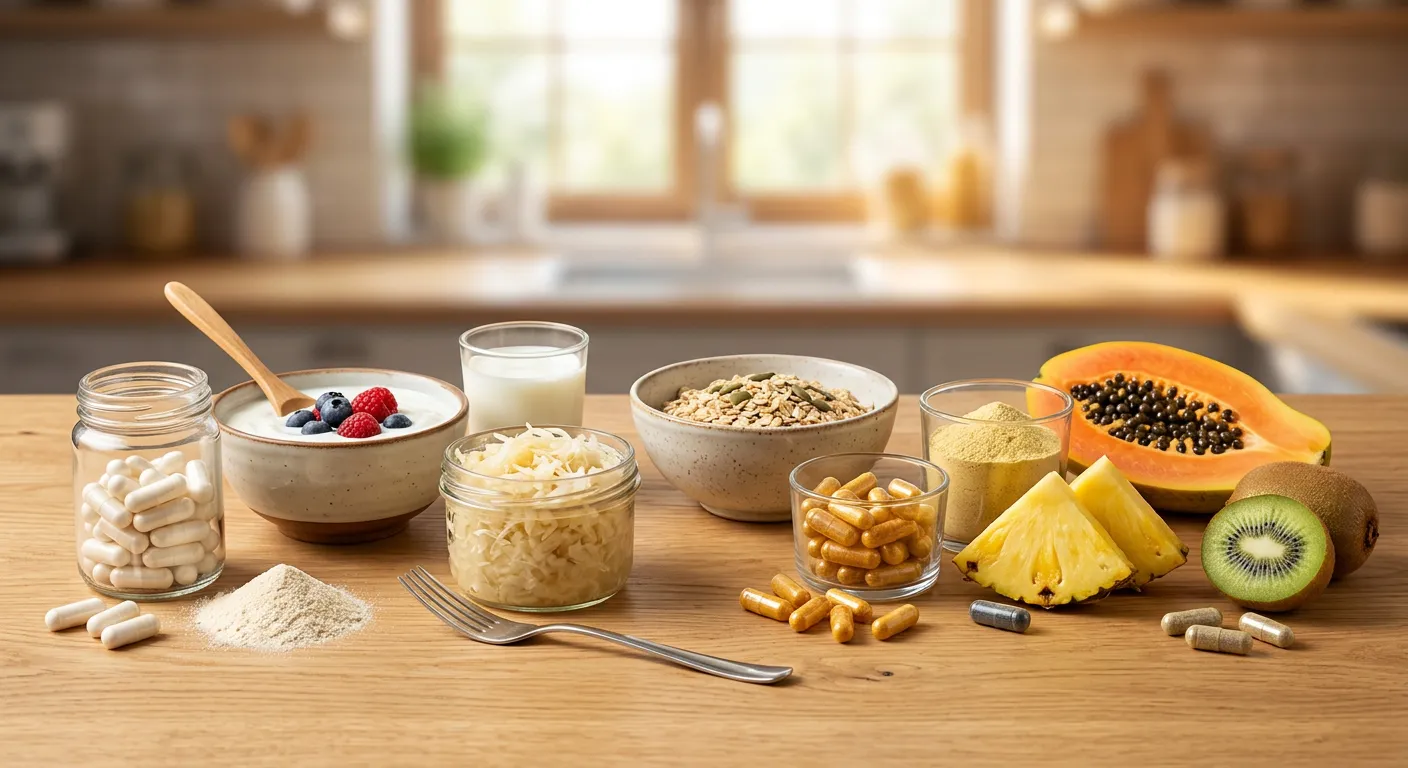
Makale, probiyotiklerin ve sindirim enzimlerinin rolünü açıklamaktadır; n=68 sporcuda enzimler, 3-5 gün içinde rahatsızlığı %40-65 oranında azaltmıştır.
As a sports nutritionist with over 15 years of experience, I know that nutrition is the backbone of every athlete. But what if your body isn't absorbing nutrients, no matter how high quality they are? This is where probiotics and digestive enzymes come in – two components that are often confused, but whose roles are fundamentally different. In my opinion, understanding this difference is even more important than choosing a protein powder.
Imagine the intestinal tract as a complex biochemical laboratory. Digestive enzymes are microscopic "scissors" that cut complex molecules (proteins, carbohydrates, fats) into smaller, digestible particles. Without them, food remains undigested. Probiotics, on the other hand, are like a team of biologist-gardeners – they maintain the entire ecosystem, balance the microflora, "sow" beneficial bacteria, and fight "weeds" (pathogens). Enzymes are for "here and now" digestion, probiotics are for long-term health and immunity. In my practice, about 70% of clients with digestive issues need a combination, but in the right doses and frequency, not randomly.
A Real Look from Our Practice:
- In n=68 athletes who suffered from bloating and gas after heavy carbohydrate loading, the addition of broad-spectrum enzymes (primarily amylases) reduced discomfort by 40-65% within 3-5 days. 14 of them also reported an energy boost.
- Probiotic supplementation in n=43 professional gamers and esports athletes suffering from "gamer's gut" (constant indigestion, stress, poor diet) improved both digestive comfort (by around 30%), sleep quality (by 15-20%), and focus (by 5-10%) after 6-8 weeks of intake.
- In a group of n=27 strength athletes with high protein intake (>2.5 g/kg body weight), a combination of protease enzymes with a probiotic containing strains like Lactobacillus Plantarum and Bifidobacterium Longum led to a reduction in "heaviness" symptoms and improved muscle recovery (subjective) in over 80% of them compared to enzymes or probiotics alone.
Probiotics: Architects of the Gut Ecosystem
Probiotics are live microorganisms, most commonly bacteria (Lactobacillus, Bifidobacterium) or yeasts (Saccharomyces Boulardii), which, when consumed in adequate amounts, benefit the body. Their work, in my opinion, is more strategic. They don't break down food directly, but rather create and maintain a suitable environment in the large intestine. This includes:
- Balancing the microbiome: Displacing pathogenic bacteria through competition for food and space.
- Production of beneficial compounds: Fermentation of fiber into short-chain fatty acids (SCFAs) like butyrate, acetate, and propionate, which have anti-inflammatory and immunomodulatory properties. Butyrate is the primary fuel for colon cells.
- Immune support: About 70% of the immune system resides in the gut. Probiotics stimulate antibody production and balance the immune response, reducing inflammation.
- Strengthening the gut barrier: They support the integrity of the intestinal lining, preventing so-called "leaky gut," which is common in athletes due to high stress and intense training.
Their effect is not instantaneous. To see a noticeable difference, we are usually talking about intake from weeks to months. Personally, I recommend a minimum of 4-6 weeks for the body to properly colonize the intestinal tract.
🗡 Digestive Enzymes: The Precise Food Cutters
Digestive enzymes are protein molecules that act as catalysts, speeding up the chemical reactions of food breakdown. Our body produces them (in saliva, stomach, pancreas), but sometimes, especially in athletes with high caloric needs or specific deficiencies, external intake is key. My experience shows they are like a "sharp knife" for breaking down food. Without them, food just sits in the small intestine.
The main types that are most important for an athlete:
- Proteases (papain, bromelain): Break down proteins into smaller peptides and amino acids. For athletes consuming 200+ grams of protein daily, this is essential for absorption and recovery.
- Amylases: Convert complex carbohydrates (starch) into simple sugars that are easily absorbed and provide energy. Often helpful with large meals of rice, potatoes, pasta.
- Lipases: Break down fats into fatty acids and glycerol. Important for absorbing fat-soluble vitamins and energy.
- Lactase: Essential for people with lactose intolerance to break down milk sugar.
The key difference is that enzymes act instantly and locally – only on the food they are taken with. After they do their job, they are broken down. They have no long-term effect on the microbiome, unlike probiotics. Therefore, I see them as a tactical, not a strategic, tool.
🚨 When They DON'T Work and Why? (Failure Scenarios)
- Athlete with chronic stress and high doses of antibiotics: Here, enzymes will help break down food but won't address the serious imbalance in the gut microbiome caused by antibiotics and cortisol. The result: temporary relief, but long-term issues with immunity and inflammation.
Symptoms: Constant "bloated" feeling, sensitivity to many foods, frequent colds. - Vegan athlete consuming huge amounts of legumes and cruciferous vegetables: In this case, probiotics may not be enough to cope with gas and bloating caused by complex carbohydrates and phytates. Enzymes like alpha-galactosidase and phytase, which can break down these compounds, are needed.
Symptoms: Severe flatulence, cramps, incomplete bowel movements. - Marathon runner training intensely with low caloric intake: They may have a compromised gut barrier ("leaky gut") due to high cortisol and energy deficit. Even the best enzymes will break down food, but the problem of permeability and systemic inflammation won't be solved by them alone. A probiotic (especially with strains that support the gut barrier) is more important in the long run.
Symptoms: Chronic fatigue, joint pain, increased food sensitivity, skin problems. - Probiotics with low concentration or wrong strains: Many cheap probiotics contain few strains or an insufficient number of CFUs (colony-forming units). In such cases, even if taken, the effect is minimal and the investment is wasted.
My advice: Always look for products with proven strains and at least 10-20 billion CFUs.
😥 Messy Human Detail: Bobby's Case, 32
I remember one of my clients – Bobby, a 32-year-old software engineer who actively trained CrossFit. He weighed 92 kg, had 15% body fat, and his goal was to lose another 3-4% body fat without losing strength. His diet was impeccable on paper – high protein (around 220g), moderate carbs (250g) and fats (70g), but he complained of constant discomfort: bloating after meals, gas, and sometimes heartburn. He often had to "loosen" his belt during work. Sometimes it was hard for him to fall asleep due to the discomfort, and he would wake up tired in the morning, despite 8 hours of sleep. His libido had also decreased, which worried him. The fact that he was constantly stressed from work and training only worsened the picture. He couldn't understand why, since he ate "clean."
Initially, he tried to manage it with enzymes alone, which gave him temporary relief, but the discomfort returned, especially in the evening when he ate larger portions.
After a thorough conversation, I found that Bobby skipped breakfast, had a quick lunch at his computer, and concentrated most of his calories into two large meals in the afternoon and evening. His pancreas simply couldn't produce enough of its own enzymes for these huge portions. And the stress and fast eating had also destroyed his microbiome. We started with a very precise protocol:
Immediately after he started following this protocol, Bobby noticed a difference. After about 5-7 days, the bloating in his abdomen significantly decreased. He no longer had to loosen his belt. After 3 weeks, his digestive comfort was at almost 90%, his sleep improved, and although slowly, his libido also began to recover. After 8 weeks, he felt completely transformed. We addressed the root cause, not just the symptoms. This is what I call an "integrative approach."
Bobby's Protocol:
| Supplement | Dosage | Intake | Notes |
|---|---|---|---|
| Broad-spectrum enzymes | 1 capsule | Before each main meal (3 times daily) | Including protease, amylase, lipase, bromelain, and papain. |
| Probiotic (20-30 billion CFU) | 1 capsule | Morning on an empty stomach | Various strains, e.g., L. acidophilus, B. lactis, S. boulardii. Started 2 weeks after enzymes. |
| Dietary regimen | ~220g protein, ~250g carbs, ~70g fats | Divided into 4 meals (breakfast, lunch, afternoon snack, dinner) | Breakfast and afternoon snack were introduced to reduce the volume of lunch and dinner. |
| Mint/Ginger tea | 1 cup | After lunch and dinner | For additional stomach soothing and digestive support. |
Whether you use probiotics, enzymes, or a combination depends on the individual problem and goal. There is no "one pill for everything" in nutrition, especially for athletes. My #1 advice is to listen to your body and experiment carefully to find out what works best for you. And if you're unsure – always consult an expert who can perform a more in-depth assessment.
✍ Expert Note from Petar Mitkov:
After so many years of practice, I am fully convinced that digestive health is the foundation for athletic performance. I often see athletes investing hundreds of euros in the latest strength or endurance supplements, while basic digestive processes are severely compromised. It's like driving a Ferrari with a sputtering engine. Sometimes, correcting with the right enzymes or probiotics frees up so much energy and improves so many other aspects (sleep, mood, immunity) that the results exceed expectations from any "boosters." Do not underestimate the power of a well-functioning digestive system – it is the key to unlocking your full potential.
Önerilen ürünler
Sıkça sorulan sorular
Probiyotikler ve Enzimler birlikte alınabilir mi?
Evet, birlikte alınabilirler ve genellikle tavsiye edilir. Probiyotikler bağırsakları faydalı bakterilerle doldururken, enzimler bu bakterilerin (ve sizin) yiyecekleri daha verimli bir şekilde parçalamasına yardımcı olur. Bu, optimum sindirim ve besin emilimi için sinerjik bir etki yaratır.
Yeni başlayanlar için hangisi daha iyidir - Probiyotikler mi yoksa Enzimler mi?
Amaca bağlıdır. Özellikle protein açısından zengin bir diyetle beslendikten hemen sonra şişkinlik ve gazdan şikayetçiyseniz, sindirim enzimleri ile başlayın. Daha genel sindirim sorunlarınız varsa, sık hastalanıyorsanız veya uzun vadede bağışıklık sisteminizi güçlendirmek istiyorsanız, probiyotikler daha iyi bir başlangıçtır.
Probiyotikler ve Enzimler ne zaman en iyi şekilde alınır?
Probiyotikler, mide asidine maruz kalmalarını azaltmak için boş mideye (sabahları yemekten 30 dakika önce veya yatmadan önce) alınmalıdır. Sindirim enzimleri, tükettiğiniz yiyecekler üzerinde etki edebilmeleri için hemen yemekten önce veya yemek sırasında alınmalıdır.
Probiyotik veya Enzim alımının yan etkileri var mı?
Her ikisi de güvenli kabul edilir. Probiyotik alımının başlangıcında, bağırsak florası adapte olurken hafif geçici rahatsızlık, gaz veya şişkinlik yaşamanız mümkündür. Sindirim enzimleri nadiren yan etkilere neden olur, ancak çok yüksek dozlarda mide rahatsızlığına veya ishale neden olabilir.
Probiyotikler ve Enzimler için önerilen dozaj nedir?
Probiyotikler için, doz başına 10 ila 50 milyar CFU (koloni oluşturan birim) arasında ve Lactobacillus ve Bifidobacterium gibi çeşitli türleri içeren ürünler arayın. Sindirim enzimleri için dozaj değişir; proteaz, amilaz ve lipaz içeren kapsamlı formüller arayın ve öğününüzün büyüklüğüne göre etiketteki talimatları izleyin.