Whey isolate vs. casein: absorption, timing, and when to use which
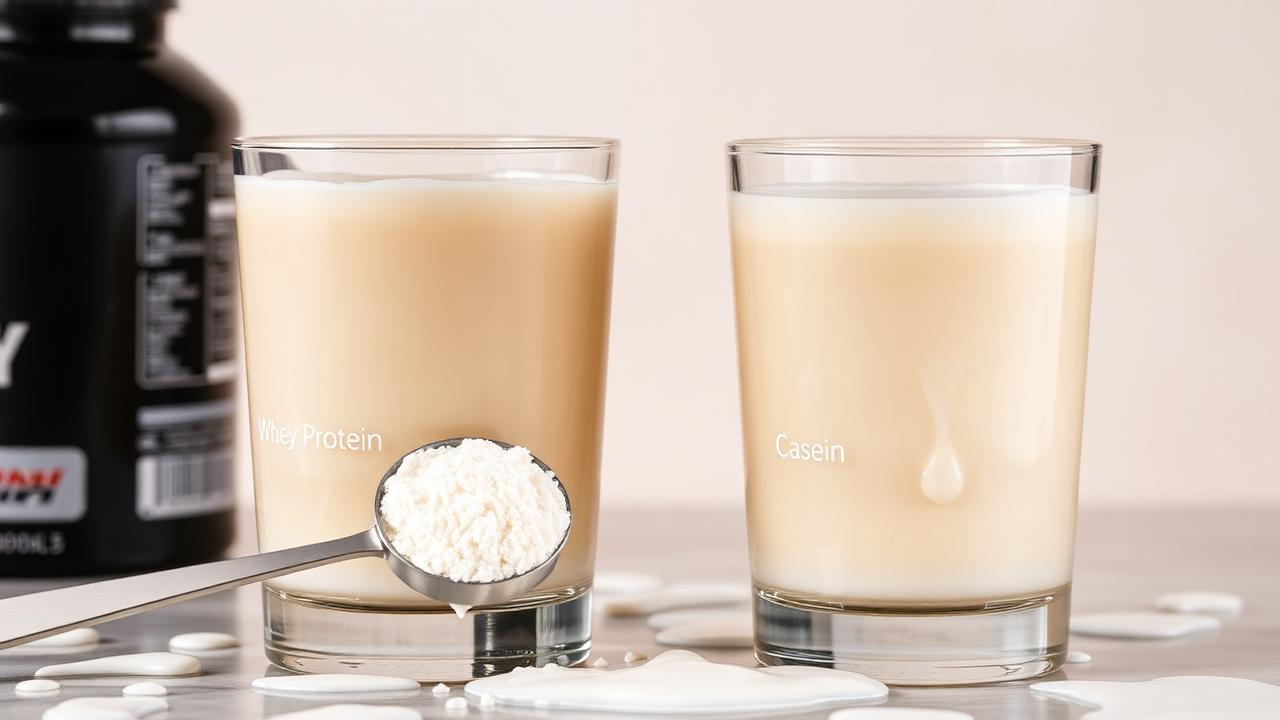
Hızlı whey izolatını ne zaman seçeceğinizi ve yavaş kazeini ne zaman seçeceğinizi anlayın. Maksimum sonuçlar için emilim, zamanlama ve pratik uygulama analizi.
Hello, my name is Petar Mitkov and I have been working side-by-side with strength and endurance athletes in Bulgaria for 12 years. Every day in my practice, I answer the same question, which seems simple but hides many nuances: "What protein should I drink?". And almost immediately after it comes the continuation: "Isolate or casein? Does it even matter?".
My answer is categorical: Yes, it matters a lot. The difference between whey isolate and micellar casein is not just in marketing or taste. It is fundamental, biochemical, and directly affects recovery, muscle growth, and athletic performance. Thinking of them as interchangeable is one of the biggest mistakes I see beginners and even advanced athletes make. It's like using a sprinter for a marathon and vice versa – in both cases, the result will be far from optimal.
In this article for SportZone Academy, we will break down the topic to the basics. We will go into details, with numbers and real examples from my practice. We will analyze absorption speed, amino acid profile, effect on muscle protein synthesis (MPS), and most importantly – I will give you a clear and practical framework on when, why, and how to use each of them to get the most out of your workouts. Forget generalities. It's time for specifics.
What is Whey Protein Isolate? The fast sprinter for your muscles
Whey protein is a byproduct of cheese production. When milk curdles, it separates into two fractions: solid (curds, from which casein is made) and liquid (whey). This liquid whey is the starting material. To turn it into "isolate," it undergoes a fine filtration process, most often cross-flow microfiltration.
This process is key because it mechanically "isolates" the protein molecules from almost everything else – lactose, fats, carbohydrates, and ash. The result is an extremely pure product:
- High protein content: Usually over 90% by weight. A 25-30 gram serving delivers about 23-27 grams of pure protein.
- Low lactose content: Often under 1 gram per serving, making it suitable for most people with lactose intolerance.
- Minimal fat and carbohydrates: Usually under 1 gram of each.
However, the most important characteristic of isolate is its absorption speed. Due to its simple structure and lack of other macronutrients that slow down digestion, it is absorbed extremely quickly. In practice, this means that the peak of amino acids in the blood (especially the key amino acid for muscle growth – leucine) is reached on average between 60 and 90 minutes after intake. This rapid and powerful surge of leucine is the strongest known stimulus for activating the process called muscle protein synthesis (MPS). A standard dose of 25 grams of quality isolate will provide you with about 2.5-3 grams of leucine – exactly in the gold standard for maximum MPS stimulation after training.
Imagine it as an injection of fuel for your muscles right after you've exhausted them with a tough workout. Your body is in a catabolic (breaking down) state and urgently needs building blocks. Isolate delivers them almost instantly, switching the metabolic switch from breakdown to building (anabolism).
What is Micellar Casein? The marathon runner that feeds muscles for hours
If isolate is the sprinter, then casein is the marathon runner. It makes up about 80% of the protein in cow's milk, and its natural role is to provide a slow and sustained release of amino acids to a nursing calf. This function is preserved when we consume it as a dietary supplement.
The keyword here is "micellar". This means that the protein is in its natural form – spherical structures called micelles. When these micelles enter the acidic environment of the stomach, they "thicken" and form something like a gel or a cheese-like mass. This gel is broken down very slowly by digestive enzymes.
This mechanism leads to a fundamentally different absorption kinetics compared to isolate:
- Slow and sustained release: Instead of a sharp peak, casein provides a smooth and constant rise in amino acids in the blood, which lasts between 4 and 7 hours.
- Amino acid peak: It is reached much later, usually around 3-4 hours after intake, with a lower level than with isolate, but it is maintained for much longer.
- Strong anti-catabolic effect: Casein's main strength is not in powerfully stimulating MPS (as with isolate), but in suppressing muscle protein breakdown (MPB). By providing a constant influx of amino acids for hours, it protects muscle tissue from breakdown, especially during long periods without food, such as overnight sleep.
This makes it the ideal protein to take before bed. During sleep, the body does not receive nutrients for 7-9 hours – a perfect environment for catabolism. A dose of casein before bed acts as a "night shift," slowly feeding the muscles and maintaining a positive nitrogen balance while you recover.
💬 Simply put
Imagine you are building a house (muscle). Whey isolate is like a truck that dumps a huge amount of bricks (amino acids) at once – perfect for starting construction immediately after work. Casein, on the other hand, is like a conveyor belt that delivers bricks slowly and evenly throughout the night so that the work doesn't stop.
Absorption Speed and Effect on Muscle Growth: A Direct Clash
The biggest difference that determines when to use one or the other is the absorption speed. Let's visualize it:
- Whey Isolate: Intake leads to a rapid and high surge of amino acids in the plasma. Maximum concentration is reached in about 60-90 minutes. This triggers a powerful signal for muscle protein synthesis (MPS). However, the effect is short-lived. After about 2-3 hours, amino acid levels return to baseline. Conclusion: Maximum anabolic stimulus, but for a short time.
- Micellar Casein: Intake leads to a slow and moderate rise in amino acids, which plateaus for up to 7 hours. This does not trigger as strong an MPS signal as isolate, but significantly reduces muscle protein breakdown (MPB) for a long period. Conclusion: Moderate anabolic stimulus, but a powerful and sustained anti-catabolic effect.
In terms of net protein balance (MPS minus MPB), both proteins are effective, but at different times and with different mechanisms. It is a mistake to say that one is "better." They are simply different tools for different tasks. Using isolate before bed is ineffective because after 2 hours the "fuel" runs out and your muscles are left "hungry" for the rest of the night. Conversely, taking casein immediately after training is not optimal because it will not deliver amino acids fast enough to take advantage of the increased muscle sensitivity at that moment.
From My Practice: The Effect of Nighttime Casein on Recovery
A few years ago, I conducted a small experiment with a group of n=18 CrossFit and triathlon competitors who complained of severe muscle soreness and fatigue in the morning. I divided them into two groups for a period of 4 weeks. Both groups followed a similar training regimen and diet plan during the day.
- Group A (9 athletes): Took 30 grams of micellar casein dissolved in water 30 minutes before bed.
- Group B (9 athletes): Took a placebo (flavored corn maltodextrin with the same calories) at the same time.
The results were telling. At the end of the 4th week, 14 out of 18 athletes (78%) could unerringly tell which group they were in, just by their feeling of recovery. In the casein group, 8 out of 9 athletes (89%) reported significantly reduced morning muscle soreness (average drop from 7/10 to 4/10 on a subjective scale) and a better feeling of "freshness." This is not a rigorous scientific study, but in the real world of sports, when 9 out of 10 people tell you they wake up feeling better, it means something is working.
Timing and Application: When to Choose Isolate and When Casein?
Here comes the most practical part. Here's when to reach for one or the other.
When to choose Whey Isolate? (The quick choice)
- Immediately after training (0-60 minutes): This is its #1 application. Muscles are highly receptive to nutrients. The rapid surge of amino acids and leucine from isolate maximally stimulates muscle protein synthesis and initiates recovery. My advice is a dose of 25-30g of isolate with 30-50g of fast carbohydrates (dextrose, maltodextrin) for optimal effect.
- Before training (30-45 minutes): If you haven't eaten for 3-4 hours before training, a light dose of isolate (20-25g) with water can provide amino acids for energy and prevent catabolism during the workout without burdening the stomach.
- Between meals: If you have a long gap (over 4-5 hours) between main meals and want a quick source of protein that doesn't fill you up too much, isolate is a good option.
When to choose Micellar Casein? (The slow choice)
- Before bed (30 minutes before sleep): The classic. A dose of 30-40 grams of casein provides a slow release of amino acids throughout the night, fights catabolism, and aids recovery while you sleep.
- As a meal replacement: When you know you won't have the opportunity to eat for the next 4-5 hours, a shake with casein, added fiber (psyllium husk), and healthy fats (almond butter) can be an excellent, satiating, and slowly absorbed meal replacement.
- During long fasting periods: For people who practice intermittent fasting, casein can be a suitable protein for the last meal before starting the fast.
Comparison Table: Isolate vs. Casein
| Characteristic | Whey Isolate | Micellar Casein |
|---|---|---|
| Absorption Speed | Fast (60-90 min peak) | Slow (4-7 hours) |
| Main Effect | Strongly anabolic (stimulates MPS) | Strongly anti-catabolic (suppresses MPB) |
| Best Timing | Immediately after training | Before bed / long breaks |
| Leucine Content | High (approx. 11-12%) | Moderate (approx. 8-9%) |
| Lactose Content | Very low (<1g/serving) | Low to moderate (varies) |
| Price per gram of protein | Higher | Lower |
| Stomach Feel | Light, not filling | Dense, filling |
When it DOESN'T work / Common Mistakes (Failure Scenarios)
Even the best tool, used incorrectly, will not yield results. Here are a few scenarios I see constantly in my practice:
- Mistake #1: Taking casein immediately after training. The athlete heard they should drink protein after training but bought casein because it's cheaper or they just didn't know the difference. Instead of getting a rapid influx of amino acids, they burden their stomach with slow-digesting protein. As a result, the anabolic window is not optimally utilized, and on top of that, they might feel heavy and bloated, which kills their appetite for the important post-workout meal 1-2 hours later.
- Mistake #2: Relying only on isolate throughout the day with long gaps between meals. Some people become obsessed with "fast" protein. They drink isolate in the morning, then train, drink isolate again, but their next meal is only in the evening. Yes, they get two powerful anabolic stimuli, but between them, there is a long 6-7 hour period when amino acid levels are low and the body can enter a catabolic state. Here, a casein shake or a normal meal would be much more adequate.
- Mistake #3: Using whey concentrate instead of casein before bed. The athlete thinks: "Protein is protein." And takes whey concentrate (not isolate) before sleep. It is indeed absorbed a bit slower than isolate due to its higher fat and lactose content, but its effect is still depleted after 3-4 hours. For the remaining 4-5 hours of sleep, the body is without "protection." It's better than nothing, but far from the optimum that micellar casein offers.
Messy Human Detail: Digestion and Bloating
Everything said so far is science, but reality is sometimes... messy. Honestly, a large percentage of problems with protein powders come from digestion. Although isolate has a negligible amount of lactose, I have seen athletes with extremely sensitive stomachs who get gas and bloating even from it. In 9 out of 10 such cases, the problem is not with the protein, but with the nonsense added to it – artificial sweeteners like aspartame, acesulfame-K, or sucralose, as well as thickeners (gums) that can irritate the intestines.
With casein, things are a bit different. The main "complaint" I hear with it is the feeling of heaviness. This is absolutely normal and is part of its mechanism of action – after all, it forms a gel in the stomach. However, some people describe it as an unpleasant sensation, especially if they take it too close to bedtime. My advice is to drink it with more water (at least 350-400 ml) and at least 30-45 minutes before going to bed to give your stomach time to "settle." If you still feel discomfort, reduce the dose from 30-40g to 20-25g.
📚 Scientific Sources
- Boirie, Y., Dangin, M., Gachon, P., Vasson, M. P., Maubois, J. L., & Beaufrère, B. (1997). Slow and fast dietary proteins differently modulate postprandial protein accretion. Proceedings of the National Academy of Sciences of the United States of America, 94(26), 14930–14935. https://www.pnas.org/doi/10.1073/pnas.94.26.14930 (This is the foundational study that first defined the concept of "fast" and "slow" proteins).
- Kerksick, C. M., Arent, S., Schoenfeld, B. J., et al. (2017). International society of sports nutrition position stand: nutrient timing. Journal of the International Society of Sports Nutrition, 14, 33. https://jissn.biomedcentral.com/articles/10.1186/s12970-017-0189-4 (The JISSN position stand, which summarizes the scientific evidence for nutrient timing, including protein).
🔬 Expert Note from Sport Zona
I work with athletes who count every gram and every minute. For them, the difference between isolate and casein is huge. But let me be completely honest: if you are an amateur who trains 3 times a week and hasn't yet sorted out your basic meals and sleep, don't obsess over this. First, make sure you are getting enough total protein per day (1.6-2.2 g/kg body weight). That's 80% of the success. If I had to choose only one protein to start with, my #1 choice is always whey isolate after training. This is the most critical moment, and the return on investment is greatest there. Once that habit is established, then add casein before bed as the next step in optimizing your recovery. Don't do everything at once. Build upon it.
Önerilen ürünler
Sıkça sorulan sorular
İzole peynir altı suyu proteini ve kazeini karıştırabilir miyim?
Kesinlikle. İzolat ve kazeini karıştırmak (örneğin %50:50 oranında) çok fazlı sindirime sahip bir protein karışımı oluşturur – izolatın ani amino asit patlamasını ve kazeinin sonraki yavaş salımını elde edersiniz. Bu, bir öğün yerine geçmek veya antrenmanınızdan sonra çok uzun bir aranız varsa harika bir seçenektir.
Kilo verme için hangi protein daha iyidir?
Her ikisi de yardımcı olabilir. Kazein, çok daha doyurucu olması ve yavaş sindirilmesi nedeniyle, özellikle akşamları iştah kontrolüne daha uzun süre yardımcı olabilmesi avantajına sahiptir. İzolat ise neredeyse hiç yağ ve karbonhidrat içermeyen saf protein sağlar. Kilo vermenin anahtarı kalori açığıdır ve yüksek protein alımı (türüne bakılmaksızın) kas kütlesinin korunmasına yardımcı olur.
İki protein türüne de sahip olmak zorunda mıyım?
Zorunlu değil ama ciddi antrenman yapan bir sporcu için idealdir. Sadece bir tanesini seçmeniz gerekiyorsa, seçim temel hedefinize bağlıdır. Antrenman sonrası büyüme için maksimum uyarım için izolatı seçin. Eğer ana sorununuz gece toparlanma veya uzun süreli yemeksiz kalma ise, kazein en iyi seçimdir.
Laktoz intoleransım var. Bana hangi protein daha uygun?
Peynir altı suyu proteini izolatı çok daha iyi bir seçimdir. Mikrofiltrasyon işlemi sayesinde, laktoz içeriği minimum seviyeye indirilir (genellikle porsiyon başına 1 gramdan az) ve intoleransı olan çoğu kişi tarafından iyi tolere edilir. Kazein ve peynir altı suyu proteini konsantresi daha fazla laktoz içerir ve rahatsızlığa neden olabilir.
Yemekle aynı etkiyi elde edebilir miyim?
Evet, ancak bazı çekincelerle. Hızlı sindirilen proteini yumurta akından veya çok saf tavukgöğsünden alabilirsiniz, ancak bunlar yine de izolat kadar hızlı olmayacaktır. Yatmadan önce yavaş protein için süzme peynir, klasik bir besin kaynaklı kazeindir. Toz formların avantajı, katı gıdalarla elde edilmesi zor olan kolaylık, doğru dozaj ve sindirim hızıdır.