Electrolytes vs. Plain Water: The Energy Charger vs. The Basic Hydrator

Proper hydration with water or an electrolyte drink? Water is vital, but during intense exertion, it is not always sufficient. Electrolytes support muscle and nerve functions.
Short answer: For workouts over 90 minutes or in hot weather, plain water is not enough. Loss of salts (especially sodium) requires an electrolyte drink to maintain muscle function and prevent cramps. Practical advice: For prolonged exertion, consume 500-700 ml/hour of an electrolyte drink containing 400-800 mg of sodium and 100-200 mg of potassium. For shorter workouts, water is sufficient.
The ability to hydrate properly is one of the fundamental prerequisites for good athletic performance. However, the question of "electrolytes or plain water" often confuses both beginner and advanced athletes. Water is an undisputed source of life, but by itself, it is not always sufficient, especially during intense and prolonged exertion. Understanding when and why to add electrolytes to your regimen is crucial to unlock your full potential, prevent cramps, and maintain peak performance.
The body acts like a complex electrical network. Water is the conductor that allows current to flow, and electrolytes are the electrical signals themselves that cause muscles to contract, nerves to communicate, and the heart to beat rhythmically. Without these mineral "sparks," the system loses its efficiency and can even short-circuit. Here, we will examine the role of each in detail to provide a clear practical algorithm for when to rely on pure water and when to opt for an electrolyte drink.
This article is part of the Expert Hub for Nutritional Supplements — over 270 expert-verified articles by Petar Mitkov and the Sport Zona team.
Which is better: electrolyte drink or plain water?
An electrolyte drink is a hydrating fluid designed for rehydration and replenishment of lost minerals such as sodium, potassium, and magnesium, while plain water is a primary hydrator for maintaining bodily fluids.
| Criterion | Electrolyte Drink | Plain Water |
|---|---|---|
| Primary Focus | Rehydration and replenishment of lost minerals (sodium, potassium, magnesium) | Primary hydration, maintenance of bodily fluids |
| Mechanism of Action | Maintains osmotic balance, neuromuscular function, facilitates water absorption (SGLT1) | Serves as a universal solvent and transport medium |
| Best Suited For | Workouts > 60-90 min, hot and humid climate, heavy sweating, endurance sports | Daily hydration, short workouts (< 60 min), low to moderate intensity |
| Time Horizon | Critical during and immediately after exertion | Needed constantly throughout the day |
| Potential Risk | or:#111;padding:0.75rem;border-bottom:1px solid #e5e7eb;">Intake of excess sugars/calories (in some products), stomach discomfortRisk of hyponatremia (dangerous dilution of sodium in the blood) with excessive intake without minerals |
What are electrolytes?
1. Electrolytes: The Body's Powerhouse
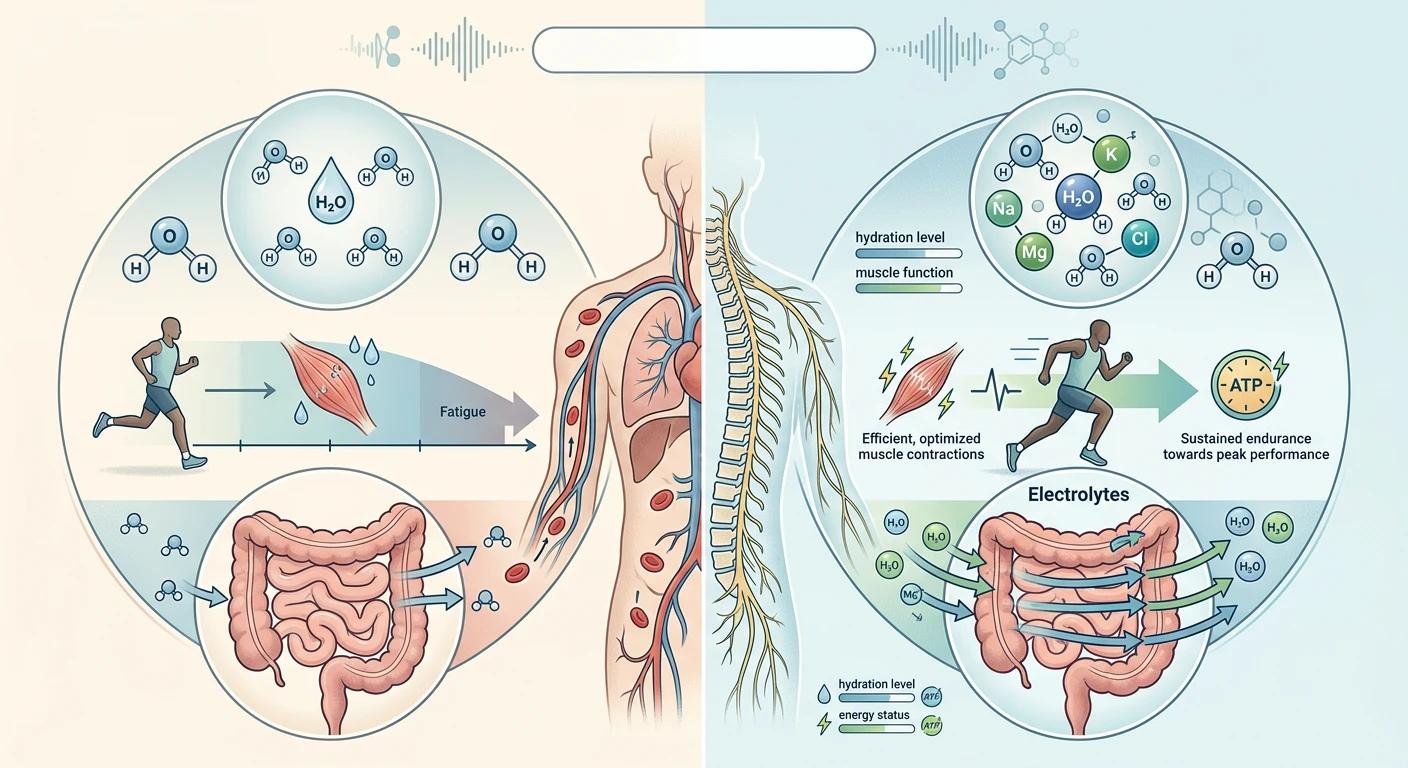
Electrolytes are minerals with an electrical charge that dissolve in body fluids and are essential for nerve impulses and muscle contractions. The main electrolytes important for athletes include sodium, potassium, magnesium, calcium, and chloride, with their loss through sweat being directly linked to dehydration and cramps.
The mechanism that makes electrolytes so effective is related to osmosis and specific transport proteins. The presence of sodium (and often a little glucose) in the drink activates the so-called Sodium-Glucose Cotransporter 1 (SGLT1) in the small intestine. This mechanism "pulls" sodium and glucose into the bloodstream, and water passively follows them along an osmotic gradient. This leads to significantly faster and more efficient hydration than if we drank only water.
Simply put: Electrolytes act as "magnets" for water. When they enter the bloodstream through the intestines, they attract water with them, speeding up hydration. Without them, water is absorbed much more slowly.
Practical Observation
When working with long-distance runners, adding an electrolyte mix with about 400-600mg of sodium per liter of water significantly reduces cases of muscle cramps in the later stages of a race. The difference is particularly noticeable in summer marathons, where a huge amount of salt is lost through sweat.
2. Plain Water: The Universal Solvent
Water is the foundation of life. It constitutes about 60% of body weight and participates in every metabolic reaction. Its main functions include:
- Thermoregulation: Through sweating, the body cools itself.
- Transport: It carries nutrients to cells and removes waste products.
- Lubrication: It moistens joints and tissues.
For daily activities and short, low-intensity workouts (under 60 minutes), plain water is perfectly sufficient for maintaining hydration. The body has complex regulatory mechanisms (like the hormone vasopressin) that manage water balance. Water intake stimulates these systems and maintains homeostasis. The problem arises when the loss of fluids and minerals through sweat exceeds the body's ability to adapt with water alone.
Scientific Sources
- American College of Sports Medicine position stand. Exercise and fluid replacement, 2007
- EFSA Panel on Nutrition. Dietary Reference Values for sodium, 2019
- Office of Dietary Supplements - NIH. Potassium Fact Sheet for Health Professionals
- Mayo Clinic. Hyponatremia, 2022
- Linus Pauling Institute. Magnesium
The Synergistic Effect: Why Do They Work Better Together?
Electrolytes and water are not competitors but partners. When you sweat, you lose not just water. Electrolytes help the body retain water where it's needed, rather than just passing through and being excreted as urine.
The biggest risk during intense exertion is the condition of hyponatremia. This occurs when an athlete drinks large amounts of pure water without replenishing the sodium lost through sweat. This dilutes the sodium concentration in the blood to dangerously low levels, which can lead to headaches, nausea, confusion, and in severe cases, brain swelling. The combination of water and electrolytes prevents this risk and ensures proper rehydration.
How to choose the right hydrating solution?
Choose electrolytes if:
- Your workout is longer than 60-90 minutes.
- You are training in hot and/or humid conditions.
- You sweat heavily (you see white salt stains on your clothes).
- You have a history of muscle cramps during exertion.
- You participate in endurance sports like marathon running, triathlon, or cycling.
🔵 Choose plain water if:
- Your workout is under 60 minutes.
- The intensity is low to moderate.
- The ambient temperature is cool or moderate.
- You want to maintain your daily hydration outside of workouts.
- You are following a calorie-controlled diet (and avoiding sugar in sports drinks).
Recommended Performance Stack
Effective hydration during intense training or competition is achieved by dissolving one dose of a quality electrolyte mix, providing 400-800 mg of sodium, 100-200 mg of potassium, and 50-100 mg of magnesium, in 750-1000 ml of water, consumed in small sips every 15-20 minutes.
What is key when choosing an electrolyte supplement?
- Daily Basis: Consume 30-40 ml of water per kilogram of body weight throughout the day. For an 80 kg athlete, this is about 2.4-3.2 liters. This should primarily be pure water.
- Before Workout (30-60 min): Drink about 500 ml of water to start the exertion well-hydrated.
- During Workout (>60 min): Aim for 150-250 ml of fluid every 15-20 minutes. This is where the Electrolyte Solution comes in.
- After Workout: For every kilogram of body weight lost, rehydrate with 1.2-1.5 liters of fluid. The first 500-750 ml can be with electrolytes for rapid recovery, and the rest with pure water.
Expert Note: Don't forget the form!
The choice of electrolyte supplement depends on the form of the minerals, with magnesium citrate or bisglycinate being preferred due to their better bioavailability and lower risk of stomach discomfort compared to magnesium oxide.
🧭 When to choose which?
- Choose plain water only if... you are doing a short strength workout, yoga, light jogging, or just for daily hydration in the office.
- Choose an electrolyte drink if... you have a long cycling session, are running a marathon, playing football on a hot day, or doing an intense circuit training for more than an hour.
- Combine the two if... you have double training sessions or a long competition day. Use electrolytes around exertion and pure water the rest of the time.
📖 What is an electrolyte and what is plain water?
Electrolytes: Minerals (like sodium, potassium, magnesium) with an electrical charge, essential for nerve function, muscle contractions, and maintaining fluid balance in the body.
Plain water (H₂O): The main chemical component of body fluids, serving as a universal solvent and transport medium, but not containing significant amounts of minerals.
⚖ Pros and Cons
| Pros | Cons |
|---|---|
| Electrolyte Drinks | |
|
|
| Plain Water | |
|
|
🗣 Simply Explained
The body is like a car. Pure water is the fuel – without it, the car doesn't run. Electrolytes are the oil, antifreeze, and brake fluid. You can drive for a while without them, but eventually, the engine will overheat, parts will wear out, and the brakes will fail.
| Criterion | Electrolytes | Plain Water |
|---|---|---|
| Metaphor | "Electrical Engineers" | "Transport System" |
| When? | Heavy, long workouts | Every day, light workouts |
| Main Goal | Function and Retention | Volume and Transport |
Choose the right product for your goal:
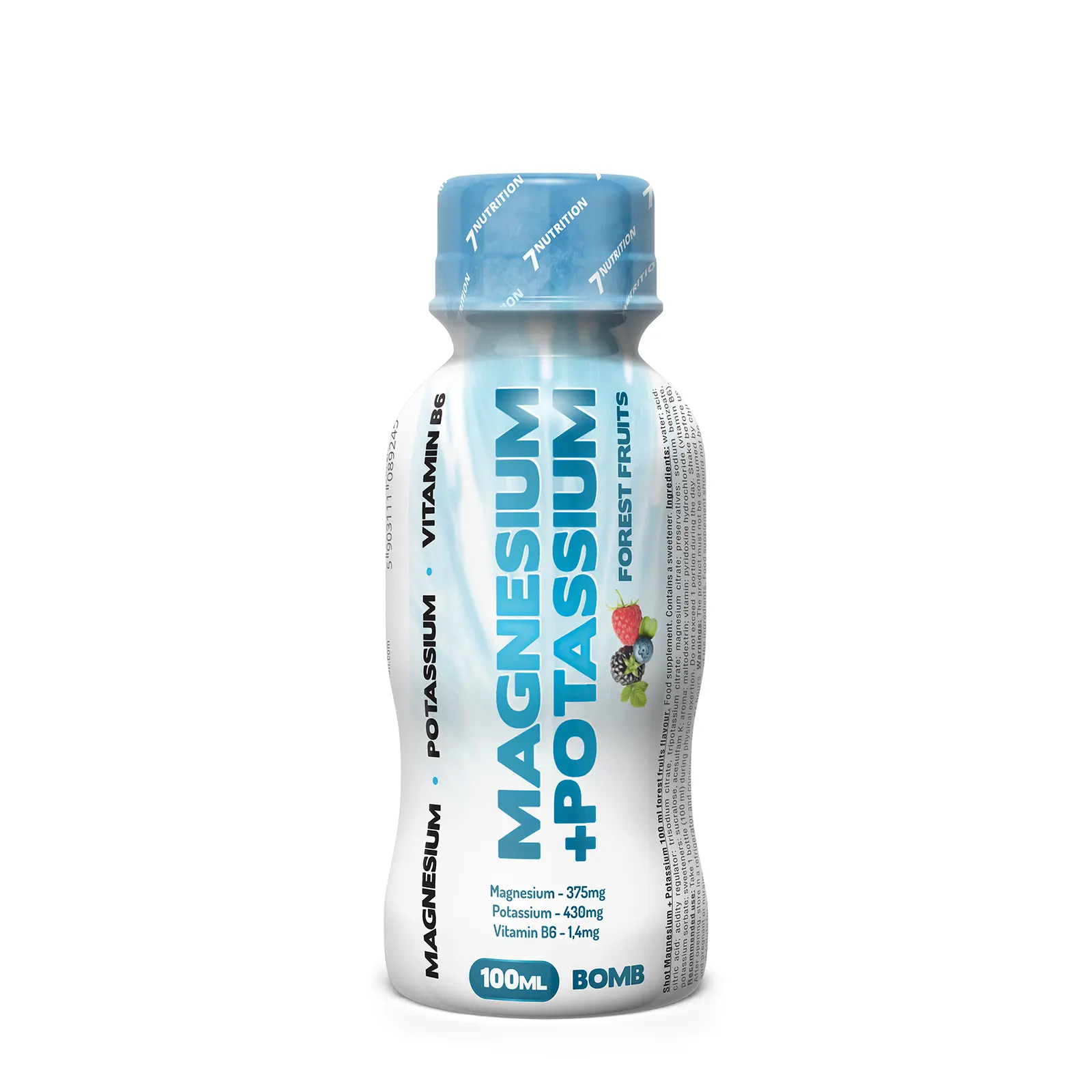
- For proper hydration and performance: Soluble electrolyte complexes
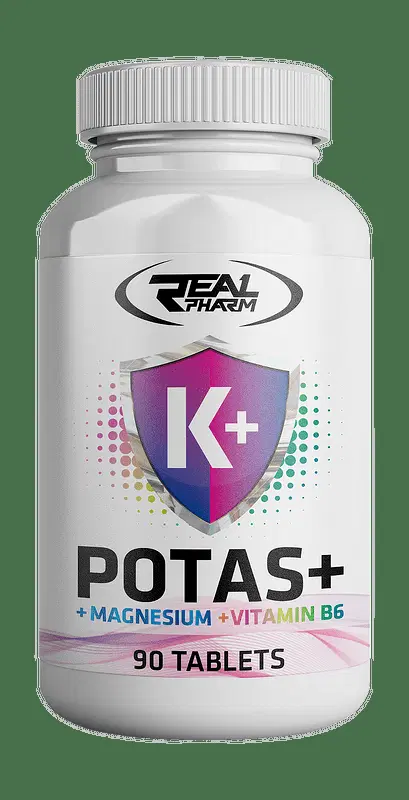
- For targeted mineral replenishment: Magnesium, potassium, and sodium capsules
- For energy and endurance: Creatine products (which also require good hydration)
Combined protocol for maximum effect:
- Before workout: 500ml pure water + standard dose of creatine.
- During workout (>60min): 750ml water mixed with electrolyte powder.
- After workout: 500ml water with electrolytes, followed by a protein shake and pure water for the rest of the day.
⚖ When to choose Electrolytes
- When you train for over an hour and sweat heavily.
- When you are in hot and humid weather.
- When you feel fatigue and the beginnings of cramps.
- When preparing for an endurance competition.
⚖ When to choose Plain Water
- For daily hydration outside of sports.
- For short workouts up to 60 minutes.
- When training in a cool, air-conditioned gym.
- If your diet is rich in minerals (sodium, potassium).
Expert Note from Sport Zona
In my many years of working with endurance athletes, I have seen how proper hydration management can change the game. A common mistake is not a lack of water, but a lack of electrolytes. Athletes who "hit the wall" often attribute it to depleted glycogen, but in many cases, the main reason is severe electrolyte imbalance. An easy test is to look at your t-shirt after a workout – if there are white salty streaks, you should include electrolytes in your protocol.
Recommended products
Frequently asked questions
Can electrolytes and plain water be taken together?
Yes, and it is often recommended. During very long events (marathons, ultramarathons), you can alternate sips of electrolyte drink with plain water. This helps to avoid excessive intake of sugars and minerals while maintaining good hydration. For most standard workouts, it is easier to stick to one type of fluid.
Which is better for beginners - electrolytes or plain water?
For beginners, whose workouts are typically under 60-75 minutes and of moderate intensity, plain water is sufficient for hydration. The need for electrolytes arises with increased duration and intensity of exertion, as well as during workouts in hot weather.
When is the best time to consume electrolytes?
Electrolyte drinks are primarily consumed during and immediately after prolonged or high-intensity workouts (over 90 minutes). They are especially important in hot and humid weather when sweating is more profuse. For general daily hydration, plain water is the more appropriate choice.
Are there side effects from consuming electrolytes or water?
Yes, for both. Excessive intake of water alone during prolonged exertion can lead to hyponatremia (dangerously low blood sodium levels). Excessive intake of electrolyte drinks, especially those high in sugar, can cause gastrointestinal discomfort. The key is balanced intake according to needs.
What is the recommended dosage of fluids during sports?
The general recommendation is to consume between 500 and 1000 ml of fluid per hour during exercise, depending on intensity and conditions. If the exertion is over 90 minutes, this fluid should be an electrolyte drink and provide about 300-600 mg of sodium and 80-200 mg of potassium per hour to compensate for sweat losses.