Zinc Picolinate vs. Zinc Bisglycinate: The Picolinic Acid Absorber vs. The Gentle Stomach

Zinc picolinate and bisglycinate are effective forms of zinc for athletes. Choose according to your needs: fast effect or long-term support.
Short answer: Zinc picolinate and bisglycinate are elite, highly absorbable forms of zinc, significantly superior to oxide and sulfate. Picolinate may have a slight advantage in people with absorption issues, while bisglycinate is gentler on the stomach. For most athletes, the difference in effectiveness is minimal. Practical advice: For general health, immunity, and testosterone maintenance, take 15-25 mg of elemental zinc daily. If you have a sensitive stomach, choose zinc bisglycinate. Take it in the evening, on an empty stomach or with a meal low in phytates and calcium.
Zinc is important for every athlete. The immune system relies on it, it participates in testosterone production, and aids in recovery. When choosing a zinc supplement, you're likely wondering which form is best. Zinc picolinate and zinc bisglycinate are two of the most popular and effective options. Which one is right for you?
The choice between these two forms depends on your goals. Do you need a quick immune boost before a competition, or do you have a diagnosed deficiency? Perhaps you're looking for long-term support for hormonal balance and overall health? Here, we'll take a detailed look at both forms to help you choose the best for your body and athletic goals.
This article is part of the Expert Supplement Hub — over 270 expertly reviewed articles by Petar Mitkov and the Sport Zona team.
What is the main difference between Zinc Picolinate and Zinc Bisglycinate?
Zinc picolinate is a chelated form of zinc with picolinic acid, focused on rapid absorption via picolinic acid as a transporter for short-term deficiency correction, while Zinc bisglycinate is a chelated form with two glycine molecules, absorbed through amino acid pathways, providing excellent stomach tolerance for long-term daily support.
| Criterion | Zinc Picolinate | Zinc Bisglycinate |
|---|---|---|
| Biological Status | Chelated form (with picolinic acid) | Chelated form (with two glycine molecules) |
| Main Focus | Rapid absorption | Good tolerance, stomach-friendly |
| Absorption Mechanism | Uses picolinic acid as a transporter | Absorbed via amino acid pathways |
| Time Horizon | Short-term, for rapid deficiency correction | Long-term, for daily maintenance |
| Stomach Tolerance | Good to very good | Excellent, the gentlest form |
| Specific Bonus | No additional effect from picolinic acid | Glycine has a calming effect on the nervous system |
How does Zinc Picolinate work?
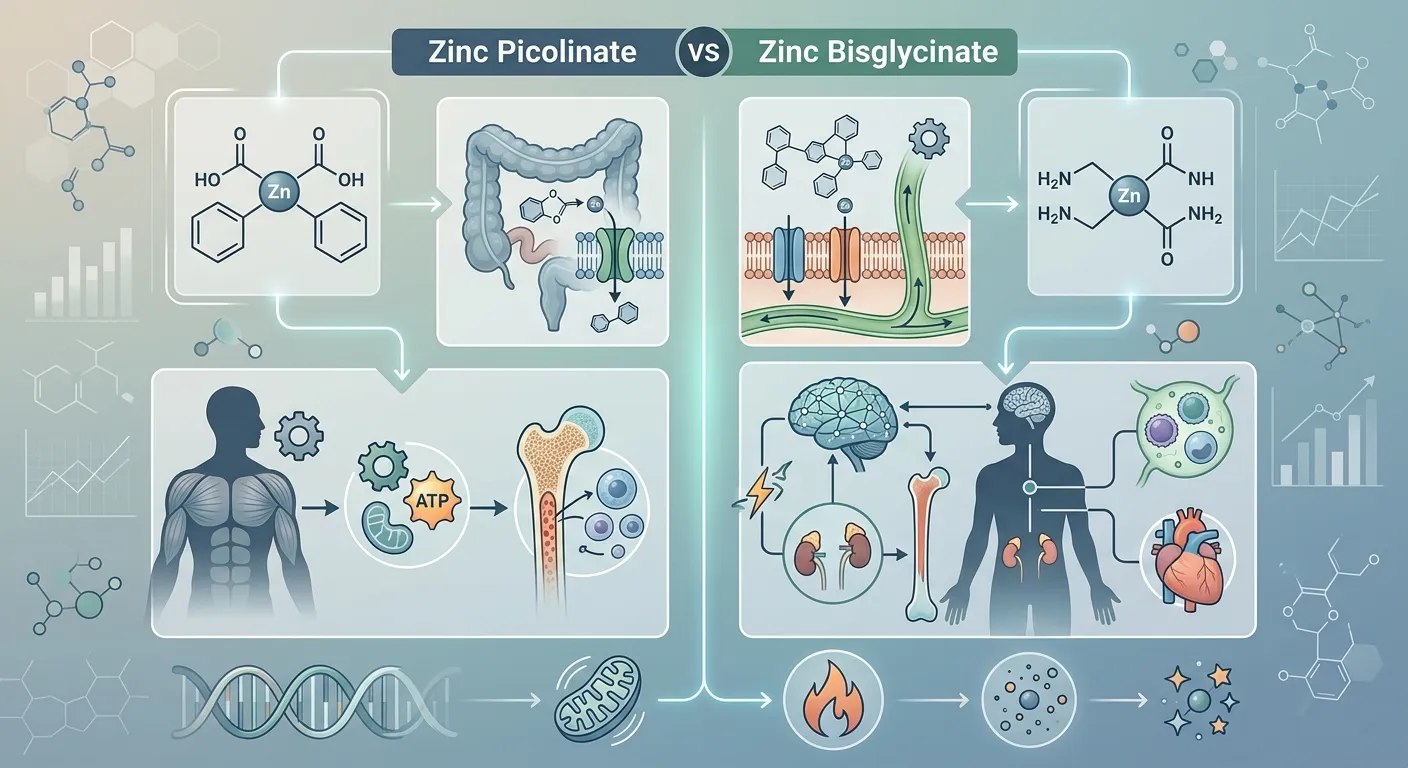
1. Zinc Picolinate: The Fast Delivery Courier
Zinc picolinate is zinc chelated (bound) with picolinic acid, which is a natural chelator produced by the pancreas to aid mineral absorption, allowing it to be more easily absorbed through the intestinal wall.
A 1987 study compared the absorption of zinc picolinate, zinc citrate, and zinc gluconate. The picolinate form led to higher levels of zinc in the blood, urine, and hair after 4 weeks. This indicates better absorption and retention in tissues.
In short: Zinc picolinate uses a natural "transporter" for rapid delivery of zinc into the bloodstream. Therefore, it is suitable for quick "loading" in cases of diagnosed deficiency or for a rapid immune response.
Scientific Sources
Practical Observation
In athletes with low zinc levels, taking picolinate for 4-6 weeks often leads to rapid normalization of values and a noticeable improvement in energy and recovery compared to other forms.
2. Zinc Bisglycinate: Secure Transport for Long-Term Use
Zinc bisglycinate is a chelated form where one zinc ion is bound to two molecules of the amino acid glycine. This glycine "packaging" protects zinc from binding with phytates and oxalates in food, which would otherwise block its absorption. Bisglycinate uses the amino acid transport systems, which are more efficient than mineral pathways.
This form does not irritate the gastrointestinal tract. Many people experience nausea or discomfort when taking zinc, especially on an empty stomach. Bisglycinate is stable and does not break down in the stomach, eliminating this side effect. Glycine has a mild calming effect and participates in the synthesis of creatine and glutathione.
In short: Zinc bisglycinate is suitable for long-term daily use. It is gentle on the stomach and absorbed very effectively, maintaining good zinc levels without discomfort.
Scientific Sources
- Gandia P, et al. A bioavailability study comparing two oral formulations of zinc (Zn bis-glycinate vs. Zn gluconate) after a single administration to twelve healthy female volunteers. 2007
- EFSA Journal - Zinc bisglycinate as a source of zinc for use in foods for particular nutritional uses... 2006
- National Institutes of Health (NIH) - Zinc Fact Sheet for Health Professionals
Practical Observation
I work with athletes and prefer bisglycinate for primary supplementation throughout the year. Athletes often have sensitive digestive systems due to training stress. Bisglycinate allows them to maintain zinc levels without discomfort.
Why do they work better together?
You can use both forms together in a specific regimen.
In cases of acute and severe deficiency, it's advisable to start with Zinc Picolinate for 2 to 4 weeks for rapid restoration of cellular levels. After this initial period, switch to Zinc Bisglycinate for long-term maintenance. This approach combines the speed of picolinate with the stability and tolerance of bisglycinate, providing the best for the body.
What is the algorithm for choosing zinc?
Choose Zinc Picolinate if:
- You have a lab-proven zinc deficiency. You need rapid correction.
- You are looking for a quick immune boost before cold season or a competition.
- You do not have a sensitive stomach and tolerate minerals well.
- Your doctor or dietitian has recommended short-term, intensive intake.
🔵 Choose Zinc Bisglycinate if:
- You are looking for a form for daily, long-term use.
- You have a sensitive stomach or discomfort from other forms of zinc.
- You aim for long-term support of hormonal balance and the nervous system.
- You want to take your zinc at any time of day, even on an empty stomach, without worry.
Recommended Stack for Athletes
The practical algorithm for choosing zinc involves combining zinc bisglycinate with Magnesium Bisglycinate and Vitamin D3 for maximum effect on recovery and hormonal balance, working to maintain immune function, bone density, and appropriate testosterone levels.
What is Protocol 2026: "Foundation and Performance Stack"?
"Protocol 2026: Foundation and Performance Stack" represents a modern approach to health and performance, focusing not on individual solutions but on building a stable foundation, supplemented by tactical additions.
- Daily (Foundation): 15-25 mg of zinc in the form of Zinc Bisglycinate in the evening before bed. This supports restorative processes during the night and optimizes hormone production.
- As Needed (Tactical Stack): During periods of stress, before or after illness, add 15-20 mg of Zinc Picolinate for 5-7 days in the morning after a meal, for a quick immune boost.
Expert Note: When and Why Evening?
Taking zinc in the evening has two advantages. First, it does not compete with other minerals from food (like calcium and iron), which improves its absorption. Second, zinc participates in the conversion of tryptophan to serotonin and melatonin, which improves sleep quality – an important factor for any athlete's recovery.
🧭 When to Choose Which?
- Choose Zinc Picolinate if your main goal is rapid correction of a diagnosed deficiency and quick immune support.
- Choose Zinc Bisglycinate if your priority is long-term, daily maintenance, you have a sensitive stomach, or you want the most versatile and gentle form.
- Combine the two strategically: Picolinate for a short "boost" when needed, followed by bisglycinate for consistent year-round support.
📖 What are Zinc Picolinate and Zinc Bisglycinate?
Zinc Picolinate: This is a salt of zinc with picolinic acid. It is considered a highly absorbable form due to picolinic acid's role as a natural mineral transporter in the body.
Zinc Bisglycinate: This is a chelated form where zinc is bound to two molecules of the amino acid glycine. This structure makes it stable and gentle on the stomach, allowing absorption through amino acid pathways.
What makes Zinc Picolinate and Zinc Bisglycinate different?
Zinc picolinate offers rapid absorption for quick deficiency correction but may not be ideal for long-term intake, while Zinc bisglycinate excels in tolerance and is perfect for continuous use, although it might not raise plasma levels as quickly.
| Pros | Cons |
|---|---|
| Picolinate: Rapid absorption, suitable for quick deficiency correction. | Picolinate: May not be ideal for very long-term intake compared to bisglycinate. |
| Bisglycinate: Excellent tolerance, does not irritate the stomach. Suitable for long-term daily use. Glycine offers additional benefits. | Bisglycinate: May not raise plasma levels as rapidly as picolinate. |
Which is better: Zinc Picolinate or Zinc Bisglycinate?
Zinc picolinate is a form of zinc bound to picolinic acid, while zinc bisglycinate is a compound of zinc with two glycine molecules, with both forms being highly bioavailable and easily absorbed by the body.
| Criterion | Zinc Picolinate (The Courier) | Zinc Bisglycinate (The Guardian) |
|---|---|---|
| Speed | Very fast | 🐢 Moderate and consistent |
| Purpose | Rapid delivery | Long-term maintenance |
| Sensation | Effective, but can be "harsh" | Gentle and unnoticed |
When to choose Zinc Picolinate or Zinc Bisglycinate?
- Support for hormones and muscles: Proteins, Creatine, combined with zinc.
- Immunity and general health: Vitamins and minerals, especially Vitamin C and D.
- Focus and nervous system: Adaptogens, Omega-3.
Combined Protocol for Maximum Effect:
- Pre-workout: Energy and focus with Pre-workout products.
- During workout: Hydration and endurance with BCAAs and electrolytes.
- Post-workout and evening: Recovery with Protein and Zinc Bisglycinate for better regeneration.
⚖ When to choose Zinc Picolinate
- You need a rapid increase in levels.
- You are preparing for a competition and want good immunity.
- You are recovering from an illness.
- You are looking for a short-term, strong solution.
⚖ When to choose Zinc Bisglycinate
- You are looking for a supplement for daily use.
- You have a sensitive stomach.
- You aim for long-term hormone support.
- You want a reliable and gentle form.
Expert Note from Sport Zona
Zinc bisglycinate is recommended as the foundation of a supplement regimen for people who train hard, as it is predictable, reliable, and hassle-free. Zinc picolinate is a specialized tool used tactically to quickly solve specific and acute problems.
Recommended products
Frequently asked questions
Can Zinc Picolinate and Zinc Bisglycinate be taken together?
Yes, it is technically possible, but not necessary and does not offer additional benefits. Both forms are highly effective and compete for the same absorption pathways. It is better to choose one form according to your individual needs and stick to the recommended dosage.
Which is better for beginners - Zinc Picolinate or Zinc Bisglycinate?
For beginners, Zinc Bisglycinate is often the better choice. It is significantly gentler on the gastrointestinal tract and reduces the risk of nausea, a common side effect when taking zinc on an empty stomach. Its effectiveness is more than sufficient for the needs of beginner athletes.
When is the best time to take Zinc Picolinate and Zinc Bisglycinate?
For maximum absorption, zinc should be taken on an empty stomach – at least one hour before or two hours after a meal. If this causes discomfort, it can be taken with a small amount of food, but avoid taking it simultaneously with foods rich in calcium, iron, and phytates (like whole grains and legumes), as they can reduce its absorption.
Are there any side effects from taking Zinc Picolinate or Zinc Bisglycinate?
Yes, nausea, stomach pain, or diarrhea may occur with high doses (over 40 mg of elemental zinc per day) or when taken on an empty stomach. Zinc Bisglycinate is less likely to cause such discomfort. Prolonged intake of very high doses of zinc can interfere with copper absorption and lead to a deficiency.
What is the recommended dosage for Zinc Picolinate and Zinc Bisglycinate?
It is important to look at the amount of "elemental zinc," not the total weight of the compound. For most athletes, a dose of 15 to 30 mg of elemental zinc per day is optimal for maintaining the immune system and hormonal balance. The upper safe limit for prolonged intake is 40 mg per day from all sources.