Ubiquinol vs. Ubiquinone (CoQ10): The Active Form vs. The Standard Precursor
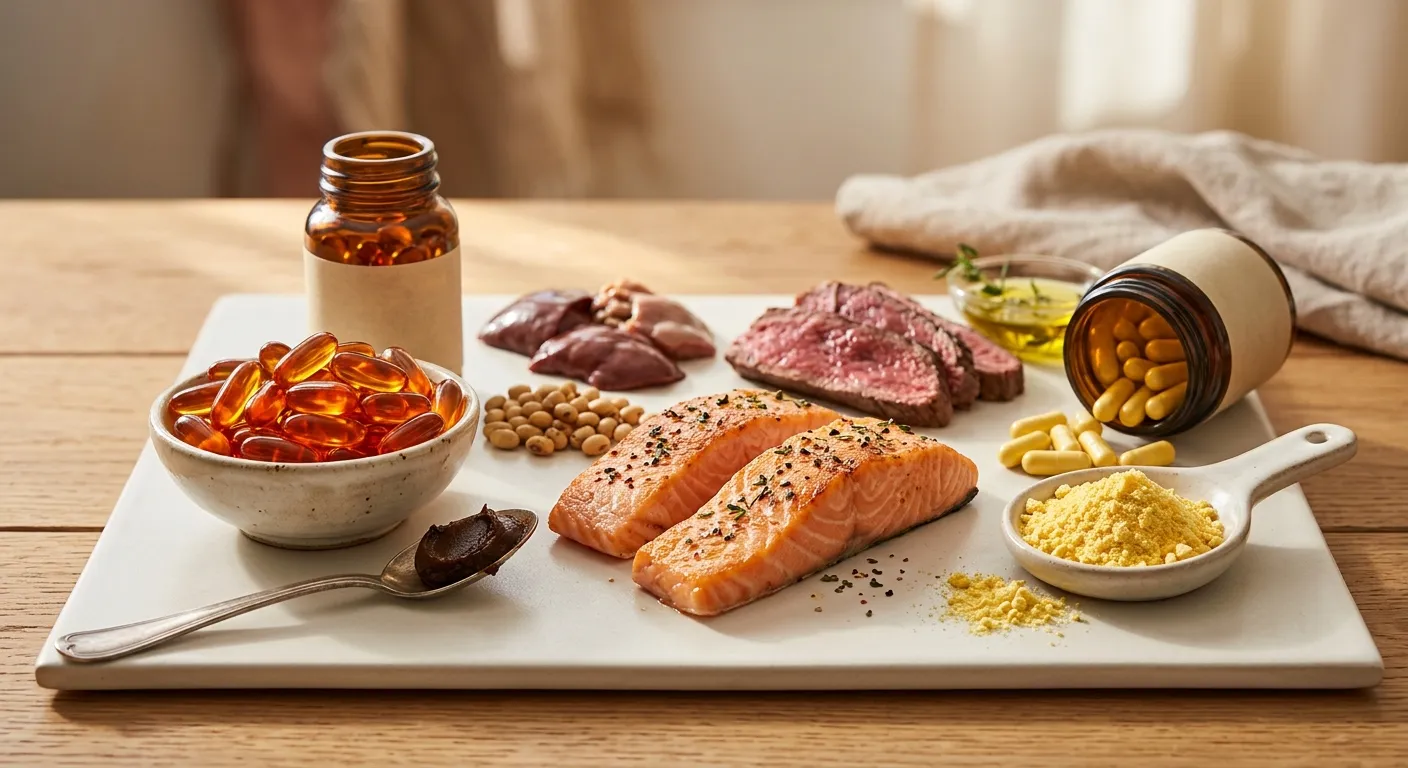
Ubiquinol is the active form of CoQ10 that the body uses directly for energy and heart health. Ubiquinone must be processed first.
Short Answer: Ubiquinol is the active, antioxidant form of CoQ10, which is absorbed up to 8 times better than Ubiquinone. Ubiquinone is the oxidized form that the body must first convert, a process that becomes less efficient with age. Practical advice: Athletes over 30-35 years old or those under high oxidative stress should choose Ubiquinol in doses of 100-200 mg daily. For younger athletes (<30), Ubiquinone (200-400 mg) is a more budget-friendly and still effective option.
Coenzyme Q10 (CoQ10) is important for cellular energy and heart health. When choosing a supplement, you need to decide between Ubiquinone or Ubiquinol. These two forms are different states of the same molecule, with different effects and applications, especially for active athletes.
CoQ10 is involved in the cell's energy metabolism. Ubiquinone requires the body to process it to become active. Ubiquinol is the active form and the body can use it immediately. Which form to choose depends on age, level of physical exertion, and the body's ability to process ubiquinone.
We will look at both forms, how they work, what their benefits are, and when it is better to choose one over the other. The goal is to make an informed decision for better energy, recovery, and overall performance.
This article is part of the Expert Hub for Nutritional Supplements — over 270 expertly verified articles by Petar Mitkov and the Sport Zona team.
What is the comparison matrix for ubiquinol and ubiquinone?
The comparison matrix for ubiquinol and ubiquinone represents a systematic analysis that covers various criteria, such as biological status, primary focus, mechanism of action, bioavailability, and recommended user.
| Criterion | Ubiquinone (Standard CoQ10) | Ubiquinol |
|---|---|---|
| Biological Status | Oxidized form (inactive) | Reduced form (active) |
| Primary Focus | Involved in ATP production (cellular energy) | Potent antioxidant protection |
| Mechanism of Action | Body must convert it to ubiquinol | Directly usable, no conversion needed |
| Bioavailability | Lower, decreases with age | Significantly higher (up to 8 times) |
| Recommended User | Young, healthy individuals (< 40 yrs), for prevention | Individuals over 40, athletes, under high oxidative stress |
| Price | Lower | Higher |
What is the in-depth analysis of the mechanisms?
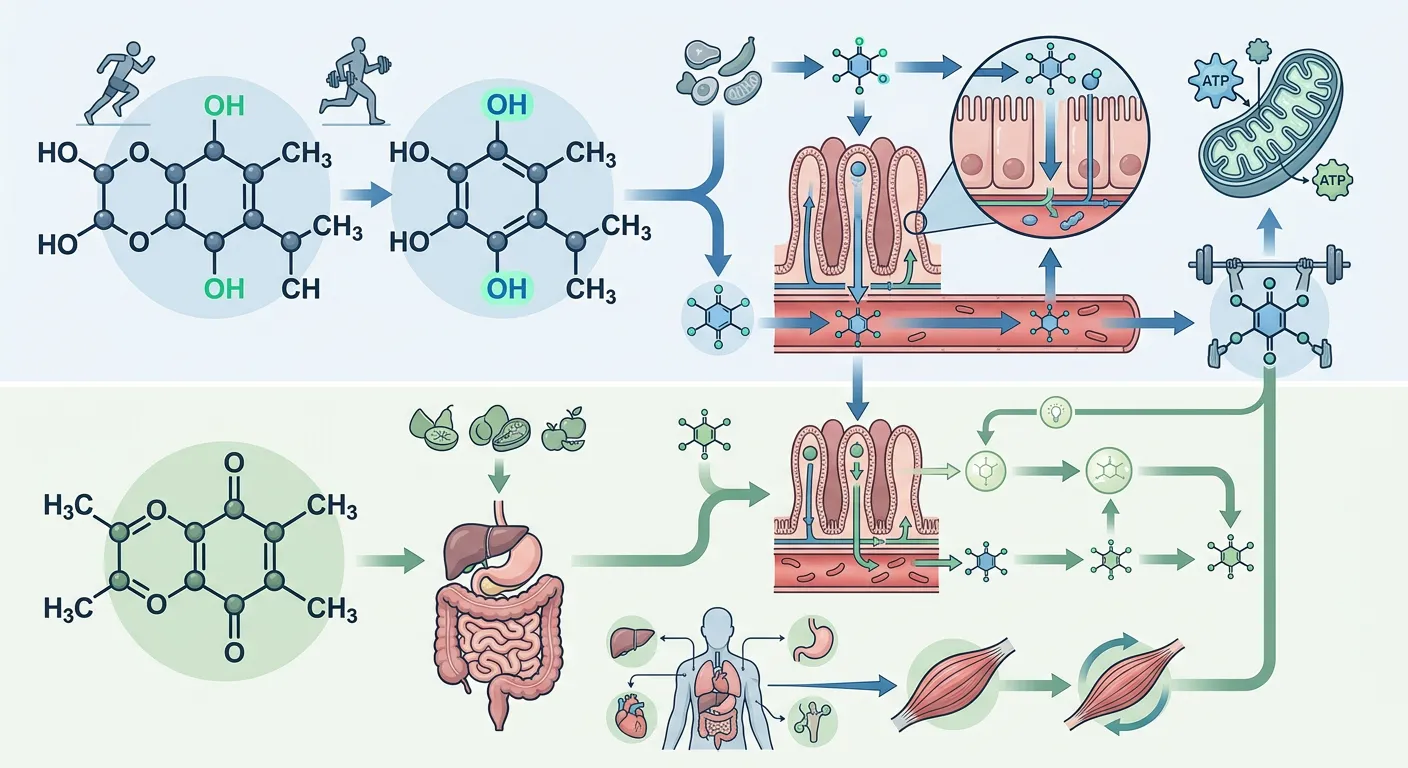
1. Ubiquinone (CoQ10): The Classic Energy Engine
Ubiquinone is the oxidized form of CoQ10, whose main task is to participate in the electron transport chain in the mitochondria, accepting electrons and converting into ubiquinol to donate electrons and support ATP synthesis; when ubiquinone is taken as a supplement, the body must reduce it to ubiquinol to activate its antioxidant function.
Simply put: Ubiquinone is like crude oil. Your body needs to refine it in a refinery to get gasoline (ubiquinol), which powers the engine and protects against wear and tear.
2. Ubiquinol: The Active Antioxidant Form
Ubiquinol is the reduced, active antioxidant form of CoQ10. In this form, over 90% of CoQ10 circulates in the blood of a healthy person. As a potent fat-soluble antioxidant, it directly neutralizes free radicals and protects cell membranes, lipids, and DNA from oxidative damage. This is especially important for athletes whose bodies generate many free radicals during intense training. Taking ubiquinol directly bypasses the conversion step. This makes it more bioavailable and effective, especially in individuals over 40 or in conditions of increased oxidative stress when the conversion ability is reduced.
Synergistic Effect: Why Aren't They Enemies?
Ubiquinone and ubiquinol exist in a continuous cycle within the body. Ubiquinone accepts electrons in the energy chain and converts to ubiquinol. Ubiquinol then donates these electrons to neutralize free radicals, oxidizing back to ubiquinone. This process is called the Q-cycle.
They are not two different substances, but two sides of the same coin that the body uses dynamically. The problem arises when the body's ability to recycle ubiquinone into ubiquinol decreases. Then, direct intake of ubiquinol becomes more effective for maintaining adequate antioxidant levels.
Which is Better Between Ubiquinol and Ubiquinone?
The choice of the better form between ubiquinol and ubiquinone is determined by several factors such as individual goals, age, and level of physical exertion, with ubiquinol being the active and more easily absorbed form, and ubiquinone being the standard precursor.
Choose Ubiquinol if:
- You are over 40 years old.
- You are an active athlete with intense and frequent training.
- You experience chronic fatigue or slow recovery.
- You have taken ubiquinone but did not feel a significant effect.
- You are looking for maximum antioxidant protection and heart support.
🔵 Choose Ubiquinone (CoQ10) if:
- You are under 30-35 years old and in good general health.
- You are looking for general preventive energy support.
- Your budget is more limited.
- You are starting CoQ10 intake for the first time.
- Your physical exertion is moderate.
Recommended Stack for Maximum Effectiveness
To increase absorption and combined effect, combine your chosen form of CoQ10 (especially ubiquinol) with quality Omega-3 fatty acids. CoQ10 is fat-soluble, and fats improve its absorption. Adding Vitamin E (tocopherols) enhances antioxidant protection, as ubiquinol helps regenerate Vitamin E.
What is CoQ10 as a foundation for cellular health in the 2026 protocol?
CoQ10 for 2026 represents a foundation for cellular health, not just a performance supplement, with its effective integration being key in the modern sports protocol.
- Daily Foundation: 100 mg Ubiquinol (if you are over 40 or an active athlete) or 100-200 mg Ubiquinone (if you are younger). Take in the morning with a meal containing fats (eggs, avocado, nuts).
- Support During Heavy Workouts: On days with extreme exertion (long runs, heavy strength training), you can add another 100 mg of Ubiquinol about 1-2 hours before training for additional protection against oxidative stress and support for energy metabolism.
- Recovery Phase: Consistent intake is more important than timing of intake. Adhering to intake ensures stable plasma levels and constant cell protection.
Expert Note on Dosage
Don't get obsessed with mega-doses. For most people, 100 mg of ubiquinol or 200 mg of ubiquinone is perfectly sufficient. The effect of CoQ10 accumulates and is felt after 2-4 weeks of consistent intake. Higher doses (300-500 mg) are typically used for specific clinical conditions and after consulting a specialist.
🧭 When to Choose Which?
- Choose Ubiquinone if you are under 35, healthy, have a limited budget, and are looking for general energy support.
- Choose Ubiquinol if you are over 40, an active athlete with heavy exertion, recovering slowly, or want maximum antioxidant protection.
- Combine them in a strategy: You can start with Ubiquinone, and if you don't feel a difference after 1-2 months, switch to Ubiquinol.
📖 What are Ubiquinol and Ubiquinone (CoQ10)?
Ubiquinone: The oxidized, more stable, and cheaper form of CoQ10. It is a component in the cellular energy production process (ATP), but the body must convert it to its active form.
Ubiquinol: The reduced, active antioxidant form of CoQ10. It has much higher bioavailability, the body can use it immediately, and it is a primary defender of cells against free radicals.
⚖ Pros and Cons
| Ubiquinone (CoQ10) | Ubiquinol |
|---|---|
| More affordable price | Much higher bioavailability |
| More stable as a raw material | Direct antioxidant action |
| Suitable for young and healthy individuals | Suitable for individuals over 40 and athletes |
| Requires conversion by the body | Significantly higher price |
| Lower effectiveness with age | Less stable and sensitive to oxidation |
🗣 Simply Explained
To explain the difference between the two forms of CoQ10 to someone unfamiliar with biochemistry, we can use a battery analogy:
- Ubiquinone is a rechargeable battery that you receive depleted. You need to put it in a charger (your body) and wait before you can use it. If your charger is old or works slowly, the process is inefficient.
- Ubiquinol is a new, fully charged, lithium-ion battery, ready for immediate use. You just put it in the device, and it starts working.
Scientific Sources
- Langsjoen PH, Langsjoen AM. Comparison study of plasma coenzyme Q10 levels in healthy subjects supplemented with ubiquinol versus ubiquinone. 2014 — A comparative study demonstrating higher plasma CoQ10 levels after ubiquinol supplementation compared to ubiquinone.
- Linus Pauling Institute at Oregon State University. Coenzyme Q10. — A detailed review of the metabolism, role, and forms of CoQ10.
- National Institutes of Health (NIH), Office of Dietary Supplements. Coenzyme Q10 Fact Sheet for Health Professionals. — A fact sheet for health professionals on CoQ10, including sources, deficiency, and safety.
- Examine.com. Coenzyme Q10. — An independent and detailed analysis of the scientific evidence for CoQ10, including a comparison of its forms.
- Mayo Clinic. Coenzyme Q10. — A general overview of uses, evidence, and potential side effects from Mayo Clinic.
Choose the right product for your goal:
- For more energy and endurance: Creatine products and pre-workout formulas.
- ❤ For heart and vascular health: Omega-3 and fish oil.
- For overall antioxidant protection: Vitamins and minerals.
Combined Protocol for Maximum Performance
1. Pre-workout: Combine CoQ10 with a nitric oxide booster for improved blood flow and energy.
2. During workout: Hydrate with electrolytes and amino acids to maintain endurance.
3. Post-workout: Accelerate recovery with whey protein and CoQ10 to combat oxidative stress.
⚖ When to Choose Ubiquinol
- For maximum bioavailability and rapid effect.
- If you are over 40 and your processing ability is reduced.
- During intense exertion and need for strong antioxidant protection.
- When seeking an effective solution for health and recovery.
⚖ When to Choose Ubiquinone
- If you are young (<35 yrs) and your body processes it effectively.
- For prevention and maintaining basic energy levels.
- When budget is a leading factor.
- As a starting point for CoQ10 intake.
Expert Note from Sport Zona
12 years of working with athletes have shown a clear difference in effect. For athletes in the active competitive phase, especially in endurance sports, switching from ubiquinone to ubiquinol often leads to a noticeably better feeling of energy throughout the day and faster recovery. For younger fitness enthusiasts who train 3-4 times a week, quality ubiquinone, taken regularly, does an excellent job and is a more sensible financial investment. Ubiquinone is effective, but ubiquinol is more direct and potent for those who truly need it.
Frequently asked questions
Can Ubiquinol and Ubiquinone (CoQ10) be taken together?
Yes, but it is not economically efficient. Since Ubiquinone is converted to Ubiquinol in the body, taking both is redundant. It is better to choose one form according to age and goals. Combining them does not offer additional synergistic benefits.
Which is better for beginners - Ubiquinol or Ubiquinone (CoQ10)?
For young and healthy beginners (under 25-30 years old), Ubiquinone is a good and more affordable option, as their body converts it effectively. For older beginners or those with specific needs, it is more advisable to start directly with Ubiquinol for a more certain effect.
When is the best time to take Ubiquinol and Ubiquinone (CoQ10)?
Both forms of CoQ10 are fat-soluble, so they should always be taken with a meal containing fat to increase absorption. Taking it in the morning or at noon is recommended. At higher doses (over 200 mg), splitting the dose into two intakes (e.g., morning and evening) can improve absorption.
Are there any side effects from taking Ubiquinol or Ubiquinone (CoQ10)?
CoQ10 is considered a very safe supplement. In rare cases, it may cause mild stomach discomfort or insomnia if taken late in the evening. It can interact with blood-thinning medications (e.g., Warfarin) and some blood pressure medications. Consultation with a doctor is mandatory if you have underlying health conditions.
What is the recommended dosage of Ubiquinol and Ubiquinone (CoQ10)?
For general health, the dosage is about 100-200 mg of Ubiquinone or 50-100 mg of Ubiquinol. For athletes seeking improved performance and recovery, the doses are higher: 200-400 mg of Ubiquinone or 100-300 mg of Ubiquinol daily, taken with food.