Vitamin D3 vs. Vitamin D2: The Sunshine Energizer vs. The Plant-Based Option

D3 is more effective than D2 because the body uses it better. For athletes, D3 is the better choice for health and performance.
Short Answer: Vitamin D3 (cholecalciferol) is up to 87% more effective than Vitamin D2 (ergocalciferol) in raising and maintaining blood vitamin D levels. D3 has a longer half-life and higher affinity for binding proteins. Practical advice: For athletes, always choose Vitamin D3. Take 2000–5000 IU daily with a fat-rich meal, especially during the autumn-winter season, to support immune function, bone density, and muscle function.
Vitamin D is often known as the "sunshine vitamin," but it's a hormone that regulates hundreds of processes in the body. For athletes, it's crucial for bone density, immune function, muscle strength, and recovery. However, when you go to the pharmacy or supplement store, you'll see two main forms: Vitamin D3 (cholecalciferol) and Vitamin D2 (ergocalciferol). Although both carry the name "Vitamin D," they are not entirely interchangeable.
D3 is the standard form, seemingly made specifically for the human body. It works with maximum efficiency. D2 does the job in most cases, but it's not always as effective and is metabolized faster. As an athlete whose body is under constant stress, choosing the right vitamin can significantly impact performance and health.
Here, we examine the two types of vitamin D to help you make an informed choice based on scientific data and practice. We will analyze their origin, biological activity, effectiveness, and when each form is more suitable.
This article is part of the Expert Hub for Food Supplements — over 270 expertly reviewed articles by Petar Mitkov and the Sport Zona team.
What is the main difference between Vitamin D3 and Vitamin D2?
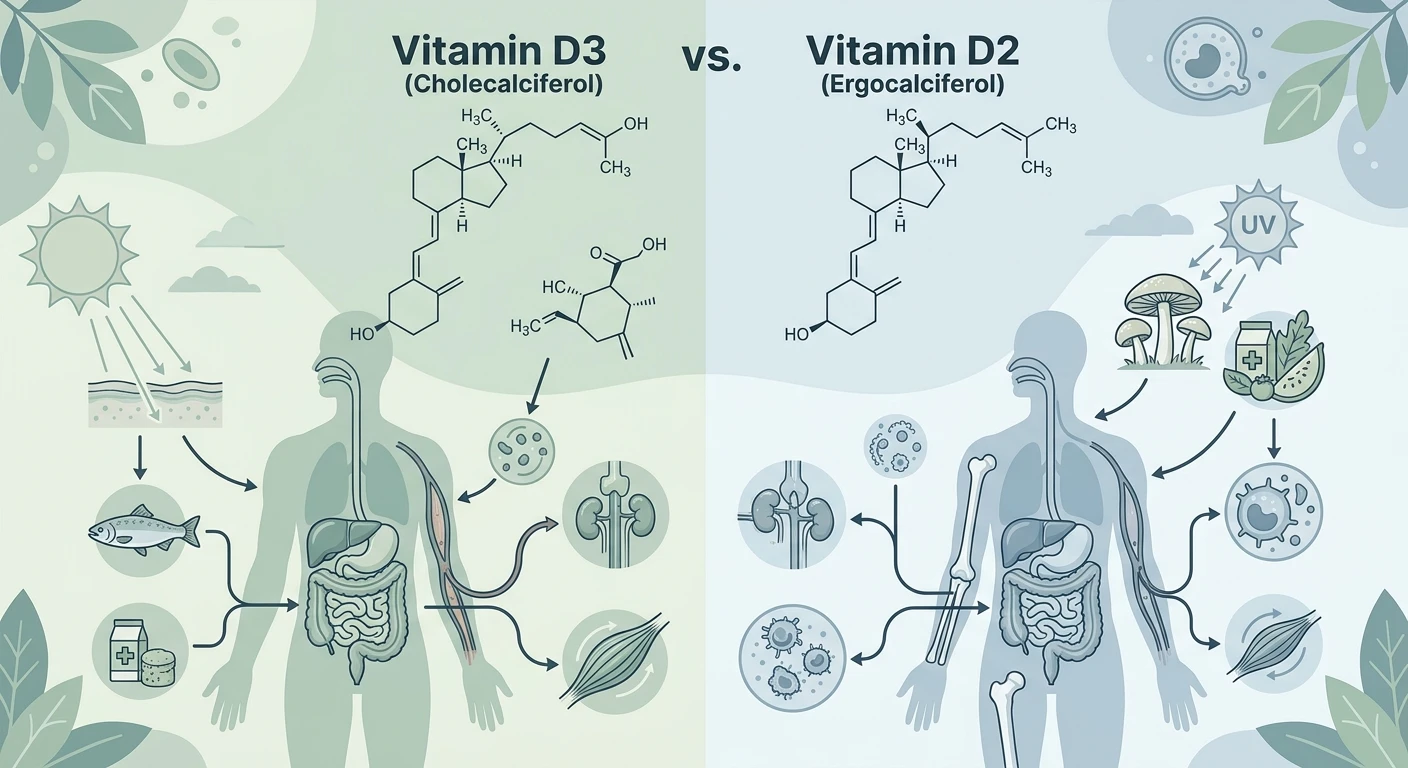
Vitamin D3 (Cholecalciferol) is an animal-derived form that originates from lanolin from sheep's wool, fish oil, or is synthesized in the skin upon sun exposure, while Vitamin D2 (Ergocalciferol) is a plant-derived form found in UV-irradiated mushrooms and yeasts. D3 has high biological potency and a longer half-life, whereas D2 is less effective and metabolized faster.
| Criterion | Vitamin D3 (Cholecalciferol) | Vitamin D2 (Ergocalciferol) |
|---|---|---|
| Origin | Animal (lanolin from sheep's wool, fish oil) and synthesis in the skin upon sun exposure. | Plant-based (UV-irradiated mushrooms, yeasts). |
| Biological Potency | High. More effectively raises serum 25(OH)D levels. | Lower. About 30-50% less effective in maintaining blood vitamin D levels. |
| Half-life in the body | Longer. Provides more stable and sustained blood levels. | Shorter. Metabolized faster, leading to greater fluctuations in levels. |
| Suitable for vegans | No (unless derived from lichen, which is rarer and more expensive). | Yes, this is its main advantage. |
| Primary Use | Preferred form in supplements and for deficiency treatment. | Mainly for fortifying plant-based foods (milks, juices) and as a vegan alternative. |
What are the mechanisms of vitamin D?
1. Vitamin D3 (Cholecalciferol): The Gold Standard
Vitamin D3 is the form that the human body naturally produces when the skin is exposed to ultraviolet B (UVB) light, with synthesis starting from cholesterol in the skin and undergoing a two-step activation process after entering the body. It can also be obtained from animal sources like fatty fish, liver, and egg yolks.
- In the liver: It is converted to 25-hydroxyvitamin D [25(OH)D], also known as calcidiol. This circulating form of vitamin D in the blood is measured in a blood test to determine vitamin D status.
- In the kidneys: Calcidiol is converted into the fully active hormonal form – 1,25-dihydroxyvitamin D [1,25(OH)2D], or calcitriol. This form binds to vitamin D receptors (VDR) in cells and performs its functions – regulating calcium metabolism, immune response, and cell growth.
D3 is more effective due to its higher affinity for liver enzymes and the more stable structure of the calcidiol it produces. This leads to a significantly more effective and sustained increase in serum 25(OH)D levels compared to an equivalent dose of D2.
Simply put: Our body recognizes Vitamin D3 best. It is more potent and maintains stable levels for longer. This makes it the preferred choice for correcting deficiency and maintaining good health.
2. Vitamin D2 (Ergocalciferol): The Plant-Based Alternative
The human body does not produce Vitamin D2. Its source is plants – mainly mushrooms and yeasts exposed to UV radiation. In them, ergosterol (a plant sterol) is converted into ergocalciferol (D2). This form is often used to fortify foods like plant-based milks, orange juice, and cereals.
The activation process for D2 is analogous to that of D3, but with a few differences that explain its lower effectiveness:
- Weaker binding: Ergocalciferol binds with lower affinity to the protein that transports it in the blood (Vitamin D-binding protein) and to liver enzymes.
- Faster breakdown: The resulting 25-hydroxyvitamin D2 has a shorter half-life and is cleared from the body faster than its D3 counterpart.
- Different metabolites: The metabolism of D2 also produces other compounds whose biological activity is lower or not fully understood.
The end result, confirmed by numerous clinical studies, is that Vitamin D2 is less effective at raising and maintaining serum 25(OH)D levels, especially at higher doses or less frequent intake (e.g., weekly or monthly).
Scientific Sources
- Tripkovic, L. et al. (2012). Comparison of vitamin D2 and vitamin D3 supplementation in raising serum 25-hydroxyvitamin D status: a systematic review and meta-analysis. The American Journal of Clinical Nutrition.
- Linus Pauling Institute at Oregon State University. Vitamin D.
- National Institutes of Health (NIH), Office of Dietary Supplements. Vitamin D - Health Professional Fact Sheet.
- Examine.com. Vitamin D - Health benefits, dosage, and side effects.
- EFSA Panel on Dietetic Products, Nutrition and Allergies (NDA). (2016). Dietary reference values for vitamin D. EFSA Journal.
The effect of D3: Why is it the better choice?
Both forms contribute to the overall vitamin D "pool" in the body, but with different effectiveness. D3 is a potent and stable source that quickly saturates the body. D2 is a weaker source that will fill levels, but more slowly, and they will drop faster. We need to maintain stable and adequate levels, especially athletes who require constant immune and bone metabolism. The only scenario where D2 is a logical choice is for strict vegans who do not have access to D3 derived from lichen.
What is the selection algorithm?
Choose Vitamin D3 if:
- You want maximum effectiveness and biological potency.
- You have a diagnosed deficiency that needs to be corrected quickly.
- You are not vegan or have access to vegan D3 from lichen.
- You are looking for the best-researched and clinically proven form for long-term maintenance.
🔵 Choose Vitamin D2 if:
- You follow a strict vegan diet and do not have access to D3 from lichen.
- Your primary source is fortified plant-based foods and beverages.
- You do not have a deficiency and are taking it only for general prevention in low doses.
- This is the only available option.
Recommended Stack for Athletes
The practical selection algorithm involves combining Vitamin D3 with Vitamin K2 (MK-7 form) and Magnesium for maximum results and absorption, as D3 increases calcium absorption, K2 directs it to bones and teeth, and Magnesium activates vitamin D.
What is the Vitamin D dosing protocol for 2026?
The Vitamin D dosing protocol for 2026 is based on individual needs and a 25(OH)D blood test, with correct levels for athletes being 50-80 ng/mL (125-200 nmol/L).
- Daily maintenance dose (no deficiency): 2000 – 4000 IU of Vitamin D3 daily, taken with a fat-containing meal.
- For mild to moderate deficiency (20-30 ng/mL): 5000 IU of Vitamin D3 daily for 8-12 weeks, then switch to a maintenance dose.
- For severe deficiency (<20 ng/mL): Consult a doctor. Higher doses (up to 10,000 IU daily) are often prescribed for a short period, followed by regular monitoring.
Expert Note on Dosage
Do not be afraid of doses above 2000 IU. Official recommendations are often outdated and aimed at preventing rickets, not optimizing athletic performance. For an athlete weighing 80-100 kg, a dose of 4000-5000 IU daily during the autumn-winter period is completely normal and necessary to maintain adequate levels. Get tested once a year (towards the end of winter) to calibrate your dose.
🧭 When to Choose Which?
- Choose Vitamin D3 if you are an athlete and want the most effective, bioavailable, and researched form to improve recovery, immunity, and strength.
- Choose Vitamin D2 if you follow a strict vegan diet and this is your only option. Keep in mind that you may need a higher and more frequent dose to achieve the same effect as with D3.
- Combine D3 with K2 and Magnesium if you want to adopt the most modern and complete approach for bone and cardiovascular health.
📖 What are Vitamin D3 and D2?
Vitamin D3 (Cholecalciferol) is a fat-soluble steroid produced in the skin of animals and humans under the influence of sunlight. It is the natural and more potent form of vitamin D for the human body.
Vitamin D2 (Ergocalciferol) is a form of vitamin D derived from plant sources (mainly mushrooms) exposed to UV radiation. It is less effective than D3 in raising blood vitamin D levels in humans.
⚖ Pros and Cons
| Product | Pros | Cons |
|---|---|---|
| Vitamin D3 | High effectiveness, longer half-life, better clinical results, natural for the body. | Usually of animal origin (not vegan unless from lichen). |
| Vitamin D2 | Suitable for vegans, available in fortified foods. | Lower potency, shorter half-life, less effective in maintaining levels. |
🗣 Explained Simply
Your body is a high-tech engine, and vitamin D is the fuel. Vitamin D3 is high-octane fuel – it burns clean, provides maximum power, and keeps the engine in top condition. Vitamin D2 is lower-octane fuel – the engine will run, but it won't have the same power, it will run rougher, and will need refueling more often.
| Criterion | Vitamin D3 | Vitamin D2 |
|---|---|---|
| Metaphor | Master Key | Copy Key |
| Fuel Type | High Octane | Low Octane |
| Effectiveness 1-10 | 9.5/10 | 6/10 |
Choose the right product for your goal:
- For healthy bones and joints: Vitamin D3 + K2, in combination with Collagen and Magnesium.
- For a strong immune system: Vitamin D3, along with Vitamin C and Zinc.
- For athletic performance: Vitamin D3 as a base, supplemented with Creatine and Beta-Alanine.
Combined Protocol:
1. Base (morning): 4000 IU Vitamin D3 + 100 mcg K2 + 400 mg Magnesium.
2. Immunity (with food): Add 1000 mg Vitamin C and 15-20 mg Zinc.
3. Performance (pre-workout): Fuel up with a pre-workout product containing citrulline and caffeine.
⚖ When to choose Vitamin D3
- When you want the fastest and most effective way to raise your levels.
- When you are an athlete and every advantage counts.
- When treating a clinically diagnosed deficiency.
- When you want to be sure your supplement is working appropriately.
⚖ When to choose Vitamin D2
- When you are on a strict vegan diet and have no alternative.
- When consuming it through fortified plant-based foods.
- When you do not have a deficiency and are taking a low preventive dose.
- When you do not have access to Vitamin D3.
Expert Note from Sport Zona
In my practice with athletes of all levels, Vitamin D3 is the absolute standard. I have repeatedly seen how switching from D2 (often prescribed by non-specialist doctors) to an adequate dose of D3 drastically improves blood levels and the overall condition of the athlete. In the Bulgarian market, D2 is rarely found as a standalone supplement – and for good reason. My personal advice is: always choose D3, preferably in combination with K2. Before starting supplementation, invest in one blood test for 25(OH)D. This is the best starting point for determining your individual dose.
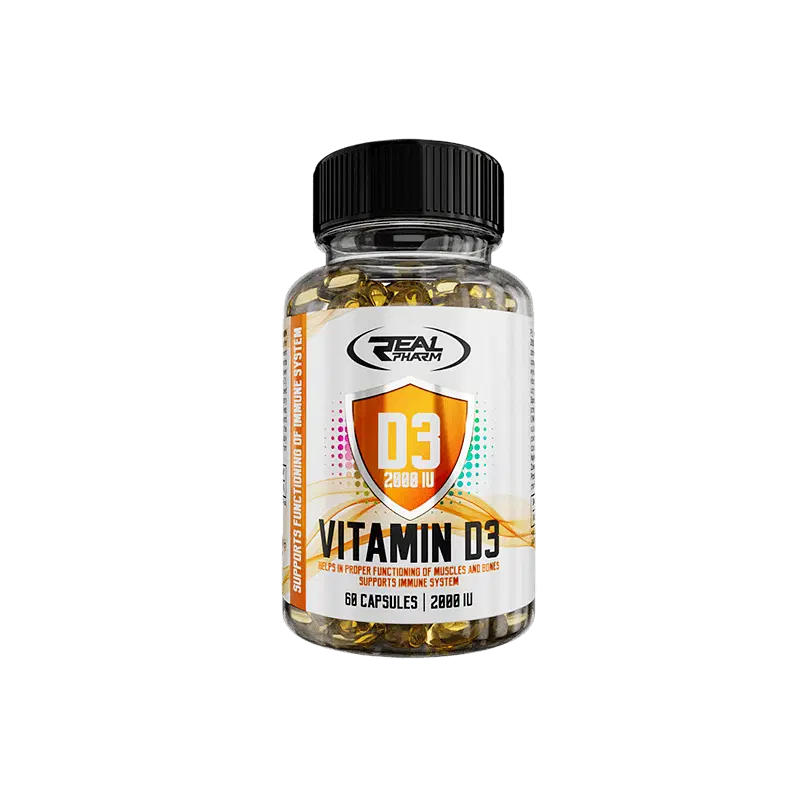
Recommended products
Frequently asked questions
Can Vitamin D3 and Vitamin D2 be taken together?
Technically yes, but it's not logical. Since Vitamin D3 is significantly more effective, there's no practical reason to add the less effective D2 form. Focus on a quality D3 source. Combined intake does not offer additional benefits.
Which is better for beginners - Vitamin D3 or Vitamin D2?
Vitamin D3 is the better choice for everyone, regardless of athletic experience. The human body produces D3 when exposed to sunlight and metabolizes this form much more effectively. The choice doesn't depend on training level, but on biological compatibility.
When is the best time to take Vitamin D3 and Vitamin D2?
Vitamin D is fat-soluble, so it's best absorbed when taken with food containing healthy fats (avocado, nuts, olive oil, fish). The time of day (morning or evening) doesn't significantly matter, but regular intake is key.
Are there side effects from taking Vitamin D3 or Vitamin D2?
When adhering to recommended doses (up to 5000 IU daily), side effects are extremely rare. Toxicity (hypercalcemia) can occur only with prolonged intake of very high doses (over 10,000 IU daily for months). Symptoms include nausea, weakness, and fatigue.
What is the recommended dosage of Vitamin D3 and Vitamin D2?
For most adults and athletes, a dose of 2000 to 5000 IU of Vitamin D3 daily is recommended, especially with insufficient sun exposure. The most accurate approach is to get a blood test for 25(OH)D levels and have a specialist adjust the dosage based on the results.