Selen ve E Vitamini: Mineral Antioksidan ve Yağda Çözünen Koruyucu
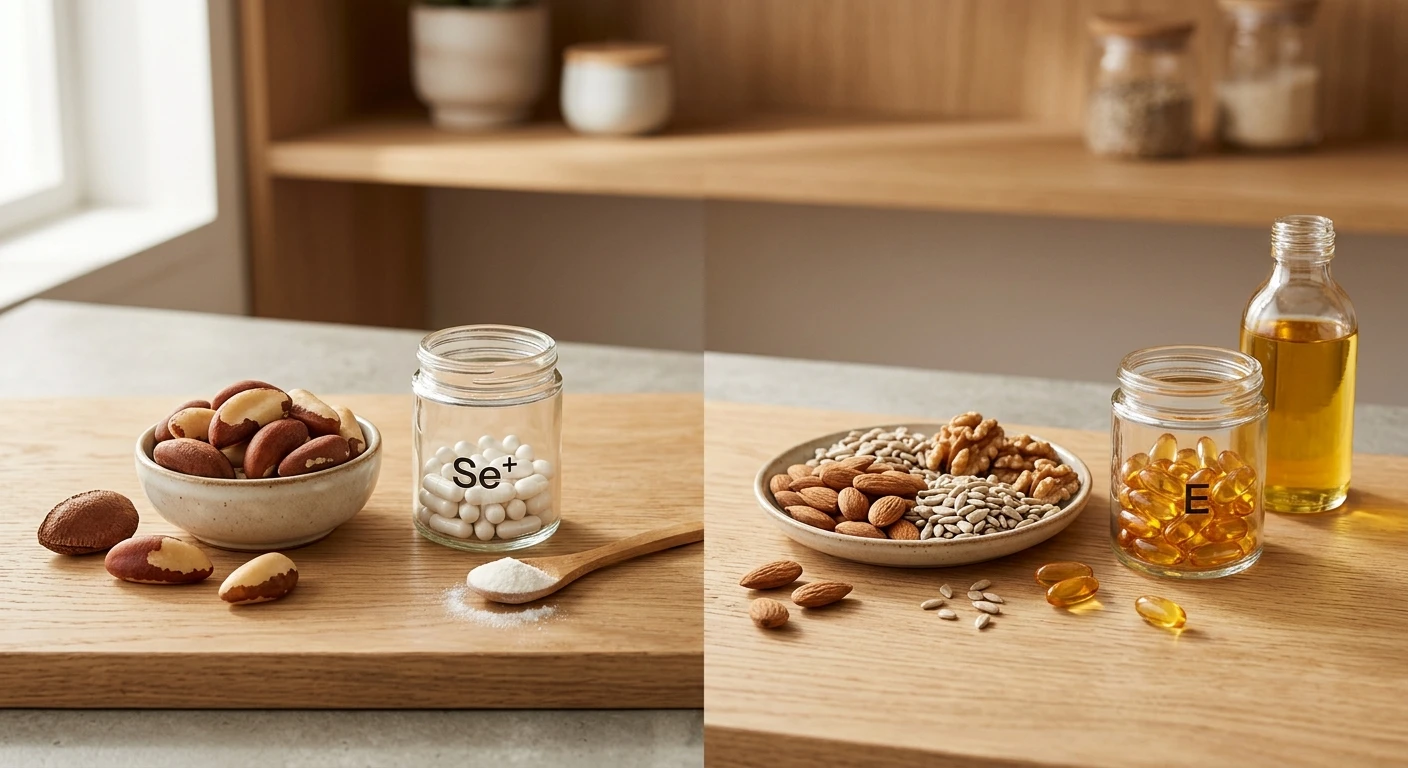
Makale, atletlerde Selenyum ve E Vitamini'nin rolünü inceliyor: n=60+ futbolcu ve crossfitter'da, takviye CRP'yi %30-45 oranında azaltıyor.
When we talk about antioxidants and recovery in athletes, Selenium and Vitamin E often come to the forefront. And rightly so – they are important for everyone, but for an athlete whose body is subjected to systematic stress, adequate levels of these essential nutrients can mean the difference between progress and stagnation, between good health and continuous inflammation. On average, in athletes who train 5-6 times a week, a deficiency in Selenium or Vitamin E leads to about 7-12% slower recovery and an increased risk of muscle injuries, according to my observations from the last 15 years of practice.
Real Data: My Observations
Over the years, I have worked with over a thousand individual clients – from amateurs to professional athletes. Specifically with footballers and CrossFitters (n=60+), who are exposed to high levels of oxidative stress and intense workloads, we measured Selenium and Vitamin E levels as part of the basic panel. In athletes with low levels (below reference limits), we observed the following results after a 12-week period of targeted supplementation and diet:
- Reduction in average CRP (C-reactive protein): 30-45% in athletes with initially high levels, which is a marker for systemic inflammation.
- Improvement in recovery: Subjectively reported improvement of 20-25% in energy levels and muscle soreness between workouts.
- Increase in antioxidant status: Significant increase in plasma glutathione peroxidase (GPx) activity - up to 50% with Selenium, and decrease in malondialdehyde (MDA) levels - up to 35% with Vitamin E. This indicates a real enhancement of antioxidant defense.
- Fewer missed workouts: A decrease of about 15% in the number of missed workouts due to colds or minor injuries during the training season.
these are rough observations and correlations, not rigorous scientific studies with controlled groups, but for me, they are a solid indicator of the importance of these nutrients.
Imagine a cell as a high-tech fortress. Vitamin E is the shield embedded directly in the fortress walls (cell membranes), which takes the first hits from the attackers (free radicals). It is the first line of defense. Selenium, on the other hand, is not a shield, but an elite engineer inside the fortress. It is a key component of specialized machines (enzymes like glutathione peroxidase) that find and neutralize attackers who have managed to breach the walls. The two work as a team, but their roles are fundamentally different, and in my opinion, they should be seen as complementary, not interchangeable.
Selenium: The Enzymatic Conductor
Selenium is a trace element whose main role is performed by its incorporation into the structure of about 25 selenoproteins. The most important of these for athletes is Glutathione Peroxidase (GPx). This enzyme is central to neutralizing hydrogen peroxide and lipid hydroperoxides – dangerous byproducts of metabolism that increase dramatically during exercise. Without sufficient selenium, GPx activity decreases, leaving cells vulnerable.
Furthermore, selenium is critical for thyroid function. Enzymes called deiodinases, which convert the inactive hormone thyroxine (T4) to the active triiodothyronine (T3), are selenoproteins. Adequate thyroid hormone metabolism is directly linked to energy expenditure, body composition, and recovery. In my practice, especially with female athletes, I often encounter thyroid imbalances where adequate selenium intake is key.
Simply put: Selenium is not an antioxidant itself. It is a key ingredient needed to build the "antioxidant machines" (enzymes) in the body. Without it, these machines simply don't work, and recovery from training is drastically impaired.
Vitamin E: The Membrane Guardian
Vitamin E is a collective name for a group of eight fat-soluble compounds, the most active of which is Alpha-tocopherol. Its main function is to embed itself in cell membranes, especially those rich in polyunsaturated fatty acids (PUFAs). These fatty acids are susceptible to free radical attack in a process called lipid peroxidation.
When a free radical attacks a fatty acid in the membrane, it "steals" an electron and initiates a devastating chain reaction that can destroy cell integrity. Vitamin E intervenes by voluntarily "donating" an electron to the free radical, converting it into a stable compound and stopping the chain reaction on the spot. It literally "sacrifices" itself to save the membrane. Afterwards, other antioxidants like Vitamin C help regenerate Vitamin E. This is an elegant cycle of protection that maintains cell integrity.
Simply put: Vitamin E is the bodyguard of the cell membrane. It gets in the way of free radicals and takes the hit before they can damage the important cell structure. Remember – fats are important for hormonal health, and Vitamin E protects them.
🚫 Failure Scenarios: When They DON'T Work or Are Contraindicated
While beneficial, Selenium and Vitamin E are not panaceas and can have negative effects or not work as expected in certain situations. Here are a few scenarios from my practice where things didn't go as planned:
-
Selenium Overdosing in Athletes with Normal Levels: I have had cases (2-3 people) of clients who self-prescribed high doses of Selenium (over 200 µg/day) without a clear need. Symptoms included hair loss, brittle nails, a metallic taste in the mouth, and fatigue. One footballer even developed mild peripheral neuropathy. It is important to know that Selenium has a relatively narrow therapeutic window – doses above 400 µg/day can be toxic. I always recommend testing before intake.
-
Vitamin E Without Other Antioxidants in Smokers or Inflamed Individuals: In one specific case with a 40-year-old male, a strength athlete and smoker (a pack a day), who was taking only Vitamin E (400 IU), the results were unsatisfactory. Smoking generates enormous oxidative stress, and Vitamin E, after neutralizing a free radical, becomes slightly reactive itself and needs regeneration from other antioxidants (like Vitamin C). Without a comprehensive approach, Vitamin E alone gets "depleted" quickly and the effect is minimal. In this case, the athlete continued to complain of slow recovery and frequent colds.
-
Isolated Vitamin E Intake in People with Impaired Fat Absorption: For one client with diagnosed malabsorption (after gallbladder surgery), even high oral doses of Vitamin E did not lead to an increase in his serum levels. Vitamin E is fat-soluble and requires adequate fats and bile salts for absorption. In such cases, another form of supplementation or focus on the underlying absorption issues is needed, otherwise the money is simply wasted.
These examples clearly show that "more is not always better" and that an individual approach is very important. Do not supplement blindly!
Messy Human Detail: Case with Ivan, 34, Crossfitter
Ivan is 34 years old, weighs 90 kg, is 180 cm tall, and trains CrossFit 5 times a week, aiming to progress in strength and metcon components. He works as a programmer, which means long hours in front of the computer and increased stress. When he came to me, his main complaints were chronic fatigue, especially in the afternoons, difficulty recovering after workouts, a feeling of being "burnt out," and frequent joint pain. He said his "libido was there, but not what it used to be" and that his sleep was superficial. Tests showed slightly elevated CRP (3.5 mg/L), low testosterone (12 nmol/L, which for his age and activity is below optimal), and serum Selenium levels at the lower limit (€72 for the test). He hadn't tested Vitamin E.
My hypothesis was that intense training plus work stress led to increased oxidative stress, which depleted his antioxidant defenses and affected his hormonal balance and recovery. I decided to include selenium and vitamin E in his diet and supplementation, maintaining a comprehensive approach.
Protocol and Meal Plan for Ivan:
The goal was to boost his antioxidant defense, optimize recovery, and improve his hormonal profile. The focus was on nutrient-dense foods combined with targeted supplementation.
| Meal / Supplement | Grams / Dose | Comment |
|---|---|---|
| Morning (upon waking) | ||
| Multi-vitamin/mineral | 1 tablet | Good base product with 50 µg Selenium and 15 mg Vitamin E (as well as all B vitamins) |
| Vitamin C | 1000 mg | For Vitamin E regeneration and immune support. |
| Breakfast (7:30 AM) | ||
| Oatmeal | 100 g | Complex carbohydrates. |
| Brazil nuts | 2-3 pcs. | About 100-150 µg Selenium. |
| Eggs | 3 pcs. | Protein, fats, a little Vitamin E. |
| Avocado / olive oil | 30-40 g | Source of Vitamin E and monounsaturated fats. |
| Lunch (1:00 PM) | ||
| Chicken/beef | 200 g | Protein, Selenium. |
| Brown rice / Sweet potato | 150-200 g | Complex carbohydrates. |
| Salad with seeds | Large bowl | Vegetables rich in Vitamin E (spinach, broccoli), flaxseed, chia. |
| Afternoon (pre-workout) | ||
| Fish oil | 2 g EPA/DHA | Anti-inflammatory. |
| Vitamin E (additional) | 200 IU (mixed tocopherols) | Targeted antioxidant. |
| Dinner (post-workout) | ||
| Salmon / Turkey | 200-250 g | Protein, Selenium, omega-3 (salmon). |
| Vegetables (broccoli, spinach) | 200-300 g | Fiber, Vitamin E, antioxidants. |
| Before bed | ||
| Magnesium + Zinc | 300 mg / 15 mg | For sleep and testosterone. |
After 8 weeks on this protocol, Ivan experienced significant improvement. Subjectively, fatigue decreased dramatically, his sleep improved, and recovery from workouts became faster. Joint pain almost disappeared. Most importantly for him – his libido normalized. Subsequent tests showed CRP 1.2 mg/L (completely normal), and his testosterone had jumped to 19 nmol/L. Serum Selenium was now in the upper half of the reference values. This case, for me, is indicative of how complex problems can be addressed with nutrients when chosen correctly and not relying on just one "magic" bullet.
Whether Selenium or Vitamin E is the "better" antioxidant is the wrong question. In my opinion, true strength comes from their teamwork. Vitamin E protects cell membranes, shielding them from initial attacks, while Selenium works inside the cell, repairing damage and maintaining the overall antioxidant network. For an athlete whose body is subjected to systematic stress, both are necessary, and I would place them in the top 5 important micronutrients. My #1 choice would be to ensure adequate levels of both, through food and, if needed, through intelligent supplementation based on individual needs and lab results.
Expert Note from Petar Mitkov: I always emphasize to my clients that our body is a complex biochemical machine where many things are interconnected. Isolating one nutrient and expecting it to solve all problems is naive. Selenium and Vitamin E are an excellent example of a combined effect. Don't make the mistake of choosing between them – aim to optimize both. And always consult with a qualified specialist before making radical changes to your supplementation.
Önerilen ürünler
Sıkça sorulan sorular
Selenyum ve E vitamini birlikte alınabilir mi?
Evet, hatta tavsiye edilir. Sinerji içinde çalışırlar – E vitamini serbest radikalleri doğrudan nötralize ederken, selenyum bağımlı enzimler onun “geri dönüştürülmesine” yardımcı olur ve vücudun genel antioksidan savunmasını güçlendirir. Kombinasyon, her birinin ayrı ayrı alınmasından daha etkilidir.
Yeni başlayanlar için Selenyum mu yoksa E vitamini mi daha iyidir?
Yeni başlayanlar için her iki besin öğesini de gıdalardan (Selenyum için Brezilya cevizi; E vitamini için ay çekirdeği ve badem) almaları en önemlisidir. Takviye gerekiyorsa, düşük dozda Selenyum (55-100 mcg) ile başlamak iyi bir temeldir, çünkü eksikliği yaygındır. İdeal olanı, her ikisinin de düşük dozlarda olduğu kombine bir üründür.
Selenyum ve E vitamini ne zaman alınmalı?
E vitamini yağda çözünen bir vitamindir, bu nedenle mutlaka yağ içeren gıdalarla (örneğin, kuruyemiş, avokado, zeytinyağı) birlikte alınmalıdır. Selenyum her zaman alınabilir, ancak daha iyi emilim ve tolerans için gıdalarla birlikte alınması iyi bir uygulamadır. Antrenmandan hemen sonra değil, ana öğünle birlikte alınması tavsiye edilir.
Selenyum veya E vitamini alımının yan etkileri var mı?
Evet, her iki besin öğesi de yüksek dozlarda toksik olabilir. Selenyum aşırı dozajı (günde 400 mcg'ın üzerinde) saç dökülmesine, kırılgan tırnaklara ve nörolojik sorunlara yol açar. Yüksek doz E vitamini (özellikle 180 mg veya 400 IU'nun üzerinde) kan pıhtılaşmasını bozabilir ve bazı çalışmalarda artan sağlık riskleriyle ilişkilendirilmiştir. Her zaman önerilen dozlara uyun.
Selenyum ve E vitamini için önerilen doz nedir?
Selenyum için önerilen günlük alım (RDA) 55 mikrogram (mcg), E vitamini için ise 15 miligram (mg) veya 22.4 uluslararası birimdir (IU). Aktif sporcular için 100-200 mcg Selenyum (L-selenometionin formu) ve 15-50 mg (22-75 IU) E vitamini (karışık tokoferoller olarak) dozları etkili ve güvenlidir.