Coenzyme Q10 vs. Vitamin B12: The Mitochondrial Engine vs. The Nerve Stabilizer
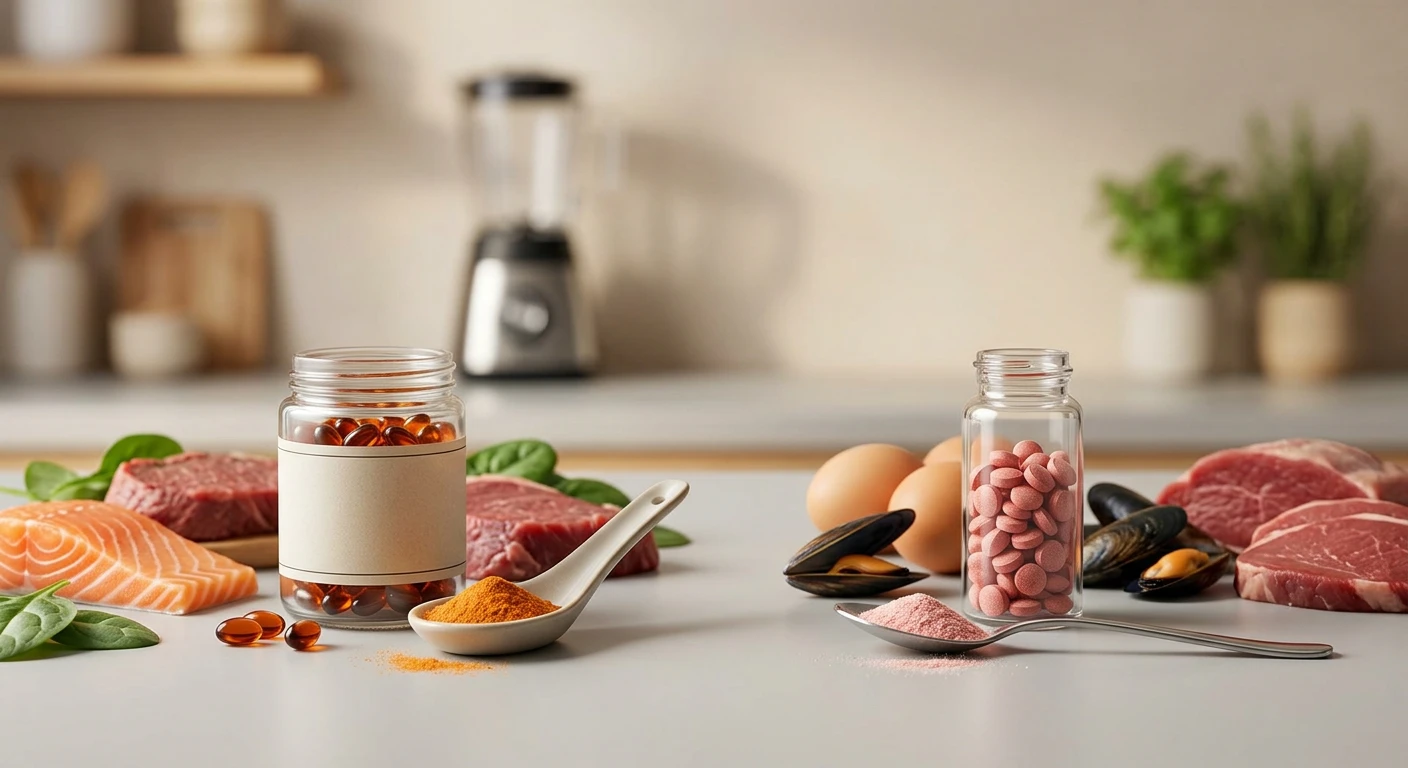
CoQ10 provides energy, B12 delivers oxygen and nutrients. Understanding their roles helps you choose the right supplement.
Short answer: Coenzyme Q10 acts as a "spark" for cellular energy production (ATP), while Vitamin B12 is fundamental for the nervous system and the creation of red blood cells that deliver oxygen. Q10 is for the *power* of energy, B12 is for the *system* that supports it. Practical advice: For general tone, start with Vitamin B12 (500-1000 mcg/day methylcobalamin). For peak performance and athletes over 30, add Coenzyme Q10 (100-200 mg/day ubiquinol).
In sports and fitness, athletes are always looking for ways to train harder, recover faster, and achieve peak performance. Coenzyme Q10 (CoQ10) and Vitamin B12 are often discussed in relation to energy, but they have different roles.
The body can be likened to a racing car. Coenzyme Q10 is the spark in the engine. Without it, the engine won't start. Vitamin B12 ensures the supply of oxygen and nutrients to the engine and transmits signals. If these systems don't work, even the most powerful engine will be useless.
Understanding these differences helps you choose correctly. This article will examine Coenzyme Q10 and Vitamin B12 to help you decide which is right for your goals, nutrition, and training load.
This article is part of the Expert Hub for Nutritional Supplements — over 270 expertly verified articles by Petar Mitkov and the Sport Zona team.
What is the comparative matrix for Coenzyme Q10 and Vitamin B12?
The comparative matrix provides a systematic analysis of Coenzyme Q10 (ubiquinone/ubiquinol) and Vitamin B12 (cobalamin), categorizing them based on their biological status, primary focus, and mechanism of action. Coenzyme Q10 is a vitamin-like, fat-soluble substance with antioxidant properties that the body produces and is crucial for cellular energy production (ATP) in the mitochondria, acting as an important component of the electron transport chain, while Vitamin B12 is an essential, water-soluble vitamin that is not produced by the body and is obtained from food, with a primary focus on the nervous system, blood formation, DNA synthesis, and fat and protein metabolism, functioning as a cofactor for enzymes.
| Criterion | Coenzyme Q10 (Ubiquinone/Ubiquinol) | Vitamin B12 (Cobalamin) |
|---|---|---|
| Biological Status | Vitamin-like substance; fat-soluble antioxidant. The body produces it. | Essential water-soluble vitamin. Not produced by the body, obtained from food. |
| Primary Focus | Cellular energy production (ATP) in mitochondria. | Nervous system, blood formation, DNA synthesis, fat and protein metabolism. |
| Mechanism of Action | Key component of the electron transport chain for ATP synthesis. | Cofactor for enzymes involved in homocysteine metabolism and energy production. |
| Time Horizon | Accumulates slowly (weeks to months) for visible effect. | Faster effect (days to weeks) in case of deficiency. |
| Main Benefit for Athletes | Improves aerobic capacity, reduces oxidative stress, supports heart function. | Prevents fatigue and anemia, maintains nervous function for proper muscle coordination. |
| Most Common Indication | Athletes over 35-40 years old, endurance sports, people taking statins. | Vegans/vegetarians, people with digestive issues, unexplained fatigue. |
How does Coenzyme Q10 work in the body?
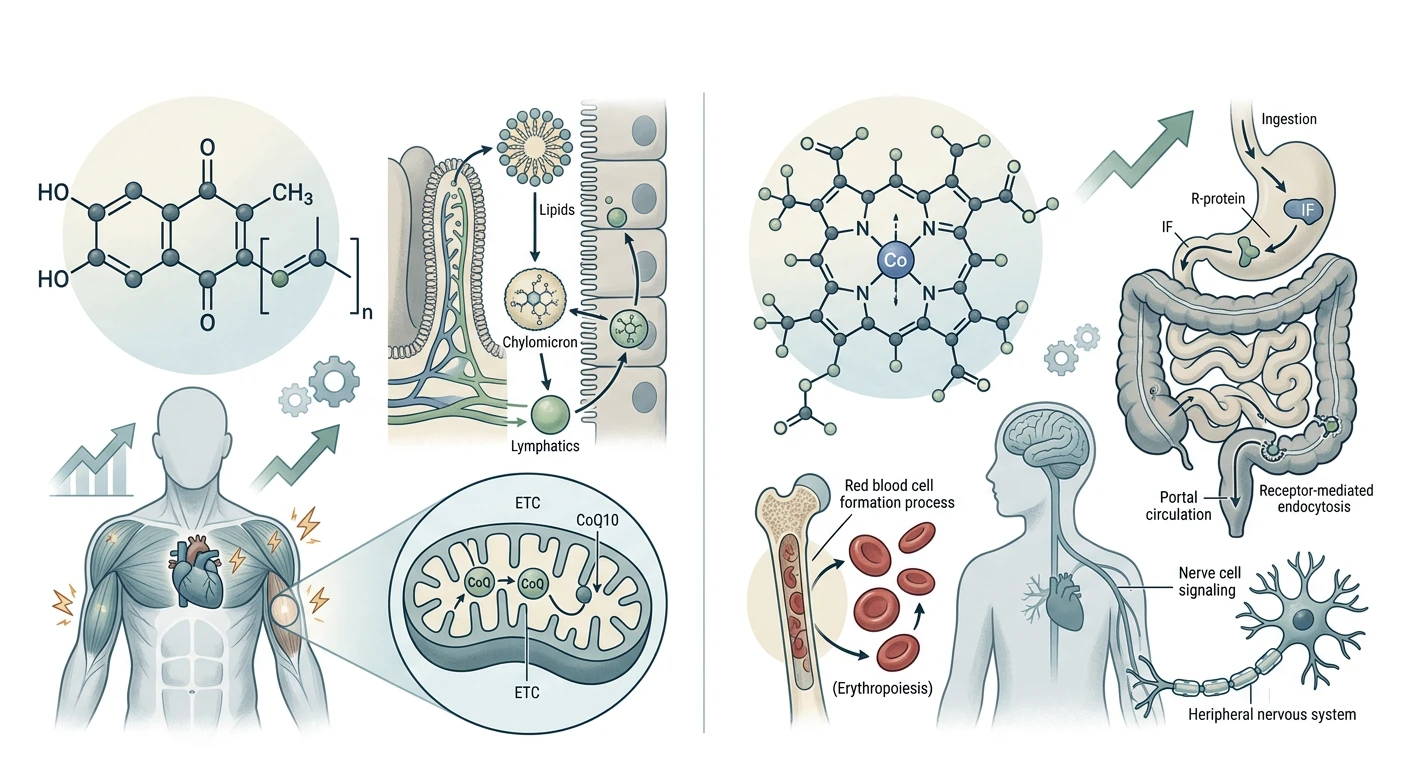
1. Coenzyme Q10: The Spark in the Cellular Engine
Coenzyme Q10, or ubiquinone, is a fat-soluble compound produced by the body that functions as a key electron carrier in the electron transport chain of mitochondria, important for ATP production.
With age and with the use of certain medications (like statins for cholesterol), the body's natural production of CoQ10 decreases. For athletes, this means less efficient ATP production, leading to lower endurance and slower recovery. In addition to its energy role, CoQ10 (especially ubiquinol) is a potent antioxidant that protects cell membranes, including mitochondrial membranes, from damage by free radicals generated during intense exercise.
Simply put: Coenzyme Q10 is essential for converting food into energy (ATP) in the muscles. Less CoQ10 means less energy at the cellular level.
Scientific Sources
2. Vitamin B12: The Conductor of Metabolism and the Nervous System
Vitamin B12, or cobalamin, is an important vitamin. The body does not produce it and must obtain it from food, primarily from animal products. Its role is broader than that of CoQ10. It does not directly participate in the ATP chain but is an important cofactor for two key enzymes:
- Methionine Synthase: This enzyme processes the amino acid homocysteine. Without enough B12, homocysteine levels rise, which is dangerous for the cardiovascular system. The process is also important for DNA synthesis and neurotransmitter production.
- L-methylmalonyl-CoA Mutase: This enzyme is necessary for converting fats and proteins into energy.
B12 is important for athletes due to its role in blood formation. It is needed for the production of healthy red blood cells (erythrocytes), which transport oxygen to working muscles. Its deficiency leads to megaloblastic anemia, where red blood cells are few, large, and inefficient. This impairs aerobic capacity and makes you feel tired and short of breath. B12 is also important for maintaining the myelin sheath around nerves, which ensures fast and accurate transmission of nerve impulses for muscle contraction.
Simply put: Vitamin B12 provides the "logistics" – delivering oxygen to muscles through the blood and maintaining the nervous system's "wiring" for good communication between the brain and muscles.
Scientific Sources
The Synergistic Effect: Why Do They Work Better Together?
CoQ10 and B12 are not competitors but partners. They work at different levels to achieve the common goal of proper energy and performance. Their synergy is particularly important for endurance sports.
Here's an example with a marathon runner. Their muscles need a lot of ATP for hours. Coenzyme Q10 ensures the efficiency of the mitochondria that produce this energy. At the same time, Vitamin B12 ensures that the blood is rich in healthy red blood cells that deliver the necessary oxygen for this aerobic process. If CoQ10 is present but there isn't enough oxygen (due to B12 deficiency), the body quickly switches to anaerobic mode, leading to lactate buildup and early fatigue. Conversely, even with good oxygen delivery, if the mitochondria are not efficient (due to low CoQ10), the energy capacity will be limited. The combination of the two creates a complete system for energy production and maintenance.
What is the correct selection algorithm?
The correct selection algorithm involves considering your individual profile, goals, and dietary habits to determine whether to choose CoQ10, B12, or a combination of both.
Choose Coenzyme Q10 if:
- You are over 35-40 years old, when its natural production decreases.
- You want to improve your endurance and aerobic capacity.
- You are taking statins to lower cholesterol.
- You want to enhance antioxidant protection and your heart health.
🔵 Choose Vitamin B12 if:
- You follow a vegan or predominantly plant-based diet.
- You experience constant fatigue, weakness, or have symptoms of anemia (shortness of breath, pale skin).
- You have digestive problems (like Crohn's disease) or have had stomach surgery.
- You experience neurological symptoms such as numbness, tingling, or balance problems.
Recommended stack for maximum energy and recovery: Combine 100-200 mg Coenzyme Q10 (preferably Ubiquinol) with food for better absorption and 500-1000 mcg Vitamin B12 (preferably Methylcobalamin under the tongue) in the morning on an empty stomach. This approach supports both cellular energy production and overall body support.
What is the "Foundation and Performance Stack" protocol for 2026?
The 2026 "Foundation and Performance Stack" protocol is a way to integrate Coenzyme Q10 and Vitamin B12 to achieve the best results.
- Daily Foundation: 1000 mcg Vitamin B12 (Methylcobalamin) in the morning, 15-20 minutes before breakfast. This provides baseline levels for the nervous system and blood formation.
- Performance Stack (on training days): 100-200 mg Coenzyme Q10 (Ubiquinol) with lunch or a pre-workout meal that contains fat. This will prepare the mitochondria for the upcoming exertion.
Expert Note on the Protocol
Do not underestimate the form and timing of intake. B12 as methylcobalamin, taken sublingually (under the tongue), bypasses part of the complex absorption process in the stomach, which is a big plus for people with digestive issues. CoQ10 is fat-soluble, so taking it with food containing healthy fats (avocado, nuts, olive oil) can increase its absorption many times over.
🧭 When to Choose What?
- Choose Coenzyme Q10 if the problem is related to endurance, you feel a drop in performance with age, or you are taking statins.
- Choose Vitamin B12 if you are on a plant-based diet, have symptoms of anemia or unexplained chronic fatigue unrelated to exertion.
- Combine both if you are a serious athlete (especially over 35) looking to optimize every aspect of energy metabolism – from ATP production to oxygen delivery.
📖 What are Coenzyme Q10 and Vitamin B12?
Coenzyme Q10 (CoQ10) is a fat-soluble, vitamin-like substance found in every cell of the body, important for energy production (ATP) in mitochondria.
Vitamin B12 (Cobalamin) is an important water-soluble vitamin that is crucial for the nervous system. It aids in red blood cell production. It is involved in DNA creation.
⚖ Pros and Cons
| Pros | Cons |
|---|---|
| CoQ10: Directly increases cellular energy, potent antioxidant, supports the heart. | CoQ10: More expensive (especially Ubiquinol form), requires intake with fats, effect accumulates slowly. |
| B12: Important for vegans, quickly corrects deficiency, supports the nervous system, more accessible. | B12: Supplementation without deficiency has no proven effect on performance, complex absorption. |
🗣 Simply Explained: The Spark vs. The Wiring
| Criterion | Coenzyme Q10 | Vitamin B12 |
|---|---|---|
| Metaphor | The spark in the engine | 🔌 The nervous system wiring |
| Main Effect | More power in the cell | Better communication and delivery |
| Feeling of Deficiency | Engine "doesn't start" easily | Accelerator pedal "doesn't work" |
CoQ10 is for Power Production, and B12 is for Resource Delivery and Communication. In a complex system like the human body, one is meaningless without the other.
Choose the right product for your goal:
- For more energy and endurance, check out our selection of energy and nitric oxide boosters.
- 🍎 To fill nutritional gaps, see our category of vitamins and minerals.
- For complete recovery, check our amino acids.
Combined protocol for peak performance:
⚖ When to Choose Coenzyme Q10
- You aim for high endurance in marathons or triathlons.
- You are over 40 and feel a natural decline in energy.
- You seek long-term support for your heart and mitochondria.
- You are taking medications (statins) that deplete its levels.
⚖ When to Choose Vitamin B12
- You eat a predominantly plant-based diet and do not consume animal products.
- You suffer from unexplained fatigue despite good sleep and nutrition.
- Your blood tests show low B12 levels or high homocysteine.
- You need support for your nervous system and cognitive function.
Expert Note from Sport Zona
Athletes often seek energy stimulants when the problem is a simple nutritional deficiency. I always recommend checking basic elements like Vitamin B12 levels, especially for athletes on a plant-based diet, before resorting to complex pre-workout formulas. For older athletes (over 40), adding CoQ10 often provides a noticeable improvement in endurance. It's not a sharp "kick," but a "smoother" and lighter feeling during long workouts.
Frequently asked questions
Can Coenzyme Q10 and Vitamin B12 be taken together?
Yes, absolutely. They are not only compatible but also complementary. Q10 supports cellular energy production, and B12 supports the nervous system and blood formation, which are essential for oxygen delivery. There are no known negative interactions between them.
Which is better for beginners - Coenzyme Q10 or Vitamin B12?
For most beginners, ensuring an adequate intake of Vitamin B12 is more fundamental. Its deficiency is more common, especially in plant-based diets, and affects overall vitality. Coenzyme Q10 is more of an optimization for athletes with higher demands or people over 30-35 years old, when its natural production in the body decreases.
When is the best time to take Coenzyme Q10 and Vitamin B12?
Coenzyme Q10 is fat-soluble, so it's best taken with a meal containing fat (e.g., with breakfast or lunch) for better absorption. Vitamin B12 is water-soluble and can be taken at any time of the day, but many people prefer it in the morning due to its role in energy metabolism.
Are there any side effects from taking Coenzyme Q10 or Vitamin B12?
Both supplements are considered very safe at recommended doses. At very high doses of Coenzyme Q10 (over 300 mg), mild stomach discomfort may occur. Vitamin B12 is practically non-toxic, as the body excretes the excess. Consult your doctor if you are taking blood-thinning medications (for Q10) or have specific conditions.
What is the recommended dosage of Coenzyme Q10 and Vitamin B12?
The standard dose of Coenzyme Q10 for athletes is 100-200 mg per day, with the Ubiquinol form having higher bioavailability. For Vitamin B12, a maintenance dose for active individuals is typically 500-1000 mcg (micrograms) daily, preferably as methylcobalamin or adenosylcobalamin.